
🌸 Thundercloud Cherry Plum
What it looks like
Why this variety
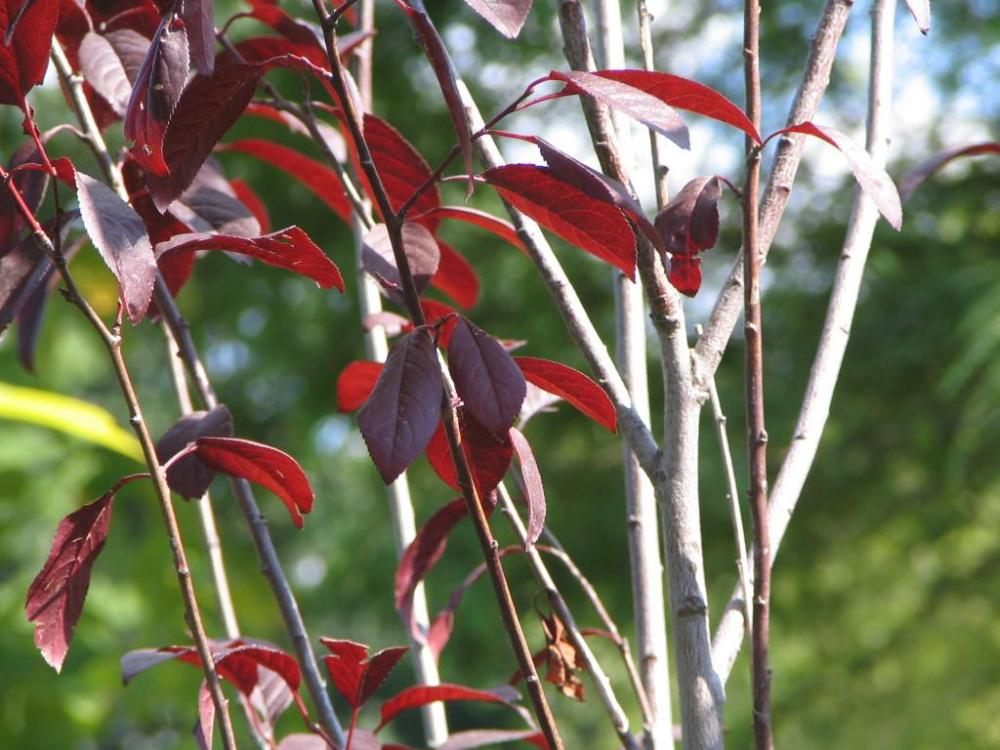
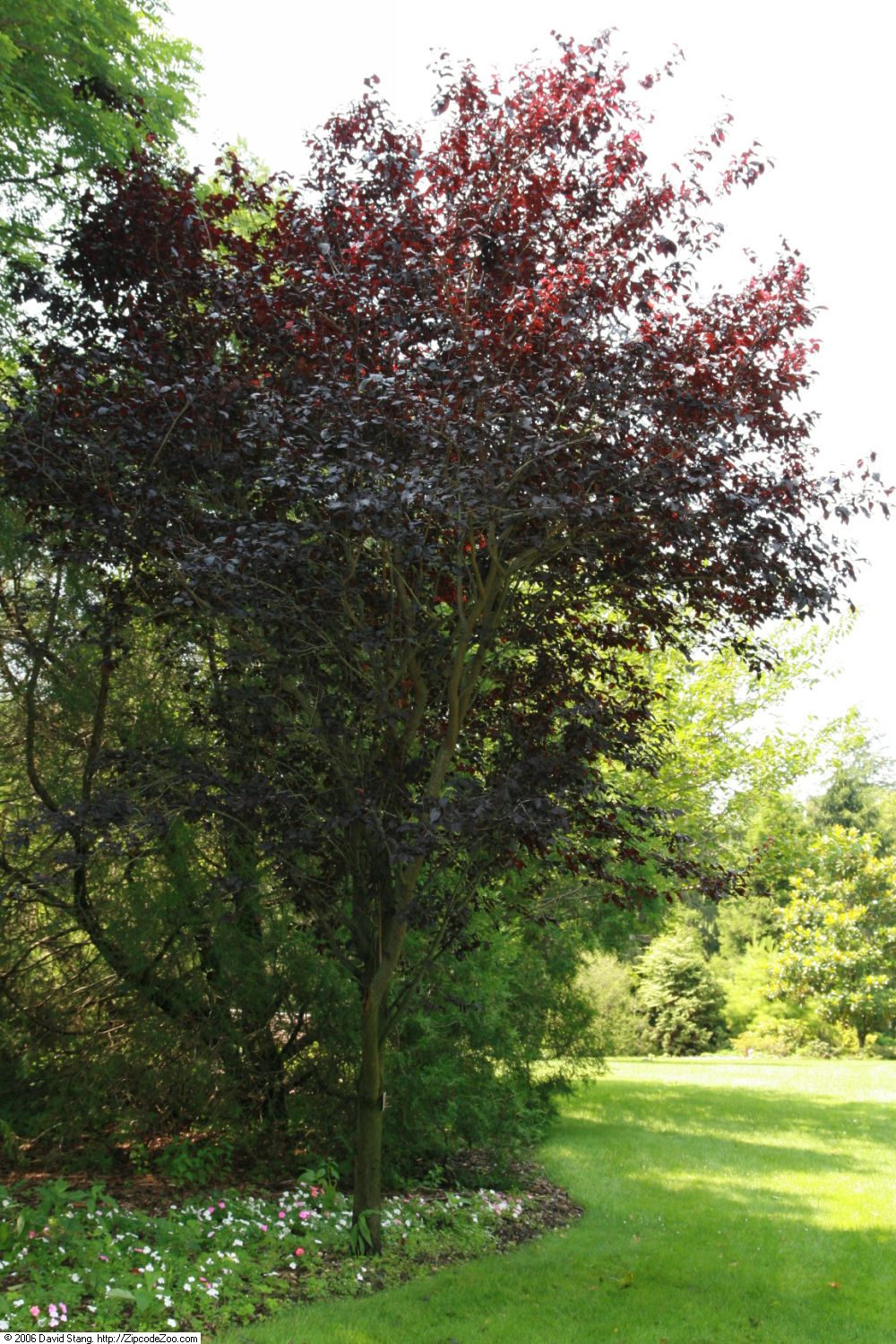
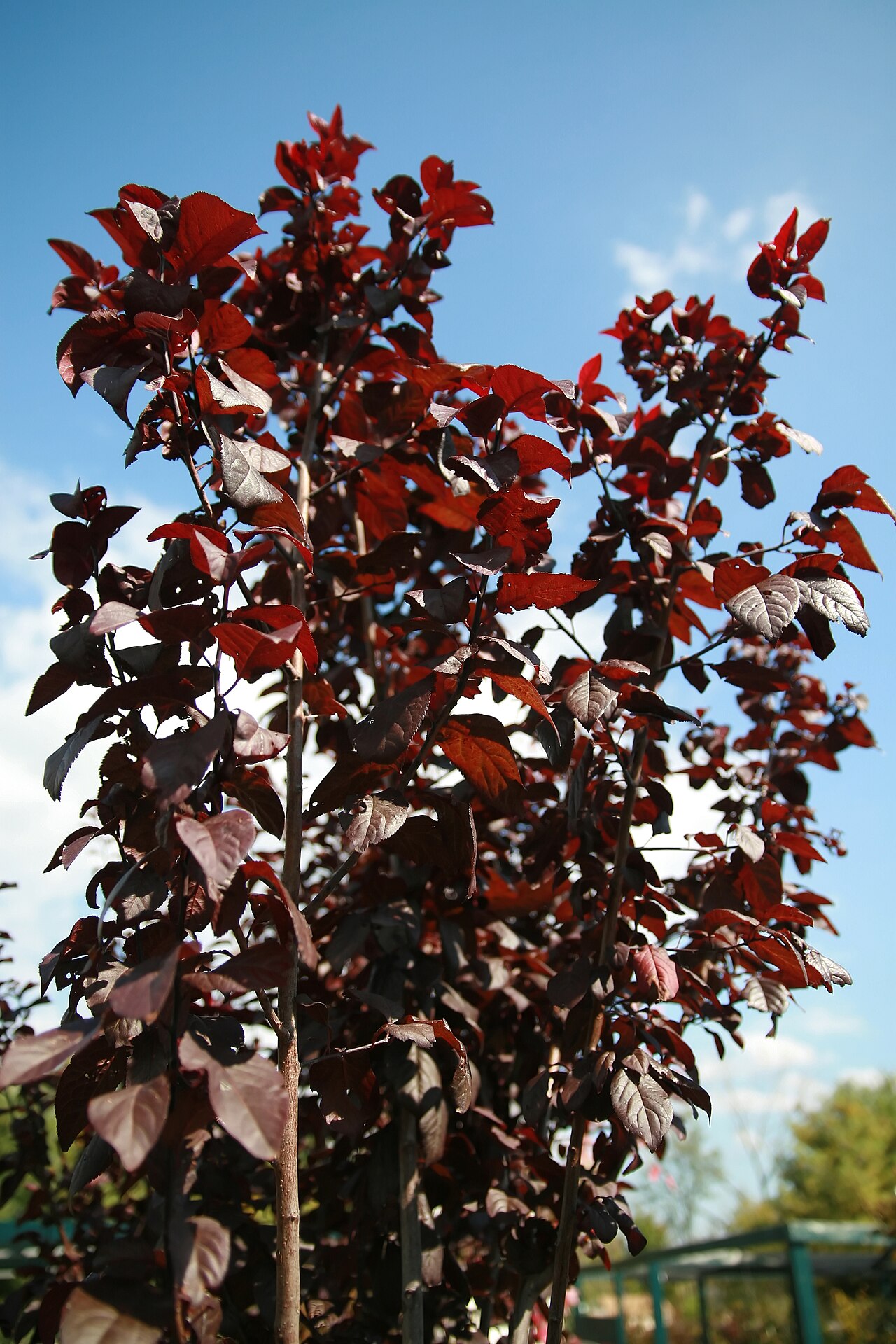
Thundercloud is the purple-leaf plum most people picture when they picture a purple-leaf plum. In spring it opens in a cloud of pale pink flowers, and then the leaves take over: deep burgundy-purple, holding their color through summer instead of greening out the way weaker purple-leaf selections do. That color retention is the whole reason Thundercloud became the standard — a purple tree that stays purple is doing its job, and a purple tree that fades to muddy green by July is just a tree with an identity crisis.
The habit is rounded and spreading, typically 15-20 feet tall and wide, which makes Thundercloud a genuine small shade tree as well as a color accent. It works as a front-yard specimen, a street tree where space allows, and a contrast plant against green hedges and pale house paint. The fruit is the honest footnote: small, reddish-purple, cherry-sized plums, edible and tart-sweet, produced in modest amounts and much loved by birds. Grow Thundercloud for the foliage and the spring flower show, treat any fruit as a bonus, and you will never be disappointed by the crop.
Pink spring flowers; burgundy foliage that holds its color; rounded 15-20 foot habit. Small, modest fruit crops — the classic purple-leaf pick.
How to grow
Plant in full sun — shade turns purple foliage green, which defeats the entire purpose — in well-drained soil. Prune after flowering to shape, and watch for black knot and other stone-fruit problems; remove any swollen black growths promptly and dispose of them off-site.
Plant grafted trees while dormant in late winter or early spring, in full sun and deep, well-drained soil. Stone fruit drowns in wet feet faster than almost any other fruit group, so drainage is the whole game: raised ground beats a hollow every time. Prune to an open, rounded crown in the first few years so light and air reach the interior wood, and keep the graft union above soil level.
Florida framing, stated plainly: purple-leaf plums are cool-to-warm climate trees, and Thundercloud is a North Florida trial only. Its foliage color holds better with some chill and cooler nights, and Florida heat, humidity, and stone-fruit disease pressure work against both color and health. In North Florida, plant in full sun with airflow and well-drained soil; further south, expect foliage to fade and the tree to struggle. This is an ornamental trial, not a fruit-crop promise.
Water & feeding
Water young trees deeply through their first two growing seasons, then water consistently through fruit development — uneven watering makes fruit split and drop. A thick mulch ring (kept off the trunk) holds moisture and suppresses weeds, and worm castings worked into the planting hole and as a spring top-dress feed the soil biology that stone fruit rewards. Skip heavy nitrogen after fruit set: it buys leaves at the expense of fruit.
Common problems
- Brown rot — the classic stone-fruit fungus, worst in warm, humid weather. It rots blossoms and fruit and overwinters in mummified fruit left on tree or ground. Sanitation (remove mummies, fallen fruit, and diseased wood) matters more than any spray.
- Bacterial canker and black knot — swollen, black growths on branches. Prune well below the swelling in dry weather and dispose of cuttings off-site; do not compost them.
- Late frost on open bloom — one hard freeze after a warm spell ends the crop. Site trees where cold air drains away, not in frost pockets, and accept that some springs will simply be lost.
- Birds and squirrels — they know ripeness a day before you do. Net before fruit colors fully if you want to taste the crop.
- Peach tree borer and other borers — sawdust-like frass at the trunk base is the sign. Keep trunks healthy, avoid mower wounds, and remove infested wood.
Harvest
Pick when fruit colors fully, yields very slightly to pressure, and smells fragrant — stone fruit picked hard never develops full flavor, and fruit picked soft bruises in the basket. Taste one before harvesting the whole tree. Use fresh within days, or preserve promptly: jam, jelly, and baking all suit these small tart-sweet plums, and a modest crop handled the same week beats a modest crop left to rot on the tree.
Browse all plant & pest guides
Saving seeds
Thundercloud is the purple-leaf plum most people picture when they picture a purple-leaf plum. In spring it opens in a cloud of pale pink flowers, and then the leaves take over: deep burgundy-purple, holding their color through summer instead of greening out the way weaker purple-leaf selections do. That color retention is the whole reason Thundercloud became the standard — a purple tree that stays purple is doing its job. The habit is rounded and spreading, typically 15–20 feet tall and wide, which makes Thundercloud a genuine small shade tree as well as a color accent, and the fruit is the honest footnote: small, reddish-purple, cherry-sized plums, edible and tart-sweet. But it is a named cultivar, not a seed strain: a seedling of Thundercloud is a cherry plum, and its leaves may come up green. To keep this exact purple tree, plant a grafted Thundercloud instead of growing one from seed. The propagation method is in the Propagation section of the Cherry Plum guide.