
💙 Silver Heart Brunnera
What it looks like
Why this variety
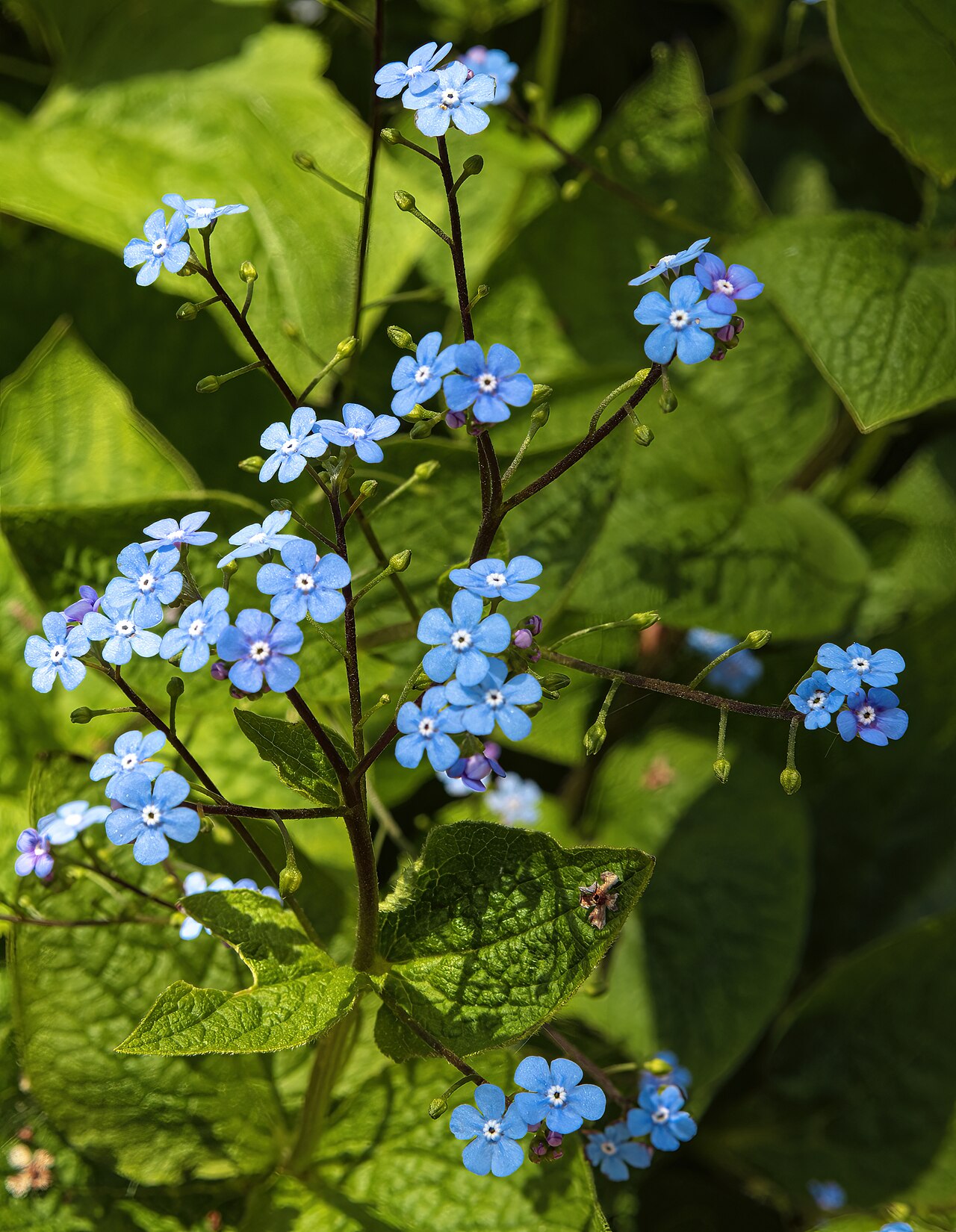
Silver Heart is the brunnera that makes visitors stop and touch the leaves, because they do not quite believe them. The silvering is more complete than Jack Frost’s — the leaf is silver first and green second, with the green reduced to fine veins and a narrow edge — so a clump glows in shade the way a lamp glows in a dark room. It is a sport selected for maximum frost, and it delivers exactly that: the most luminous foliage in the genus.
The trade-off is that maximum silver means maximum visibility of every flaw: scorch, slug nibbles, and drought stress all show plainly on a silver leaf, where they would hide on a green one. Silver Heart wants the best shade spot you have — deep shade, rich moist soil, mulch, and no afternoon sun — and it repays that pampering with a display no green shade plant can match. Do not plant it as an afterthought in a hot corner; plant it as the centerpiece of a cool, damp bed.
If you are new to choosing between cultivars, the Varieties Matter guide explains why the name after the plant matters as much as the plant itself. Silver Heart is a perfect example: it is not just a brunnera in the abstract, it is a brunnera with a specific job, a specific history, and specific strengths.
Florida honesty, stated plainly: brunnera is a North Florida shade trial, not a statewide promise, and Silver Heart is the most demanding trial of the silver types — its luminous leaves scorch first when heat or drought strike. In North Florida, give it the coolest, dampest shade you have, water consistently, and mulch deeply. If it thrives, it will be the brightest thing in your shade garden; if it struggles, Sea Heart is the tougher silver to try next.
How to grow
Plant in spring or fall in rich, moist soil in part to full shade — brunnera is a woodland plant that wants leaf-mold soil, consistent moisture, and protection from hot sun. Work worm castings and compost into the bed at planting, mulch deeply, and site it where the soil stays damp. It tolerates dry soil better than some shade plants once established, but ‘better’ does not mean ‘dry’: in sun or drought it scorches, and its silver leaves show scorch plainly.
Set plants 15-18 inches apart in soil with a pH around 6.0-7.0. Work worm castings into the bed at planting and mulch to hold moisture. A well-fed brunnera plant rewards that care directly: steadier growth, better bloom, and a show that actually shows up.
Water & feeding
Keep soil consistently moist — brunnera scorches in dry soil and hot sun, and its silver leaves show damage plainly. Water at the soil line, mulch deeply, and feed lightly: castings and compost at planting plus a spring top-dress. In a dry spell, water is the care program; a brunnera that dries out does not bounce back to silver that season.
Common problems
- Scorch in sun or drought — browned silver leaves; the fix is shade, moisture, and mulch, applied before damage, not after.
- Slugs and snails on foliage in wet weather — pick at dusk and keep mulch pulled back slightly from crowns.
- Crown rot in waterlogged soil — brunnera wants moist soil, not standing water; improve drainage and do not plant where rain ponds.
- Self-seeding in happy conditions — seedlings appear freely; deadhead if you do not want them, or welcome them as free plants.
- Short life in hot climates — heat shortens brunnera life; in warm zones, treat it as a shade trial with soil that never dries out.
Harvest
Cut a few sprays of forget-me-not flowers for small spring bouquets, when blooms are fully open — brunnera flowers last a few days in water and suit tiny, woodland-style arrangements. The foliage is the longer harvest: silver leaves last all season and can be cut sparingly for foliage arrangements without harming the plant. Deadhead if you do not want seedlings, divide congested clumps in spring or fall every few years, and leave the foliage standing over winter where it is evergreen enough to shelter.
Browse all plant & pest guides
Saving seeds
Silver Heart is the brunnera that makes visitors stop and touch the leaves, because they do not quite believe them. The silvering is more complete than Jack Frost’s — the leaf is silver first and green second, with the green reduced to fine veins and a narrow edge — so a clump glows in shade the way a lamp glows in a dark room. It is a sport selected for maximum frost, and it delivers exactly that: the most luminous foliage in the genus. As a named brunnera it is kept true by division, not by seed — plant in spring or fall in rich, moist soil in part to full shade: brunnera is a woodland plant that wants leaf-mold soil, consistent moisture, and protection from hot sun. Work worm castings and compost into the bed at planting, mulch deeply, and site it where the soil stays damp. It tolerates dry soil better than some shade plants once established, but ‘better’ does not mean ‘dry’: in sun or drought it scorches, and its silver leaves show scorch plainly. The full method is in the Saving seeds section of the Brunnera guide.