
🌼 Perkins Pink Yellowwood
What it looks like
Why this variety
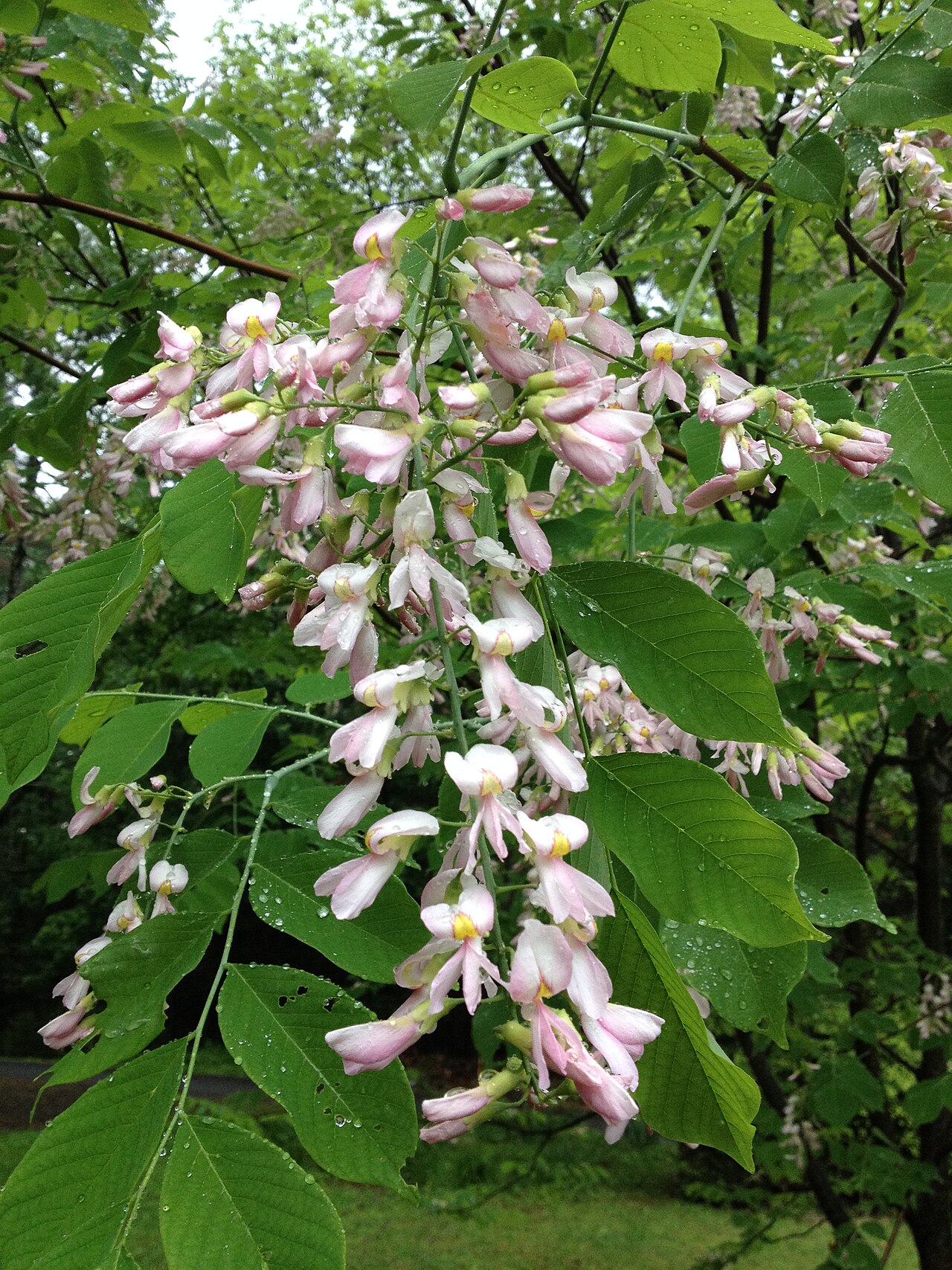
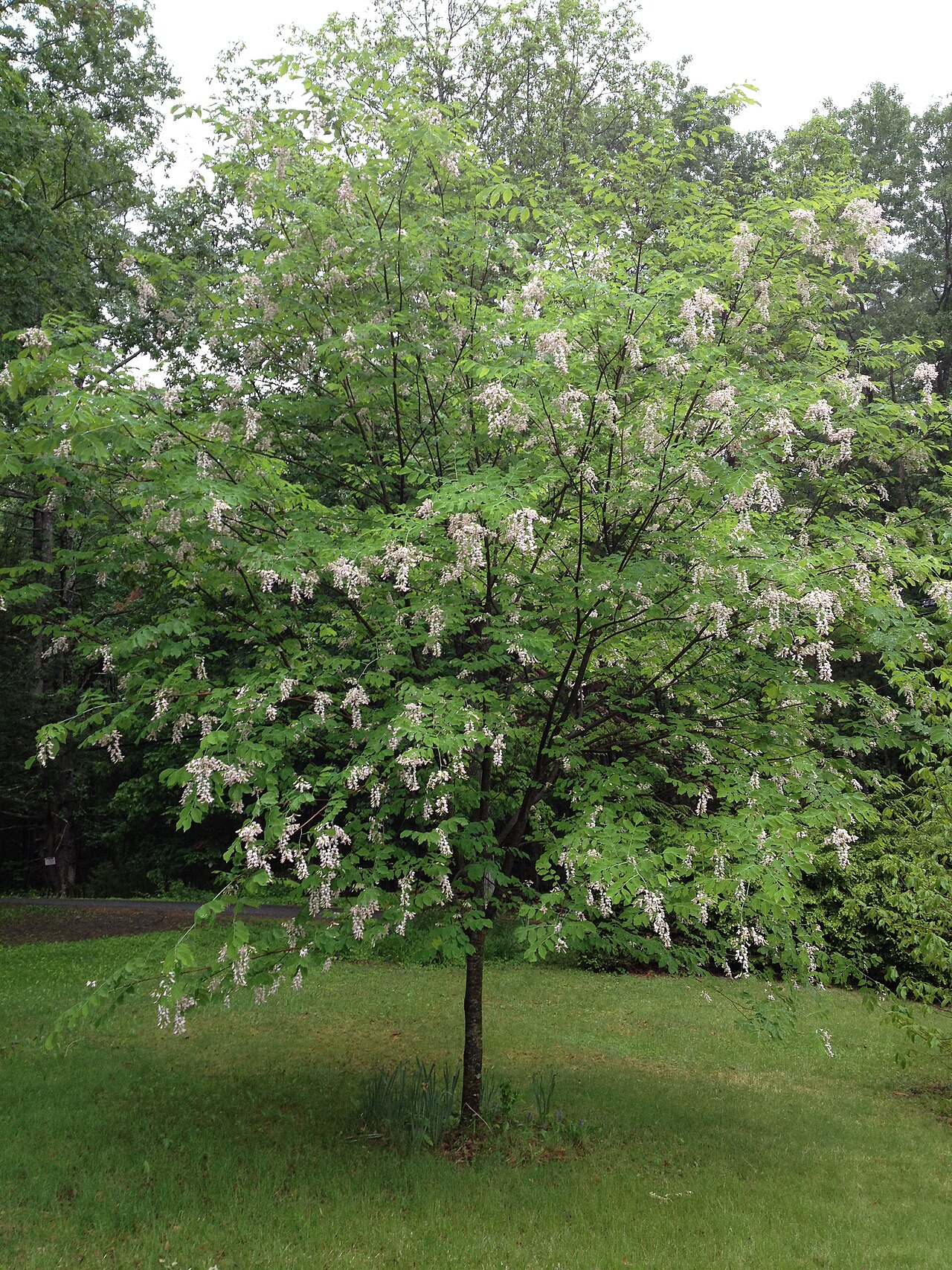
Perkins Pink is the pink-flowered selection of yellowwood: the same 30–40 foot native tree, the same smooth grey bark and yellow fall colour, but with flowers in a soft blush-pink instead of white, hanging in long panicles in late spring like a pink wisteria that grew into a tree. It is the yellowwood for a garden that wants the species’ shape and bark with a flower colour that stands out against green foliage — pink reads farther than white, and a Perkins Pink in full bloom is visible from the street.
In Florida, Perkins Pink is a north-Florida trial like the species: full sun to part shade, deep, well-drained soil, afternoon shade if the site is brutal, and the same biennial bloom habit — a heavy flowering year followed by a light one is normal, not a problem. Train its structure young, since yellowwood wood is brittle and narrow branch angles split in storms, and give it 25 feet of room.
How to grow
Yellowwood is the native shade tree that flowers like a wisteria: in late spring, long hanging panicles of white, pea-like, fragrant flowers drape a 30–50 foot tree with smooth grey bark and yellow fall colour. Plant in fall or spring in sun to part shade in deep, well-drained soil, 25–30 feet from structures, and train a strong structure while young — yellowwood wood is brittle and narrow branch angles split in storms, so a well-shaped young tree is a safer old tree. Florida honesty: this is a zone 4–8 tree, so plant it only in the north, with afternoon shade if the site is brutal, and expect the famous bloom to be biennial — a heavy flowering year followed by a light one is normal, not a problem to fix. Water deeply for the first two to three years.
Water & feeding
Water deeply through establishment, then in dry spells; established yellowwood is moderately drought-tolerant. Mulch widely. Feed lightly in spring if growth is pale.
Common problems
Few serious pests. Branch breakage is the main complaint, and the prevention is structural pruning while young — wide branch angles, a single leader, no competing trunks. A yellowwood that skips a bloom year is not sick; it is alternating, and the next heavy year is already on its way.
Harvest
There is no fruit harvest worth chasing — the small pods are ornamental, and the crop is the pink bloom and the shade. Prune for structure while young — wide branch angles, a single leader — and leave it alone after that. A Perkins Pink that skips a bloom year is not sick; it is alternating, and the next heavy pink year is already on its way.
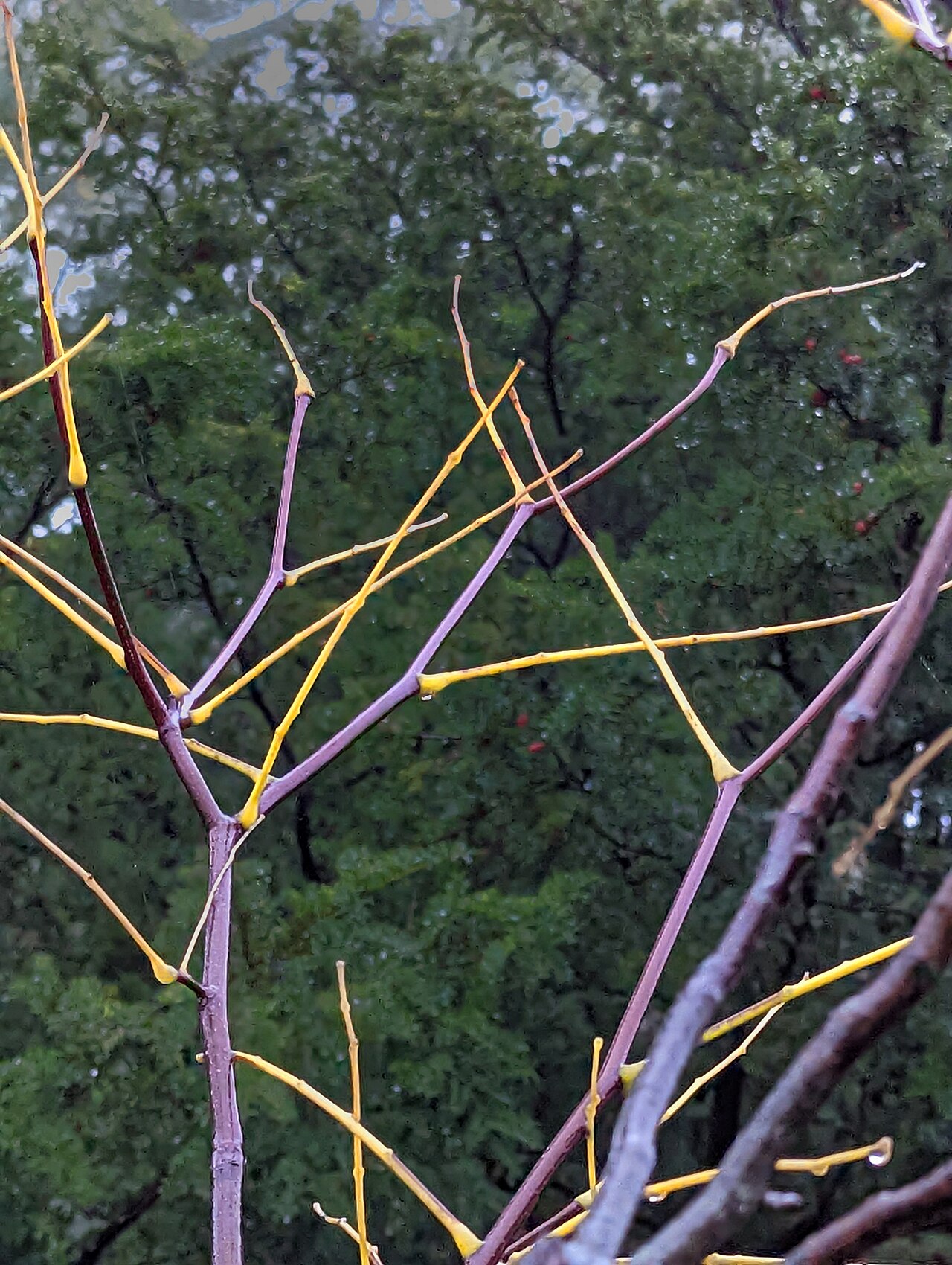
Nerdy fact: Yellowwood’s wood is yellow — bright yellow when freshly cut, which is how the tree got its name — and it was once used for gunstocks and dye. A tree named for its timber now earns its keep with flowers, which is a career change most trees never manage.
Saving seeds
Perkins Pink is the pink-flowered selection of yellowwood: the same 30 to 40 foot native tree, the same smooth grey bark and yellow fall colour, but with flowers in a soft blush-pink instead of white, hanging in long panicles in late spring like a pink wisteria that grew into a tree. It is the yellowwood for a garden that wants the species’ shape and bark with a flower colour that stands out against green foliage — pink reads farther than white, and a Perkins Pink in full bloom is visible from the street. As a named yellowwood selection it is kept true by grafting and cuttings, not by seed — seedlings would not hold the pink flowers. Plant in fall or spring in sun to part shade in deep, well-drained soil, 25 to 30 feet from structures, and train a strong structure while young, since yellowwood wood is brittle and narrow branch angles split in storms. The full method is in the Saving seeds section of the Yellowwood guide.