
🌞 Daybreak Red Stripe Gazania
What it looks like
Why this variety
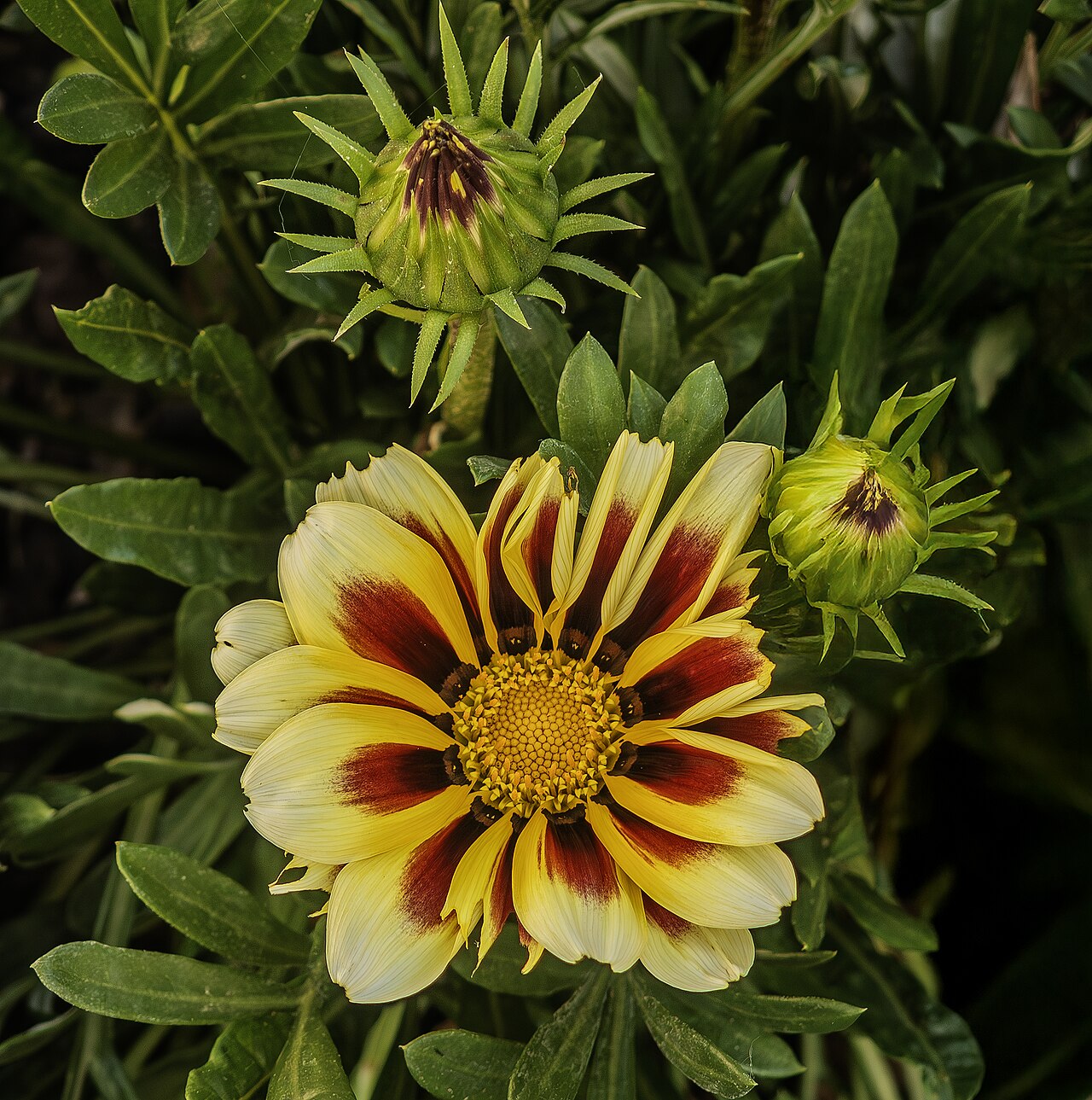
Daybreak Red Stripe is the gazania for gardeners who want daisies with drama: large, deep yellow flowers with red stripes radiating from the center over each petal, like a sunrise painted on a daisy, on compact plants about a foot tall. It won a Fleuroselect Gold Medal — the international seed industry’s trial award — for beauty, earliness, and profusion, and it earns it: Daybreak flowers open earlier in the day and stay open longer on cloudy days than other gazanias, which famously close when the sun goes in. That means color on overcast mornings, not just blazing afternoons.
The trade-off is the gazania bargain: sun is non-negotiable, and shade or wet soil gives you foliage and closed flowers. Give Daybreak Red Stripe full sun, sharp drainage, and lean soil, deadhead lightly for rebloom, and do not overwater — gazanias are South African plants built for sun and drought, and they rot in pampering. In return you get daisies from summer until frost in colors bright enough to hurt your eyes, in a good way.
If you are new to choosing between cultivars, the Varieties Matter guide explains why the name after the plant matters as much as the plant itself. Daybreak Red Stripe is a perfect example: it is not just a gazania in the abstract, it is a gazania with a specific job, a specific history, and specific strengths.
Florida honesty: gazania is a genuine statewide plant in Florida — perennial in zones 9-11, grown as an annual elsewhere in the state — and it is one of the best heat-and-drought annuals a Florida gardener can plant. Give it full sun and sharp drainage or a raised bed, water to establish and then sparingly, and it will bloom through Florida summers that flatten fussier daisies. Deadhead to limit self-seeding and keep it in its bed.
How to grow
Plant in spring in full sun and sharply drained, even poor soil — gazania is a South African sun plant that rots in wet soil and closes its flowers in shade. Work a little worm castings into the bed at planting, do not overfeed, and space for air. Water to establish, then water sparingly; a gazania that is pampered with water grows leaves, not daisies. Deadhead lightly for rebloom.
Set plants 12 inches apart in soil with a pH around 6.0-7.5. Work worm castings into the bed at planting and mulch to hold moisture. A well-fed gazania plant rewards that care directly: steadier growth, better bloom, and a show that actually shows up.
Water & feeding
Water to establish, then water sparingly — gazania is drought-tolerant once established and rots in wet soil, so overwatering is the mistake to avoid. Water at the soil line, do not mulch heavily, and feed lightly: castings at planting is usually enough.
Common problems
- Closed flowers in shade or cloud — gazanias open with sun; plant in full sun or accept closed blooms on dull days.
- Rot in wet soil — gazania’s killer; plant in sharp drainage or raised beds and do not overwater.
- Self-seeding beyond the bed — deadhead to limit volunteers, or edit seedlings in spring.
- Leggy growth in shade or rich soil — lean soil and full sun make compact gazanias.
- Frost killing perennial plants — in zones below 9, treat gazania as an annual and replant yearly.
Harvest
Cut flowers for bouquets in summer, when daisies are fully open in sun — gazania flowers last a few days in water but close at night, so cut in the morning and enjoy them by day. Deadhead for rebloom, and at season’s end pull annual plants and compost them, or leave perennial plants in zones 9-11 to return. The real harvest is color: a gazania bed in full sun is a daisy field that never stops.
Browse all plant & pest guides
Saving seeds
Daybreak Red Stripe is an F1 hybrid gazania from the Daybreak F1 series, so seed saved from it won’t come true — buy fresh seed each season instead. The full method is in the Saving seeds section of the Gazania guide.