
🎺 Stromboli Trumpet Vine
What it looks like
Why this variety
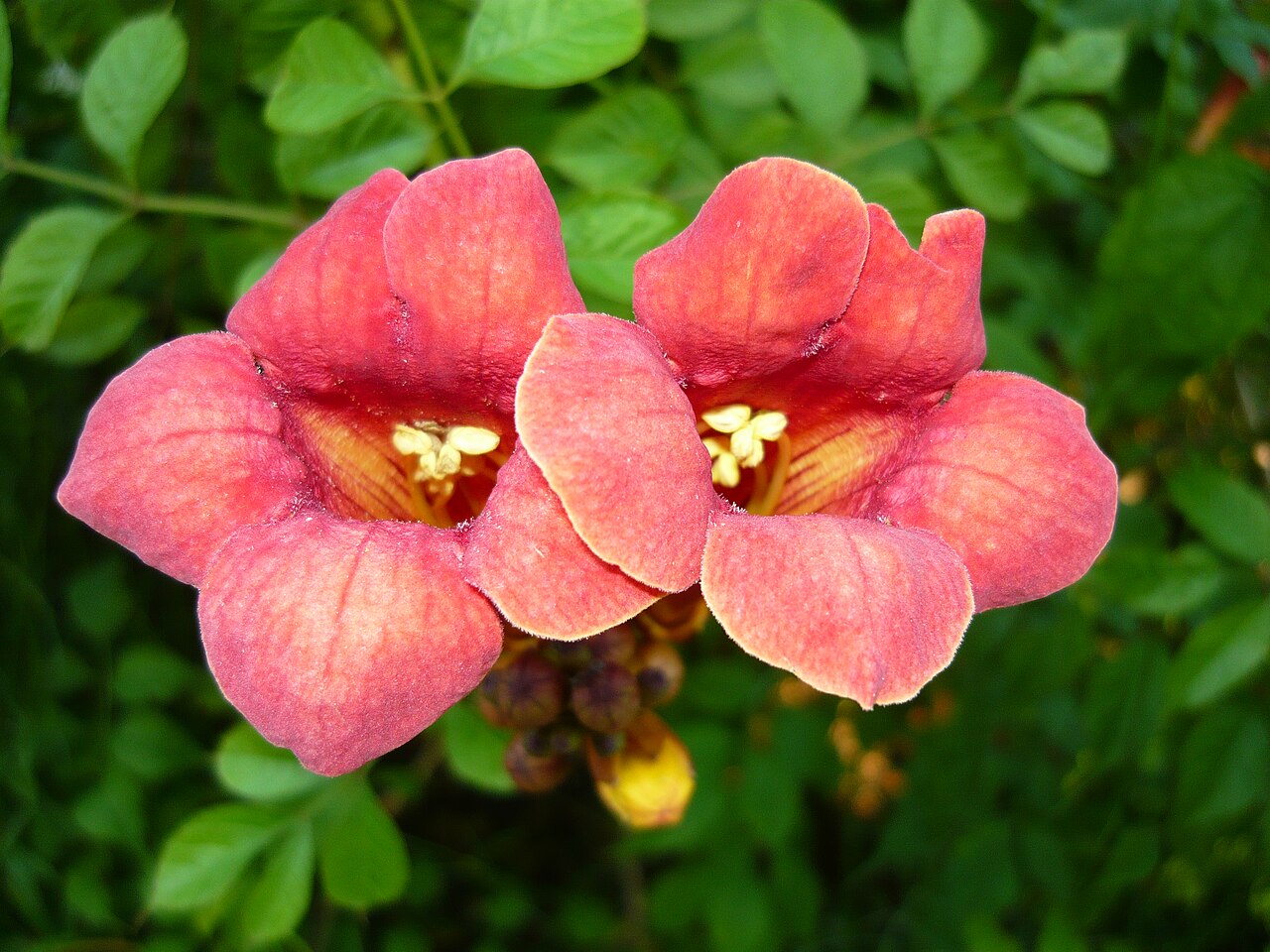
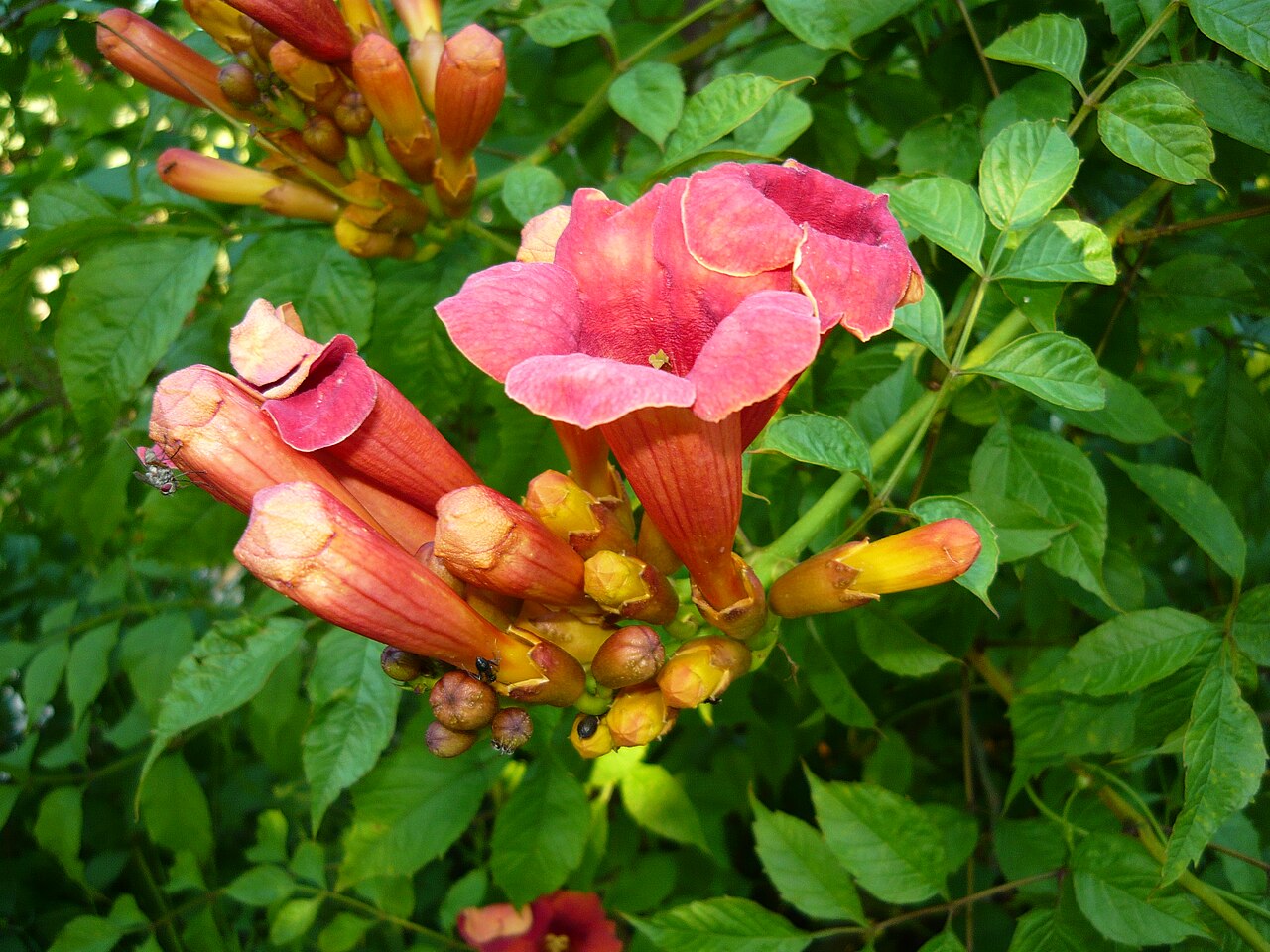
Stromboli is the trumpet vine for gardeners who want the deepest red: rich, saturated red trumpets in big clusters from summer into fall, on the same hybrid vine as Madame Galen — vigorous, hummingbird-magnetic, and freer-blooming than the species, but with a red so deep it looks almost velvet in bright sun. It is the trumpet vine to plant where you want a red exclamation point — over a dark arbor, against a pale wall, or at the back of a hot, sunny border, where its color carries across the garden.
The trade-off is the same as all trumpet vines: vigor, suckering, and ambition. Stromboli wants a sturdy support, a hard late-winter pruning, and sucker patrol, and it climbs anything it touches — give it a heavy arbor or fence, never a house wall or a tree you care about. Wear gloves when pruning, because trumpet vine sap can irritate sensitive skin, and pull suckers promptly, because a trumpet vine that is allowed to sucker freely becomes a thicket, not a vine.
If you are new to choosing between cultivars, the Varieties Matter guide explains why the name after the plant matters as much as the plant itself. Stromboli is a perfect example: it is not just a trumpet vine in the abstract, it is a trumpet vine with a specific job, a specific history, and specific strengths.
Florida honesty: trumpet vine is a genuine statewide Florida plant, and Stromboli’s deep red holds well in Florida sun, where paler reds can bleach. Give it a sturdy support, prune hard in winter, pull suckers, and never plant it near a foundation or a natural area. Its red flowers are a hummingbird magnet all summer, which is the reward for the pruning — and the reason to plant it where you can watch the hummingbirds, not where you will resent the suckers.
How to grow
Plant in spring in full sun and well-drained soil, against a sturdy, freestanding support — a heavy arbor or fence, never a house wall or a tree you care about. Work worm castings into the planting hole, water through the first season, and prune hard in late winter to keep it in bounds. Pull suckers promptly, and wear gloves and long sleeves when pruning — the sap can irritate sensitive skin.
Set plants 6-10 feet apart on a sturdy support in soil with a pH around 6.0-7.5. Work worm castings into the bed at planting and mulch to hold moisture. A well-fed trumpet vine plant rewards that care directly: steadier growth, better bloom, and a show that actually shows up.
Water & feeding
Water through the first season, then water in drought — established trumpet vine is vigorous and drought-tolerant, but a young vine that dries out stalls. Water at the soil line, mulch lightly, and feed lightly: castings at planting plus a balanced organic feed in spring is enough. Overfeeding makes even more vigorous growth, which is the last thing this vine needs.
Common problems
- Suckering everywhere — pull suckers promptly, and never plant trumpet vine near a foundation, septic system, or lawn you mow.
- Vigorous escape — prune hard in late winter and never let it climb into trees or onto houses.
- Skin irritation from sap — trumpet vine sap can cause a rash in sensitive people; wear gloves and long sleeves when pruning.
- Damage to paint and mortar — aerial rootlets grip permanently; do not plant on house walls.
- Failure to bloom on young vines — trumpet vines bloom once established; be patient, and do not overfeed, which makes leaves at the expense of flowers.
Harvest
Cut a few flowering stems for bouquets in summer, when trumpets are fully open — trumpet vine flowers last a few days in water and suit large, dramatic arrangements, though the vine is best admired on its support. Prune hard in late winter to keep it in bounds, pull suckers promptly, and wear gloves and long sleeves — the sap can irritate sensitive skin. The real harvest is hummingbirds: a trumpet vine in bloom is a feeder that never needs refilling.
Browse all plant & pest guides
Saving seeds
Stromboli is the trumpet vine for gardeners who want the deepest red: rich, saturated red trumpets in big clusters from summer into fall, on the same hybrid vine as Madame Galen — vigorous, hummingbird-magnetic, and freer-blooming than the species, but with a red so deep it looks almost velvet in bright sun. As a named trumpet vine it is kept true by cuttings, not by seed — plant in spring in full sun and well-drained soil, against a sturdy, freestanding support: a heavy arbor or fence, never a house wall or a tree you care about. Work worm castings into the planting hole, water through the first season, and prune hard in late winter to keep it in bounds. Pull suckers promptly, and wear gloves and long sleeves when pruning — the sap can irritate sensitive skin. The trade-off is the same as all trumpet vines: vigor, suckering, and ambition. Stromboli climbs anything it touches, so give it a heavy arbor or fence and sucker patrol, and it will reward you with a red exclamation point over a dark arbor, against a pale wall, or at the back of a hot, sunny border. The full method is in the Saving seeds section of the Trumpet Vine guide.