
🌸 Queeny Purple Hollyhock
What it looks like
Why this variety
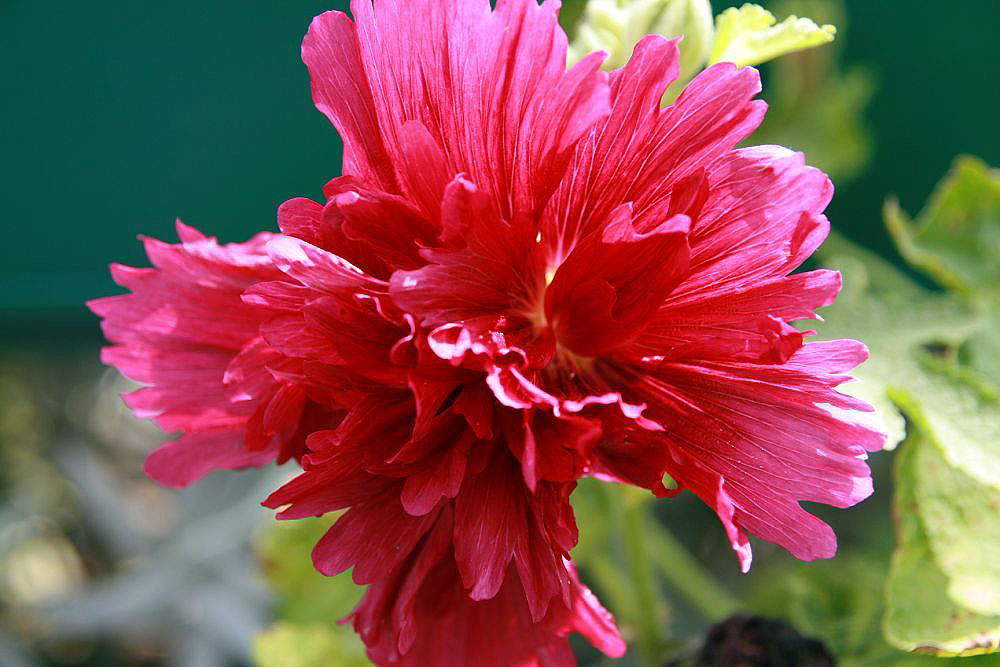
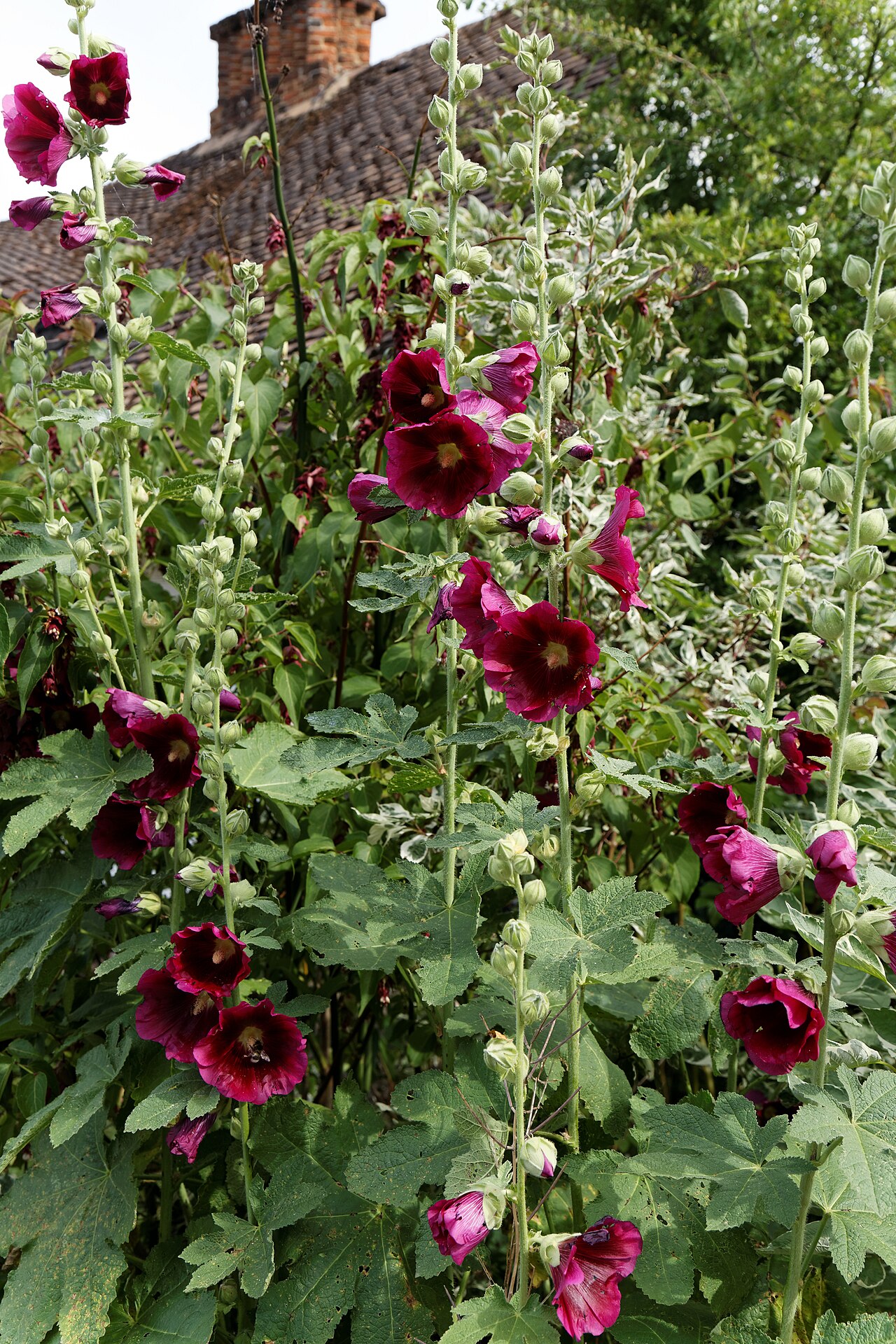
Queeny Purple is the hollyhock for small gardens: double, purple flowers on compact plants, about 3 feet tall — half the height of a classic hollyhock — bred in the Queeny series for pot and small-bed use, and, from an early sowing, often blooming in the first year instead of waiting for the second summer. Purple doubles on a plant you can reach to deadhead, in a pot you can move, without a 8-foot spire swallowing the fence: that is the Queeny bargain, and it is why dwarf hollyhocks now outsell tall ones in small yards.
The trade-off is presence: Queeny Purple will not make the towering spire that Nigra makes, and a single dwarf hollyhock alone in a big bed looks lost. Plant it in groups of three or five, in containers, or at a sunny wall where its compact doubles can be seen up close, give it sun and air, remove rusted leaves promptly in humid weather, and stake only if your site is very windy. Doubles offer bees less than singles, so plant a single nearby for pollinators.
If you are new to choosing between cultivars, the Varieties Matter guide explains why the name after the plant matters as much as the plant itself. Queeny Purple is a perfect example: it is not just a hollyhock in the abstract, it is a hollyhock with a specific job, a specific history, and specific strengths.
Florida honesty: hollyhock is a North and Central Florida trial, not a statewide perennial, and Queeny Purple’s compact size makes it the easiest hollyhock to trial in Florida — a large pot with rich soil on a sunny patio, with air circulation, is a controlled experiment. In North and Central Florida, give it sun, drainage, and rust patrol, and treat it as a cool-season biennial or annual. In South Florida, treat it as a seasonal annual.
How to grow
Sow seed in summer for bloom the second year, or start indoors early for first-year bloom from dwarf types — hollyhock is a biennial by nature, first year a rosette, second year a spire. Set plants in full sun and rich, well-drained soil, work worm castings into the bed at planting, and give them air circulation to fight rust. Stake tall spires in windy sites, and let a few plants self-seed for next year’s spires.
Set plants 12-18 inches apart in soil with a pH around 6.0-7.5. Work worm castings into the bed at planting and mulch to hold moisture. A well-fed hollyhock plant rewards that care directly: steadier growth, better bloom, and a show that actually shows up.
Water & feeding
Keep soil evenly moist but never waterlogged — hollyhocks want steady moisture and good drainage, not swamp and not drought. Water at the soil line, mulch to hold moisture, and feed moderately: castings at planting plus a balanced organic feed in spring. Avoid overhead watering where rust is a problem.
Common problems
- Rust in humid climates — orange pustules on leaves; remove affected leaves promptly, space for air, and avoid overhead watering.
- Biennial patience — hollyhocks bloom in year two (except early-sown dwarfs); sow yearly for continuous spires.
- Flopping tall spires in wind — stake tall forms in windy sites; dwarf forms need less staking.
- Seedling reversion — seedlings of doubles often revert to singles; deadhead for purity or welcome the mix.
- Short life in hot, wet summers — heat plus humidity shortens hollyhock life; in warm zones, treat it as a cool-season biennial.
Harvest
Cut spires for tall bouquets in summer, when flowers are fully open — hollyhock flowers last a few days in water and suit dramatic, cottage-style arrangements, though tall spires need a tall vase and a steady hand. Deadhead lightly for rebloom on dwarfs, let tall types self-seed for next year’s spires, and cut back spent plants in fall.
Browse all plant & pest guides
Saving seeds
Queeny Purple is the hollyhock for small gardens: double, purple flowers on compact plants, about 3 feet tall — half the height of a classic hollyhock — bred in the Queeny series for pot and small-bed use, and, from an early sowing, often blooming in the first year instead of waiting for the second summer. Purple doubles on a plant you can reach to deadhead, in a pot you can move, without a 8-foot spire swallowing the fence: that is the Queeny bargain. As a double hollyhock it is kept true by division, not by seed — saved seed reverts to single flowers, the nora-barlow pattern. Sow seed in summer for bloom the second year, or start indoors early for first-year bloom from dwarf types, and let a few plants self-seed for next year’s spires. The full method is in the Saving seeds section of the Hollyhock guide.