
🌸 Hollyhock
What it looks like
How to grow
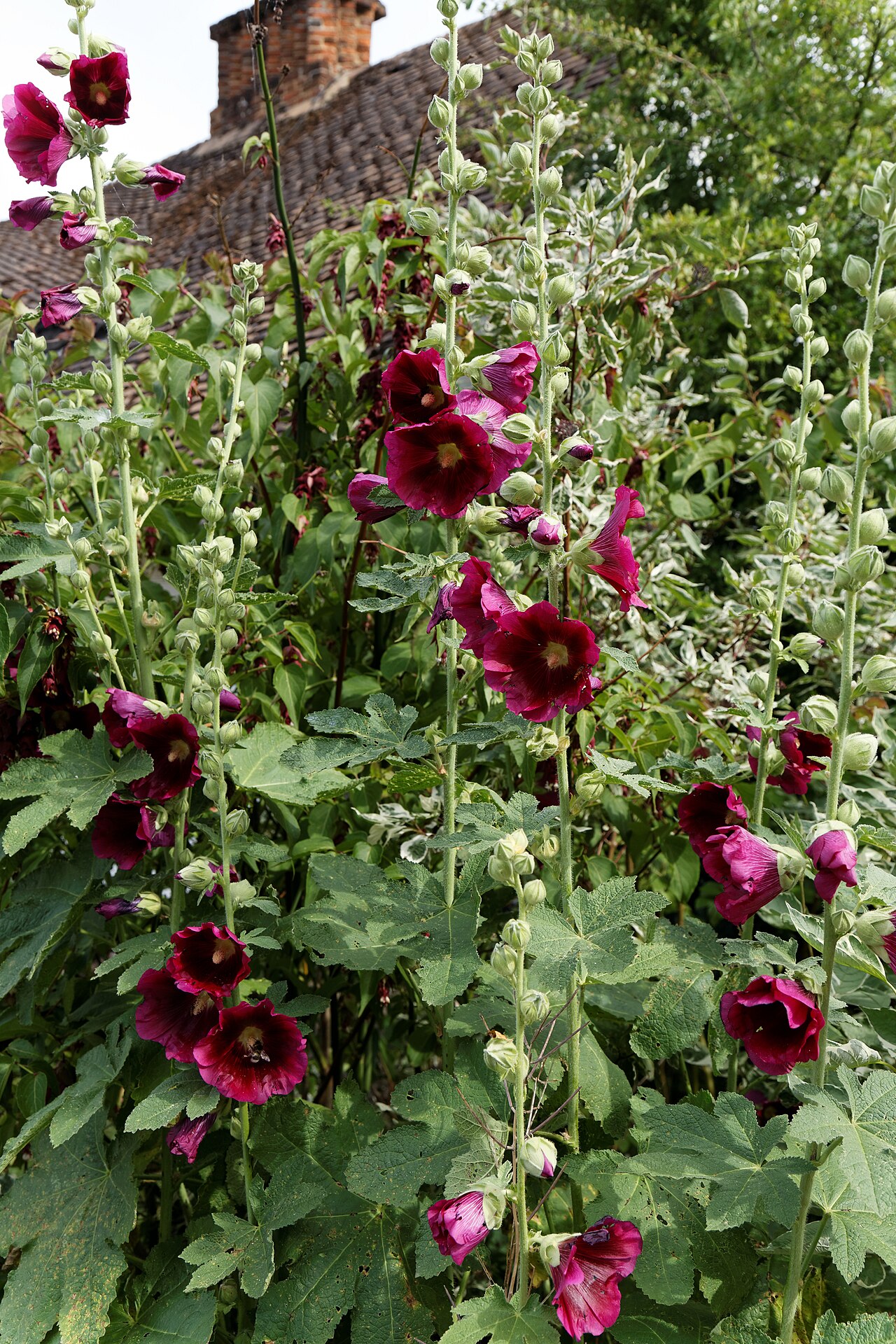
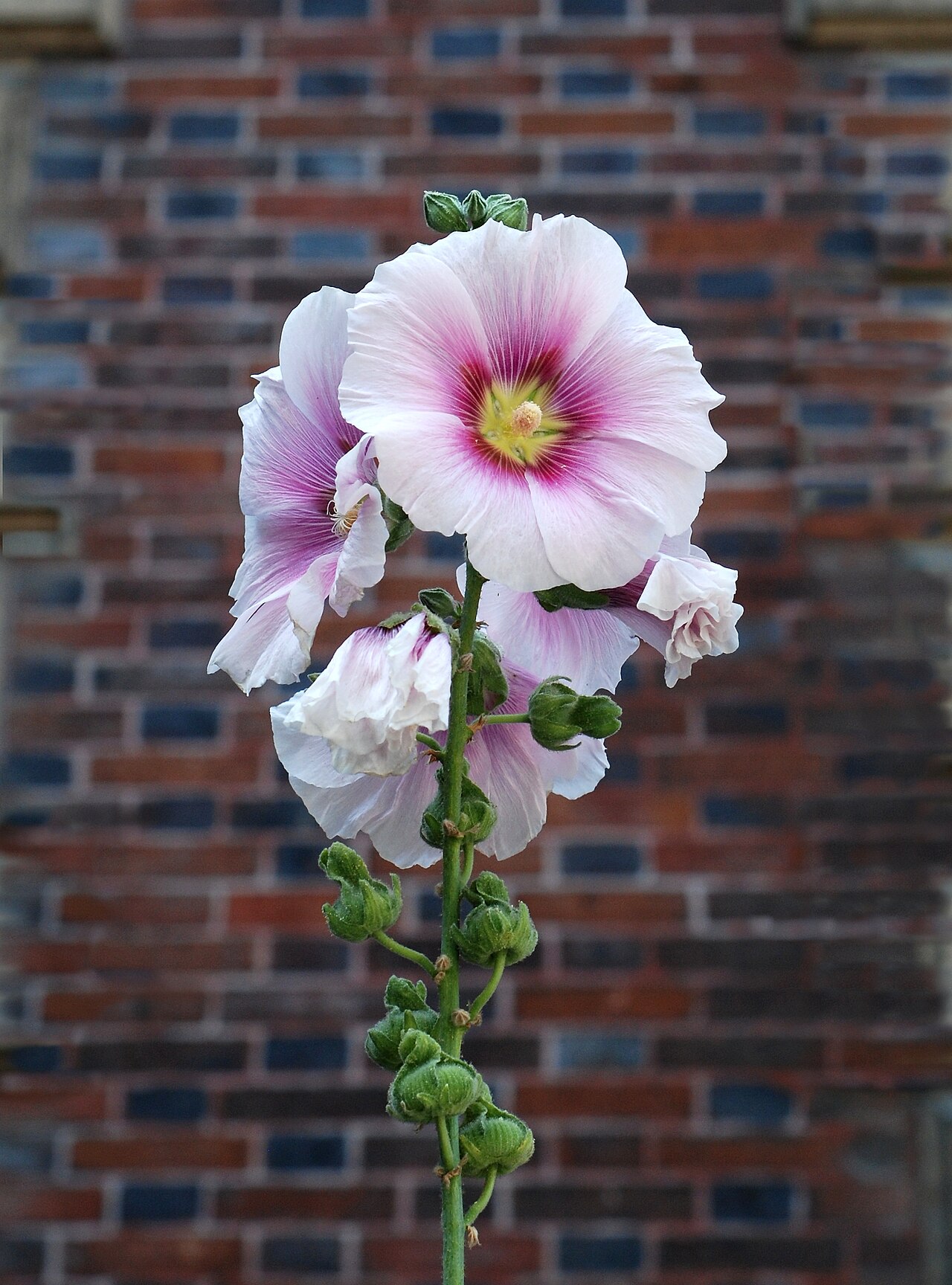
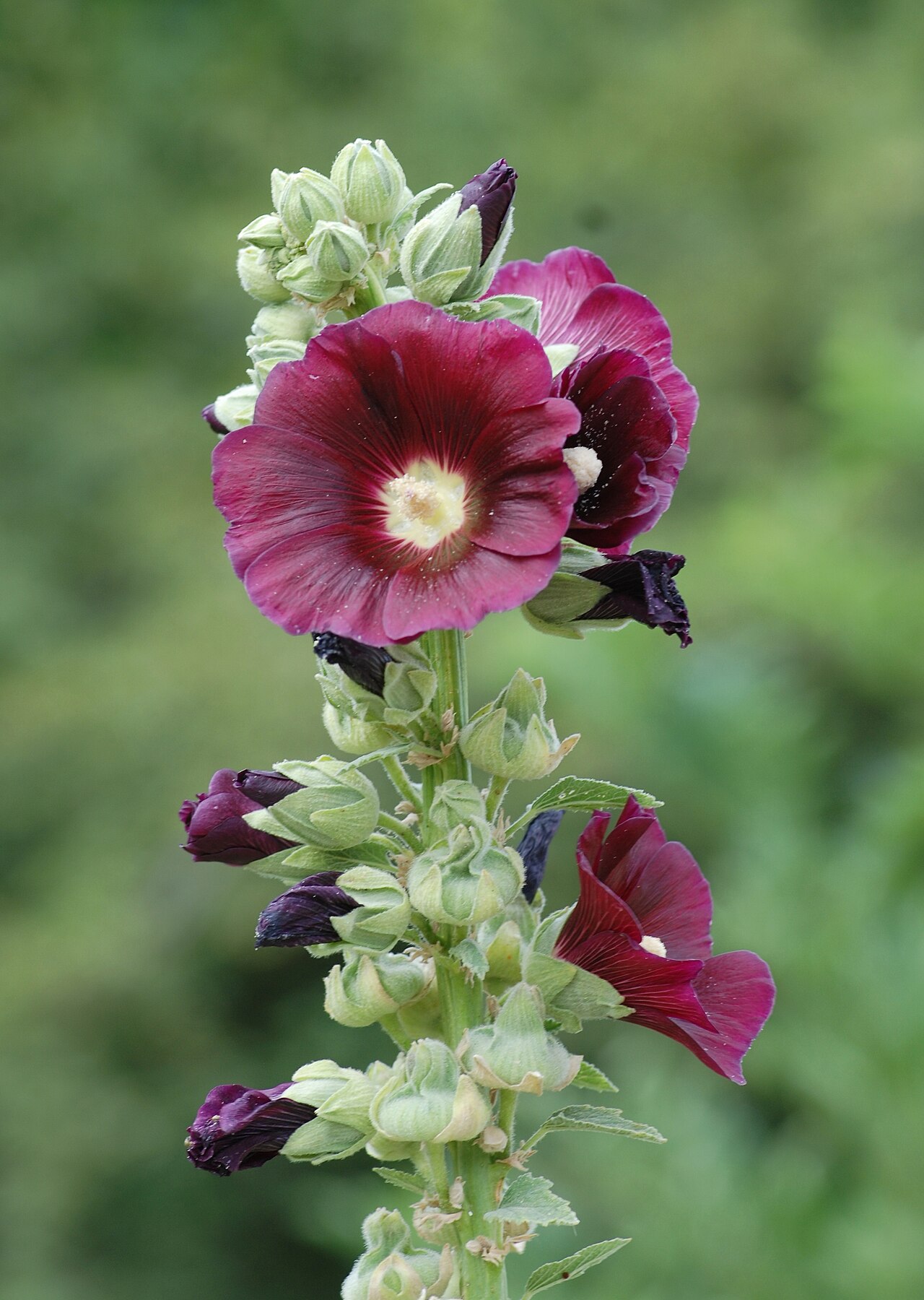
Hollyhock is the classic cottage-garden biennial: first year a rosette of large leaves, second year a towering spike 5–8 feet tall covered in single or double flowers in pink, red, white, yellow, purple, or near-black, blooming from early to mid-summer. Plant seed in summer or fall for bloom the following year, or buy nursery plants, spacing 12–24 inches apart in full sun and rich, well-drained soil — hollyhocks want sun and air flow, and they do best against a wall or fence that shelters them from wind and gives them something to lean on. Once established, hollyhocks self-seed freely, so a planting often becomes perennial in effect, with new plants replacing old ones each year. Stake tall spikes in windy gardens.
Water & feeding
Water regularly, especially in the first year and in dry spells; hollyhocks like even moisture and rich soil. Feed with compost in spring. Mulch to hold moisture.
Common problems
- Rust — the classic hollyhock disease, orange spots on leaves; give air flow, water at soil level, remove affected leaves, choose resistant varieties.
- Flopping in wind — stake, or site against a wall or fence.
- Short life — biennial by nature; let it self-seed for continuity.
- Japanese beetles — hand-pick or tolerate; plants usually outgrow damage.
Notes
Cut spent spikes back after bloom to encourage a second, smaller flush, or leave some to set seed for next year’s plants. Remove rusted leaves promptly and do not compost them. Hollyhocks pair with roses, foxgloves, and delphiniums in the cottage border — the tall, old-fashioned trio.
Browse all plant & pest guides
Saving seeds
Hollyhocks are biennials with a gardener’s sense of humour: year one they sit there as a low rosette, looking like nothing much, and year two they throw up a six-foot flower spike and then die, leaving their seeds as their entire estate plan. Saving those seeds is easy, generous, and slightly chaotic, which suits the plant. Each faded flower leaves behind a round, papery pod — botanists call it a schizocarp, which sounds like a dinosaur and behaves like a coin purse — packed with flat, dark, kidney-shaped seeds. One spike gives you dozens of plants for free, which is why cottage gardeners have been passing hollyhock seed over fences for centuries.
Wait until the pods are fully brown, papery, and dry on the stalk, usually in late summer into early fall, and give one a shake: if it rattles, it is ready. Green or soft pods mean unripe seed that will not germinate well, so leave those alone. Cut the dry pods into a paper bag on a dry day — a bag catches the seeds that are already escaping — and finish drying them indoors for a week or two in a warm, airy spot away from direct sun. Then crush the pods gently over a tray, pick out the papery chaff, and keep the dark, plump seeds. Do not save seed from plants showing hollyhock rust, those orange pustules on the leaves and stems: rust travels with the garden, and while seed itself is not the main route of infection, saving only from clean, vigorous plants is the kind of quiet discipline that keeps a hollyhock patch healthy for years.
Storage is where Florida gardeners earn their keep. Dry the seed thoroughly — really thoroughly, until it snaps rather than bends in your imagination, and a test pinch feels crisp — then store in an airtight jar with a desiccant packet, or a paper envelope inside a sealed jar, kept cool and dark. Florida humidity will creep into a merely closed envelope and turn a good batch musty, so the jar-and-desiccant combination is not fussy, it is necessary. Kept cool and dry, hollyhock seed generally stays viable for about two to three years, with some sources stretching that to five under ideal conditions; germination fades gradually rather than falling off a cliff, so test an older batch by sprouting ten seeds on a damp paper towel before you bet a whole border on it.
Will saved seed grow true? It depends on what you grew, and honesty here saves disappointment. Open-pollinated hollyhocks grown on their own generally come back looking much like their parents, because bees do the pollinating and a lone colour in a garden mostly breeds with itself. But grow several colours together — which is exactly what a cottage border does — and bees will happily cross them, so seed from a pink spike may give you pinks, reds, whites, and surprises, and seed from a named double or a hybrid will not reliably repeat the parent at all. If you want one colour kept pure, grow one variety, save from several plants rather than a single spike, and accept a little variation as the price of a free plant. Or lean into it: a self-sown hollyhock patch that reshuffles its colours every generation is not a failure of seed saving, it is seed saving doing what it has always done, which is to keep the garden interesting without asking permission.
Varieties
Every named variety of Hollyhock with its own growing guide:
- Nigra Hollyhock — The black hollyhock: near-black, single flowers on towering spires, the hollyhock that looks like velvet in the sun.
- Peaches ‘n’ Dreams Hollyhock — The peach double: fully double, peach-and-apricot ruffles on 6-foot spires, the hollyhock for cottage borders.
- Queeny Purple Hollyhock — The dwarf purple: double purple flowers on compact 3-foot plants, the hollyhock for small gardens and pots.