
🌸 Nigra Hollyhock
What it looks like
Why this variety
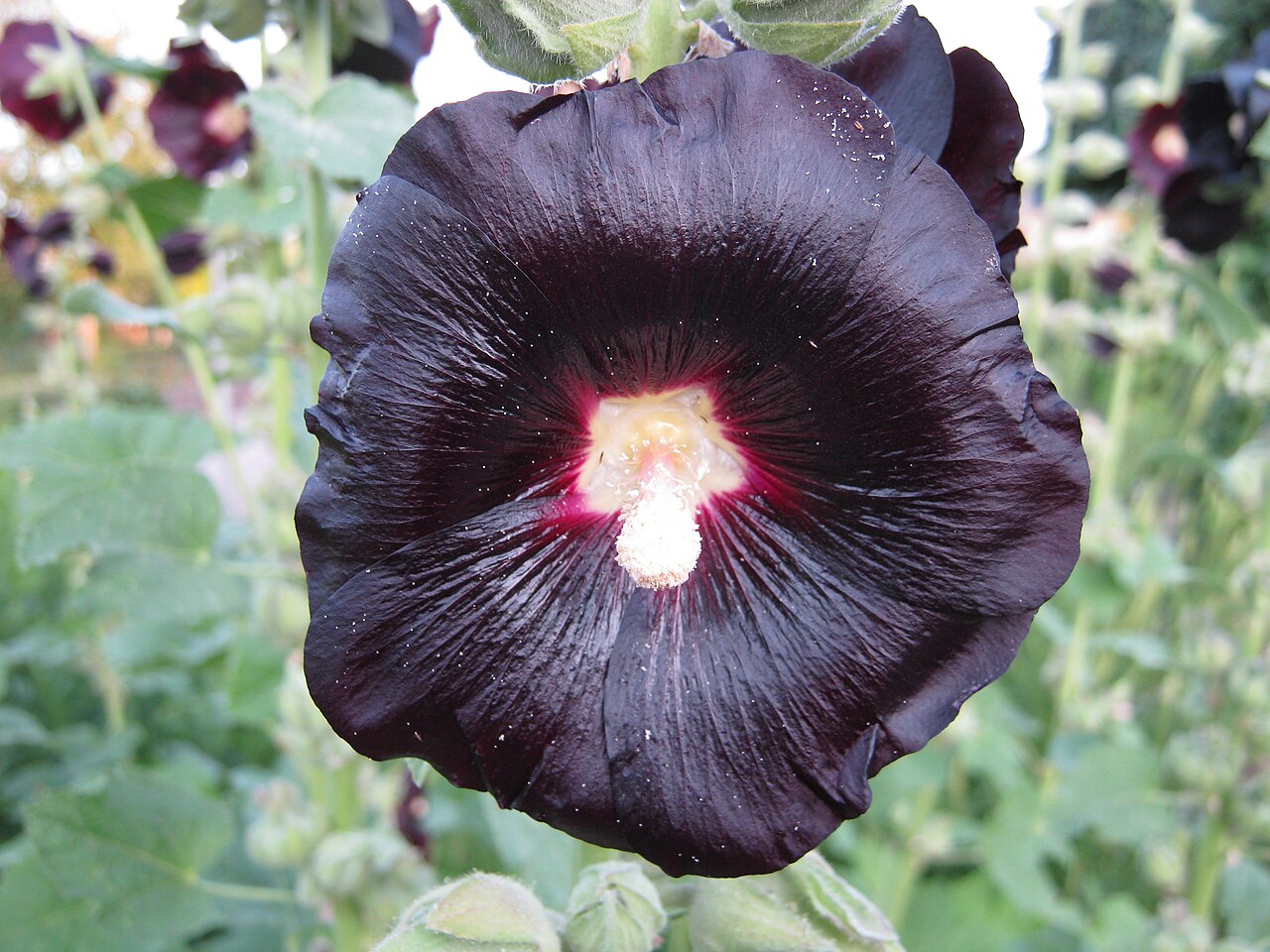
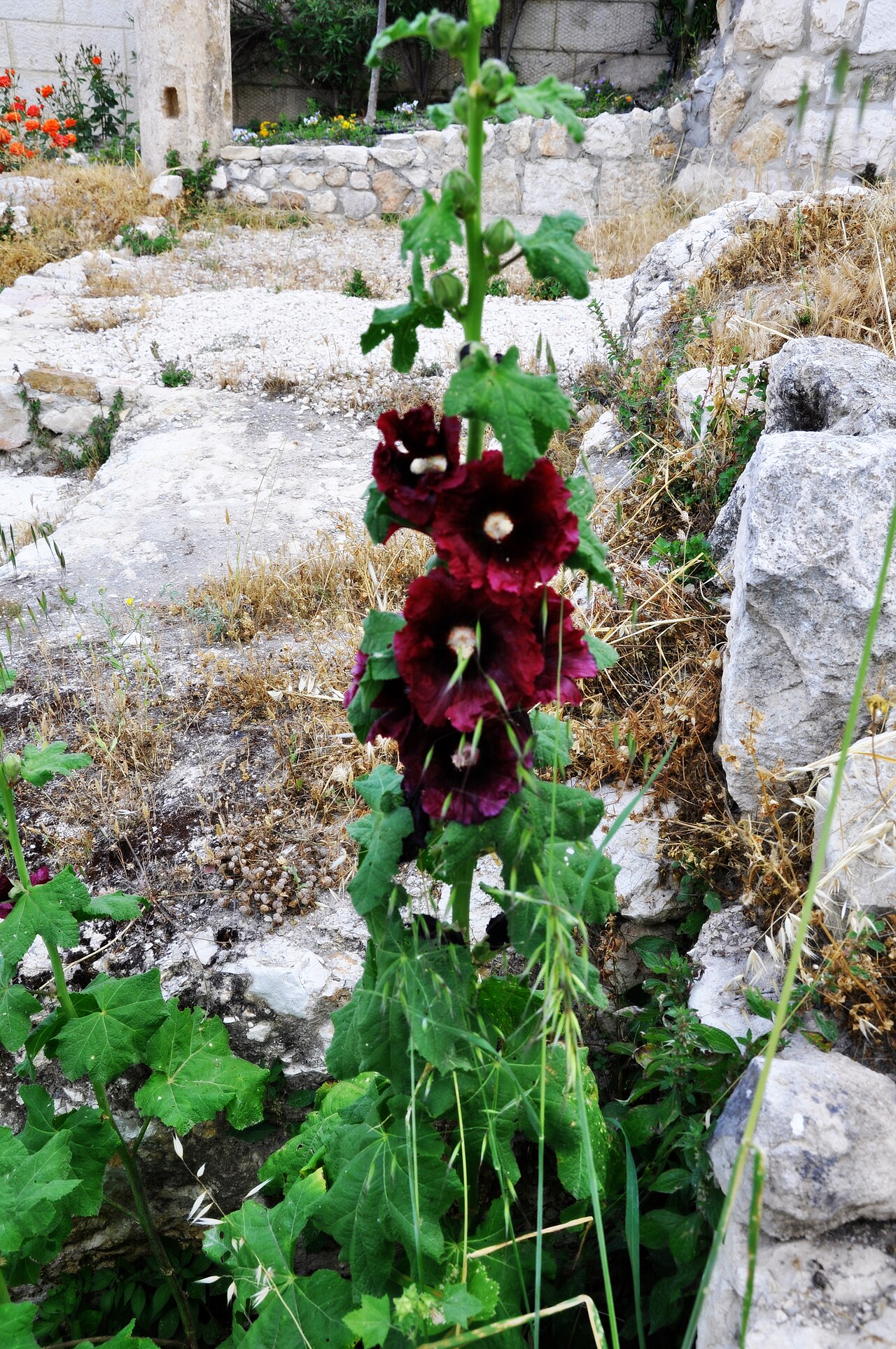
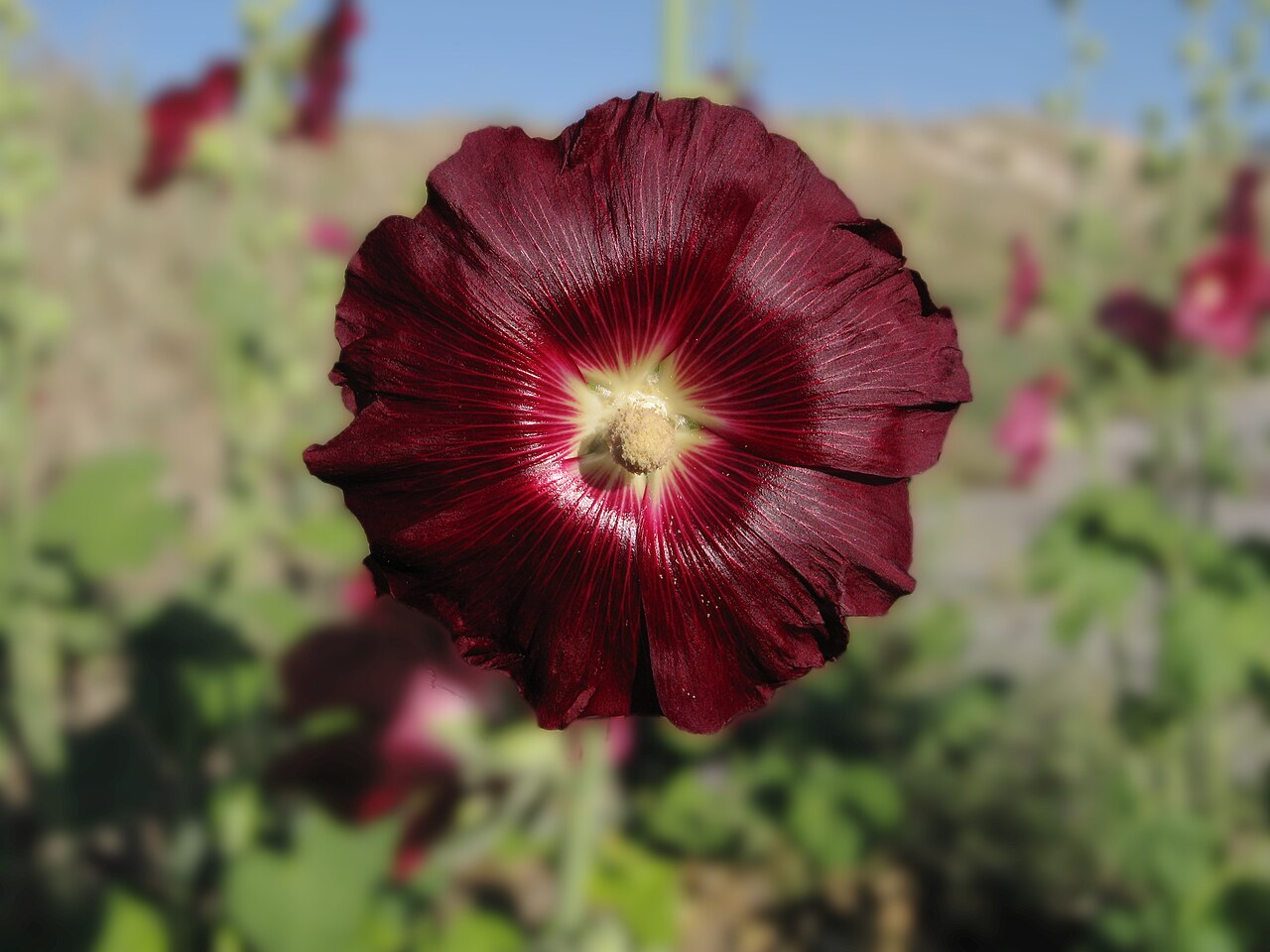
Nigra is the hollyhock for gardeners who want drama without double ruffles: tall, 5- to 8-foot spires of single, near-black flowers — so dark purple they read as black — with a contrasting pale center, blooming in the second summer on a biennial plant. Black flowers are rare in the garden, and Nigra’s velvety, near-black petals against a sunny fence or pale wall are a showstopper: bees love the open singles, photographers love the contrast, and neighbors ask what it is. It is the hollyhock that looks expensive while costing seed-packet money.
The trade-off is rust and biennial patience: hollyhocks are biennials — first year a rosette, second year a spire — and they suffer rust in humid climates, with orange pustules on leaves that weaken the plant. Give Nigra full sun, air circulation, rich well-drained soil, and room, remove rusted leaves promptly, and let it self-seed for next year’s spires. Stake tall spires in windy sites, and do not plant it in shade or wet soil and expect a tower.
If you are new to choosing between cultivars, the Varieties Matter guide explains why the name after the plant matters as much as the plant itself. Nigra is a perfect example: it is not just a hollyhock in the abstract, it is a hollyhock with a specific job, a specific history, and specific strengths.
Florida honesty: hollyhock is a North and Central Florida trial, not a statewide perennial — Florida humidity supercharges rust, and South Florida heat shortens its life. In North and Central Florida, plant Nigra in full sun with air circulation, in rich well-drained soil, remove rusted leaves at the first orange spot, and treat it as a cool-season biennial that self-seeds. In South Florida, treat it as a seasonal annual and do not mourn it in summer.
How to grow
Sow seed in summer for bloom the second year, or start indoors early for first-year bloom from dwarf types — hollyhock is a biennial by nature, first year a rosette, second year a spire. Set plants in full sun and rich, well-drained soil, work worm castings into the bed at planting, and give them air circulation to fight rust. Stake tall spires in windy sites, and let a few plants self-seed for next year’s spires.
Set plants 12-24 inches apart in soil with a pH around 6.0-7.5. Work worm castings into the bed at planting and mulch to hold moisture. A well-fed hollyhock plant rewards that care directly: steadier growth, better bloom, and a show that actually shows up.
Water & feeding
Keep soil evenly moist but never waterlogged — hollyhocks want steady moisture and good drainage, not swamp and not drought. Water at the soil line, mulch to hold moisture, and feed moderately: castings at planting plus a balanced organic feed in spring. Avoid overhead watering where rust is a problem.
Common problems
- Rust in humid climates — orange pustules on leaves; remove affected leaves promptly, space for air, and avoid overhead watering.
- Biennial patience — hollyhocks bloom in year two (except early-sown dwarfs); sow yearly for continuous spires.
- Flopping tall spires in wind — stake tall forms in windy sites; dwarf forms need less staking.
- Seedling reversion — seedlings of doubles often revert to singles; deadhead for purity or welcome the mix.
- Short life in hot, wet summers — heat plus humidity shortens hollyhock life; in warm zones, treat it as a cool-season biennial.
Harvest
Cut spires for tall bouquets in summer, when flowers are fully open — hollyhock flowers last a few days in water and suit dramatic, cottage-style arrangements, though tall spires need a tall vase and a steady hand. Deadhead lightly for rebloom on dwarfs, let tall types self-seed for next year’s spires, and cut back spent plants in fall.
Browse all plant & pest guides
Saving seeds
Nigra is the hollyhock for gardeners who want drama without double ruffles: tall, 5- to 8-foot spires of single, near-black flowers — so dark purple they read as black — with a contrasting pale center, blooming in the second summer on a biennial plant. Black flowers are rare in the garden, and Nigra’s velvety, near-black petals against a sunny fence or pale wall are a showstopper. As an open-pollinated strain it comes true from seed: sow seed in summer for bloom the second year — hollyhock is a biennial by nature, first year a rosette, second year a spire — and let a few plants self-seed for next year’s spires. The full method is in the Saving seeds section of the Hollyhock guide.