
🌿 Frizelliae Lady Fern
What it looks like
Why this variety
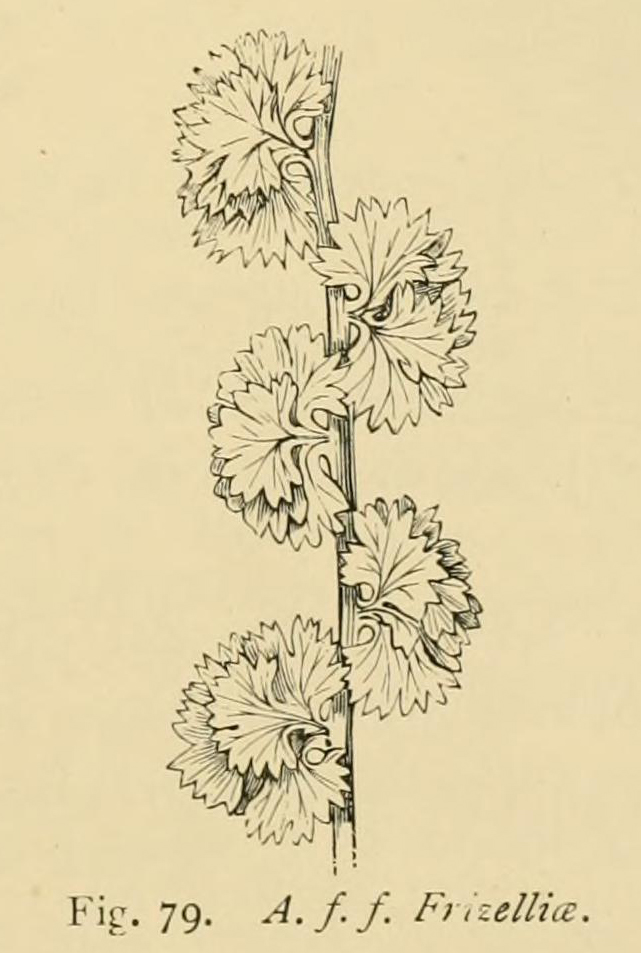
Frizelliae is the lady fern that makes fern people stop and squint: instead of the usual lacy, feathery leaflets, its narrow fronds carry small, rounded, ball-like pinnae packed along the midrib, so each frond looks like a string of green beads. That beaded look is what gave it its common name, the tatting fern — tatting is a kind of hand-made lace, and these fronds look like lace someone made out of pearls. It is a dwarf, too, reaching only about 9 to 12 inches tall and 12 to 18 inches wide, which makes it the lady fern for trough gardens, rock gardens, shaded border fronts, and the edge of a woodland path where a full-size lady fern would crowd its neighbors.
The story is Victorian, and it shows. Frizelliae was found in 1857 by a Mrs. Frizell growing between boulders along the Avonmore River in County Wicklow, Ireland, and was later presented to the Trinity College Botanic Garden — found, in other words, at the exact moment when both ferns and tatting were all the rage. It has carried the Royal Horticultural Society’s Award of Garden Merit ever since gardeners started keeping score, and it is still sold by major nurseries today, which is how a fern from 1857 stays in the trade: it is genuinely unlike anything else in the shade garden.
One honest quirk, stated up front because it matters to buyers: Frizelliae can be unstable, and its fronds may normalise with age, losing some of the beaded-necklace look and growing more like an ordinary lady fern. That is not a defect in your plant or your care — it is a known trait of this cultivar. Buy from a reputable source, give it deep shade and soil that never dries out, and enjoy the beading at its best in spring and early summer, when new fronds unfurl at their most intricate.
If you are new to choosing between cultivars, the Varieties Matter guide explains why the name after the plant matters as much as the plant itself. Frizelliae is a perfect example: it is not just a lady fern in the abstract, it is a lady fern with a specific job, a specific history, and a specific look that no other lady fern gives you.
Florida honesty, stated plainly: lady fern is a North Florida shade trial, not a statewide promise. Frizelliae is hardy in zones 4-8, and Florida heat is not its home weather. In North Florida, plant it in deep shade with afternoon protection, in soil that stays damp, and water through dry spells — and expect its best beading in the cool months, with summer heat testing it. South of the Panhandle, expect decline, and plant a native southern wood fern for the same lacy effect instead.
How to grow
Plant in spring or fall in rich, moist soil in part to full shade — Frizelliae is a woodland fern that wants leaf-mold soil, consistent moisture, and protection from hot sun and drying wind, and it thrives in deep shade where many plants sulk. Work worm castings and compost into the bed at planting, mulch deeply, and site it where the soil stays damp: along a shaded stream edge, in a woodland bed, in a trough, or in a container in shade. Cut old fronds back in late winter before new growth unfurls, and divide congested clumps every 2 to 3 years in spring.
Set plants 12-18 inches apart in soil with a pH around 5.5-7.0. Work worm castings into the bed at planting and mulch to hold moisture. A well-fed Frizelliae rewards that care directly: steadier growth, tighter beading, and a dwarf mound that actually shows up at the front of the border instead of vanishing into it.
Water & feeding
Keep soil consistently moist — Frizelliae scorches and crisps at the edges in dry soil and hot sun, and its tiny beaded pinnae show damage plainly. Water at the soil line, mulch deeply, and feed lightly: castings and compost at planting plus a spring top-dress. In a dry spell, water is the care program; a lady fern that dries out does not bounce back that season, and a dwarf like Frizelliae has less plant to spare.
Common problems
- Scorch in sun or drought — browned, crisped fronds; the fix is shade, moisture, and mulch, applied before damage.
- Slugs and snails on fronds in wet weather — pick at dusk and keep mulch pulled back slightly from crowns.
- Crown rot in waterlogged soil — Frizelliae wants moist soil, not standing water; improve drainage and do not plant where rain ponds.
- Fronds normalising with age — the beaded look may soften over time; this is a known trait of the cultivar, not a care failure. Buy from a reputable source and enjoy the spring beading at its best.
- Short life in hot climates — heat shortens lady fern life; in warm zones, treat it as a shade trial with soil that never dries out.
Harvest
There is no flower harvest — lady ferns never flower, and their show is fronds. Cut a few fronds for foliage arrangements in spring and summer, when fronds are fully unfurled — Frizelliae’s beaded fronds are the conversation piece in a small woodland-style arrangement. Do not cut heavily: the plant needs its fronds to feed next year’s crown, and a dwarf has fewer to spare. Cut old fronds back in late winter before new growth, divide congested clumps every 2 to 3 years in spring, and leave fronds standing over winter where they shelter.
Browse all plant & pest guides
Saving seeds
Frizelliae is a dwarf lady fern with beaded, tatting-like fronds, and ferns don’t make seed at all — divide congested clumps every 2 to 3 years in spring. The Propagation section of the Lady Fern guide covers propagation for the species generally.