
🌳 Frisia Black Locust
What it looks like
Why this variety
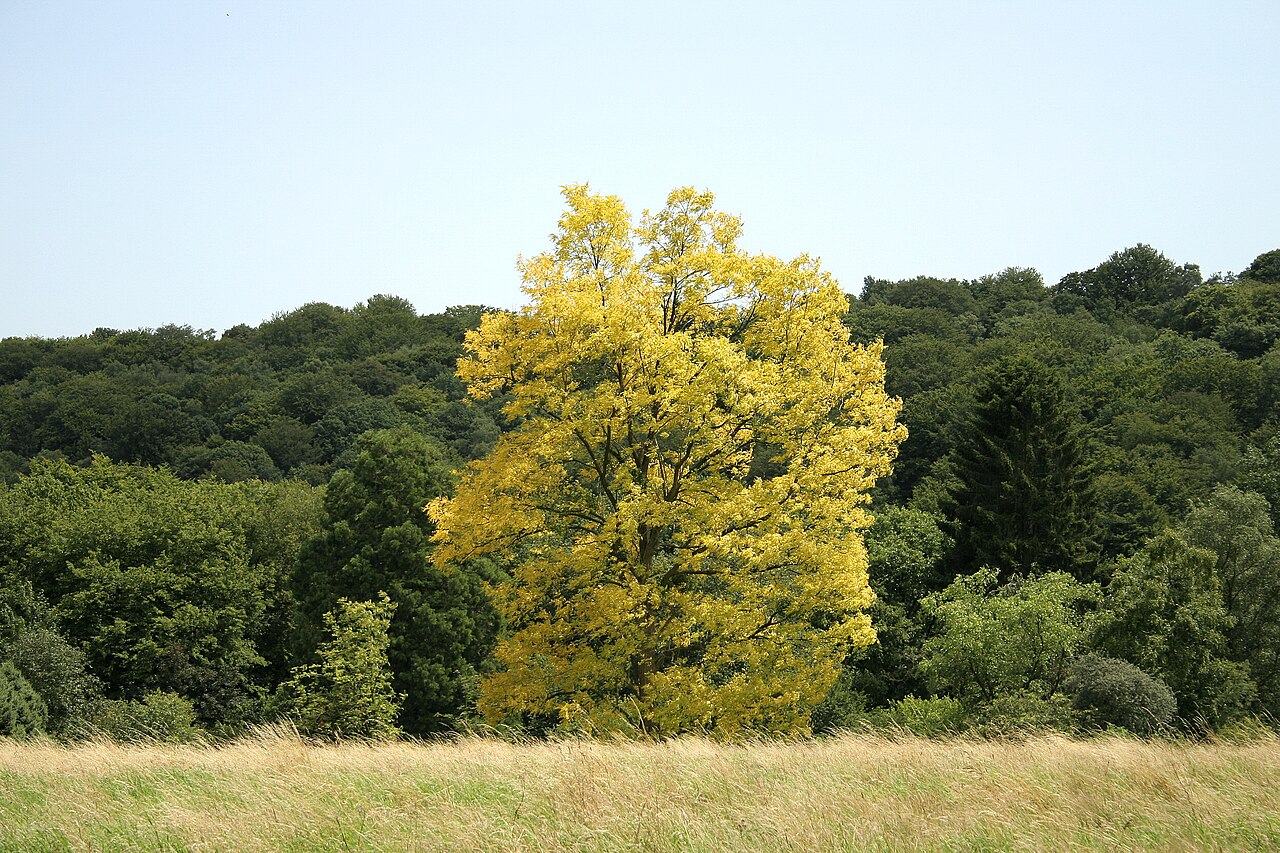
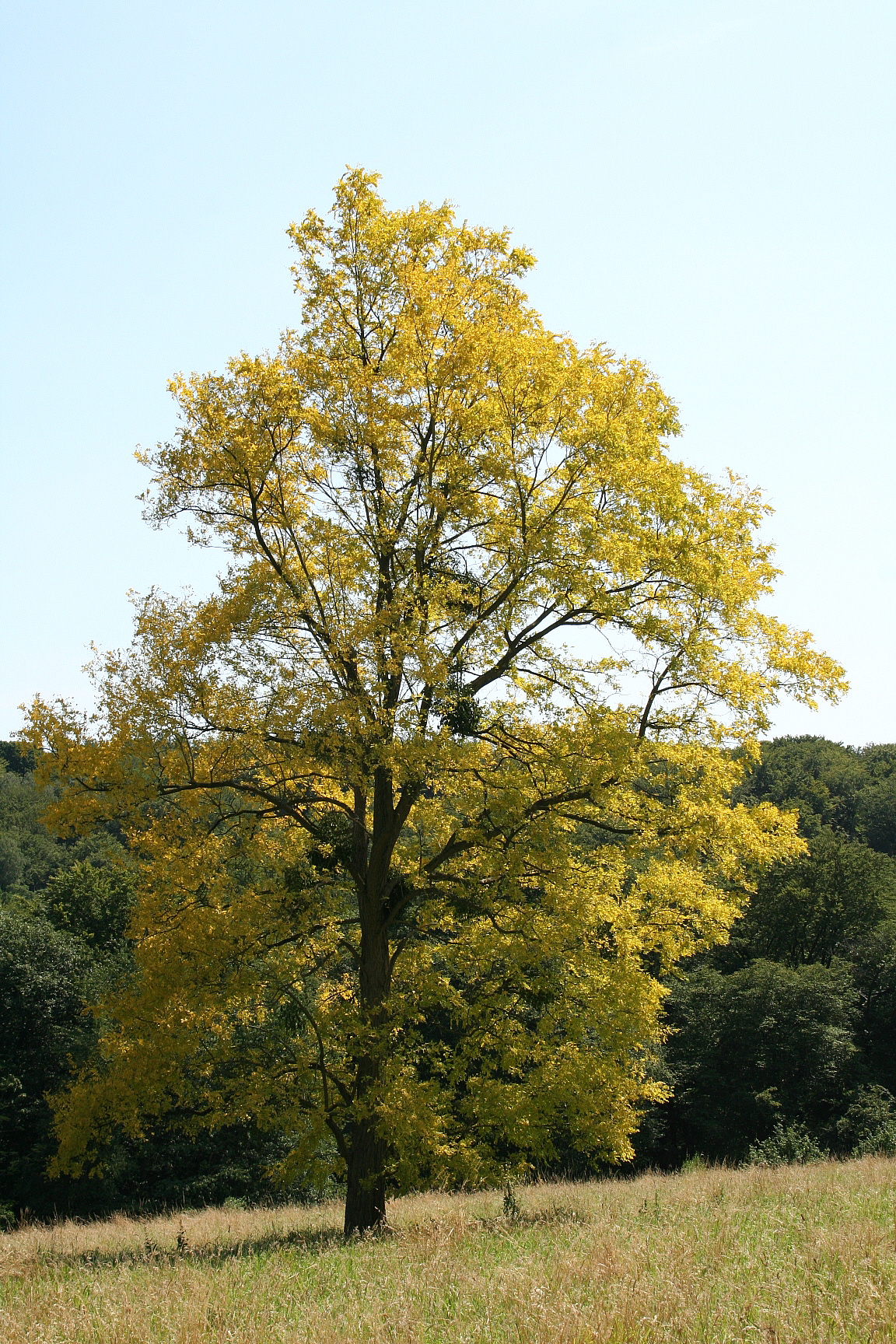
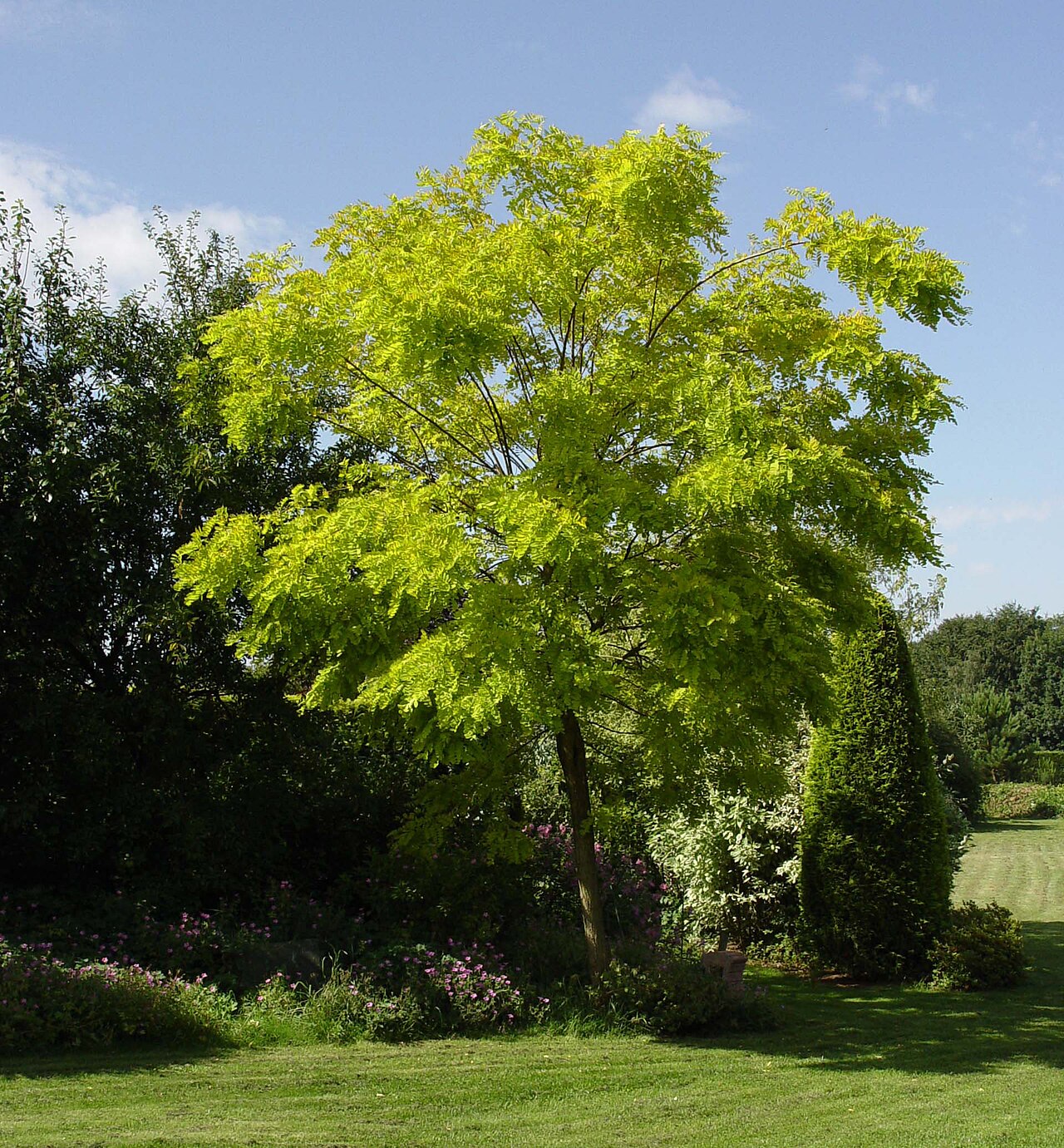
Frisia is the black locust for gardeners who want a golden tree without planting a fussy one: a selection with brilliant yellow-green leaves all summer — no green center, no fading, just gold — on a fast-growing, drought-tolerant, nitrogen-fixing tree that grows four to six feet a year and thrives in poor, even alkaline soil where other trees struggle. Its white, fragrant flower clusters in late spring are a bonus, and its golden foliage lights up a landscape the way a yellow house lights up a street: from a distance, unmistakable, and in a garden of green, the one tree your eye finds first. Frisia is one of the most planted black locust cultivars in the world, and its gold is the reason.
The trade-off is everything that comes with black locust, and this guide will not soften it: thorns, suckers, brittle wood, and invasiveness outside its native range. Frisia suckers from its roots, its branches are thorny and brittle in storms, and black locust is listed as invasive in several states and prohibited in others — plant it only inside its native Appalachian and Ozark range, check your state list first, and never plant it near a natural area it can colonize. Inside its range, give it full sun, well-drained soil, and room — twenty to thirty-five feet — and it will be a fast, golden, fragrant tree for decades.
If you are new to choosing between cultivars, the Varieties Matter guide explains why the name after the plant matters as much as the plant itself. Frisia is a perfect example: it is not just a black locust in the abstract, it is a black locust with a specific job, a specific history, and specific strengths.
Florida honesty: black locust is not a Florida tree, and Frisia does not change that — its range is zones 3-8, it wants cold winters, and Florida’s heat and humidity are outside its comfort zone, with disease and stress shortening its life. North Florida gardeners in the coldest microclimates can trial it, but this guide’s recommendation for Florida is to admire Frisia’s gold in photographs and plant a Florida-native golden tree instead. And wherever you plant it, the invasiveness warning stands: outside its native range, black locust is a problem tree, not a garden tree.
How to grow
Plant only inside its native Appalachian and Ozark range, after checking your state list — black locust is listed as invasive in several states and prohibited in others. Inside its range, plant in full sun and well-drained, even poor soil, give it 20-35 feet of room, and water to establish; after that, it tolerates drought and poor soil with ease. Prune in late winter, wear gloves and eye protection for the thorns, and manage suckers promptly.
Set plants 20-35 feet apart in soil with a pH around 4.6-8.2. Work worm castings into the bed at planting and mulch to hold moisture. A well-fed black locust plant rewards that care directly: steadier growth, better bloom, and a show that actually shows up.
Water & feeding
Water to establish, then water sparingly — black locust is drought-tolerant once established and thrives in poor soil, so overwatering is the mistake to avoid. Water at the soil line, do not mulch heavily against the trunk, and feed almost never: black locust fixes its own nitrogen, and fertilizer makes soft, brittle growth. In a drought, occasional deep watering keeps it vigorous; in a wet site, do not plant it at all.
Common problems
- INVASIVENESS — black locust spreads by seed and root suckers outside its native range and is prohibited in some states; plant only inside its range, after checking your state list.
- Thorns — branches are thorny; wear gloves and eye protection when pruning, and do not plant beside walks or play areas.
- Brittle wood in storms — locust branches snap in wind and ice; plant away from houses, walks, and power lines.
- Suckering colonies — roots send up suckers; mow or cut promptly, and never plant near a natural area it can colonize.
- Locust borer on stressed trees — drought and wounding invite borers; water to establish, do not wound bark, and remove affected wood.
Harvest
There is no food harvest — black locust flowers are fragrant and edible in small, traditional uses, but the bark, leaves, and seeds are toxic, so this guide does not recommend eating any part of it. The seasonal work is management: prune in late winter, remove suckers promptly, and cut storm-broken wood. Leave the tree standing for shade, fragrance, and nitrogen fixation, and never compost diseased wood where it can spread.
Browse all plant & pest guides
Saving seeds
Frisia is a golden black locust cultivar, and named cultivars are planted as grafted or nursery-grown trees — seedlings won’t hold the brilliant yellow-green leaves. The Saving seeds section of the Black Locust guide covers seed for the species generally.