
Dairy Goats for the Backyard Homestead
Of all the animals a homesteader can invite into their life, the dairy goat has the best publicist: herself. She is charming, she is theatrical, she produces milk from weeds and sunshine with a comedian’s timing, and she will look you dead in the eye over the fence she is currently defeating. Dairy goats are genuinely wonderful homestead animals — productive, personable, scaled for a backyard in a way a cow simply is not — and this guide will sell you on them exactly as hard as it warns you about them, because both are the truth. Florida adds chapters to both sides of that ledger: our forage grows nearly all year, and so do our parasites. Let’s meet the herd.
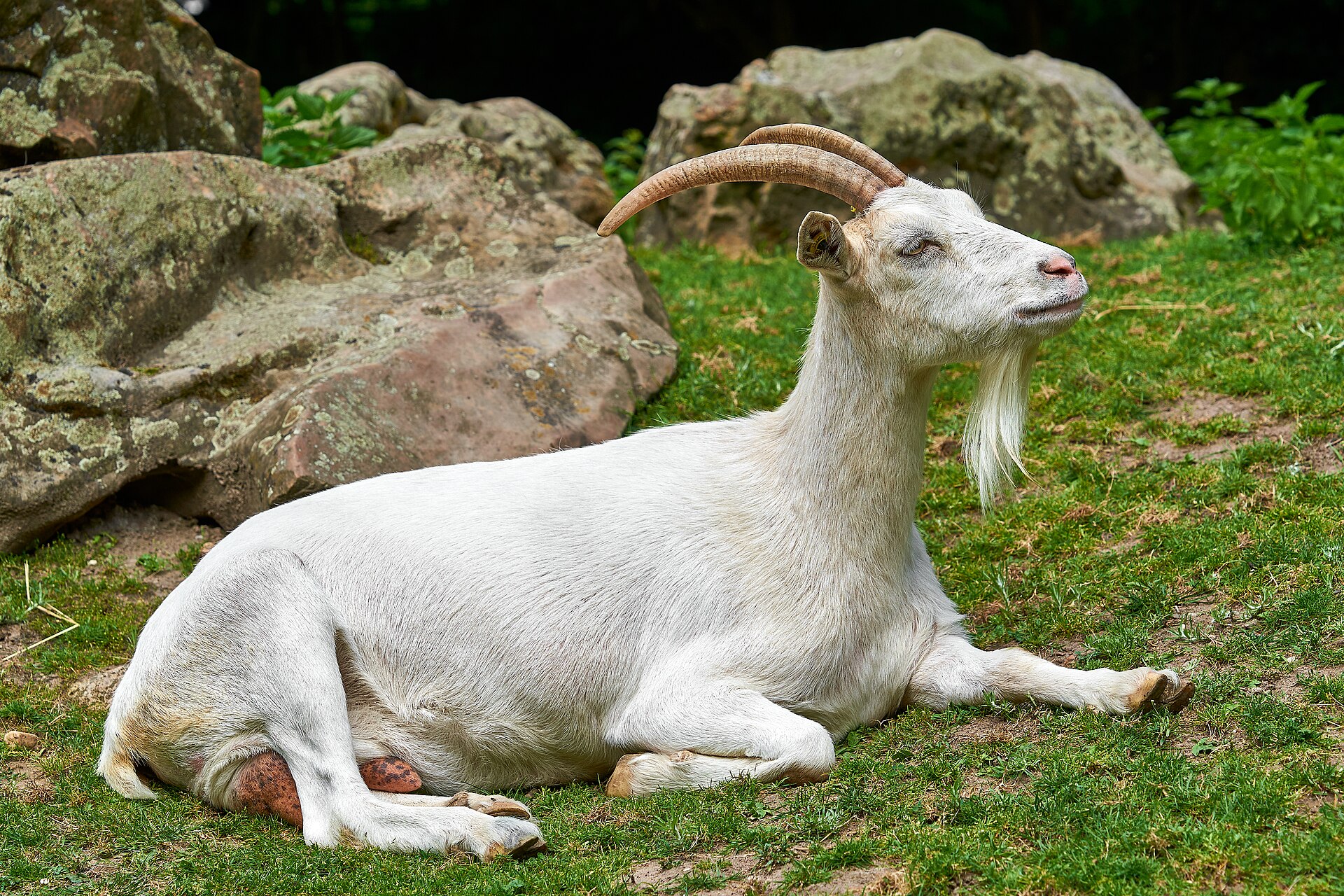
Breeds That Can Take the Heat
Two breeds dominate the Florida backyard dairy conversation, for opposite and complementary reasons:
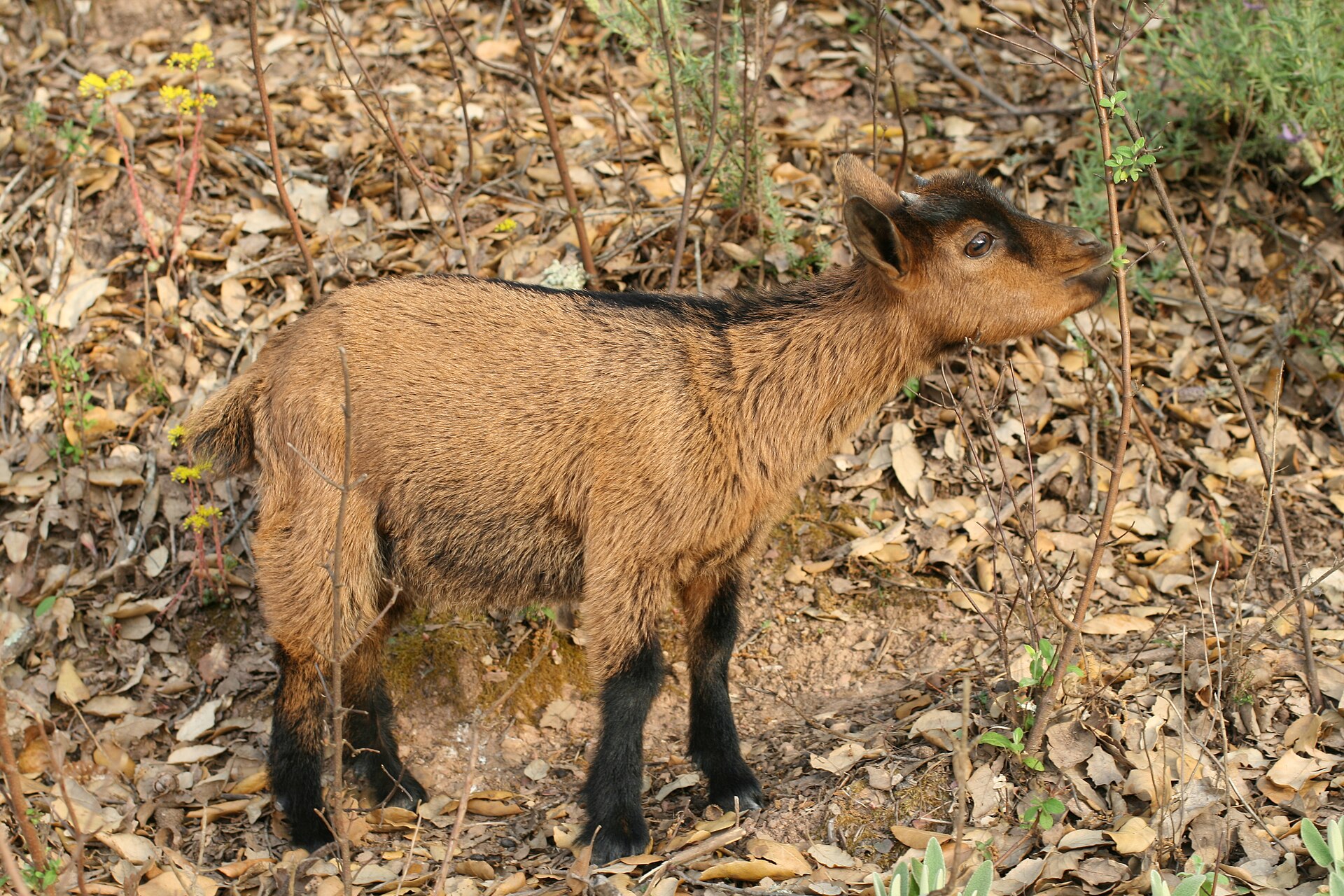
Nigerian Dwarfs are the smallholders’ favorite: genuinely small (which means less feed, less fencing horsepower, and a doe you can manage without a gym membership), famously rich milk — Nigerian milk is prized for high butterfat, the stuff of cheese-makers’ dreams — and personalities that trend toward “dog that happens to be a goat.” A small herd of Nigerians is the correct scale for most backyard milk ambitions, and the breed’s West African heritage means Florida heat is a rumor they’ve heard before.
Nubians are the romantic’s dairy goat: long, elegant, pendulous ears, a voice with genuine carrying power (the neighbors will have an opinion about Nubians; factor it in), and generous milk with excellent butterfat. Their ancestry runs through hot climates, and they handle Florida summers with more grace than the Alpine breeds bred for mountain weather. They’re also bigger, stronger, and louder — the full goat experience, at full volume.
Honorable mention to crosses and to heat-tolerant lines within other breeds: in Florida, the first breed-selection criterion is not production records, it’s thrives in humidity and parasite pressure. A goat whose paperwork is impeccable and whose constitution wilts in August is a vet bill with ears. Buy from Florida breeders whose herds are already succeeding under Florida conditions; local adaptation is inherited advice.
Space, Shelter, and the Sacred Dry Foot
Goats do not need acreage so much as they need dry ground and something interesting to climb. They are browsers by evolution — designed for shrubs, brush, and rough forage more than lawn — and they are desert-and-mountain in their relationship with water: goats hate being wet, and chronically wet feet are the first station on the line to hoof rot, a bacterial misery that thrives exactly where a hoof stands in mud all day. Florida’s rainy season is therefore the dairy goat’s central housing problem, and housing here means: a shelter that is genuinely dry and draft-free at goat level, with airflow above (heat kills more Florida goats through stress and parasites than cold ever will — ventilation is the summer survival system), raised or well-drained ground inside it, dry bedding maintained like you mean it, and a yard or pen whose low spots you’ve fixed before the goats move in, because afterward you’ll be fixing them in the rain, supervised.
Space requirements scale with ambition, but the honest minimums are about quality more than raw footage: room to move, room to browse or be fed browse, a dry loafing area, and separation options — because the day will come (breeding, kidding, illness, a buck in rut) when “the goats” need to be two groups of goats, and that day does not send a calendar invitation.
Fencing: A Professional Warning
Every goat keeper has a fence philosophy, and every goat keeper’s philosophy was educated by a specific goat. Here is the collected wisdom in advance of your own education: goats do not see fences as boundaries; they see them as a first draft. They climb what can be climbed, squeeze what can be squeezed, lean on what leans, and regard a gate latch as a puzzle box provided for their enrichment. The fences that work are the boring ones — sturdy woven wire, properly tensioned, with no horizontal mid-rails on the goat side offering a climbing ladder, gates that latch against a determined forehead, and a hot wire strand as the exclamation point for confirmed escape artists. Walk your fence line the way your most athletic goat would read it: as literature. Where she finds a plot hole, she will publish herself through it, usually at the exact moment the garden gate is open and the tomatoes are ripe. This is not malice. It is peer review.
Feed, Minerals, and the Browse Buffet
A dairy doe is an athlete in production, and her ration has three legs. Forage first: quality hay and, in Florida, abundant browse — brush, branches, and the weedy edges goats were built to harvest. A goat with good browse is doing the job she evolved for, and your fence lines and overgrown corners become feed you didn’t have to buy. Concentrate as needed: milking does typically receive a grain ration scaled to production — the milking stand is where it’s served, which is also the bribe that makes milking stand manners possible. Minerals, always: a loose mineral formulated for goats, available free choice (goats have specific mineral needs — copper prominently among them — that sheep minerals don’t meet, which is why goat and sheep feeding advice must never be casually swapped), plus clean water in quantities that will surprise you. A milking doe is mostly water wearing a goat costume; the milk has to come from somewhere.
Hooves and the Barber Pole: Florida’s Main Event
Two maintenance items separate Florida goat keeping from the greeting-card version. Hooves grow continuously and, in our soft, wet ground, wear down slowly — so trimming becomes a recurring chore on a schedule of weeks-to-months per goat, and skipped trims become lameness, hoof rot, and a doe whose milk drops because standing hurts. Learn the trim, keep the tools, do it on the calendar rather than on the limp.
And then the headliner. The barber pole worm (Haemonchus contortus) is a blood-feeding stomach parasite, and Florida’s warm, humid pastures are essentially its ancestral homeland and favorite resort. It doesn’t cause dramatic scenes; it causes anemia — a doe going quietly pale, thin, and tired while her milk fades, in bad cases to collapse. It is the single most important health fact in Florida goat keeping. The management, in honest general terms: pasture rotation so goats aren’t grazing close over their own parasite eggs in the same ground forever (goats forced to graze low eat the parasite’s neighborhood; browsers fed up high dodge much of it); monitoring, including the FAMACHA system — a widely taught method of scoring the color of the lower eyelid membrane as an anemia check — used by trained keepers to decide which individual animals actually need treatment; and deworming as a targeted, veterinary-guided tool, not a calendar ritual, because decades of routine whole-herd deworming have bred drug-resistant worms across the Southeast, and the keepers who fare best treat strategically and keep records. This paragraph is not a treatment protocol — protocols belong to you and your vet, working from your herd’s actual fecal tests. It is a map of where the dragon lives, drawn so you stock the right shelf before you meet him.
The Milking Commitment, Stated Plainly
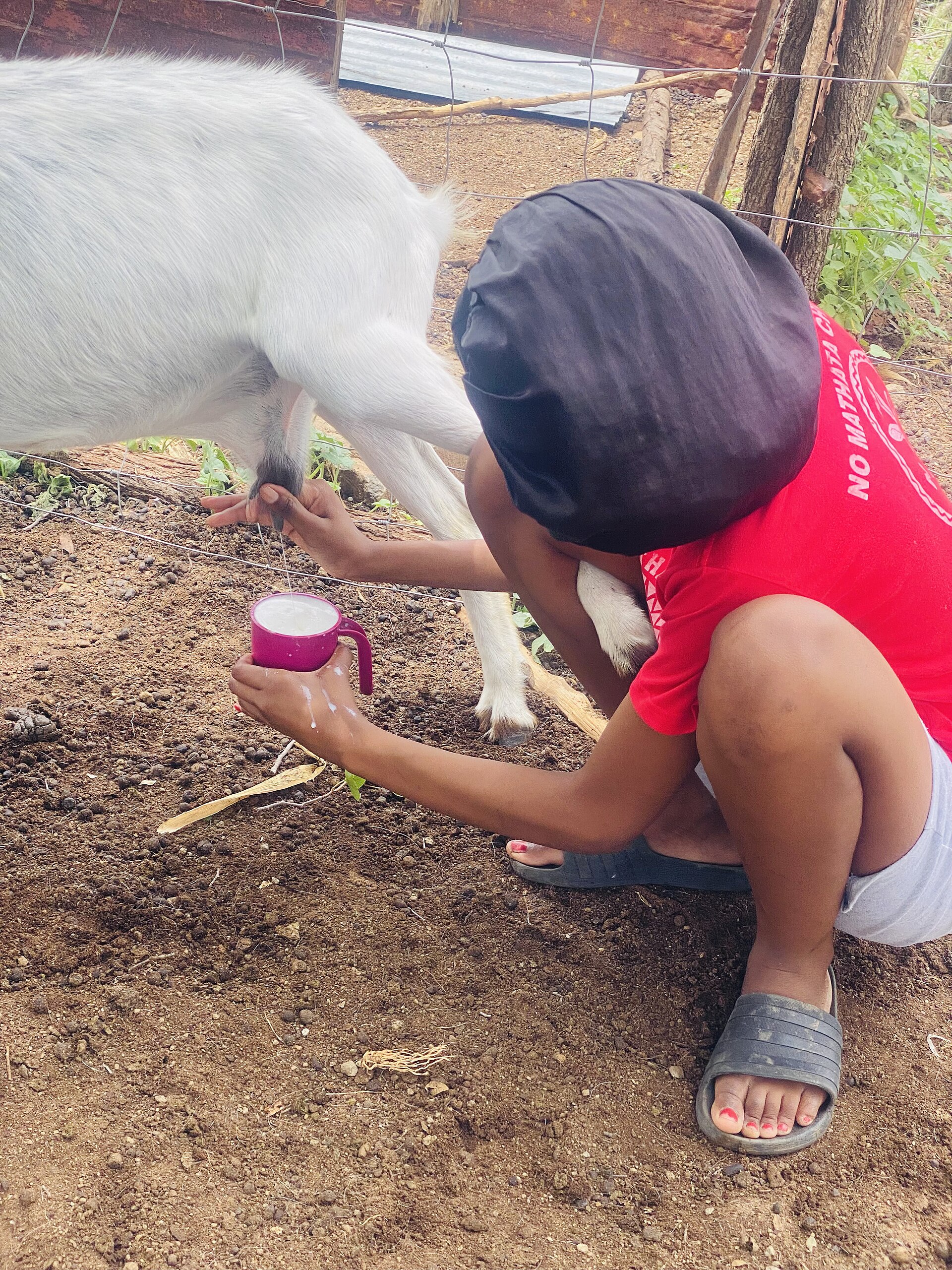
Now the paragraph that decides whether dairy goats are for you, printed without flinching. A doe in milk is milked twice a day, every day, for the length of her lactation. Not weekdays. Not weather permitting. Vacations require a trained, trusted relief milker in a way that a garden never does; a garden forgives a week away, and a full udder does not — skipping milkings is painful for the doe and an invitation to mastitis. Dairy is a subscription you cannot pause, and it is also, for the people it suits, the best part of the day: quiet barn, warm animal, rhythmic work, milk still warm in the pail. Both of those are the truth; the homesteader’s job is deciding which truth is theirs.
Attached to it is the breeding reality: a doe gives milk because she has given birth, which means your dairy program includes a breeding plan (owning a buck is its own fragrance-forward commitment; many backyard keepers use a breeder’s buck service instead), a kidding season with its joys and its 2 a.m. checks, kids to raise or place, and dry periods between lactations when the herd is charmingly unproductive. The milk is not a product the goat makes instead of having a life cycle. The life cycle is the dairy program.
The Legal Bowl: Raw Milk in Florida
If any of this milk is destined beyond your own kitchen, Florida law enters the chat, and we’ll state the landscape in careful general terms — verify the current rules with FDACS before a single jar changes hands, because regulations here are specific and enforced. In Florida, raw milk is not sold for human consumption through ordinary retail channels; the lawful channel that exists for raw milk is sale as pet food, labeled as such — “not for human consumption” — and that channel has its own licensing and labeling requirements with the state. Herd shares and other arrangements occupy gray territory that Florida has historically viewed narrowly. The home dairy for your own family’s use is the simple case; the moment milk becomes commerce, it becomes FDACS’s subject, not a guide’s. We like our readers un-fined: check the current rules at the source.
The Vet, the Records, and the Loop Home
Find your large-animal vet before the emergency — a vet who sees goats, knows your herd, and has your number — because goats specialize in needing help at hours when introductions are awkward. Keep the records the old keepers keep: breedings, kiddings, treatments, hoof trims, fecal results. Dairy goats are a multi-year relationship; the notebook is how the relationship compounds.
And then the close, which is the reason this guide lives on this particular website. A dairy goat converts brush, hay, and weeds into milk, kids, companionship, and a steady, generous stream of manure — and goat manure is garden gold with an unusual courtesy: it’s a comparatively mild, pelleted manure that composts beautifully and, properly composted, feeds the very beds that grow the garden that supplements the goat. Scraps and browse to the goat; milk to the kitchen; manure to the compost (our Florida Fall Soil Reset shows the compost at work in the beds); garden abundance back to the goat. That loop — animal to soil to plant to animal — is the homestead’s whole thesis statement, and the dairy goat, standing in the middle of it defeating a fence with her mind, is its most charismatic employee. Read the rest of the menagerie’s manual in Ponds, Ducks, Fish & Chickens, place her in the bigger plan with 7 Simple Ways to Start Homesteading, and then decide — eyes open, fence walked, milking schedule contemplated — whether your homestead is ready for its most entertaining subscription.
The Milk Room Routine
The twice-daily subscription runs on ritual, and the ritual is mostly sanitation wearing a schedule. The doe comes to the milk stand — a raised platform with a head gate and her grain ration waiting, which converts milking from a rodeo into a commute. The keeper’s routine, in the order that keeps milk clean and udders healthy: wash your hands; clean the udder; draw the first streams into a strip cup rather than the pail — those first squirts carry the highest bacterial load from the teat canal, and the strip cup’s dark screen lets you spot the flakes or clots that are mastitis clearing its throat. Milk into a clean pail, ideally stainless and seamless, because milk fat colonizes scratches and yesterday’s residue is today’s flavor problem. Filter the milk, and get it cold promptly — rapid cooling is the single biggest quality lever a home dairy owns, the difference between sweet milk all week and a science project by Thursday. Then the equipment gets washed like you run a restaurant, because microbiologically, you do. None of this is glamorous, all of it is learnable in a week, and the keepers with the best milk in the county are simply the ones whose routine never negotiates with itself. The goat provides the milk. The ritual decides what it’s worth.
The Honest Economics
Goat math deserves the same honesty as goat fencing. On the cost side: animals, fencing (the real fence, not the first fence), shelter, a milking stand, ongoing hay and feed and minerals, hoof tools, veterinary care, and your two daily appointments priced at whatever your time is worth. On the return side: milk, cheese, yogurt, and soap if your ambitions ferment that way; kids to sell or keep in a good year; brush clearing you didn’t have to pay a machine for; manure the garden notices; and the intangibles line, which for most keepers quietly becomes the largest number on the page. What the spreadsheet will rarely show is “cheaper than store milk” in year one, and any source promising it is selling goats. What it shows by year three, in a well-run small herd, is something better than cheap: a food supply you control, built out of weeds and routine, with the surplus stacking up in the freezer as cheese. Dairy goats are not a loophole in the grocery economy. They are a trade — money and unbending routine, exchanged for quality, resilience, and a relationship with an animal who will absolutely learn the sound of your truck and have opinions about your punctuality. Homestead trades don’t get fairer, or funnier, than that.
The Social Contract: Goats Are Never Singular
One rule of goat keeping admits no exceptions at all: a goat alone is a miserable goat. They are herd animals down to the wiring — eating, resting, and alarming as a committee — and a solitary goat will spend its considerable intelligence and volume explaining the situation to the entire zip code. The minimum viable herd is two, and the backyard classic is two does, or a doe and a wether (a neutered male, kept as companion and brush crew, immune to both the buck’s perfume and the breeding calendar). Speaking of bucks: keeping your own buys convenience and sells your peace — an intact buck in rut is an olfactory event with a half-mile footprint and a personality in a hurry — which is why so many small herds outsource the romance to a breeder’s buck and keep the home herd all-female and fragrant only by garden standards. Plan the herd as a society, not a purchase: at least two goats, always, with the second one budgeted as a welfare requirement rather than an upgrade.
🌱 Keep learning
Meet the rest of the herd in Ponds, Ducks, Fish & Chickens, work the manure loop with the Florida Fall Soil Reset, plan the whole operation in 7 Simple Ways to Start Homesteading, and find the rest of the collection at the Living Root Academy.
🪱 Your Soil Needs This
Reading about healthy soil is great. Growing in it is better. Our small-batch, traceable worm castings are the shortcut your garden deserves.
Shop Worm Castings Subscribe & SaveEvery bag comes with a lot certificate. Know what's in your soil.