
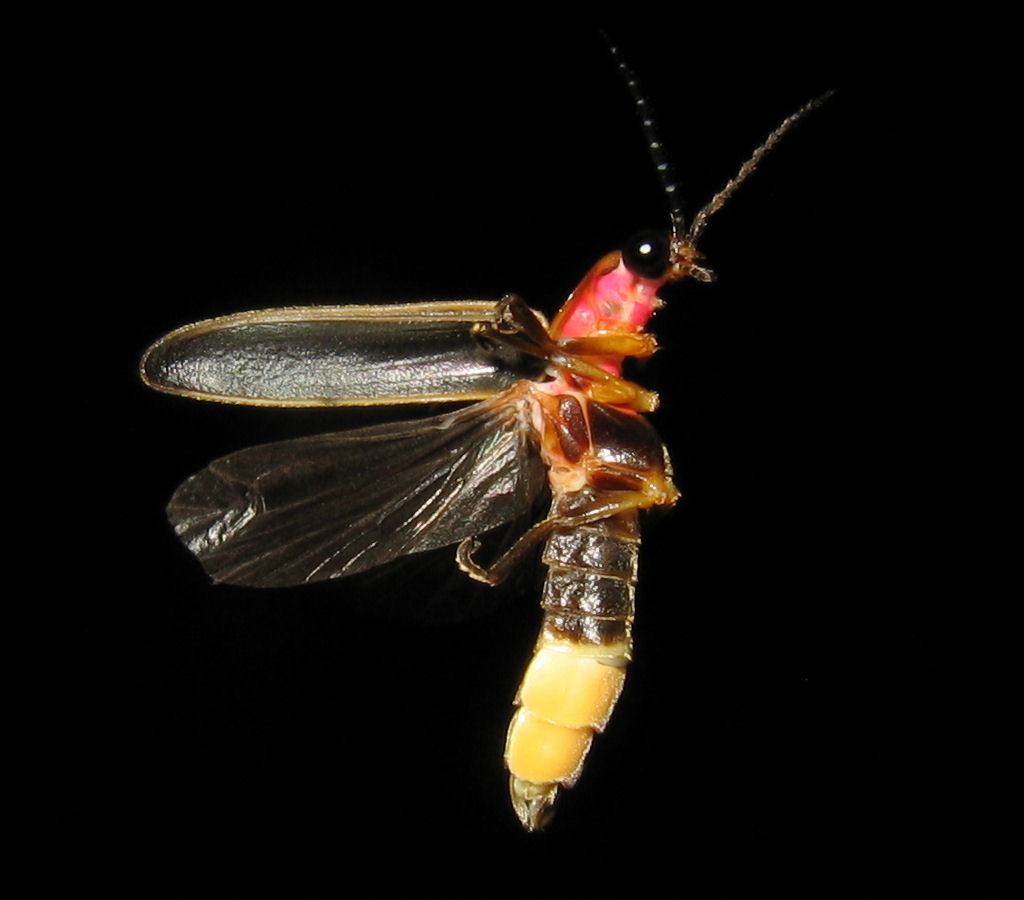
If you grew up catching lightning bugs in a jar, you probably remember two things: the magic, and the morning-after guilt when the jar went dark. Here is the good news — Florida still has fireflies, 56 species of them by the University of Florida count, and a yard set up right can bring them back to places they have quietly vanished from. The bad news is that a firefly is not a decoration you install. It is a beetle with a two-year childhood, a sex life conducted in Morse code, and a mortal enemy in your porch light. This guide covers all of it: what fireflies are, how they make light without cooking themselves, the full life cycle, why they are fading, and exactly how to make your yard a place they come back to.
First, the Name Is a Lie (a Lovable One)
Fireflies are not flies. They are not true bugs either. They are beetles — order Coleoptera, family Lampyridae, a name that comes from a Greek word for shining. The “fly” in firefly is just what people called anything small with wings before entomology ruined everyone’s fun. Their cousins include click beetles, which makes sense once you learn that firefly light organs evolved from the same toolkit as other beetles’ hardware. Worldwide, nearly 2,000 firefly species have been formally described, and more than 175 live in the United States. Florida alone has 56. So when someone says “we don’t have fireflies in Florida,” what they usually mean is “we don’t have fireflies in my yard anymore” — which is a fixable problem, and the rest of this guide is about fixing it.
How the Light Works (No, It Is Not Magic, It Is Better)
On the underside of a firefly’s abdomen sits a light organ, a little lantern built out of specialized cells. Inside those cells sit four ingredients: a molecule called luciferin, an enzyme called luciferase, the cell’s energy currency ATP, and oxygen. When the firefly wants to flash, it opens tiny air tubes and lets oxygen flood the organ. Luciferase catalyzes luciferin, ATP, and oxygen into an excited molecule called oxyluciferin, which immediately drops back to a lower energy state and sheds the difference as a single photon of yellow-green light, around 560 nanometers. The color is set by the shape of the luciferase enzyme, not the luciferin — tweak the enzyme slightly and you change the color, which is one reason different species glow different shades.
The firefly controls the whole show by throttling the oxygen supply, the way you control a lamp with a dimmer switch made of air. And here is the part that still makes engineers jealous: the light is cold. An old incandescent bulb turns under 5 percent of its energy into light and wastes the rest as heat. A firefly turns far more of its chemistry into light and almost none into heat, which is why you can hold one in your palm and feel nothing warm. Published efficiency estimates vary depending on how you measure it, so beware any article that quotes you one smug exact percentage — but every version of the story beats a light bulb by a mile. The same chemistry, by the way, now powers laboratory tests for living cells: add luciferin to a sample and the light it gives off is proportional to the ATP inside, which is to say, to how alive the sample is. Firefly chemistry literally became a way to measure life.
Flashing Is Flirting (and Sometimes Murder)
For most fireflies, the light is a dating app. Males fly around flashing a species-specific pattern — the Big Dipper male, for example, throws a half-second flash while he cruises — and females answer from their perches with their own precisely timed flash, delayed just so. That delay is the password. Get the pattern and the timing right and you are her species; get it wrong and you are ignored. More than three-quarters of firefly species in the United States and Canada are nocturnal or active at dusk, which is why the hour after sunset is the show.
Then there is Photuris, the genus that took this beautiful system and turned it into a crime scene. Female Photuris fireflies, the so-called femmes fatales, fake the flash-delay answers of female Photinus fireflies. A hopeful Photinus male follows the signal in, expecting romance, and becomes dinner. This is not just lunch — it is shoplifting. Photinus males carry bitter defensive steroids called lucibufagins, which make them taste terrible to predators like jumping spiders. Photuris females cannot make lucibufagins themselves, so they steal them, preloaded, by eating the males. Researchers proved it in a famous 1997 study: Photuris females that had eaten Photinus males were rejected by jumping spiders, while unfed ones were eaten. So the femme fatale is not evil. She is a single mother stealing body armor for herself and her kids, one fake date at a time.
The Life Cycle: Two Years Underground, Three Weeks of Stardom
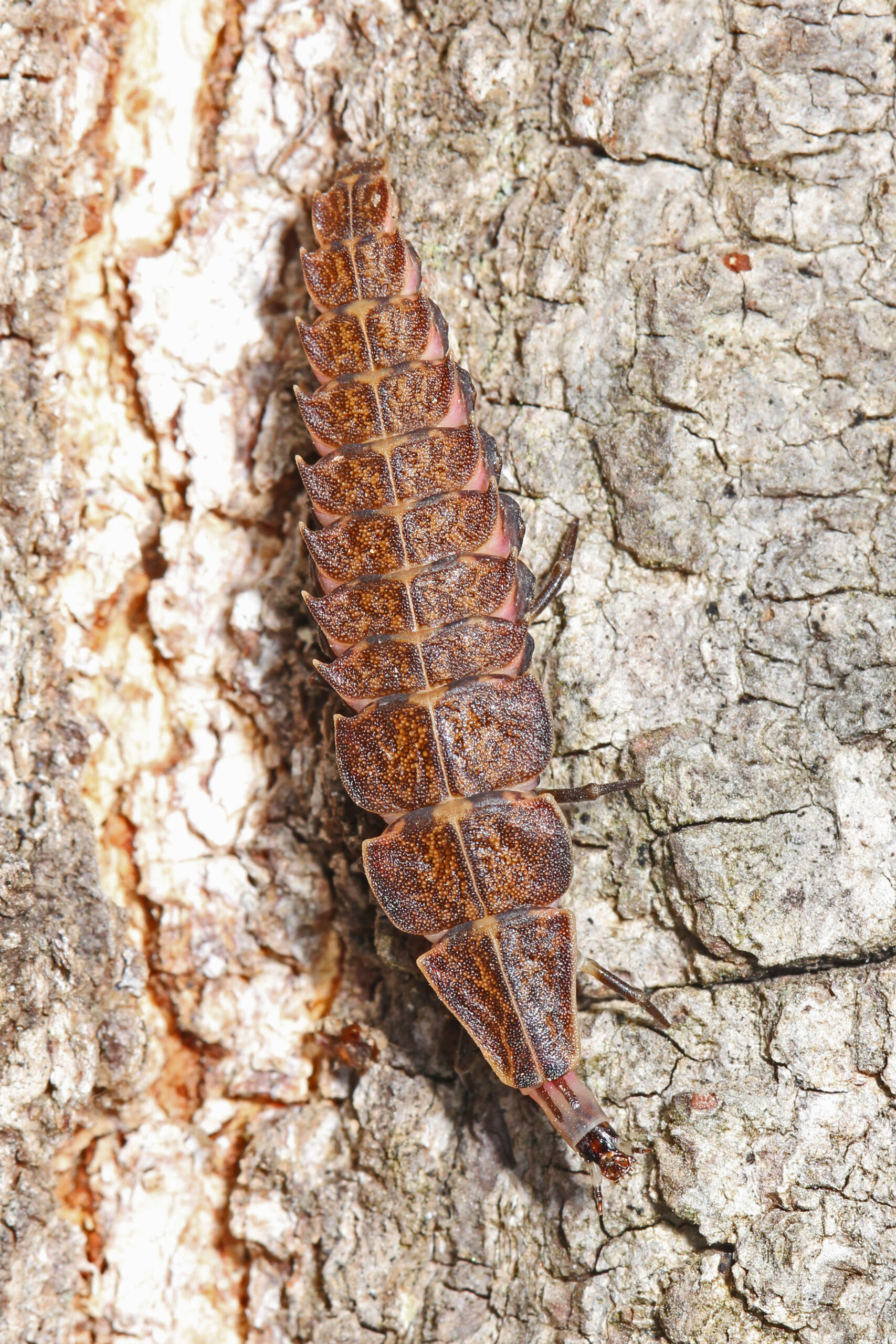
Fireflies go through complete metamorphosis: egg, larva, pupa, adult. Females lay eggs in the top few inches of soil in meadows or forested areas, and then the long game begins. Larvae live in the soil and leaf litter for most of their lives — often one to two years, sometimes longer — hunting soft-bodied prey: slugs, snails, earthworms, and grubs. If you have ever wished something would eat the slugs off your plants, congratulations, firefly larvae already signed up for the job. They glow while they do it, and the glow is a warning: firefly larvae taste bitter, thanks to those same lucibufagins, and researchers have shown that predators like mice learn to leave glowing larvae alone. A flashing larva is a tiny neon sign that reads “I taste terrible, try the snail instead.”
After their long underground childhood, larvae pupate for a few weeks and emerge as adults — who then live only a few weeks themselves. Think about that ratio: up to two years of growing up, in the dark, for a few weeks of flashing. Many adults eat little or nothing during those weeks; they are running on larval savings. Some have been observed feeding on milkweed, in a study presented at the 2014 International Firefly Symposium, but the adult stage is mostly about one thing: finding a mate before the clock runs out. Which is exactly why every night of flashing matters, and why the “what not to do” section below is not optional.
Where They Live (and Which Ones Live in Florida)
Fireflies need three things above all: moisture, cover, and darkness. Most species and their prey depend on moist habitats — wetlands, streams, damp fields, and the damp edges of yards. They need vegetation for shelter, foraging, overwintering, and mating: tall grass to perch on, shrubs to hide under, leaf litter to grow up in. And they need dark, because their whole love life runs on light signals that artificial light drowns out.
Florida’s 56 species span the state, from upland forests to coastal salt marshes, and each has its own habitat and schedule. The ones you are most likely to meet in a yard are the Big Dipper (Photinus pyralis), the common eastern firefly, adaptable enough to show up in yards and along roads, and most active around dusk — which also makes it a little more resilient to light pollution than full-dark species. Various Photuris species patrol Florida nights too, including the femmes fatales. And Florida has its own celebrity: the Florida intertidal firefly (Micronaspis floridana), a mangrove and salt-marsh specialist of the coasts, listed as Endangered on the IUCN Red List and vulnerable in Florida, whose adults peak from March through May with yellowish flashes in the hour or so after sunset. That one is a creature of wild coasts, not backyards — admire it from a boardwalk, not a planting plan.
Why They Are Fading
The Xerces Society, which assesses firefly conservation in North America, names the main threats plainly: habitat loss and degradation, light pollution, pesticide use, climate change (especially drought and sea-level rise), poor water quality, invasive species, and over-collection. In the United States and Canada, habitat loss, light pollution, and climate change look like the primary drivers, with pesticides suspected of playing a major role. An assessment found 18 North American firefly species officially threatened with extinction, and roughly one in three assessed species may be at risk.
Each threat hits a different weak spot. Habitat loss removes the moist, vegetated places larvae need for years at a time. Light pollution — skyglow over towns, light spilling from a porch into a yard, glare from a security floodlight — washes out the flash signals fireflies mate by, and can even draw them toward lights instead of each other. Pesticides hit hardest exactly where fireflies are most helpless: larvae and flightless females, which cannot walk away from a treated site, and the slugs, snails, and worms they eat. A lawn sprayed for mosquitoes or grubs is a lawn where firefly larvae starve or die outright. And over-collection — including the trade in wild-caught fireflies — takes adults during the few weeks they have to reproduce. None of this is mysterious. It is all fixable, starting in your own yard.
How to Attract Them: Seven Upgrades That Actually Work
Here is the honest framing first: planting for fireflies is a two-year investment, not a weekend trick. The adults flashing tonight are the product of conditions from one or two years ago, because that is how long larvae take to grow up. If you make the changes below this year, expect the payoff to build over the next couple of summers, not next Tuesday. That is not a reason to wait. It is a reason to start now.
1. Give them tall grass to stand on. Muhly Grass (Muhlenbergia capillaris) is the classic firefly plant for a reason: its tall, airy clumps give males a perch to flash from and females a place to answer, and its pink autumn cloud is a bonus. Leave patches of it unmowed through the season.
2. Let the lawn edges go a little wild. Frogfruit (Phyla nodiflora) makes a low, moist, living groundcover along lawn edges and between stepping stones — the kind of damp, undisturbed edge where larvae hunt and adults shelter, and it feeds butterflies while it is at it.
3. Plant a wet-corner shrub. Buttonbush (Cephalanthus occidentalis) belongs near damp spots, ditches, and pond edges — exactly the moist habitat fireflies and their prey depend on. A damp corner with a buttonbush in it is worth more to fireflies than a whole acre of dry, mowed lawn.
4. Add nectar for the adults that do feed. Blue Mistflower (Conoclinium coelestinum) and Seaside Goldenrod (Solidago sempervirens) keep flowers coming for pollinators and for the firefly adults that sip nectar, with goldenrod carrying the show late into the season.
5. Leave the leaves. This one costs nothing and matters most. Leaf litter and pine straw in quiet corners are the nursery: larvae live, hunt, and overwinter in them. Raking litter to the curb is raking up next summer’s fireflies and throwing them away. Keep litter zones in low-traffic corners, under trees, and along fences, and let them stay damp and undisturbed.
6. Keep a damp corner, not a swamp. Fireflies want moist microhabitat, not standing water. A low spot that stays a little damp, a mulched bed that holds moisture, a ditch edge that never quite dries out — that is the target. Their prey needs moist soil too, so a yard that dries to concrete in June is a yard with nothing for larvae to eat.
7. Go dark, on purpose. This is the single highest-impact change. Turn off unnecessary outdoor lights, especially during the hour after dusk when flashing peaks. Where light is truly needed, use the dimmest warm-amber bulb that does the job, point it down, shield it so it does not spill into the yard, and put it on a motion sensor or a timer that shuts it down by mid-evening. A passing car’s headlights can throw off a firefly’s mating ritual; your porch light left on all night does it for hours. Darkness does not guarantee fireflies, but light guarantees they cannot do their thing.
And the supporting habits: skip broadcast pesticides and lawn chemicals, especially mosquito adulticides and grub treatments, which hit larvae and their food; mow less and leave some patches taller; keep a small log or stick pile in a quiet corner for egg-laying shelter. None of this requires a perfect yard. It requires a yard with a few wild, dark, damp corners — which, happily, is also a yard with fewer chores.
What NOT to Do
Do not keep them in jars overnight. A jar is a firefly’s worst date night. Adults have only a few weeks to mate, and every night in a jar is a night not flashing. Kept longer than a day, fireflies in jars are likely to die — they dry out, overheat, and miss their mating window. If you catch one to look at it, be gentle, give it air holes and a damp paper towel, and release it the same night, right where you caught it, so it can get back to flashing.
Do not run a bug zapper. A zapper kills flying insects indiscriminately, including the very fliers you are trying to attract. It is the opposite of a firefly strategy.
Do not buy fireflies. Mail-order fireflies are wild-caught animals shipped across the country, and the trade itself is part of the over-collection pressure conservationists warn about. Released fireflies do not found a colony in your yard — they disperse, die, or were never yours to keep. Build the habitat and let the local fireflies find it; they are better at that job than any shipping box.
Do not collect larvae or rake the nursery. Larvae are the whole future of your firefly population, and they live exactly where tidy yards get cleaned up: under leaves, in mulch, in damp soil. Every bag of leaf litter at the curb is a bag of baby fireflies.

Watching Fireflies in Florida
Florida’s firefly season runs from late spring through late summer, with two general activity windows that the University of Florida notes: one in spring and another in July and August. Timing shifts by species, region, weather, and habitat, so a July evening that lights up one part of Florida may be quiet in another — and a yard that seems empty in May may be full in August, or the other way around. The best nights are warm and humid, just after sunset, in the darkest place you can find with natural cover: a forest edge, tall grass, shrubs, and ideally a water source nearby like a stream, pond, or marsh. Let your eyes adjust for twenty minutes and do not wave a flashlight around — white light resets everyone’s night vision, including yours. If you want a guaranteed show while your own yard is still growing into one, look for organized firefly nights at state parks, which run during the season in the spring and summer months.
Fun Facts (All True, All Verified)
- Fireflies taste terrible on purpose. Their bitter lucibufagin steroids are why predators learn to leave them alone — and why larvae glow: the light is a warning label that says “I taste awful” before a predator even bites.
- A female Photuris can steal a male’s chemical defenses by eating him, then pass that protection on to her offspring. She is not just a predator. She is a thief with an inheritance plan.
- Firefly light has left the meadow and entered the laboratory: the luciferin-luciferase reaction is used to test samples for living cells, because the light it produces is proportional to the ATP inside.
- Some female fireflies never fly at all. In glowworm species, the females stay on the ground and send the first signals, glowing steadily while the males come to them.
- The Big Dipper’s name is literal: males fly in a dipping, J-shaped pattern while flashing, like someone writing cursive in the air with a sparkler.
- Florida’s rarest firefly lives in mangroves, not meadows. The Florida intertidal firefly flashes along salt-marsh edges and is listed as Endangered — a reminder that “firefly habitat” in Florida includes coasts, not just backyards.
Keep Exploring
Fireflies are the night shift of the same garden the daytime pollinators work. If you liked this guide, meet the Atala Butterfly, another Florida specialist with a chemical-defense story, or browse the full Butterflies of the United States finder. And if you want to understand why a yard full of native plants feeds more than just fireflies, start with the plants in this guide — Muhly Grass, Frogfruit, and Buttonbush are all working plants, not just pretty ones.
🪱 Your Soil Needs This
Reading about healthy soil is great. Growing in it is better. Our small-batch, traceable worm castings are the shortcut your garden deserves.
Shop Worm Castings Subscribe & SaveEvery bag comes with a lot certificate. Know what's in your soil.