
Allegheny chinquapin (Castanea pumila)
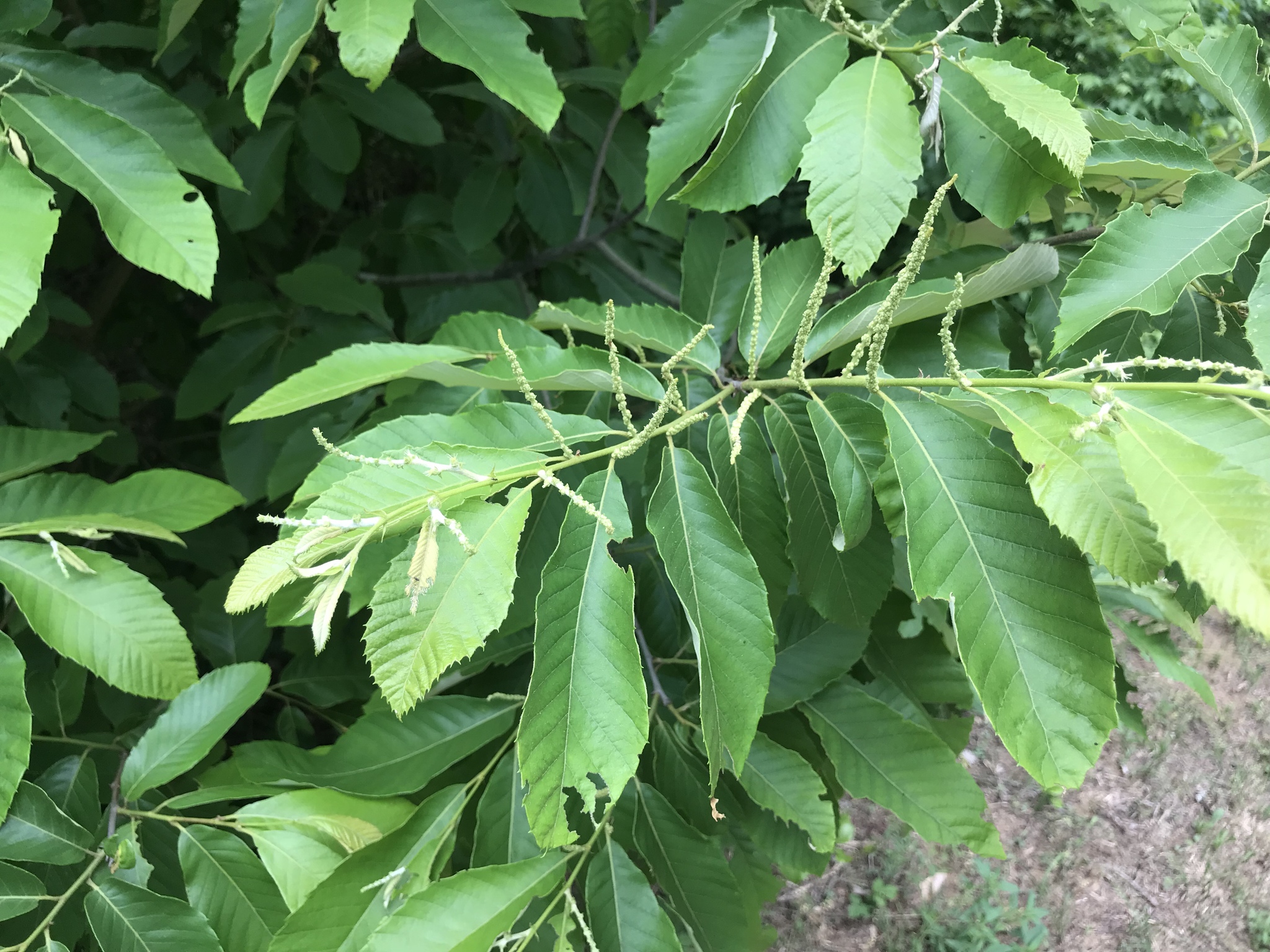

Quick Facts
- Type: shrub
- Size: 8-20 ft x 8-15 ft
- Sun: Full sun
- Water: Dry to medium
Care & Propagation
Needs full sun and well-drained, acidic sandy soil; it sulks in lime or wet feet. Fire-adapted and quick to resprout, it fruits young and makes a great wildlife thicket on dry uplands.
Wildlife Value
The small, sweet nuts are devoured by wild turkeys, deer, squirrels, and jays, and the early-summer catkins feed a crowd of pollinating insects.
← Browse all Florida native plants
🌴 In Florida
The chestnut you can actually grow in Florida. It is far more blight-resistant than the American chestnut: it may blight back but resprouts from the roots and fruits again. Its nuts are sweet and edible, half the size of a chestnut and not flattened.
✨ Fun fact
The Allegheny chinquapin is the chestnut Florida can actually grow — blight may knock it back, but it resprouts from the roots and fruits again like nothing happened. Sweet nuts, half the size, zero drama.
🌿 Keep exploring
More Florida natives worth meeting:
- Adam's Needle (Yucca filamentosa)
- American Beautyberry (Callicarpa americana)
- American Hazelnut (Corylus americana)
🍽️ Also see the edible-plant profile for this same species: Allegheny chinquapin (Castanea pumila) — how to eat it and harvest notes.
🪱 Your Soil Needs This
Reading about healthy soil is great. Growing in it is better. Our small-batch, traceable worm castings are the shortcut your garden deserves.
Shop Worm Castings Subscribe & SaveEvery bag comes with a lot certificate. Know what's in your soil.