
Coral Honeysuckle (Lonicera sempervirens)
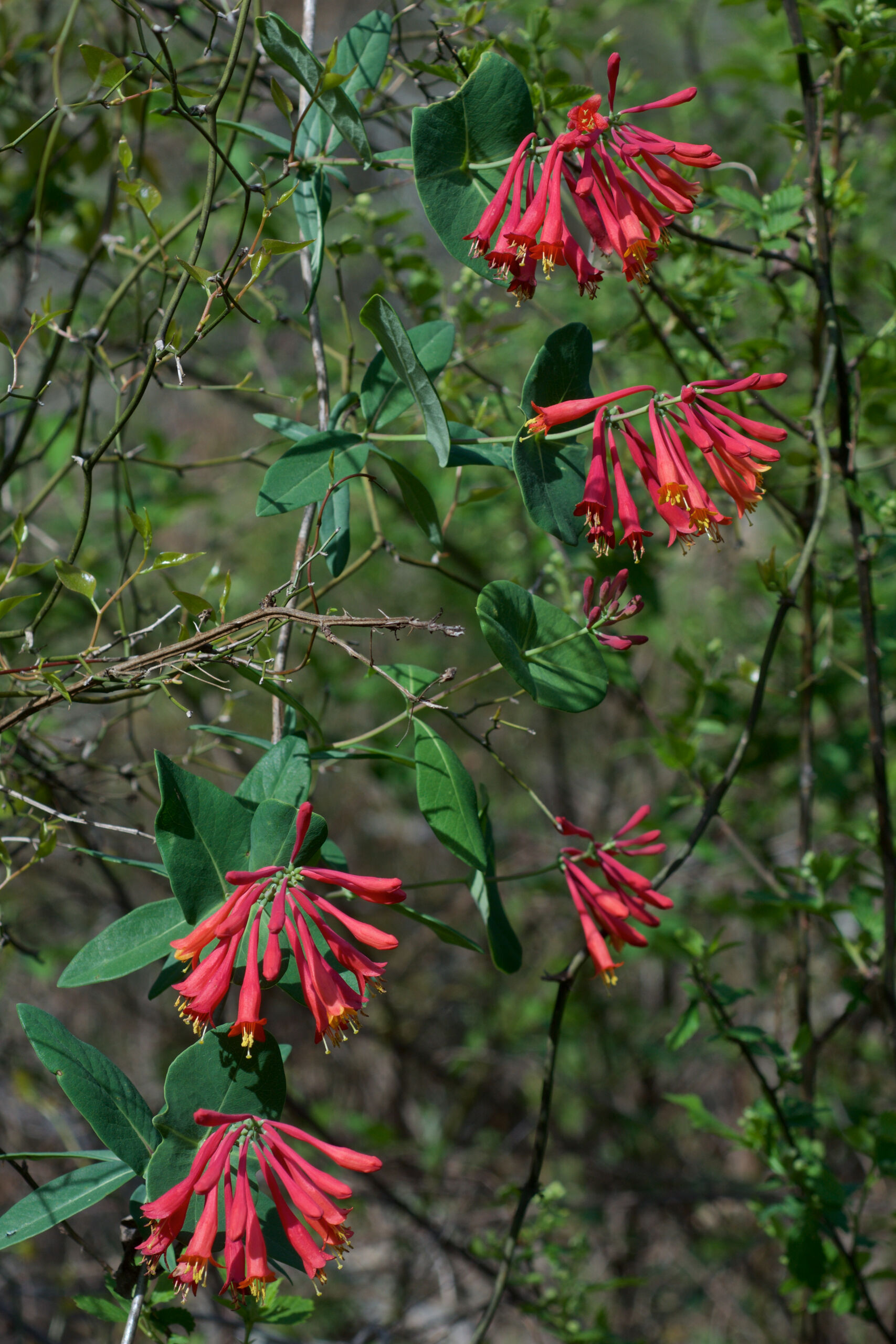

Also known as: trumpet honeysuckle
Quick Facts
- Type: vine
- Size: to 15-20 ft long
- Sun: full
- Water: moderate
- Soil: Sandy to loamy, well-drained soils
- USDA zones: 8-10
Clusters of coral-red trumpet flowers bloom spring through fall; hummingbirds visit daily.
The well-behaved native honeysuckle, nothing like invasive Japanese honeysuckle; red berries feed birds in fall.
In the Landscape
The native honeysuckle for trellises, arbors, fences, and mailbox posts. Give it something sturdy to climb and stand back — hummingbirds will find it within days.
Care & Propagation
Plant in spring in full sun to part shade. Prune lightly after the main spring bloom to shape it. It is well-behaved compared to its invasive Japanese cousin — it climbs but doesn't smother.
Take semi-hardwood cuttings in summer, or layer a low stem in spring by pinning it to the soil until it roots. Seed works but is slow.
Wildlife Value
Trumpet-shaped red flowers are a hummingbird magnet and feed long-tongued bees and sphinx moths. Red berries in fall feed songbirds including robins and cedar waxwings.
🌱 Fun fact: This is the honeysuckle to plant instead of Japanese honeysuckle — same family charm, zero guilt. The flowers have no scent, which is how you know it's the well-behaved native.
← Browse all Florida native plants
🌴 In Florida
The well-behaved native honeysuckle, nothing like invasive Japanese honeysuckle; red berries feed birds in fall.
🌿 Keep exploring
More Florida natives worth meeting:
- American Wisteria (Wisteria frutescens)
- Atlantic Pigeonwings (Clitoria mariana)
- Beach Morning Glory (Ipomoea imperati)
🪱 Your Soil Needs This
Reading about healthy soil is great. Growing in it is better. Our small-batch, traceable worm castings are the shortcut your garden deserves.
Shop Worm Castings Subscribe & SaveEvery bag comes with a lot certificate. Know what's in your soil.