
Marlberry (Ardisia escallonioides)

Quick Facts
- Type: shrub
- Size: 10-15 ft tall
- Sun: part
- Water: moderate
- Soil: Well-drained; hammock soils
- USDA zones: 9-11
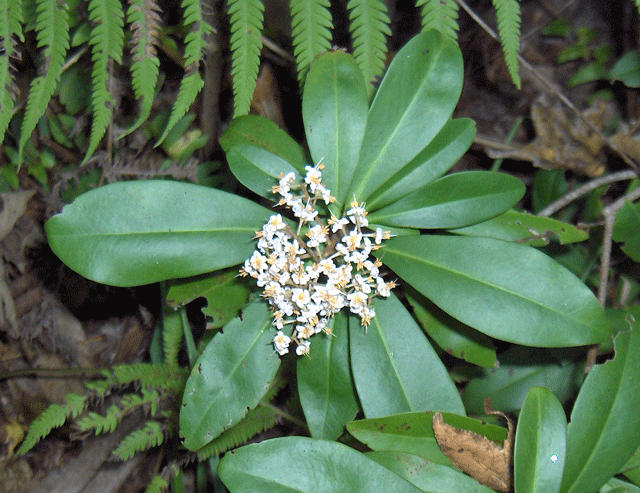
Glossy evergreen leaves, fragrant white flower clusters, and purple-black bird berries.
A refined hammock understory shrub – plant it in shade where the invasive shoebutton ardisia is banned.
In the Landscape
A refined specimen, hedge, or background shrub for hammock gardens and shady landscapes. It is salt and drought tolerant, so it also works in coastal plantings, and it prunes easily into shape.
Care & Propagation
Plant in spring in well-drained soil with an organic top layer, in full sun to part shade, spacing 6 to 8 feet apart. Water until established; after that it is quite adaptable. Prune in late winter or early spring to maintain size, since flowers and berries appear throughout the year.
Grown from seed; sow cleaned, ripe seed in light shade in moist soil, but be patient since germination can take up to six months. Harvest berries fresh from the plant for the best results.
Wildlife Value
The fragrant white flower clusters attract bees, and a wide variety of birds eat the black berries. Just be sure you have the native marlberry and not its invasive lookalikes, coral ardisia or shoebutton ardisia, which displace native plants.
🌱 Fun fact: The species name escallonioides means 'resembling Escallonia,' because its leaves look like those of the ornamental Escallonia shrubs. Despite the family resemblance, it is a true Florida native.
← Browse all Florida native plants
🌴 In Florida
A refined hammock understory shrub – plant it in shade where the invasive shoebutton ardisia is banned.
🌿 Keep exploring
More Florida natives worth meeting:
- Adam's Needle (Yucca filamentosa)
- Allegheny chinquapin (Castanea pumila)
- American Beautyberry (Callicarpa americana)
🪱 Your Soil Needs This
Reading about healthy soil is great. Growing in it is better. Our small-batch, traceable worm castings are the shortcut your garden deserves.
Shop Worm Castings Subscribe & SaveEvery bag comes with a lot certificate. Know what's in your soil.