
Sandspur (Cenchrus spp.)
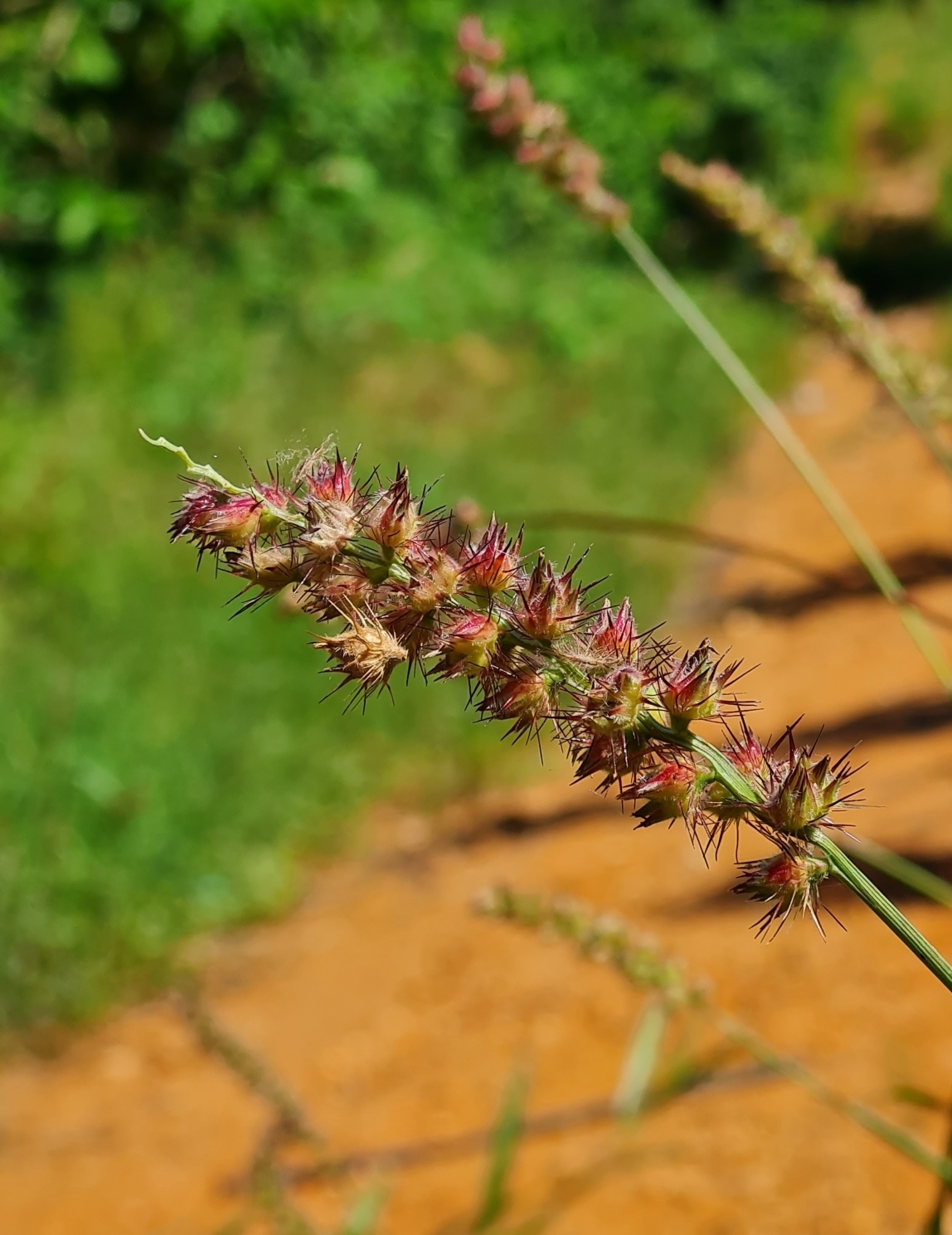

Also known as: sandbur, sand burr, stickerbur, stickerweed
Quick Facts
- Type: native annual grass (and a weed, full stop)
- Size: low, spreading mats radiating outward, usually under 2½ feet tall
- Sun: full sun
- Water: low — it thrives in dry, sandy soil
- Soil: dry sand, thin turf, roadsides, paths, beach edges
- USDA zones: 8–11 (all of Florida)
Here is the honest truth about sandspur, up front: it is a genuine Florida native, and you still do not want it in your lawn. Native does not mean desirable. Nobody has ever stepped on a sandspur bur barefoot and said, “Well, at least it belongs here.” The bur’s whole job is to hurt, hitchhike, and make more sandspurs, and it is extremely good at all three.
Sandspurs are true grasses in the grass family, Poaceae. Six Cenchrus species are native to Florida, and the two that ruin barefoot summers are southern sandbur (Cenchrus echinatus) and coastal sandspur (Cenchrus incertus, which you will also see listed as Cenchrus spinifex — same coastal culprit, and taxonomists are still sorting out which name wins). Southern sandbur is the classic lawn weed across the state, an annual grass with a shallow, fibrous root system perfectly adapted to dry, sandy soil. Coastal sandspur is its beach-and-field cousin. A third native, dune sandbur (Cenchrus tribuloides), haunts the beaches. The other three natives — slender sandbur (Cenchrus gracillimus, a perennial), big sandbur (Cenchrus myosuroides), and slimbristle sandbur (Cenchrus brownii) — show up less often in lawns but belong to the same prickly family. Do not confuse any of these with the nonnative Cenchrus species in Florida, like buffelgrass and fountain grass: different plants, different problems.
In the Landscape
Sandspur volunteers wherever the lawn is thin and the sand is showing: roadsides, worn paths, dog-walk routes, the bare patch by the mailbox, the edge of the driveway where the grass gave up. It is an annual that radiates outward from a central crown, stems sprawling along the ground and sometimes rooting where they touch soil, brown toward the center. You can learn to recognize it before it blooms, and you should, because once it blooms, the clock starts ticking.
Flower stalks appear from June through November, carrying clusters of spiny burs. Each bur is a spikelet cluster wrapped in hardened, barbed bristles — a seed-dispersal device that works by stabbing whatever walks past. Each bur holds one to four seeds, and the barbs have a curved hook on the tip, like a tiny fishhook. That is why burs end up in mower tires, dog paws, socks, shoelaces, and the tender arch of your foot at the worst possible moment. The plant is not being mean. It is being a grass. Grasses that hitchhike get planted, and sandspur is a champion hitchhiker.
Control
Pull, and pull early. Start watching in mid-summer, before the burs harden, and pull every plant you find — leather gloves are not optional, they are the whole strategy. Then go back a week or so later and pull again, because you missed some and they know it. Since sandspurs are annuals, getting them all before seed drop greatly reduces the local population. The catch is that new seeds arrive constantly on feet, fur, tires, and wind-blown debris, so this is a habit, not a one-time event. Think of it like weeding any annual: the plants you pull this year are the burs you do not step on next year.
Bag the burs and trash them. Do not toss seed-bearing plants in the compost and do not leave pulled plants lying on the lawn, where the burs can finish ripening and drop their seeds anyway. In late winter, you can drag an old carpet remnant, a blanket, or a cloth through a contaminated area to snag leftover burs before spring germination — every bur you collect is seeds that will never sprout.
The long game is a thick, healthy lawn. Proper fertilization, irrigation, and mowing at the right height for your grass species crowd sandspur out, because it needs thin, sunny, sandy ground to get started. A dense turf is the best pre-emergent there is. Speaking of pre-emergents: a pre-emergent herbicide applied in late winter to early spring, before seeds germinate, is effective, and a post-emergent can help in summer — always follow the label, and check with your county Extension office for products labeled for your lawn grass. One thing that does not work, despite the folklore: liming or dolomite. Sweetening the soil will not kill sandspur, and Extension specialists say so plainly. Save the lime for soil that actually needs it.
Wildlife Value
Here is the part that makes the story complicated, the way native-plant stories always are. Sandspur is not just a villain. Deer mice cache its seeds. Birds like the Pyrrhuloxia eat them. It is a larval food plant for several branded skippers and most of the satyr butterflies. Out in a meadow or a dune, where nobody walks barefoot, sandspur is doing honest ecological work: feeding seed-eaters, hosting caterpillars, holding sandy ground with its roots. The problem is not the plant. The problem is the plant in your lawn, between your back door and the hose bib, at 7 a.m., before coffee.
🌱 Fun fact: the genus name Cenchrus comes from the Greek word for millet, and the species name echinatus means armed or spiny — think hedgehog. A bur is not a seed with spikes glued on. It is a whole spikelet cluster wearing a suit of barbed armor, built by evolution for one purpose: to stick to something that moves and get carried somewhere new. Botanists call that epizoochory. Bare feet call it something else entirely.
A curiosity from the history books, not a recommendation: old accounts mention people roasting sandspur seeds or brewing them. Given what the burs do to your hands, the seeds are not worth the trouble, and this guide does not recommend eating them.
← Browse all Florida native plants
🌴 In Florida
Sandspur occurs throughout Florida in turf, cultivated ground, and disturbed areas, and across the warm southeastern United States from North Carolina to California, plus Mexico, Central America, South America, the West Indies, and beyond. As a native plant, it is not on any invasive-species list — which is exactly why the “native” label does not settle whether you want it in your yard. Native tells you where a plant comes from. It does not tell you whether to let it colonize the path to your front door.
🌿 Keep exploring
More Florida natives worth meeting:
- Pink Muhly Grass (Muhlenbergia capillaris)
- Sunshine Mimosa (Mimosa strigillosa)
- Spanish Needles (Bidens alba)
🌿 Its partner in this pair: Chamber Bitter (Phyllanthus urinaria) — the nonnative weed that fights dirtier than sandspur ever could.
🪱 Your Soil Needs This
Reading about healthy soil is great. Growing in it is better. Our small-batch, traceable worm castings are the shortcut your garden deserves.
Shop Worm Castings Subscribe & SaveEvery bag comes with a lot certificate. Know what's in your soil.