
Turk's Cap (Malvaviscus arboreus var. drummondii)
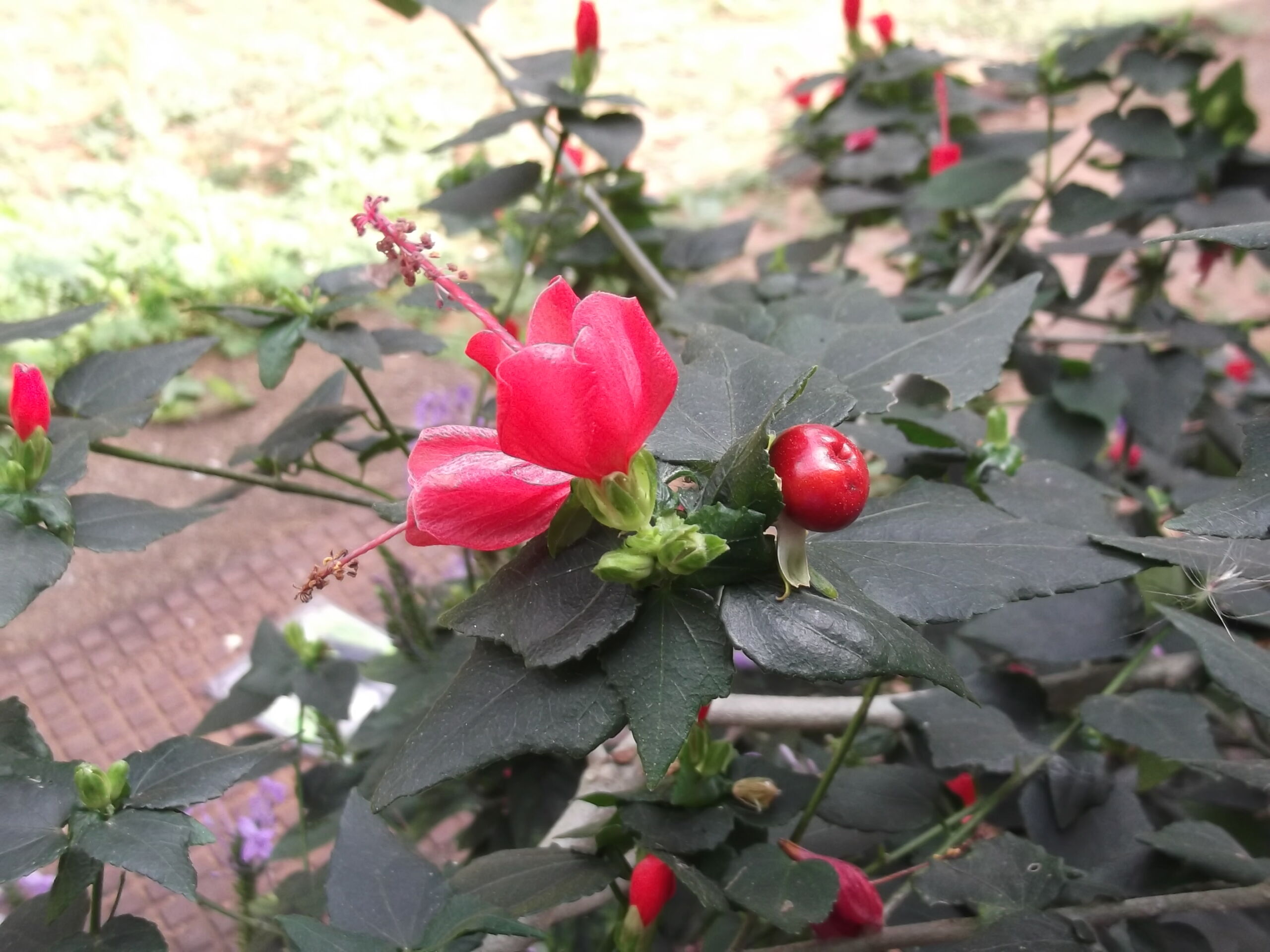

Also known as: Turkscap mallow
Quick Facts
- Type: shrub
- Size: 3-5 ft tall
- Sun: part
- Water: moderate
- Soil: Adaptable; moist, well-drained
- USDA zones: 8-10
Red turban-shaped flowers that never fully open – hummingbirds pry them open all summer.
Blooms in shade where little else does; a North and Central Florida hummingbird staple.
In the Landscape
One of the few shrubs that blooms heavily in part shade, making it ideal for understory plantings, shade gardens, and hummingbird gardens. It also works in mixed borders and containers in full sun to shade.
Care & Propagation
Plant in spring in part shade to sun in moist, well-drained soil, spacing 3 to 4 feet apart. Cut it back hard in late winter for compact, vigorous growth; it blooms even on short-pruned plants. Water until established, then it tolerates some drought.
Very easy to propagate. Take softwood stem cuttings in spring or summer, divide established clumps in early spring, or simply let it reseed itself. Branches layered onto the ground root on their own.
Wildlife Value
An important nectar source for female and juvenile ruby-throated hummingbirds, which visit the flowers constantly. It is also the primary host plant for the Turk's-cap white-skipper caterpillar.
🌱 Fun fact: The red flowers never fully open. They stay furled like a little Turkish turban or fez, which is exactly where the common name comes from.
← Browse all Florida native plants
🌴 In Florida
Blooms in shade where little else does; a North and Central Florida hummingbird staple.
🌿 Keep exploring
More Florida natives worth meeting:
- Adam's Needle (Yucca filamentosa)
- Allegheny chinquapin (Castanea pumila)
- American Beautyberry (Callicarpa americana)
🪱 Your Soil Needs This
Reading about healthy soil is great. Growing in it is better. Our small-batch, traceable worm castings are the shortcut your garden deserves.
Shop Worm Castings Subscribe & SaveEvery bag comes with a lot certificate. Know what's in your soil.