
Habitat Gardening in Florida: One Tree, One Thicket
Your yard is either a food web or a food desert, and the difference is not how much you spend. It is whether anything in it can actually live there.
Here is the chain that runs every real garden, whether you planted it on purpose or not: the soil ecosystem feeds the plants, the plants feed the insects, and the insects feed the birds and everything else with feathers, fur, or scales. Break any link and the whole thing goes quiet. A yard can look green and still be silent, because green paint and green plants are not the same thing.
This guide is about the single highest-leverage move in a Florida yard: stop letting your trees stand alone in the lawn, and start building habitat thickets around them. One tree, one thicket. That is the whole program, and it is enough.
The Florida yard, as it usually comes
Picture the default Florida yard. A big stretch of closely mowed monoculture lawn, a few stand-alone trees rising out of it like islands, and a neat fringe of foundation plants hugging the house like a mustache. It is tidy. It is legible. It is, ecologically speaking, a parking lot with better PR.
The problem is not that lawns are evil. The problem is what it takes to keep that look: landscape-wide insecticides, herbicides, fungicides, and synthetic fertilizer, applied on a schedule whether anything needs them or not. Those chemicals do not stay where you put them. They damage the soil ecosystem — the fungi, bacteria, worms, and microarthropods that make soil alive — and what the soil cannot hold rinses through it or erodes off it into ditches, canals, and waterways, where the nutrients feed algae growth and dead zones instead of your garden. You end up paying to poison the workforce and fertilize the algae. That is a bad trade even before you count the birds that never show up because there is nothing for them to eat.
The good news is the fix is not a bulldozer and a second mortgage. It is a thicket.
Why a lone tree in a lawn is a raw deal (for the tree)
We love a lone oak in a lawn. It looks stately on a real estate listing. For the tree, though, it is a rough posting, and here is why:
- Its roots are fighting the grass. The vast majority of a tree’s roots are shallow and wide-spreading — most of them live in the top foot or so of soil and reach well past the drip line. That is exactly the same soil the turf wants, so tree and grass spend every dry spell in a drinking contest, and the grass has the sprinkler system on its side.
- It drinks like a tree. A big tree moves a remarkable amount of water — a large one can easily pull 100 gallons or more out of the soil on a hot summer day through transpiration. That is the same transpiration that cools your yard, and it is also why the grass under a big canopy always looks thirsty no matter how much you water.
- It shades out its own competition, slowly. As the canopy grows, the shade deepens, and turf that loved full sun starts to thin and sulk. You mow more, fertilize more, and the grass still loses, because the tree was always going to win that fight eventually.
- It gets mugged by the mower. String trimmers gouge bark, mower decks scalp the surface roots that rise above mowing height, and repeated mowing traffic compacts the soil the tree’s roots are trying to breathe in. Every nick in the bark is a doorway for decay, and trees do not heal the way we do — they seal wounds off and carry them forever.
- It stands on a poisoned workforce. Landscape-wide lawn chemicals hammer the soil ecosystem the tree depends on. A tree is only as healthy as the soil food web under it, and a chemically hammered web is a thin crew. (If you want the full cast list of that crew, our Soil Food Web Explorer introduces them all, and Living Soil is the field guide.)
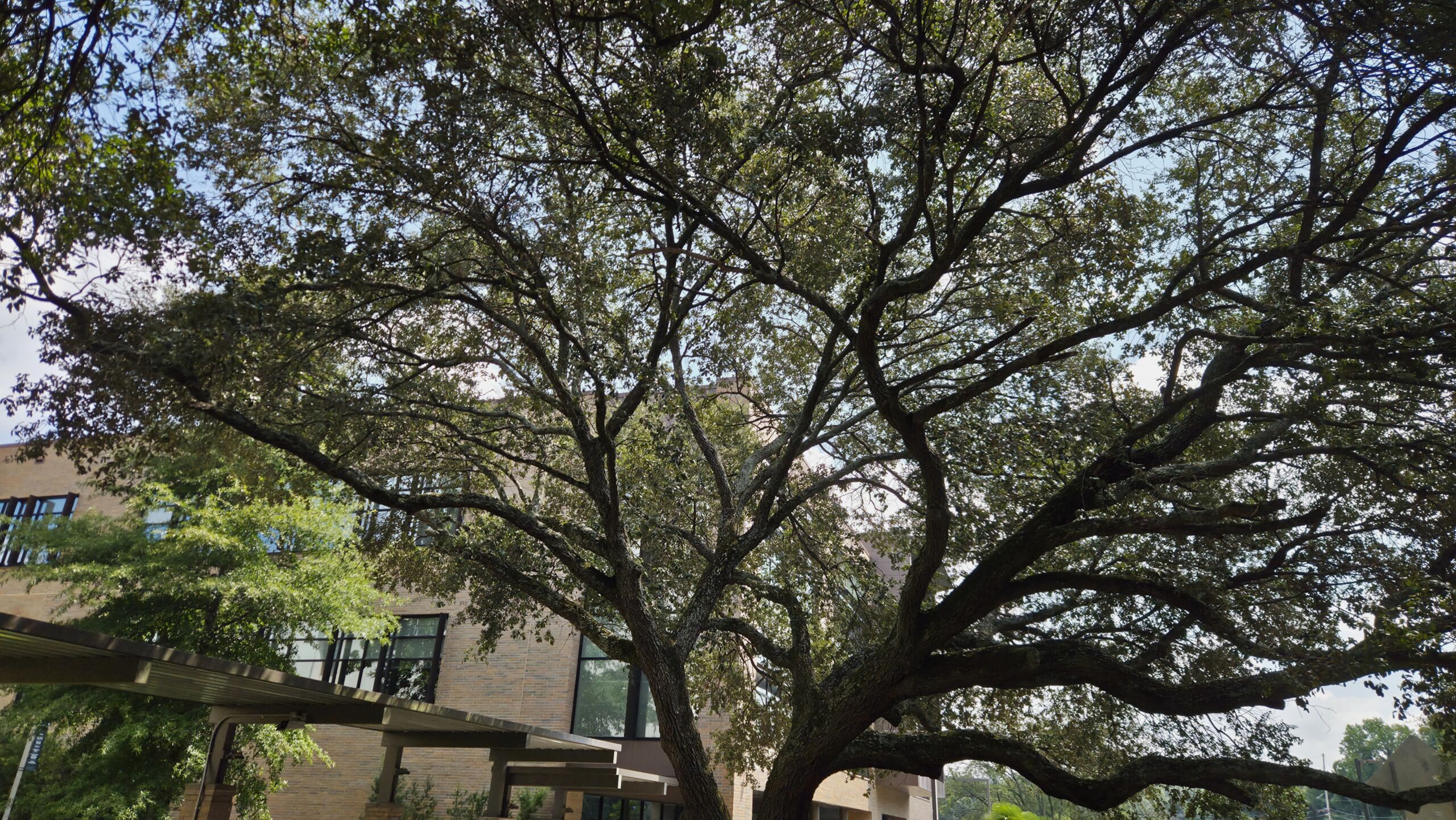
None of this means the tree is doomed. It means the lawn is a bad roommate, and the tree would do better with different company.
Why a thicket fixes it
Put trees and shrubs together in a grouping and everything changes. Their root systems interweave into a complex mat that holds soil, shares water, and anchors the whole group — which is why a thicket is far more wind-tolerant and drought-tolerant than a lone tree standing in shallow-rooted turf. One tree in a lawn is a sail on a stick. A thicket is a crew holding hands.
A grouping also drinks more stormwater than a lone tree, because there is more leaf, more root, and more mulch slowing water down and letting it soak in instead of sheeting off. Park a thicket at the edge of a low spot and it becomes the intake filter for your yard: runoff from roofs, driveways, and roads flows in, and the thicket’s soil and roots take it up. That is exactly the logic of a rain garden, and a thicket makes a fine neighbor for one — see Florida Rain Gardens for the soggy-spot version of this idea.
And then there is the part you can hear. A thicket is habitat: shelter, nesting cover, berries, nectar, caterpillars, and all the small lives that turn into bird food. The chain from the first section — soil, plants, insects, birds — actually runs here, because a thicket gives every link somewhere to live. A lawn gives them a haircut.
How to build a thicket around a tree
Here is the method, step by step. None of it requires a landscape crew, and none of it has to happen in one weekend.
1. Size it by the leaf drop. Make the thicket at least as large as the area the tree drops leaves over. That leaf litter is not trash — it is the thicket’s own mulch factory, and the whole point is to let it stay where it falls. Magnolias are the classic case: their thick, leathery leaves are too stubborn for a mower and perfect for a thicket floor, where they rot slowly into exactly the fungal-rich litter that woodland plants love.
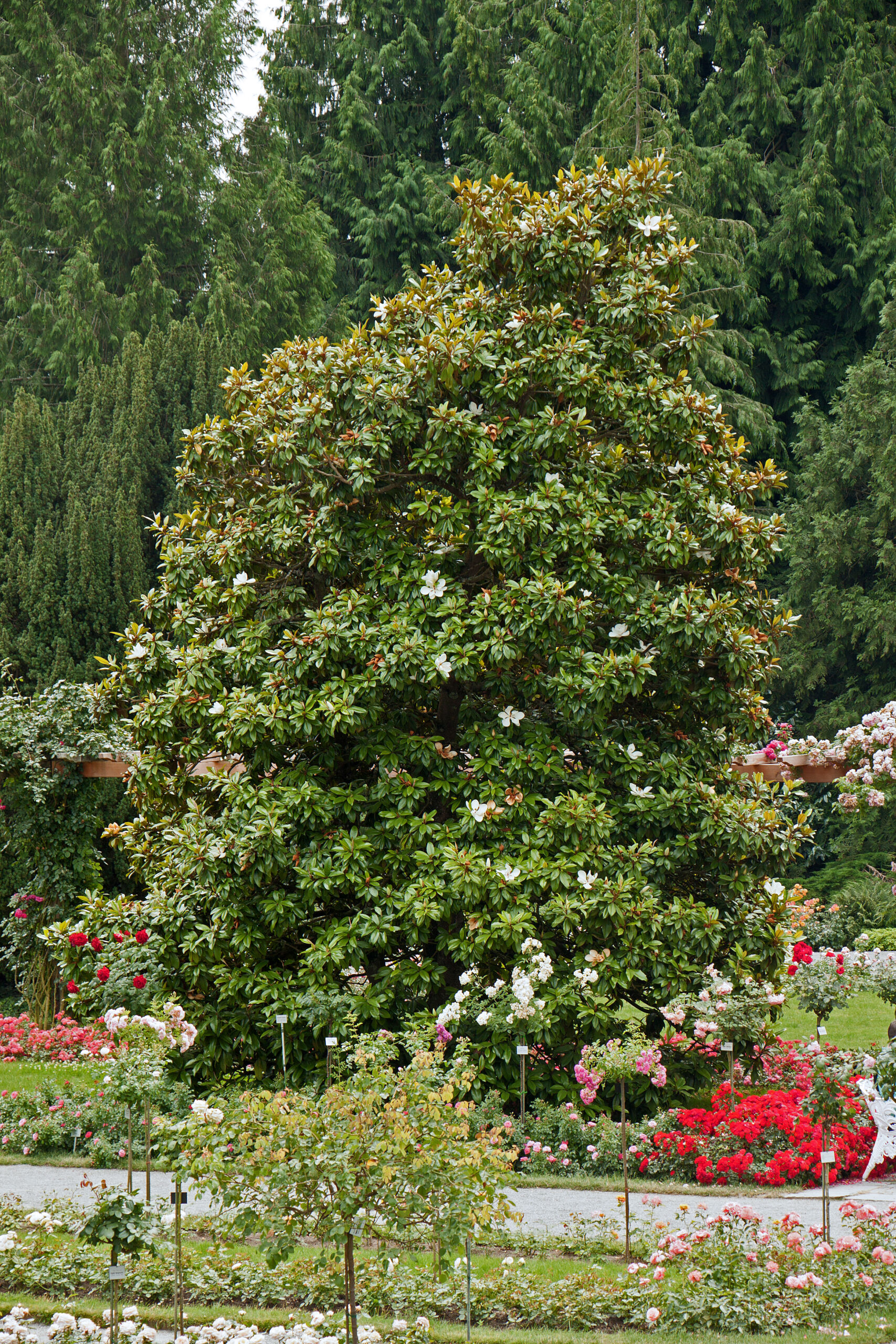
2. Draw wide curves. A thicket with gentle, sweeping edges is easy to mow around. A thicket shaped like a lightning bolt is a weekly argument with your mower. Wide curves, always.
3. Get the lawn out without hurting the tree. Right next to the trunk, remove lawn by hand or with hand tools. No sod-cutters and no herbicides in that zone — both will damage the tree’s roots and bark, which defeats the entire purpose. Further out, where the roots are less dense, smother the grass with a thick layer of wood mulch, with or without cardboard or newspaper underneath. The mulch does double duty: it kills the grass and it feeds the soil food web while it rots.
4. Plant in the pockets. A tree’s big roots are not negotiable — you do not cut them to make room. Instead, find the planting pockets between the major roots and tuck plants in there, leaving each woody plant room to grow into its own mature form. A thicket is not a hedge; it is a crowd with personal space.
5. Choose natives, and choose diversely. Pick plants compatible with the tree — same light, same moisture, same soil — and native to the region. And choose for diversity across the neighborhood, not just your yard: if every house plants the same three shrubs, the street has a monoculture with better marketing. A street where every thicket is a little different is a street with a real food web.
6. Plant woody plants the tough-love way. When you plant a woody plant in the thicket, rinse all the potting soil from its roots and spread them out in a shallow planting hole. It looks harsh. It is the head start that matters: roots in contact with your actual soil from day one, instead of circling in a potting-mix pot-shape underground, grow outward faster — and outward roots are what make a plant wind-tolerant and drought-tolerant. (Yes, this is the same tough love we recommend for trees generally. Consistency is a virtue.)
7. Finish the edges. Edge the thicket with bunching grasses and smaller herbaceous plants. The edge is what keeps the whole thing looking intentional instead of abandoned, and it is where a lot of the pollinator action happens anyway.
8. Take your time. A thicket is not one giant install. Build it over a number of years and seasons, as time, money, and energy allow. Plant the bones first, fill in as you go, and let each season teach you what works on your specific property. Experience compounds: the third year of a thicket teaches you things the first year never could, because now you have actually watched your soil, your shade, and your rain.
Florida thickets that already work
You do not have to take this on faith. Florida is full of working thickets, and the best ones are the ones nobody maintains:
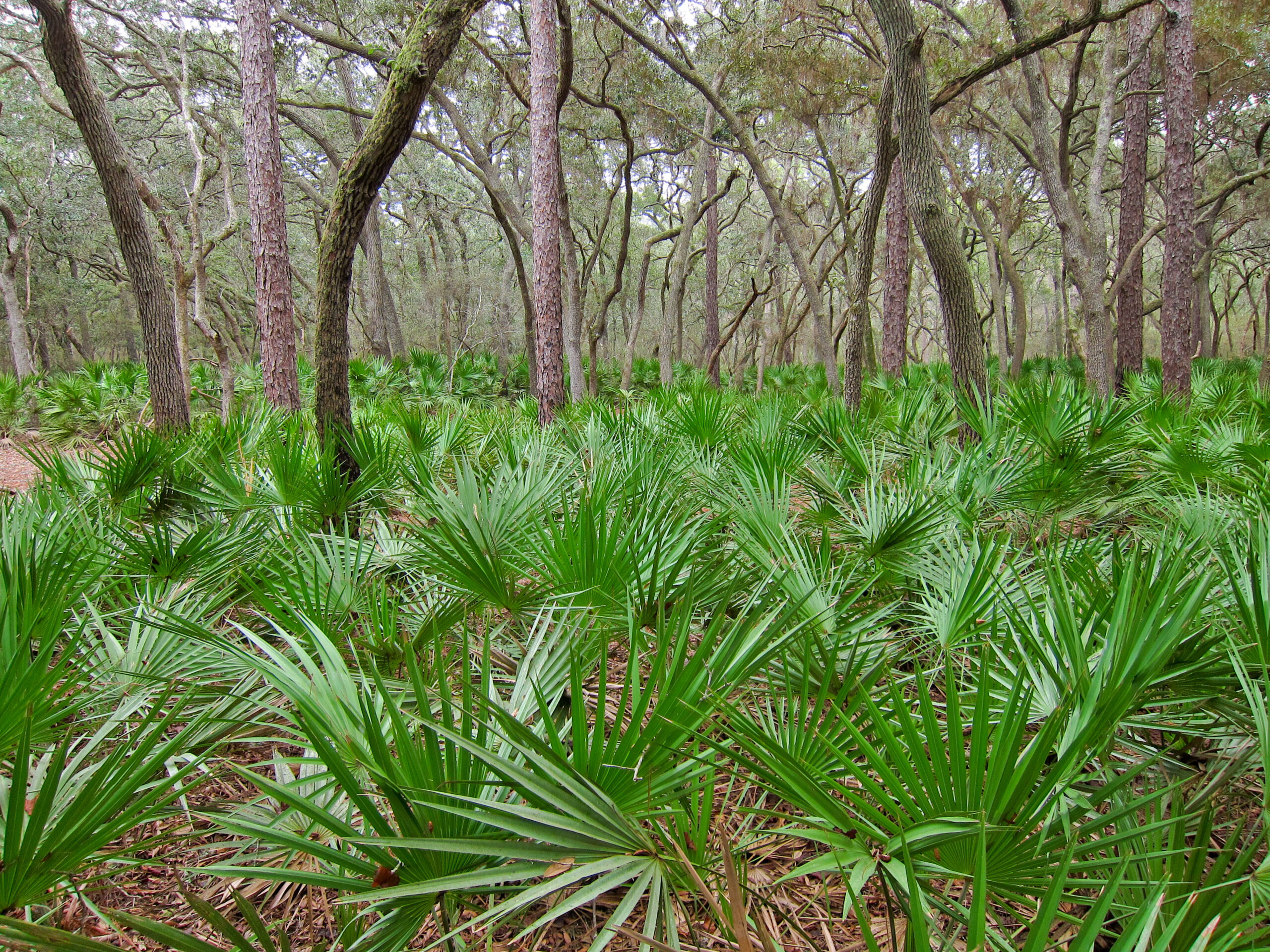
The palmetto thicket. A saw palmetto (Serenoa repens) thicket as screening needs almost no maintenance beyond mowing around it. Palmettos are the introverts of the plant world: they want to be left alone, they feed wildlife, and they look like Florida because they are Florida.
The azalea thicket around an oak. Give an azalea thicket a decade under an oak and it becomes a self-running woodland room, maintained the same way — mow around it, otherwise leave it alone. Our native pinxter azalea (Rhododendron canescens) does the same trick around pines, lighting up the spring understory pink before most of the neighborhood has woken up.
The thickets nature builds for free. Drive past a minimally maintained right-of-way and look at what grows there without anyone’s help: a tangle of shrubs, vines, and small trees doing exactly what a thicket does — holding soil, feeding insects, sheltering birds. Nature’s version is messier than yours will be, and it works anyway. That is the standard you are aiming for, not a magazine spread.
Other good thicket citizens with profiles on this site, if you are shopping for your own: wax myrtle (Morella cerifera), yaupon holly (Ilex vomitoria), coontie (Zamia integrifolia), wild coffee (Psychotria nervosa), marlberry (Ardisia escallonioides), firebush (Hamelia patens), and coral bean (Erythrina herbacea). Under the right tree, a cabbage palm (Sabal palmetto) or a southern magnolia (Magnolia grandiflora) can be the canopy itself, and the live oak (Quercus virginiana) is the classic Florida thicket roof. Match the plant to the tree’s light and moisture, and let the thicket sort out the rest.
The mistake to avoid: limbing up and clearing out
Now the cautionary tale, because Florida yards have a recurring villain and it is not a plant. It is the urge to limb up a magnolia or clear out the understory trees, shrubs, and vines under a big tree, in the name of tidiness.
Here is what that tidiness costs: the screening that kept your yard private, the sound dampening that kept it quiet, and the bird habitat that kept it alive — all gone in an afternoon. The newly admitted light explodes the weed population, because sunlight on bare soil is a weed’s favorite love letter. The cut stumps sucker endlessly, so you have traded a no-care habitat for an endless pruning cycle, which is the opposite of a bargain. And you have lost the transpiration cooling the understory was providing, so the yard gets hotter while you work harder in it. Congratulations, you played yourself.
If a limb is genuinely hazardous, deal with the limb. But do not confuse a hazard with a habitat. The understory is not clutter. It is the crew.
Start small: one tree, one thicket
You do not need to convert the whole property. Pick one tree — the one you already feel sorry for, standing alone in the lawn — and build one thicket around it. Size it by the leaf drop, curve the edges wide, mulch out the grass, tuck plants into the pockets, and then mostly leave it alone. Watch what shows up. It will not take long: a butterfly that was not there before, a bird that suddenly has somewhere to land, soil that stays damp a day longer after rain.
Every yard makes a difference to a butterfly or a bird. And a street of thickets — one per yard, each a little different — stops being a row of lawns and starts being a larger habitat, with more diversity than any single yard could hold alone. That is the whole idea, and it starts with one tree.
🌱 Keep learning
Three related guides worth reading next:
- Ponds, Ducks, Fish & Chickens — The backyard ecosystem guide: stacking animals, water, and garden into one system.
- Grow Your Own Chicken Feed — Cut feed costs with duckweed, forage crops, and fermented feed.
- The Living Root Reading List — Books and resources that make better gardeners without requiring a lab coat.
🪱 Your Soil Needs This
Reading about healthy soil is great. Growing in it is better. Our small-batch, traceable worm castings are the shortcut your garden deserves.
Shop Worm Castings Subscribe & SaveEvery bag comes with a lot certificate. Know what's in your soil.