
How a Plant Actually Works
You water it. You feed it. You talk to it, possibly, in a voice you would not use in front of your coworkers. But what is the plant actually doing all day? A plant looks like the most passive organism on the property — no face, no feet, no visible agenda — and is, in reality, running a chemical factory, a hydraulic engineering firm, a solar utility, and a hormone-driven group chat, simultaneously, in total silence. Botany has a reputation as the sleepy science because its subject holds still. This guide is the correction: a tour of how a plant actually works, written for gardeners, where every mechanism ends with the only question that matters — so that’s why my garden does that?
The Anatomy Tour: Every Part Has a Job
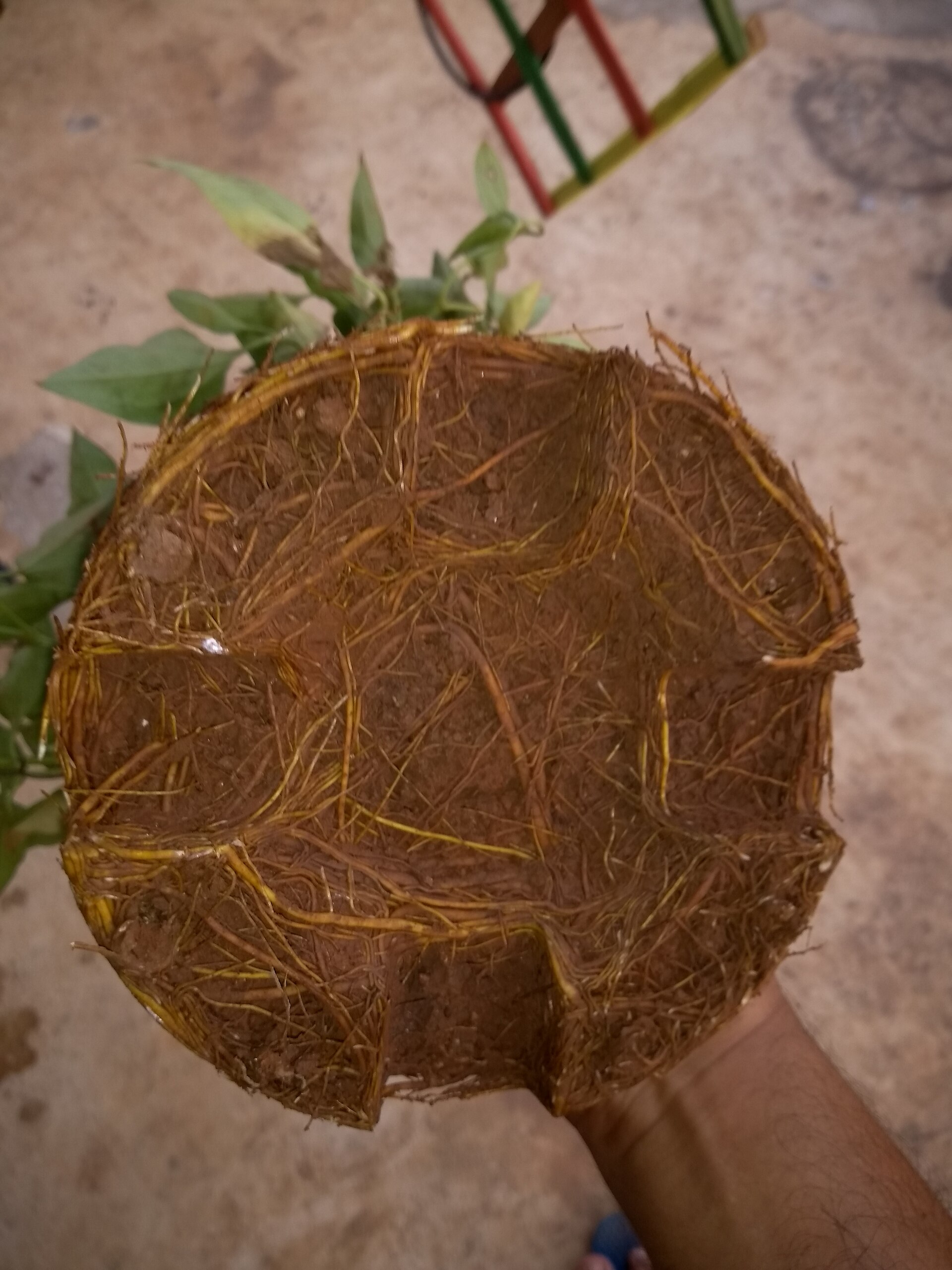
Roots are the intake and anchoring department, but describing them as “the part that drinks” undersells the operation. The real absorption happens in the root hairs — microscopic, single-cell fingers just behind each root tip that multiply the surface area enormously — and roots are also sensors and storage: they grow toward moisture, away from trouble, stockpile starch, and negotiate with fungi (the mycorrhizal trading relationship our soil guides keep bragging about). Our Roots & Nutrient Uptake guide is the deep dive; the headline here is that the root system is not plumbing. It’s a foraging brain made of chemistry.
Stems are the logistics network: a bundle of two one-way highways. Xylem carries water and dissolved minerals up from the roots; phloem carries sugars from the leaves (the source) to wherever they’re needed (the sink — roots, fruits, growing tips). Between them, in woody plants, lies the cambium, the thin generative layer that makes new highway each year and becomes, over time, the wood. This is why girdling kills a tree: sever the phloem in a complete ring and the roots starve, even though the water highway still runs for a while. A plant can be dying of hunger with a full drink in its hand, which is as good a parable as botany offers.
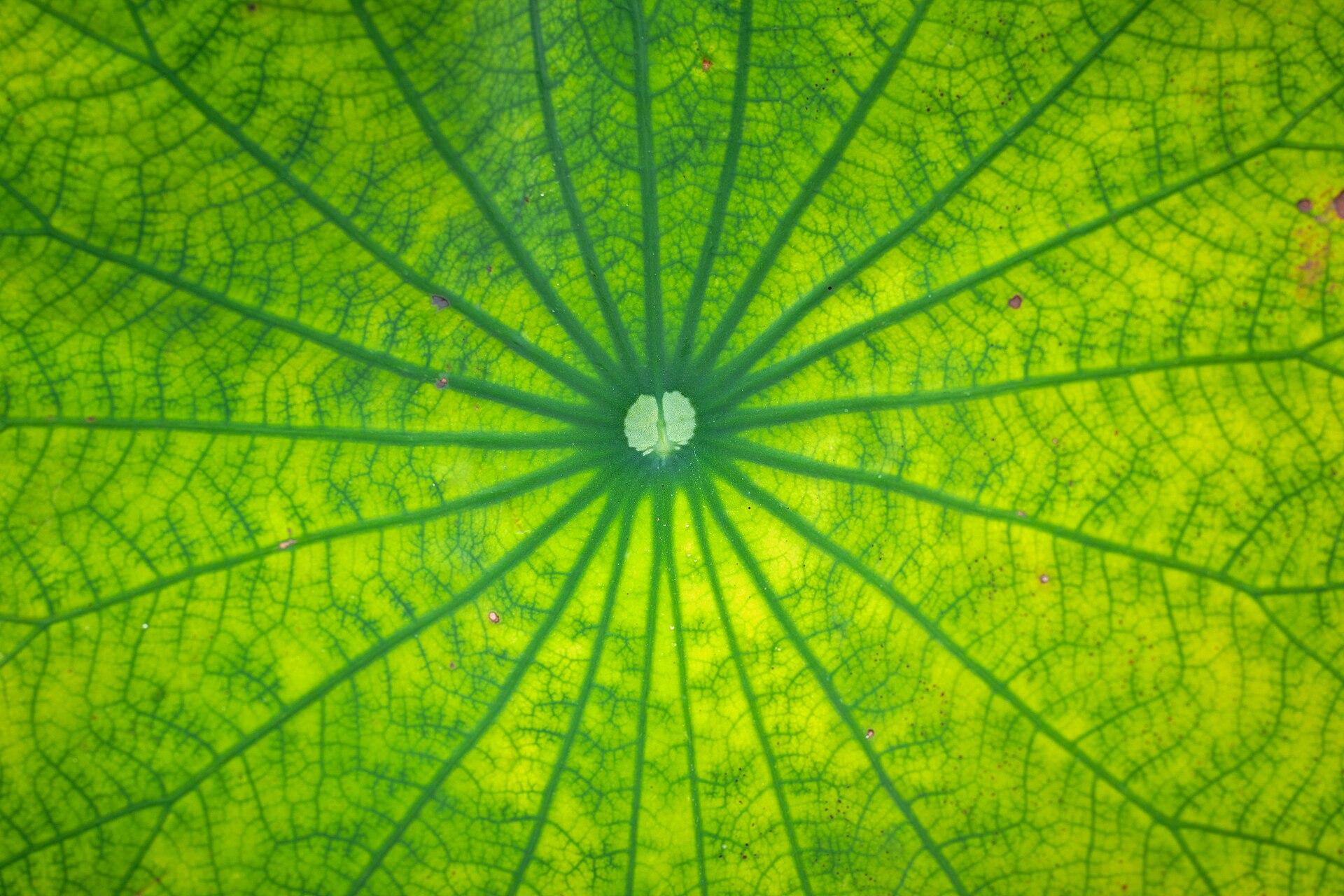
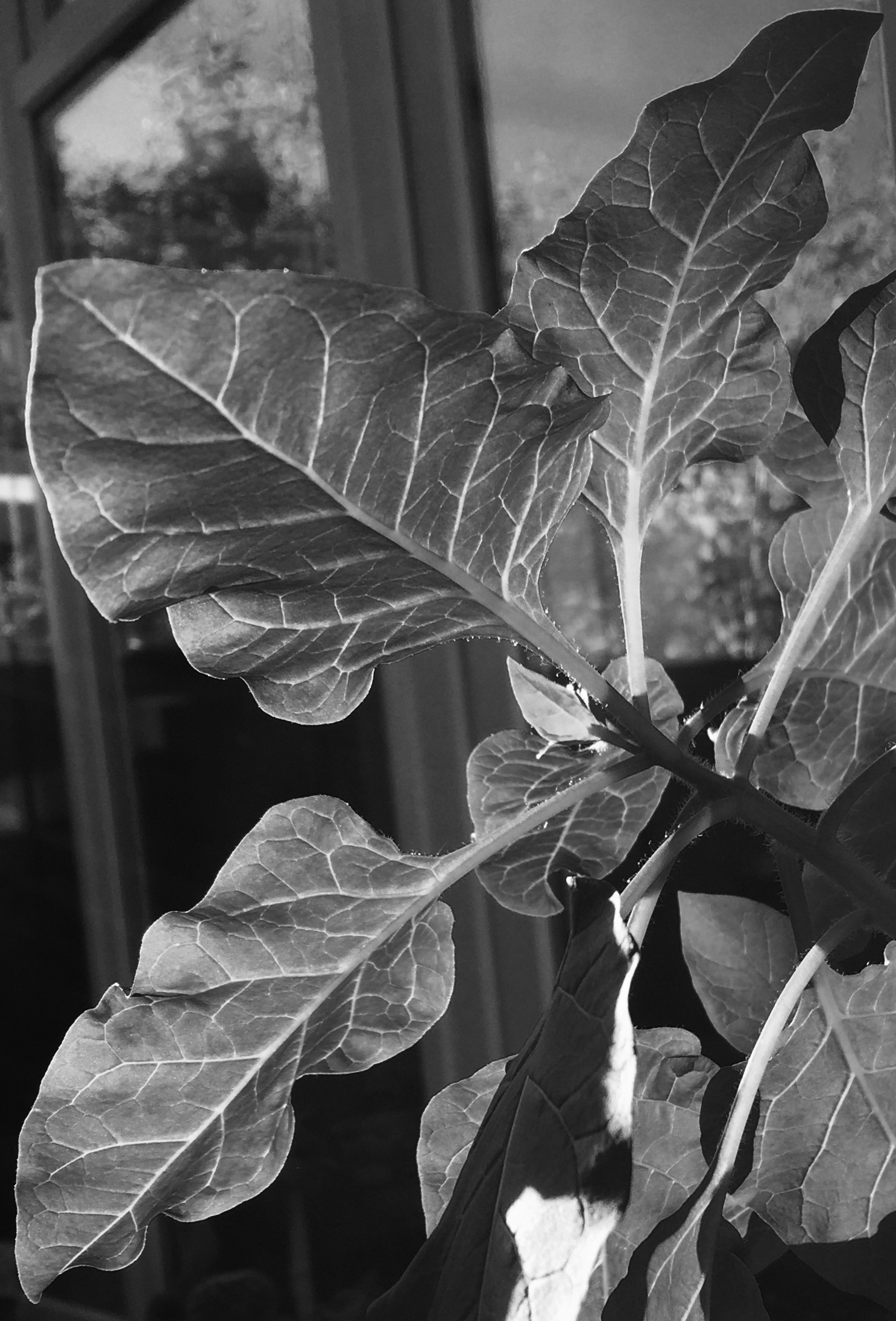
Leaves are the factory floor — flat solar collectors with adjustable ventilation. Each leaf is studded, mostly underneath, with stomata: tiny pores, each flanked by guard cells that inflate and deflate to open and close them like microscopic mouths making constant decisions. Open, the plant can take in carbon dioxide for photosynthesis — and loses water vapor doing it. Closed, it conserves water — and can’t eat. Every leaf, every minute of daylight, is running this cost-benefit analysis. Wilting at noon and recovering by evening is often just the plant having closed the factory during the expensive hours.
Flowers are the reproductive department, engineered for pollination logistics — color, scent, shape, and nectar as advertising and payment — and the fruit that follows is the seed-delivery vehicle, sweetened at the plant’s expense because the plant is paying animals to move its children. When you eat a mango, you are the unpaid intern in a distribution scheme older than mammals. It’s a good job. The benefits are mangoes.
The Transpiration Stream: Water’s Impossible Elevator
Here is a fact that should bother you pleasantly: a tall tree lifts water from its roots to its highest leaves, dozens of feet in the air, with no pump, no moving parts, and no energy bill. The mechanism is the transpiration stream, and it’s one of the elegant hacks in all of biology. Water evaporates from the leaves through the stomata; because water molecules cling to each other (cohesion) and to the walls of the xylem (adhesion), the evaporation at the top puts the entire unbroken column of water under tension — and the column simply gets pulled up, root to leaf, like drinking through a very long straw that physics holds together. Over ninety percent of the water a plant absorbs is not used for growth or chemistry at all; it evaporates, paying the toll that keeps minerals flowing in and leaves cooled.
The gardener payoffs arrive immediately. So that’s why a plant wilts on a windy day even in moist soil — demand at the top outran the elevator. So that’s why transplant shock is about roots, not welcome baskets: severed roots can’t supply the stream until they regrow, which is why we prune top growth on transplants and shade them — we’re balancing a budget. So that’s why root damage shows up as leaf symptoms first, and why “the leaves look thirsty” so often means “check the roots, the soil, and the drainage” rather than “add more water to a drowning plant.”
Photosynthesis: The Only Solar Industry That Matters
The core transaction: chlorophyll in the leaves captures light energy and spends it splitting water and building sugar from carbon dioxide. Oxygen — the byproduct, the waste gas of this operation — is what you’re breathing; essentially every living thing you have ever met runs on this one chemical reaction, run by plants and their microbial ancestors, at planetary scale. The sugar produced is the plant’s currency: burned for energy, built into cellulose for structure, converted to starch for storage, shipped via phloem to roots and fruits. When gardeners say a plant is “hungry for light,” they mean this literally: shade is a pay cut, and a plant in deep shade is an employee on reduced hours trying to fund the same fruit production.
And now the Florida chapter, because photosynthesis has variants and our heat sorts them. Most plants use the standard pathway, called C3 — and C3 has a flaw: its carbon-fixing enzyme also grabs oxygen by mistake, a costly error called photorespiration that gets worse as temperature rises. On a brutal Florida afternoon, a C3 plant can waste a significant share of its earnings fixing its own enzyme’s confusion. C4 plants — corn, sugarcane, many tropical grasses — evolved a workaround: a carbon-concentrating pump that force-feeds CO₂ to the enzyme, nearly eliminating the mistake, at the cost of extra energy. In cool weather it’s an unnecessary expense; in Florida heat it’s a superpower, which is why the summer lawn and the corn patch are thriving while the C3 vegetables are negotiating. CAM plants — pineapple, cactus, orchids, agave — play a third strategy: open stomata only at night, bank the CO₂ as acid, and photosynthesize all day behind closed doors, losing almost no water. Three engineering solutions to the same problem, sorted by climate. Your garden contains all three philosophies, and knowing which plant runs which explains half the “why is this one happy and that one miserable” mysteries of a Florida summer.
The Hormone Group Chat
Plants coordinate their growth with chemical messages, and once you know the main senders, a dozen garden mysteries resolve into memos:
Auxin is the growth foreman, made in shoot tips and young leaves. It promotes stem elongation and — critically for propagators — stimulates root formation, which is why rooting hormone exists (it’s usually a synthetic auxin) and why the whole cutting business in our Propagation Guide works. Auxin also enforces apical dominance: the top bud suppresses the side buds below it, keeping the plant growing up rather than out. So that’s why pinching the tip of a basil or tomato plant makes it bush out — you fired the foreman, and every side bud got promoted on the same day. Pruning works the same way at branch scale: remove a tip, release the buds behind it, redirect the plant’s ambitions. You’re not cutting the plant. You’re editing its org chart.
Ethylene is the ripening memo — a gas, unusually, so it drifts plant to plant and fruit to fruit. It coordinates ripening and senescence, which is why one overripe banana in the bag hurries all the others (the bag traps the gas; the saying about a bad apple is peer-reviewed by every fruit bowl), and why commercial bananas ship green and get gassed on arrival. So that’s why tomatoes picked at first blush ripen on the counter — the memo was already sent; the fruit finishes the job off the vine.
Gibberellins are the stretch-and-germinate signals — stem elongation, seed germination triggers — and abscisic acid is the stress officer: it closes stomata in drought and enforces seed dormancy until conditions argue otherwise. Every one of these is a lever a gardener touches without knowing: the pinch, the pruning cut, the ripening bag, the scarified seed. Botany is just the user manual for levers you’ve been pulling blind.
Tropisms: How a Plant Steers Without Moving
Plants can’t walk to the light, so they grow to it — differential growth, one side elongating faster than the other, bending the stem. Phototropism (toward light) is auxin again: it migrates to the shaded side and elongates those cells, curving the shoot sunward — the windowsill plant’s lean, fixed by a quarter-turn of the pot, which is you manually redistributing a hormone. Gravitropism keeps shoots growing up and roots growing down regardless of how the seed landed — a seed planted upside down rights itself, because the plant can tell down from up with a reliability most of us lack before coffee. Thigmotropism is touch response: the tendril that curls on contact with a trellis, the vine that finds the fence. Slow by our clocks, these are not inactions; they’re navigation at plant speed.
Day Length: The Calendar Written in Light
Many plants flower not by temperature or age but by photoperiod — the length of the night, precisely measured by pigments that track darkness. Short-day plants (many fall bloomers) flower as nights lengthen; long-day plants (much of the spring roster) flower as nights shrink; day-neutral plants (tomatoes, peppers, and other pragmatists) flower whenever they’re mature and conditions allow. Florida’s latitude gives us gentler day-length swings than the north, which is why some northern varieties behave oddly here and why Florida breeding and Florida calendars matter. So that’s why the same variety bolts for one gardener and dawdles for another five hundred miles apart: they’re quite literally on different calendars, written in light, read by leaves.
Put it all together and the “passive” plant is revealed as the hardest-working negotiator in the yard: trading water for carbon by the second, pulling an elevator of water with evaporation, fixing its enzyme’s mistakes or paying for a pump to avoid them, governing its own shape by committee of hormones, steering by growth, and keeping a calendar in its leaves. The gardener’s whole job — water, light, pruning, timing — is adjusting the conditions of those negotiations. Garden long enough with this manual in your head and you stop asking “what does this plant want?” You already know. You watched it decide. The plant was never passive; it was just fluent in a language you have only just started learning.
The Launch Sequence: How a Seed Decides
Before any of the above machinery exists, it has to be started, and a seed is a startup with a checklist. Dormancy is the default state — enforced by abscisic acid and sometimes by the seed coat itself — and breaking it is the seed’s way of demanding references: moisture, temperature, sometimes light, sometimes a winter survived (cold stratification), sometimes physical damage to the coat (scarification), in the wild sometimes fire or a trip through an animal. When the references check out, the sequence fires: the seed drinks (imbibition, a physical swelling powerful enough to split the coat), gibberellins wake the embryo and signal the pantry — the seed’s stored starch — to start converting to sugar, and the radicle, the embryonic root, emerges first, always first, because the whole enterprise needs water before it needs light. The shoot follows, often wearing the seed coat like a helmet it discards at the surface. So that’s why seed-starting instructions are so bossy about depth and moisture: you’re not following rituals, you’re satisfying a checklist written by evolution, item by item. Get the items right and the launch is nearly automatic. It’s the least mysterious reliable process in the garden, and it still feels like a magic trick every single spring.
Defense and Communication: Handle the Headlines With Care
Plants under attack are not passive either. They manufacture chemical defenses — the bitterness, the toxins, the compounds that make a leaf a bad meal — and they can ramp production up when chewed, a response coordinated by yet another hormone pathway (jasmonic acid, the alarm bell). Damaged plants also release volatile chemicals into the air, and here the internet’s favorite headline needs its qualification, delivered kindly: neighboring plants can detect some of these airborne compounds and prime their own defenses, and in agricultural settings these signals are a real, studied phenomenon — but “plants talk to each other” as a picture of forest-wide conversation goes well past the evidence. What the evidence supports is stranger and better: plants eavesdrop. The air is full of chemical information, and anything that can read a rumor and arm itself cheaply, does. The gardener payoff is modest but real — a garden of mixed, vigorous plantings has this whole signaling-and-defense economy running at once, one more quiet reason monocultures need so much outside help. Your plants are not chatting. They are monitoring each other’s distress calls with the focus of neighbors who definitely heard that noise too.
Life History: The Annual Bargain and the Perennial Bank
Every plant is also running a financial strategy for its one wild and precious life. Annuals spend everything: germinate, grow fast, flower, seed, die — the entire fortune converted to offspring in a single season. Bolting, the gardener’s heartbreak, is this strategy executing on schedule: when a lettuce or spinach plant reads its cues — lengthening days, rising heat — it concludes the season is ending and moves its whole budget into a flower stalk and seeds now, because an annual that waits politely for better weather leaves no descendants. The bitterness that floods a bolted lettuce is the taste of a plant that has stopped cooking for you and started packing for the next generation. It is not misbehaving. It is completing the only mission it ever had, and your job is timing — grow the cool-season annuals in Florida’s cool season, and let the strategy work for you instead of against you. Perennials run the opposite book: bank resources in roots, crowns, and wood; spend conservatively; survive the bad season on savings and do it all again for years. Neither strategy is better. They’re answers to different questions — is this place predictable enough to save in? — and a Florida garden, with its long bounty and sudden dramas, rewards growers who plant both the gamblers and the bankers, on purpose, knowing which is which.
🌱 Keep learning
Go below ground with Roots & Nutrient Uptake, explore the partnership economy in Plant-Soil Relationships, put the hormone levers to work in the Propagation Guide, and find the rest of the collection at the Living Root Academy.
🪱 Your Soil Needs This
Reading about healthy soil is great. Growing in it is better. Our small-batch, traceable worm castings are the shortcut your garden deserves.
Shop Worm Castings Subscribe & SaveEvery bag comes with a lot certificate. Know what's in your soil.