
Hydroponics, Honestly
Deep breath. This is the Living Root Garden website — the one with the worm herd, the soil sermons, the castings with a published menu — publishing a hydroponics guide. Somewhere, a bag of potting soil just fainted. But honesty is the house rule here, and the honest truth is that hydroponics — growing plants in water instead of soil — is a real technique, with real virtues, practiced by serious growers, and a Living Root reader deserves the fair version: how it works, what it genuinely does better than soil, what it cannot do at any price, and why, at the end of the comparison, this site still plants in dirt. No sneering. No straw men. Just the whole picture, roots and all — the roots, in this case, hanging in water for everyone to see, which is hydroponics’ first charm: it hides nothing.

How It Works: The Plant Doesn’t Read the Label
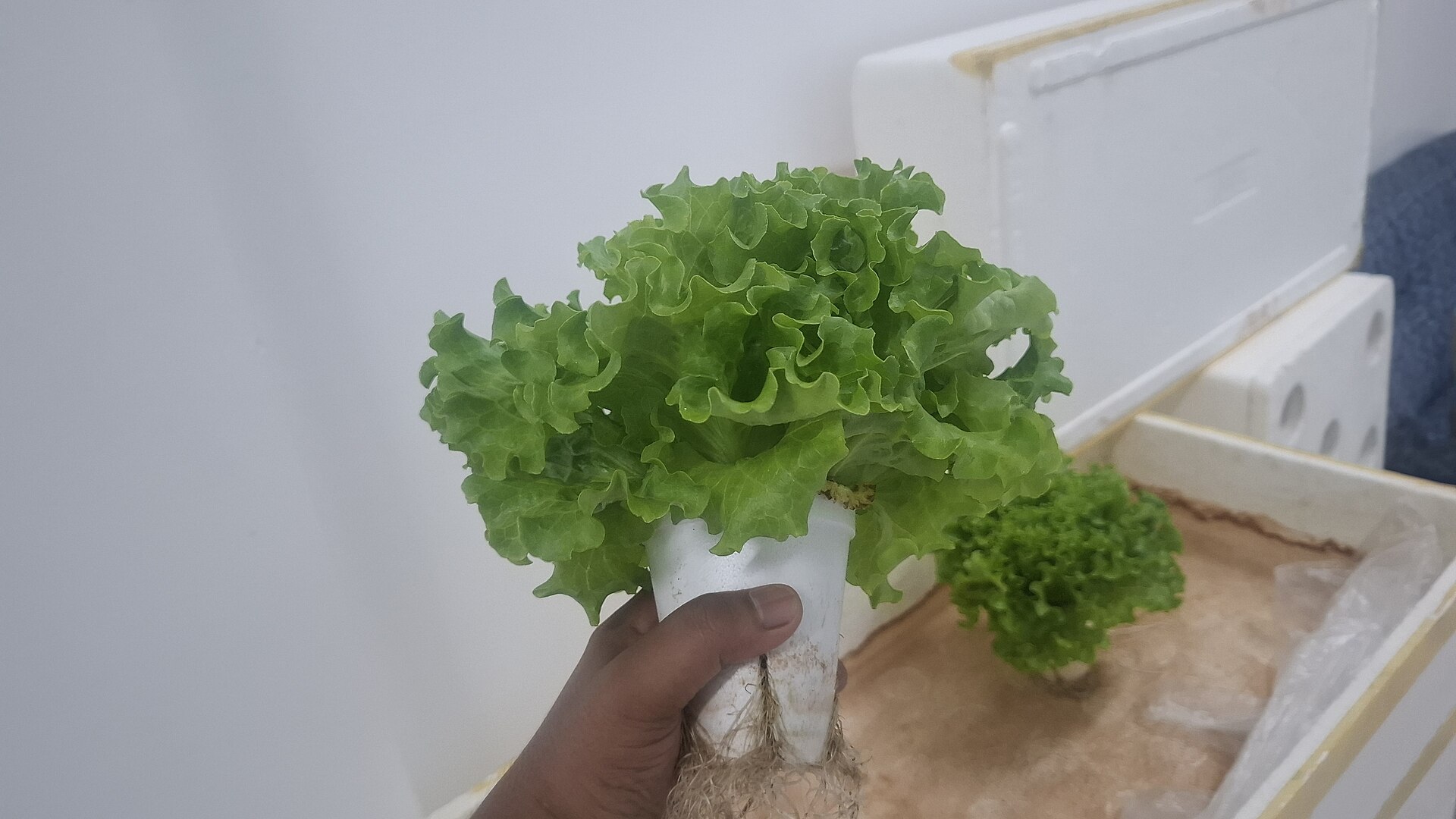
Start with the botany, because it dissolves most of the mystique. A plant root’s job is to absorb water and dissolved mineral ions — nitrogen, phosphorus, potassium, calcium, and the rest of the periodic pantry. The root cannot tell whether those ions were dissolved by soil microbes from compost, or by a grower from a bottle of nutrient salts. An ion is an ion. Soil is the plant’s traditional delivery and buffering system; hydroponics replaces that system with engineering: hold the plant up, bathe or mist its roots in a nutrient solution you mix and monitor, and supply the one thing water alone lacks — oxygen at the roots, because roots breathe, and a root sitting in still, warm, oxygen-free water drowns in the middle of a drink.
That oxygen problem is the design axis of every hydroponic system ever built:
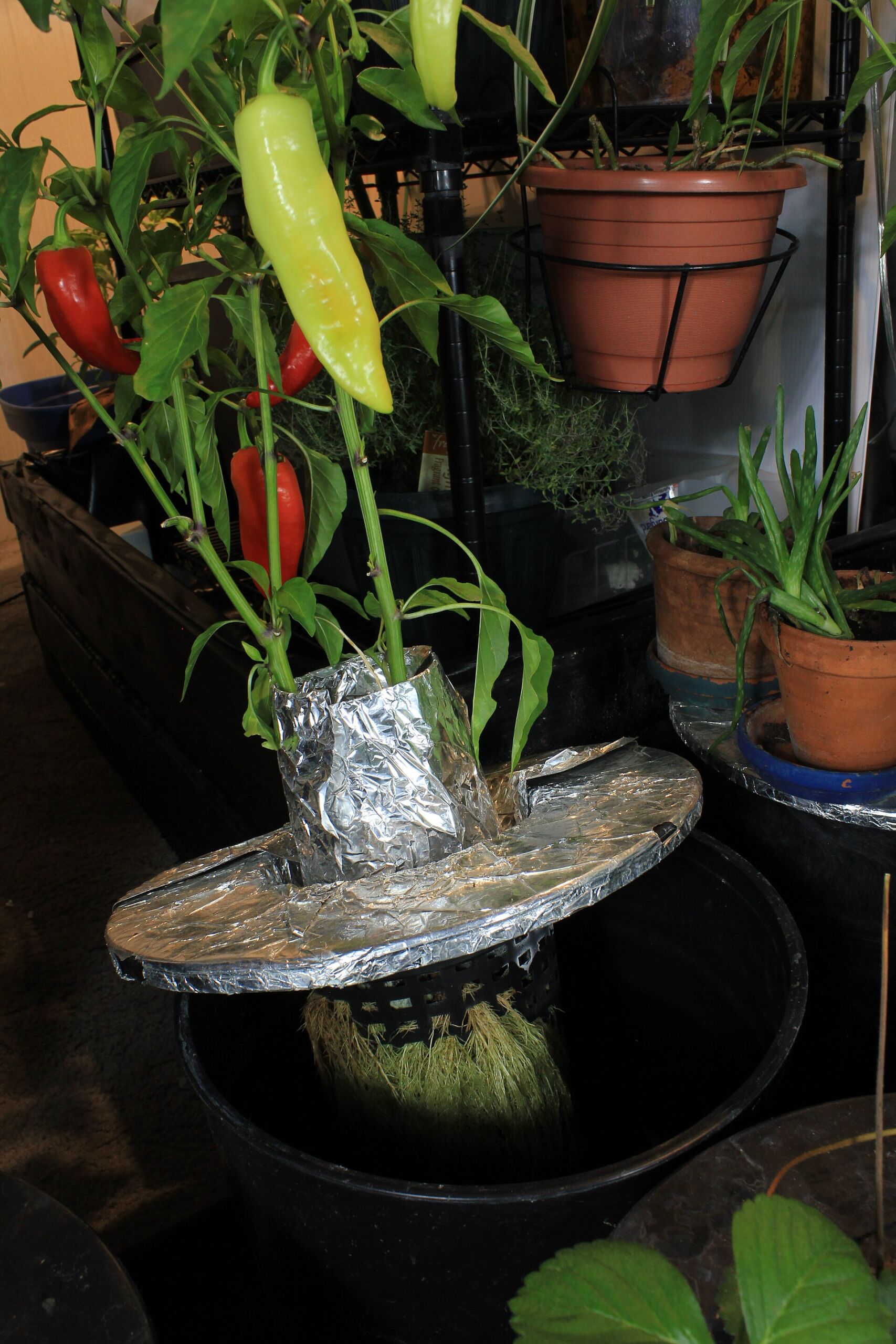
- Kratky method — the minimalist masterpiece. The plant sits in a net pot over a reservoir; roots grow down into the solution, and as the level drops, an air gap forms — the exposed upper roots breathe, the lower roots drink. No pump, no electricity, no moving parts. It shouldn’t work as well as it does, and it’s the correct first date with hydroponics.
- Deep water culture (DWC) — roots hang in a reservoir full-time while an aquarium air pump and air stone keep the solution oxygenated. Simple, vigorous, and entirely dependent on a small electric heartbeat.
- Nutrient film technique (NFT) — a pump runs a shallow film of solution through channels past the roots, constantly renewed and re-oxygenated. Elegant, commercial, and the system most sensitive to a pump failure on a hot day.
- Ebb and flow, drip, and media systems — variations on flooding a tray or dripping solution through an inert medium (clay pebbles, perlite, coir), then draining. The medium gives roots something to hold and a buffer against brief failures.
Across all of them, the grower’s real jobs are the two meters: the solution’s strength (read as electrical conductivity — salts conduct, so the meter estimates how much food is in the water) and its acidity, which drifts and must be checked and adjusted, because nutrient availability lives and dies in a fairly narrow pH neighborhood and water holds no buffer of its own. Soil does a hundred small corrections automatically. Hydro hands you the clipboard.
What Hydroponics Genuinely Does Better
The fair list, without asterisks in our voice:
- Water efficiency. A recirculating system reuses the same water until the plants drink it or it needs changing; very little is lost to the deep soil or the wind. In a closed loop, hydroponics is legitimately frugal with water in a way open ground can’t match.
- Speed and control. With nutrition perfect, oxygen maxed, and light controlled, growth rates can outpace soil — the plant never waits for a microbe to finish cooking its dinner. Commercial growers aren’t buying pumps for fun; the throughput is the business case.
- No soil-borne disease or weeds. The whole Rogues’ Gallery of soil fungi, nematodes, and weed seeds simply isn’t in the building. Sterility is hydroponics’ home-field advantage, and in a greenhouse it is a massive one.
- Place independence. Warehouses, rooftops, deserts, space stations — hydroponics goes where soil isn’t. (Yes, actual space stations. The lettuce is fine, apparently.)
- Clean, exact, measurable. Every variable is a number you can log. For the data-minded grower, hydroponics is gardening as instrumentation.
What It Cannot Do
And now the other side of the ledger, which is the reason this website exists:
- There is no food web. A hydroponic root zone is a cafeteria, not an ecosystem. There are no mycorrhizal partners trading minerals for sugar (the fungi need soil life and the plant is fed directly, so the ancient marketplace never opens), no microbial community cycling nutrients, suppressing pathogens by competition, building structure and resilience as it goes. The plant is fed; it is not accompanied. Everything the soil does beyond delivering ions — and our Living Soil guide is several thousand words on exactly that everything — hydroponics doesn’t replace. It declines to attempt it.
- There is no buffer, so mistakes arrive at full speed. In soil, an overfeeding is diluted, adsorbed, argued with by chemistry for days. In a reservoir, a wrong mix, a drifting pH, a failed pump on a Florida afternoon reaches the roots in hours. Hydroponics trades soil’s forgiveness for precision, and the trade is permanent.
- Total input dependence. The fertility arrives in bottles made in factories; the oxygen arrives by electricity; the light, indoors, by the grid. A soil garden’s fertility can be grown on-site from scraps and worms and time. A hydroponic garden’s fertility has a supply chain, and the supply chain has a price tag, forever. (In hurricane country, add this line item: when the power goes out for days, a soil garden is inconvenienced. A pump-dependent system is a countdown.)
- The flavor question, handled fairly. Hydroponic produce’s reputation for blandness is mostly a variety-and-harvest story — commercial cultivars bred for shipping, picked early — rather than a water story; a vine-ripened hydroponic tomato of a flavorful variety tastes like itself. What hydroponics cannot replicate is terroir in the microbial sense: whatever subtle contributions a living soil community makes to a plant’s chemistry arrive via pathways a reservoir doesn’t have. Reasonable gardeners can weigh that differently. All of them should weigh it knowingly.
The Side-by-Side, in One Honest Table of Prose
Soil asks for patience and gives resilience; hydroponics asks for precision and gives control. Soil fertility can be free and gets better every year you tend it; hydroponic fertility is purchased and identical every week. Soil fails slowly and forgives; hydroponics fails fast and teaches. Soil grows an ecosystem that happens to include your dinner; hydroponics grows your dinner, full stop, with an efficiency that feeds cities where land and water are scarce. These are not the same product, and the shouting match between their partisans is mostly two correct answers arguing about which question was asked. For feeding lots of people in a warehouse with little water? Hydroponics, and it isn’t close. For a Florida backyard whose owner wants the food, the fertility independence, the biology, and the resilience in one package? We plant in the dirt, and this site’s several hundred pages are the long version of why.
The Gateway Experiment: One Bucket of Kratky Lettuce
Curiosity deserves a cheap experiment, so here is the one we’d assign. Take a food-grade bucket with a lid. Cut a hole in the lid for a small net pot. Fill with water, mix in hydroponic nutrient solution per its label, set a lettuce seedling in the net pot with a bit of inert medium so its roots can reach the water, and put the bucket in bright light with the reservoir shaded. Then mostly leave it alone — the Kratky method’s entire energy budget is your occasional check that the level hasn’t fallen too far and a top-up of solution if it has. In a few weeks you will harvest a genuinely good head of lettuce that grew in a bucket of water on your porch, and you will understand hydroponics in your hands instead of in your opinions: the speed is real, the simplicity (at this scale) is real, and so is the clipboard — because you will have checked that water like a nurse the whole time, and the soil bed ten feet away asked you for nothing but a drink. Both lessons are the curriculum. (Our Container Gardening Guide covers the soil-grown porch alternative, if the bucket makes you homesick.)
Florida Notes: Hot Water and Storm Season
Two local facts before anyone in this state builds a system. First, warm solution grows trouble: the root-rot organisms (pythium and friends) adore warm, wet root zones, and a reservoir sitting in Florida heat is running their favorite temperature — shade the reservoir, insulate it, keep solution as cool as the setup allows, and treat root health as the system’s vital sign, because in Florida it is. Second, algae: light plus nutrient water equals green slime on every lit surface, so reservoirs and channels stay opaque and covered. And third — the hurricane footnote from the ledger above — a Florida hydroponic grower plans for outages the way a Florida boater plans for weather: battery air for the DWC buckets buys the crop its countdown in hours-to-days. The garden in the ground, meanwhile, will be standing there after the storm asking only for its debris to be picked up, which is the soil position in a single image. Respect both, choose knowingly, and if you run a reservoir next to your beds, you are not a traitor to either flag. You’re a gardener with a clipboard in one hand and a handful of castings in the other, and around here, that’s just called being thorough — the Water & Soil guide covers the element both systems share, whatever roof, reservoir, or open sky happens to be standing over it at the time.
Where the Nutrients Come From
The bottles deserve their own paragraph of honesty, because “feeding plants water and minerals” can sound like a spa treatment until you ask where the minerals were before the bottle. Conventional hydroponic nutrients are refined mineral salts — nitrogen from industrial fertilizer chemistry, phosphorus and potassium from mined rock, processed, purified, and dissolved. They are, in short, the same industrial inputs conventional agriculture uses, minus the soil they were invented to bypass the limits of. That doesn’t make them sinister; it makes the dependence ledger concrete. The soil gardener’s fertility can be a loop closed at home — scraps, worms, compost, cover crops, repeat. The hydroponic grower’s fertility is an input stream, priced by markets they’ll never meet, and its perfection is precisely its point: it is the same this week as last week, which no compost pile has ever promised anyone.
Growers regularly ask about organic hydroponics, and the honest answer is that it’s the hardest version of the idea: organic nutrient sources need microbial digestion to release their ions, and a reservoir is a difficult place to run a microbial kitchen — things clog, foam, and go anaerobic in ways a soil bed shrugs off. It can be done, by determined people, with biofilters and patience. It cannot be done casually, and the gap between “organic inputs were added” and “the plants were fed by a functioning food web” is exactly as wide in a tank as it is in a bag of potting mix. Chemistry doesn’t grade on intentions.
Aquaponics: The Hybrid With a Heartbeat
There is one member of the family that answers the food-web objection from inside a tank: aquaponics, where fish and plants share one loop of water. Fish eat feed and excrete ammonia; bacteria — a genuine, living microbial community hosted on every wet surface — convert that ammonia through nitrite to nitrate, the nitrogen cycle running in plumbing instead of soil; plants drink the nitrate; the cleaned water returns to the fish. It is hydroponics with an ecosystem hired back in, and it deserves respect on this site for exactly that reason: the fertility is biological, the loop is closed on the property, and the system produces protein alongside the greens. Its costs are the honest ones — fish are livestock, with a livestock keeper’s duties and disaster modes, and balancing three living systems (fish, bacteria, plants) adds a third clipboard to the two hydroponics already carries. Floridians run tilapia in backyard tanks all over this state, in water that stays kind to tropical fish most of the year. If the soil-free idea calls to you but the bottle-dependence bothers you, aquaponics is where the two honesties meet.
Who Should Actually Do This
Reach for hydroponics if you have no soil to speak of — the apartment, the courtyard, the contaminated lot where our phytoremediation guide told you not to plant dinner — or if your goal is greens and herbs in high rotation in a small footprint, or if you simply love systems, instruments, and the sight of roots in clear water doing visible math. Reach for it commercially if water is your scarcest input and land your second scarcest; that’s the equation it was built to win. Think twice if your land grows fine soil already and your goals are the long, cheap, resilient kind — perennials, orchards, the fertility bank that compounds — because hydroponics’ running meter (inputs, power, attention) never sleeps, and a Florida garden in living soil is a system that gets better at being left slightly alone. And think twice, always, in proportion to your outage plan. The grid is a landlord here in storm season, and it does not return calls.
Hydro Troubleshooting in Four Lines
- Plants wilt while sitting in water. The signature hydroponic paradox, and almost always oxygen — a failed air pump, a clogged stone, or a warm reservoir holding too little dissolved oxygen to share. Check the bubbles before you check anything else; the roots are drowning politely.
- Roots turn brown and slimy. Root disease moving into a warm, under-oxygenated system — the Florida resident from the notes above. Cooler, darker, better-aerated solution is the defense; badly infected plants are a sanitation decision, not a rescue project.
- Leaf tips burn while the meter says the mix is right. Trust the plant and recalibrate the meter — conductivity pens drift, and a reservoir concentrates as plants drink water faster than salts. Top up with plain water between changes, and let the foliage grade the instruments.
- Everything was fine until the vacation. The buffer lesson, learned personally: hydroponics measures its keeper’s absence in hours. Soil measures it in weeks. Choose your systems with your calendar open on the table.
🌱 Keep learning
For the other side of the story, read Living Soil, grow the porch comparison with the Container Gardening Guide, complete the element with Water & Soil, and find the rest of the collection at the Living Root Academy.
🪱 Your Soil Needs This
Reading about healthy soil is great. Growing in it is better. Our small-batch, traceable worm castings are the shortcut your garden deserves.
Shop Worm Castings Subscribe & SaveEvery bag comes with a lot certificate. Know what's in your soil.