
The Pearl Crescent (Phyciodes tharos) is a brush-footed butterfly (family Nymphalidae) with a wingspan of 2.1 to 4.5 cm depending on source and season (about 1 to 1.75 inches); spring and late-autumn individuals are smaller and more heavily marked. Its range runs Southern Canada south through the United States east of the Pacific states to Florida, the Gulf Coast and Mexico — one of the most widespread small butterflies on the continent.
At a glance
- Latin name: Phyciodes tharos — family Nymphalidae, the brush-footed butterflies
- Wingspan: 2.1 to 4.5 cm depending on source and season (about 1 to 1.75 inches); spring and late-autumn individuals are smaller and more heavily marked
- Range: Southern Canada south through the United States east of the Pacific states to Florida, the Gulf Coast and Mexico — one of the most widespread small butterflies on the continent.
- Host plants: True asters, especially smooth-leaved species (Symphyotrichum species, formerly Aster), including smooth aster, calico aster, heath aster and New England aster.
- Flight: Several broods; April to November in the north, throughout the year in the deep south and Mexico.
- In Florida: A full-time Florida resident, active year-round in the south of the state.
How to recognize it
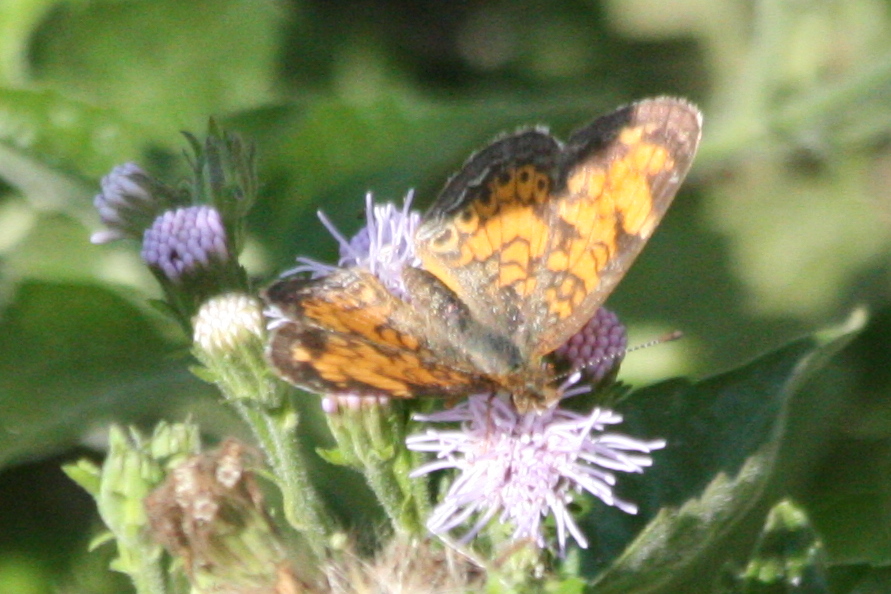
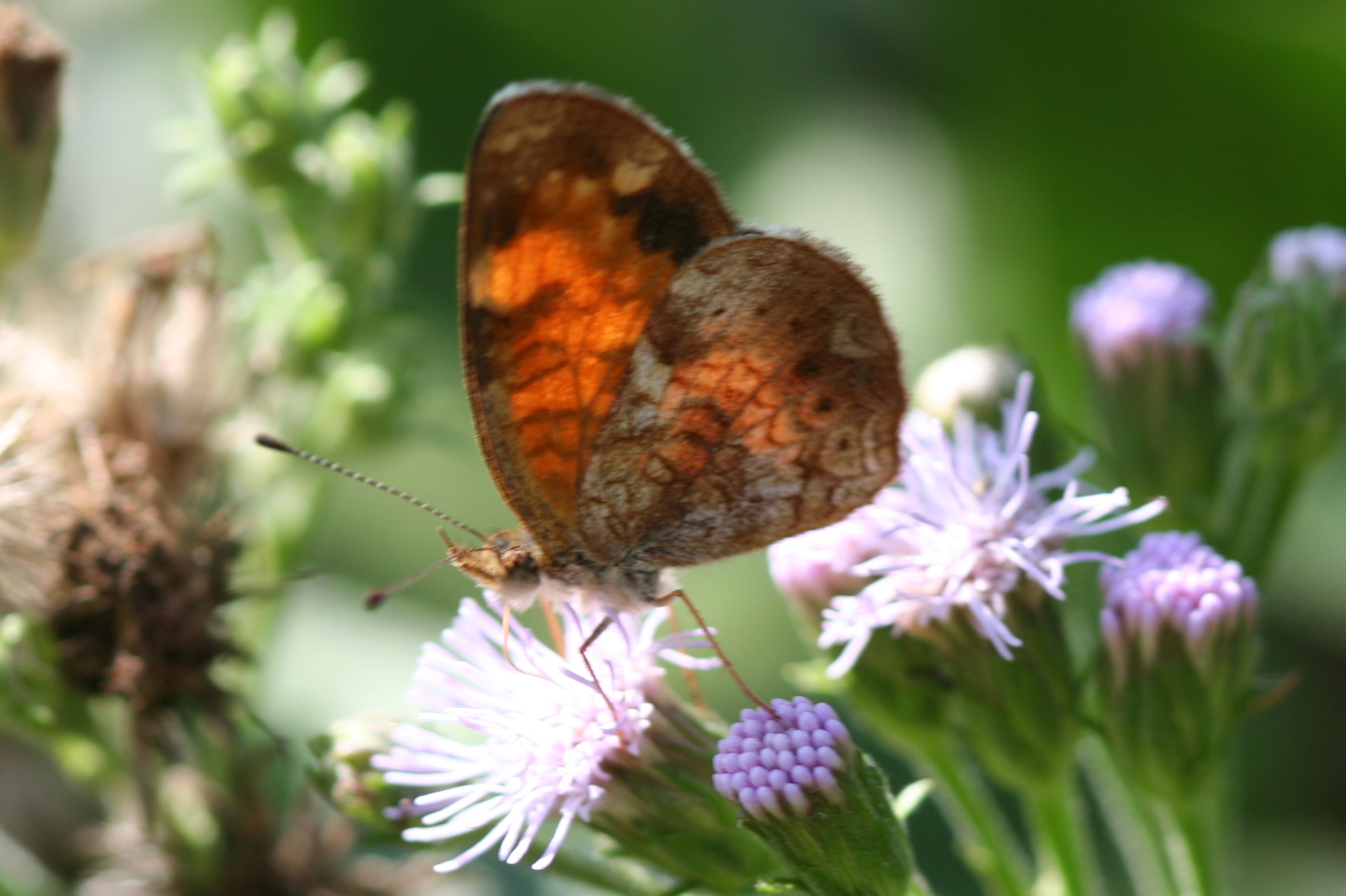
A small orange butterfly with a broad black border and a black-and-white checkered fringe. The upperside is orange with black markings; the underside hindwing carries the pale, pearl-like crescent that gives the butterfly its name. Males have black antennal knobs. It is the butterfly most often confused with the Phaon Crescent: Pearl is a little larger, its host is aster rather than frogfruit, and its hindwing underside pattern is the decider when the two overlap. Males patrol open areas near host plants in search of females, flying low and perching on rocks and low vegetation.
The caterpillar
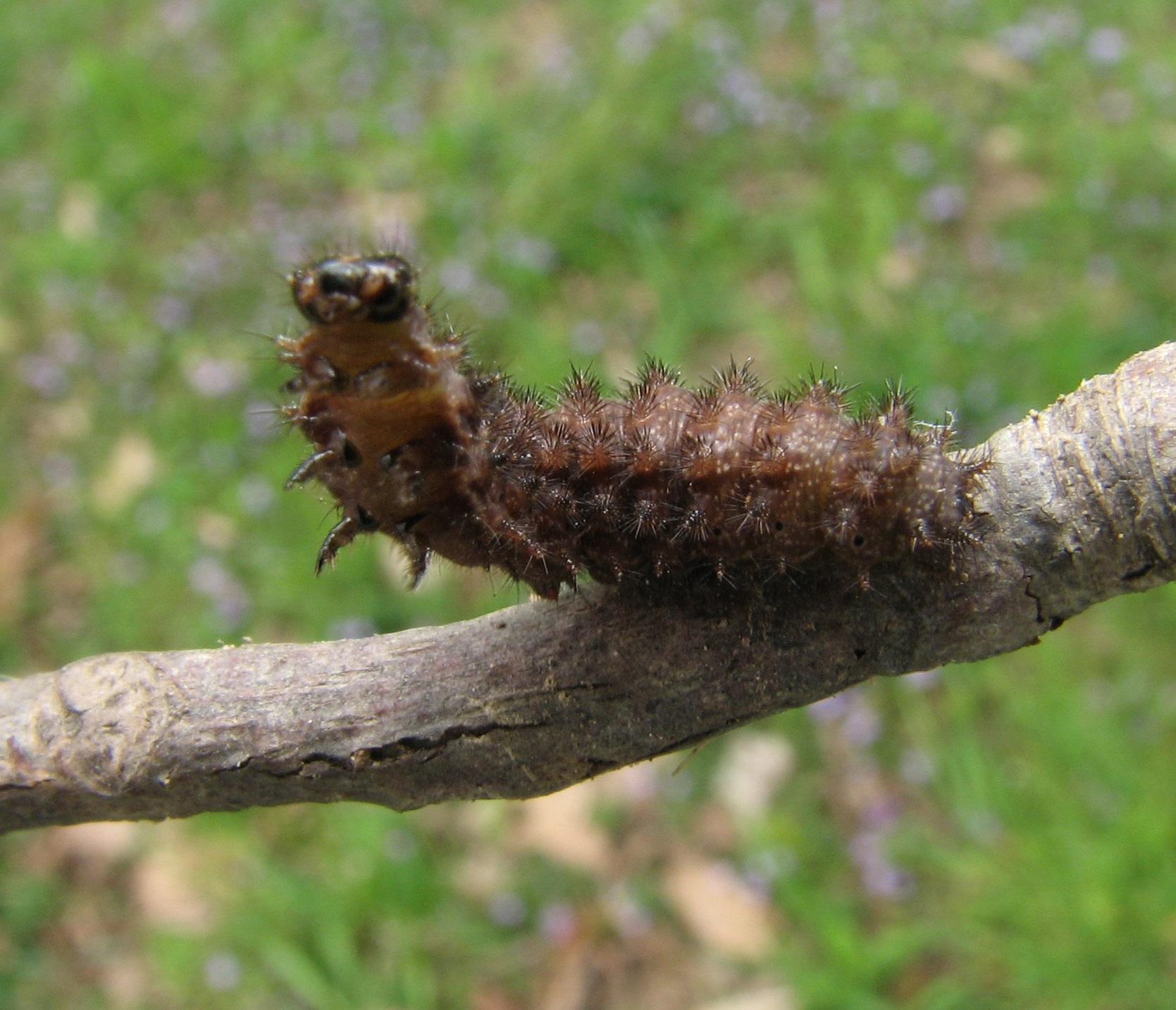
Females lay green eggs in clusters on the undersides of aster leaves — clusters of around 20 to 200, sometimes more. Young caterpillars are gregarious and feed together within a silk web; the caterpillar is dark with spines and pale markings. The species overwinters as a third-stage caterpillar, tucked away until spring. The photograph below shows a Pearl Crescent caterpillar, verified from its collection record.
Host plants
True asters, especially smooth-leaved species (Symphyotrichum species, formerly Aster), including smooth aster, calico aster, heath aster and New England aster.
What the adults eat
Nectar from a great variety of flowers: dogbane, milkweeds, asters, fleabane, winter cress, goldenrods and Spanish needles. Males also take minerals at damp ground.
How to attract it
Plant asters, and then be patient in the best way: smooth aster, calico aster, heath aster or New England aster in a sunny, unsprayed patch, plus a spread of nectar flowers (goldenrod, fleabane, milkweed) for the adults. Leave the aster patch standing through winter — the overwintering caterpillars are in there, and a tidy autumn cleanup is their worst enemy.
Predators and defenses
Spiders, predatory insects, dragonflies and birds. The caterpillars’ gregarious web-feeding and spiny skins help, and the adults’ sheer abundance is a defense in itself: predators cannot eat them all.
Life cycle
Eggs in clusters under aster leaves, hatching within days; young caterpillars feeding together in a web, then dispersing; the second brood’s caterpillars overwintering as third-stage larvae; pupation in spring; adults patrolling, puddling and nectaring through a long season of two to four broods.
Where it lives and when it flies
Southern Canada south through the United States east of the Pacific states to Florida, the Gulf Coast and Mexico — one of the most widespread small butterflies on the continent. Several broods; April to November in the north, throughout the year in the deep south and Mexico. A full-time Florida resident, active year-round in the south of the state.
Fun facts
The Pearl Crescent may be the most common butterfly in the eastern United States, and it is also one of the most misidentified — a whole genus of lookalikes means that a huge number of ‘pearl crescents’ in photo collections are actually Phaons, Northern Crescents or Tawny Crescents wearing the same orange outfit. Getting one right feels disproportionately satisfying.
Conservation
Abundant and secure across a huge range. It is a weed-patch butterfly in the best sense: as long as asters grow in sunny, unsprayed corners, Pearl Crescents will be there.
🪱 Your Soil Needs This
Reading about healthy soil is great. Growing in it is better. Our small-batch, traceable worm castings are the shortcut your garden deserves.
Shop Worm Castings Subscribe & SaveEvery bag comes with a lot certificate. Know what's in your soil.