
Catch the Rain: Rainwater Harvesting for Florida Gardens
Florida gets about 54 inches of rain a year — roughly 70 percent of it in the summer wet season, often arriving as an afternoon thunderstorm that dumps an inch in an hour and leaves just as fast. And what does most of that water do? It hits a roof, runs down a gutter, pours out a downspout, and rushes off to a ditch, while the same gardener who watched it fall pays for city water to keep the tomatoes alive in the dry season. That is a delivery system running in reverse. A rain barrel — or a few of them, or a rain garden — just turns it the right way around: catch the free water when it falls, use it when it doesn’t. This guide covers the whole setup the Florida way: the roof math, the barrel, the first-flush diverter, the overflow problem nobody warns you about, the mosquito rules, what to water, what never to drink, and the rain garden that takes everything your barrels can’t hold.
The Roof Math: Your Roof Is a River
Start with the number that makes the whole project click. One inch of rain falling on one square foot of roof produces about 0.62 gallons of water. Multiply that by a roof and it gets silly fast: one inch on 1,000 square feet of roof is roughly 620 gallons. A standard 55-gallon rain barrel holds what about 90 square feet of roof sheds in a one-inch storm. A single Florida thunderstorm dropping an inch on a 1,500-square-foot roof section sends over 900 gallons down the gutters.
Two conclusions fall out of that math, and they shape everything below. First, you will never lack water in the wet season — the problem is storage, not supply. Second, your barrel will fill up fast, possibly in a single storm, which means overflow handling is not a detail. It is the project. Anyone who sells you a barrel without talking about where the overflow goes is selling you half a system and a future puddle against your foundation.
Is It Legal? In Florida, Yes — With One HOA Caveat
Florida has no state-level restrictions on residential rainwater harvesting: no permit, no registration, no volume limit for a home system. Some counties even offer rebates or sell barrels at a discount, so checking with your county extension office or utility before you buy can literally pay for part of the setup. Florida is, by the numbers, one of the friendliest states in the country for this — a sharp contrast with the handful of western states that still cap or restrict collection.
The one caveat is your HOA, if you have one. Florida law blocks HOAs from prohibiting Florida-friendly landscaping and water-conservation measures, which covers rain collection — but an HOA can still regulate appearance, including requiring screening like latticework or landscaping around a barrel visible from the road. So the move is: check your HOA’s rules before you install, put the barrel where it works and looks tidy, and screen it if that’s what’s asked. A barrel behind a trellis with a vine on it is a garden feature. A barrel glaring at the street is a complaint waiting to happen.
Barrel Basics: Dark, Sealed, High, and Level
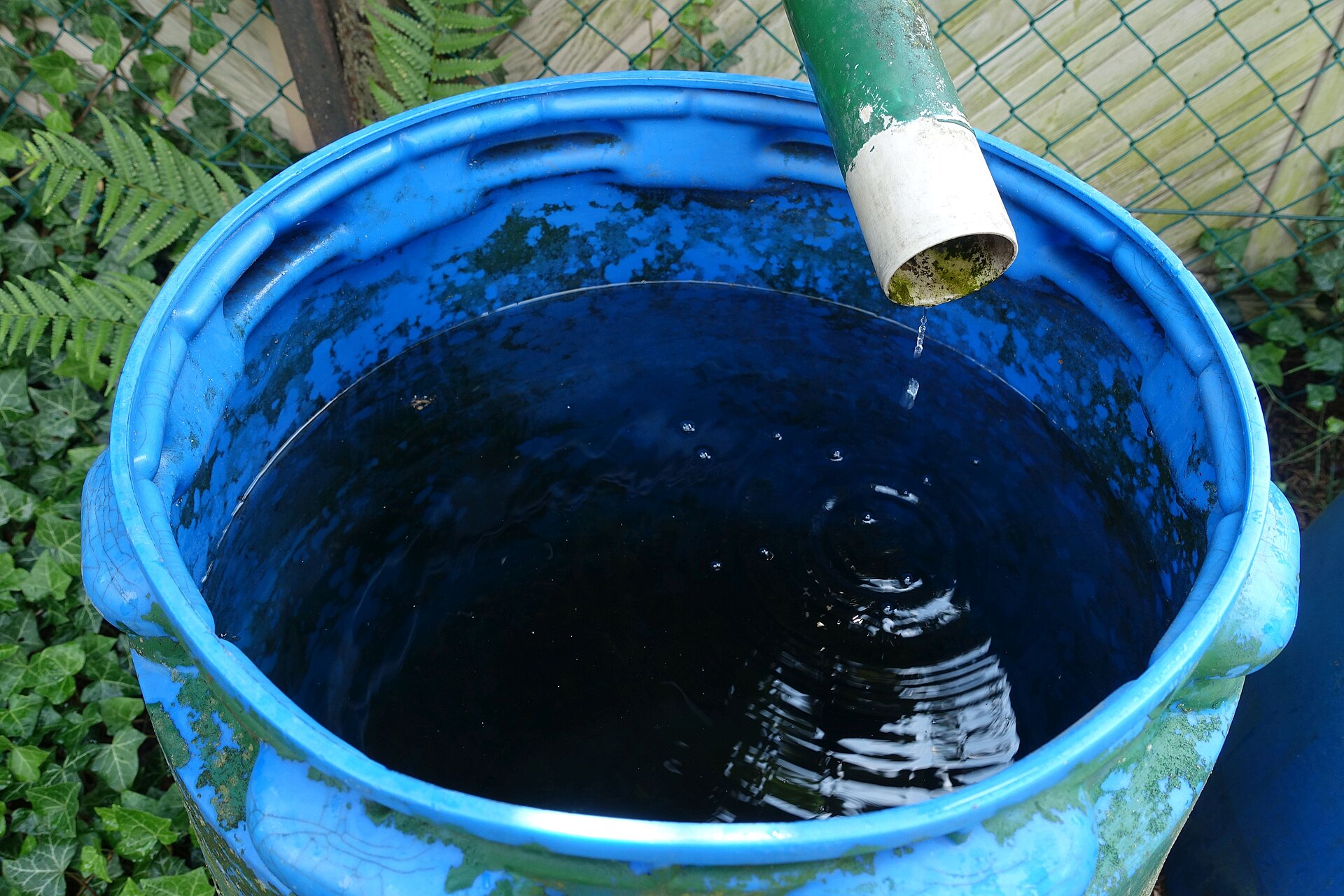
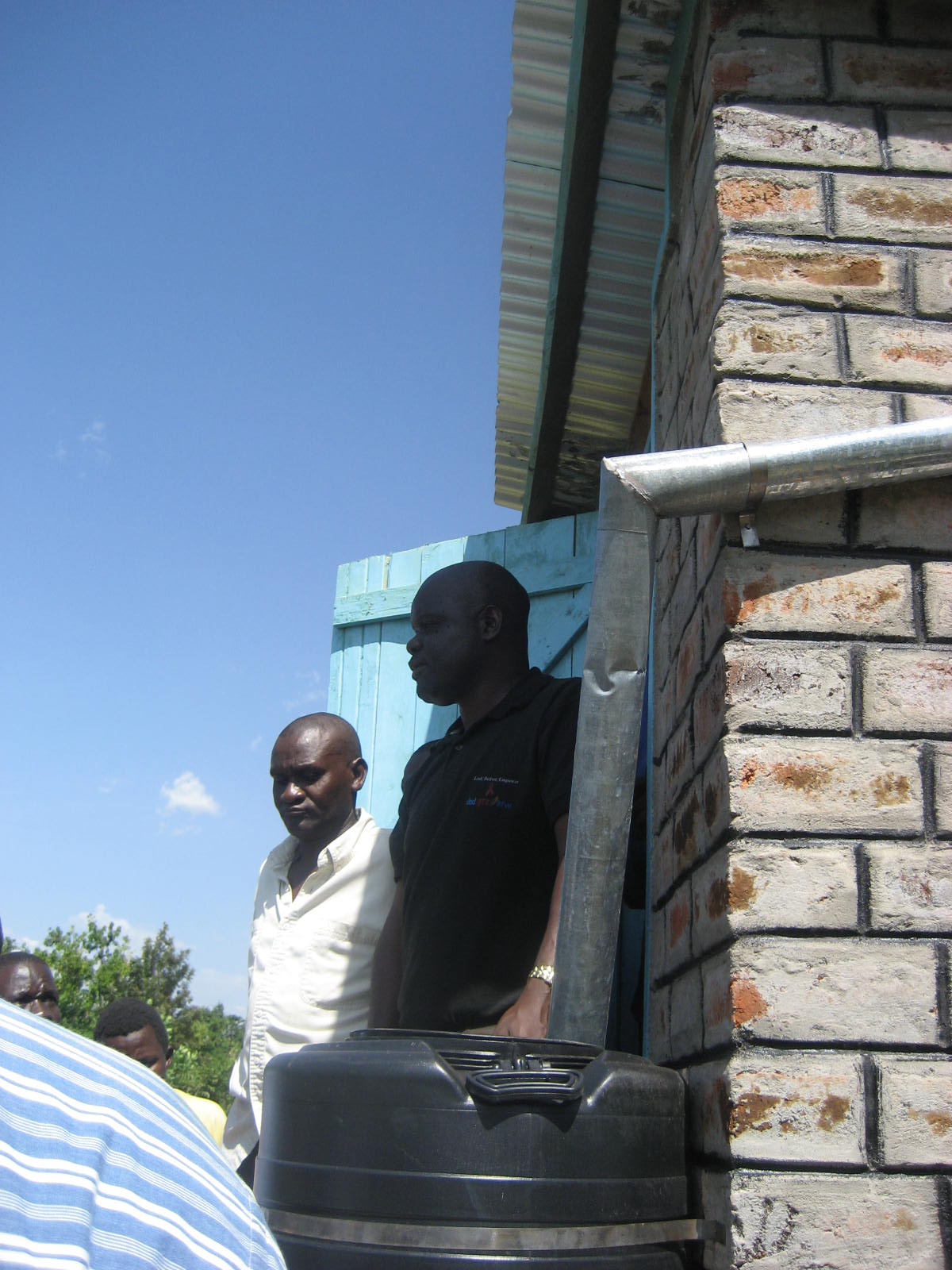
A good rain barrel has five features, and they’re all non-negotiable. Food-grade plastic only — never a barrel that held chemicals, and be suspicious of any barrel with an unknown past. Dark and opaque, because sunlight grows algae in stored water and a translucent barrel becomes a green science experiment. A sealed lid, because an open barrel in Florida is a mosquito farm within days (more on that below). A screened inlet where the downspout enters, to keep out leaves and mosquitoes. And a spigot near the bottom, with the barrel on a stand — gravity is your pump, and a barrel sitting on the ground gives you a dribble. Raise it on cinder blocks or a sturdy platform and the hose actually reaches the beds.
Placement is a trade-off between two things: close to a downspout (so the water gets in) and close to the beds you’ll water (so you don’t haul a full watering can across the yard). Pick the downspout nearest the garden, put the barrel on level ground — a full 55-gallon barrel weighs over 450 pounds, so “level” is not cosmetic, it’s structural — and run a short hose or watering can from there. When one barrel isn’t enough, chain them: an overflow hose from the top of the first into the top of the second doubles your storage without a second downspout.
First Flush: Let the Roof Rinse Itself First
Your roof collects more than rain. Between storms it gathers dust, pollen, leaves, bird droppings, and grit from the shingles themselves, and the first gallons of a storm wash all of that down the gutter. A first-flush diverter is the simple fix: a vertical standpipe on the downspout that fills with that first dirty flush, then a float or valve sends the cleaner water that follows into your barrel. You can buy one or build one from PVC, and either way it’s the difference between storing rainwater and storing roof tea.
The diverter doesn’t replace maintenance. Clean your gutters — a clogged gutter sends water everywhere except your barrel — and check the diverter and inlet screen after big storms, when leaves and debris do their worst. Five minutes with a hose and a brush, a few times a year, is the whole maintenance schedule. Rainwater systems fail from neglect, not complexity.
Overflow: The Florida Problem Nobody Warns You About
Here is the scenario that catches every first-time barrel owner in Florida: a July thunderstorm fills your 55-gallon barrel in twenty minutes, and the next 800 gallons have to go somewhere. If “somewhere” is straight down against your foundation, you have traded a water bill for a drainage problem. Every barrel needs an overflow hose, and that hose needs a destination: away from the house, downhill, into a mulch basin, a swale, or a rain garden (next section). Never let overflow dump against the foundation, the driveway’s low spot, or your neighbor’s fence line.
And since this is Florida: secure your barrels. A full barrel is an anchor at 450-plus pounds and rides out storms fine. An empty barrel in a hurricane is a very large, very round projectile. Strap them, weight them, or at least tuck them against the house on the leeward side when a big storm is forecast. The barrel that survives the storm is the one still there to catch the next one.
Mosquito-Proofing: Sealed or Sorry
Standing water in Florida grows mosquitoes the way a compost pile grows tomatoes, and an unscreened barrel is a nursery. The rules are simple and absolute. Every opening gets a fine mesh screen — inlet, overflow, any vent — with no gaps around the edges, because a mosquito needs almost no gap at all. The lid stays sealed except when you’re maintaining it. And as a backup, mosquito dunks — the donut-shaped tablets of Bacillus thuringiensis israelensis, or Bti — are safe for plants, pets, and wildlife and kill mosquito larvae in the water for about a month per dunk. Use them as insurance, not as a substitute for screens: screens keep mosquitoes out, dunks handle the ones that somehow get in.
Check after every big storm, because storms are when screens shift, lids loosen, and debris piles up. A barrel that held water all summer without a single mosquito is not luck. It’s a screen that stayed put.
What to Water, and What Never to Drink
Rainwater is wonderful garden water. It’s soft, it’s chlorine-free, it’s room temperature instead of hose-cold, and plants visibly prefer it — seedlings especially, and anything in containers where tap-water salts build up. Water at soil level, the way you’d water with any source, and wash all produce before eating, which you should be doing anyway.
What rainwater is not: drinking water. Roof runoff is not potable without proper filtration and treatment, and no barrel setup in this guide makes it so. Don’t drink it, don’t cook with it, don’t run it to an indoor tap. The lane for home rainwater is the garden, and it’s a generous lane — beds, containers, fruit trees, lawns, compost piles (a dry compost pile loves a bucket of rainwater). Stay in that lane and there’s nothing to worry about. Step out of it and you’re doing a different project with different rules, permits, and equipment.
Rain Gardens: Where the Overflow Goes to Work
When your barrels are full and the storm keeps coming, a rain garden is the destination that turns a problem into a feature. A rain garden is a shallow planted basin — typically 6 to 8 inches deep, sized to the roof area draining into it — that catches runoff, holds it for hours (not days), and lets it soak into the ground instead of running to the street. The plants in it are the ones that tolerate wet feet at the bottom and drier soil at the edges, and Florida natives are naturals for the job.
This site already has the full treatment: Florida Rain Gardens covers 24 Florida natives for wet-center, middle, and dry-edge zones, plus honest mosquito answers. The short version of its placement rules: keep a rain garden at least 10 feet from your house foundation, never over a septic field or wellhead, and never where water already ponds for days — a rain garden drains in hours, and a spot that stays wet for days has a drainage problem a garden won’t fix. Get those three right, route your barrel overflow into it, and the water your barrels can’t hold feeds a garden instead of a ditch.
Family Rain Gauge: Measure Your Own Sky
Here is the part the kids will actually remember, and it costs nothing. Take a straight-sided jar or a clear bottle with the top cut off, set it in the open away from trees and eaves, and mark a ruler beside it — or just tape a strip of paper to the side and mark the waterline after each storm. Now you have a rain gauge, and more importantly, you have your own number for the roof math: last night’s storm dropped half an inch, your roof section is 1,000 square feet, so about 310 gallons just fell on your house. Track a week of summer storms and watch the total climb into the thousands. That number is the whole argument for this guide, measured in your own yard. And if the gauge becomes a family habit, the kids will start announcing storms like weather reporters, which is a feature, not a bug.
Start This Weekend
The whole project fits in a Saturday morning. One food-grade dark barrel with a sealed lid and screened inlet, a stand of cinder blocks on level ground by the downspout nearest your beds, a spigot, an overflow hose routed to a mulch basin or a future rain garden spot, and a first-flush diverter if you’re feeling thorough (a simple one is fine — the perfect diverter is the enemy of the barrel you actually install). Clean the gutters first, set the barrel, wait for the next afternoon storm — in a Florida summer, you won’t wait long — and watch it fill. Then water the garden with it, and notice what every rainwater gardener notices: the plants don’t know it’s free. They just know it’s better.
🌱 Keep learning
Your barrel’s overflow needs a destination: Florida Rain Gardens is the full guide to building one. Pick rain garden plants in the Florida Native Plants finder, see where water fits the bigger yard in Ponds, Ducks, Fish & Chickens, and remember mulch is the other half of holding water in the soil: The Florida Fall Soil Reset covers the mulch layer that keeps what your barrels deliver.
🪱 Your Soil Needs This
Reading about healthy soil is great. Growing in it is better. Our small-batch, traceable worm castings are the shortcut your garden deserves.
Shop Worm Castings Subscribe & SaveEvery bag comes with a lot certificate. Know what's in your soil.