
Sucking Insect Feeding Injury: Stipples, Curls, and Sticky Clues
There is a special kind of garden insult that does not chew, does not bore, and does not even leave a proper hole. It just sips. Somewhere, possibly right now, a creature the size of a sesame seed has parked its straw in your plant’s cells and is drinking lunch. The plant’s response is a constellation of tiny pale dots, a curl here, a sticky sheen there — damage that looks like a disease, feels like a mystery, and is actually a whole guild of tiny vampires doing what tiny vampires do.
Sucking insects are not one pest. They are a feeding style shared by aphids, whiteflies, scale, mealybugs, stink bugs, leafhoppers, and their extended family, and they cause a recognizable family of symptoms even when you never see the culprit. This guide teaches you to recognize that family, confirm it with a few cheap checks, name the likely suspects at the group level, and act gentlest-first. For the deep dive on any one pest, it hands you off to the existing specific guides — Aphid, Whitefly, Scale, Mealybug, Stink Bug, Thrips, Spider Mite, and Leaf-footed Bug — instead of repeating them. Think of this page as the “is it sucking insects?” test; those pages are the mugshots.
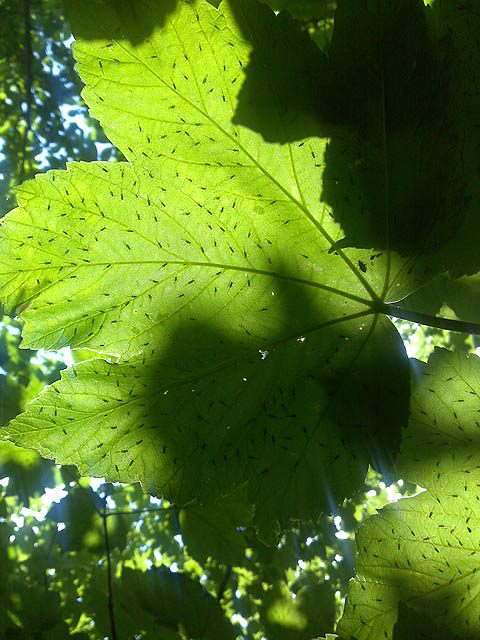
What Sucking Feeding Actually Does to a Leaf
Chewing insects remove chunks. Sucking insects remove contents. Their mouthparts are built like a hypodermic needle — entomologists call them stylets — which they slide between or into plant cells and use to drink sap. The plant cell, thus emptied, dies or malfunctions, and the leaf shows it in a handful of repeatable ways. Learn these, and you will start diagnosing from across the garden.
Stippling. The signature symptom. Hundreds of tiny pale, yellow, or white dots where individual cells were drained. Up close it looks like someone dusted the leaf with pale freckles; from a distance the whole leaf just looks faded or dusty. Stippling is the single most useful sucking-insect clue, because almost nothing else makes that exact pattern — diseases make bigger blotches, and chewing makes holes. If your leaf looks stippled, start suspecting sippers.
Curling and distortion. When sippers feed on young, still-expanding leaves, the damaged cells do not grow at the same rate as their neighbors, so the leaf buckles, curls, cups, or twists as it grows. Aphid feeding on shoot tips is the classic: the new growth comes out crumpled like a bad first draft. Some of this is also the plant reacting to the insects’ saliva, which can be surprisingly chemically active for creatures that small.
Yellowing and stunting. Drain enough sap from a plant and it runs short. Leaves yellow, growth slows, fruit stays small. This is the least specific symptom on the list — water, nutrients, and roots can all cause it too — so yellowing alone never proves sucking insects. Yellowing plus stippling, on the other hand, is a strong case.
Honeydew and sooty mold. Sap is mostly sugar water with a little nutrition, so sippers drink far more of it than they need and excrete the excess as honeydew: a clear, sticky syrup that coats leaves, fruit, and anything parked underneath. Honeydew itself then grows a black fungus called sooty mold, which is ugly, blocks sunlight, and tells you sippers were here even after they have moved on. If your leaves are sticky and turning black, read the Sooty Mold guide — but know the mold is the symptom, and the sippers are the cause. Kill the mold without addressing the insects and it just grows back.
Virus delivery (the serious one). Some sucking insects carry plant viruses from plant to plant on those same stylets. A plant that is not just stippled but also mottled, mosaic-patterned, or bizarrely distorted may have received more than a meal. Virus-infected plants generally cannot be cured, which is why controlling the vectors early matters more than most gardeners realize. This guide does not diagnose viruses — if you see mosaic patterns plus distortion, check the virus guides and your Extension office — but it is worth knowing that “just a few aphids” can be a bigger deal than it looks.
How to Confirm It: Cheap Checks, No Lab Required
Sucking insects are small and shy, but they leave evidence the way teenagers leave dishes: everywhere, once you know where to look.
Flip the leaf. Always, always flip the leaf. Aphids, whiteflies, and scale cluster on undersides and along veins, where they are sheltered from sun, rain, and your disapproving stare. If the top looks stippled and the underside has clusters, dots, or tiny oval bumps, you have your answer. A hand lens — the 10x kind that costs less than lunch — turns “tiny dots” into recognizable insects, eggs, and cast skins, and it makes you feel like a proper detective besides.
The tap test. Hold a sheet of white paper under a suspect branch and tap the branch sharply. Whiteflies will puff up in a little cloud (and then, annoyingly, resettle). Aphids and mites will rain down as slow-moving specks. This is also a genuinely satisfying test, which is not nothing at 7 a.m. in a humid garden.
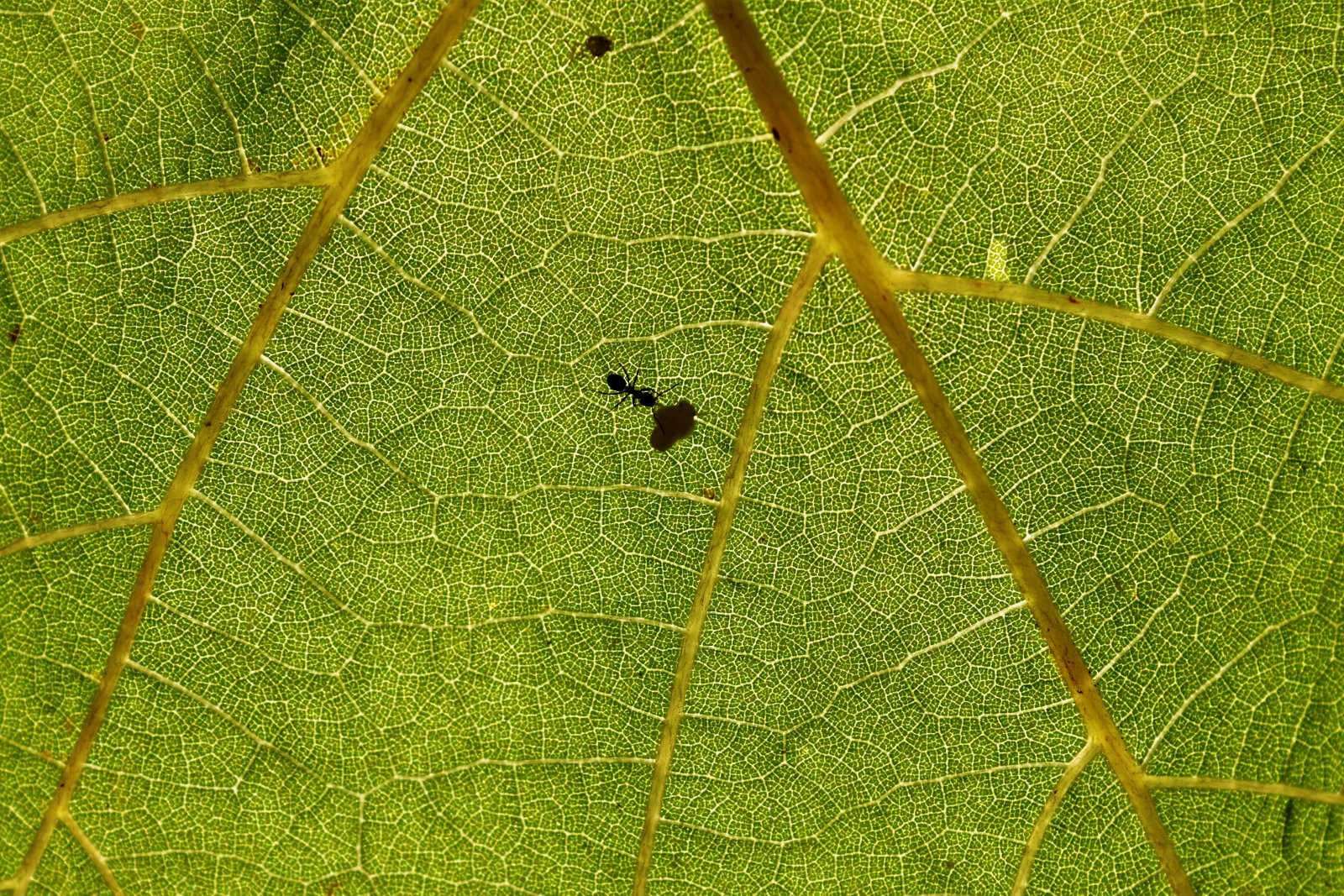
The sticky test. Run a finger over a leaf. Sticky? That is honeydew, and honeydew means sippers have been feeding above. Look up: the colony is often on the leaves overhead, raining syrup down onto the ones below. Ants marching up the stem in a tidy line are another giveaway — ants farm aphids the way we farm cows, protecting them from predators in exchange for honeydew. If you see ants, look for their livestock.
Yellow sticky traps. A yellow card hung near the plant catches flying adults — whiteflies, winged aphids, leafhoppers — and gives you a census without you having to squint at every leaf. They are monitoring tools first and control tools second: a trap full of whiteflies tells you the population is big and the timing is right to act, which is more useful than the handful it actually catches.
Look for cast skins and eggs. Aphids leave behind pale, papery cast skins that look like tiny white ghosts stuck to the leaf. Scale leaves waxy bumps that do not move when poked (if it scrapes off with a fingernail and leaves a clean spot, it was probably scale). Whitefly nymphs look like tiny flat translucent scales on the underside — immobile, easy to miss, and the stage that does most of the feeding.
The Florida Lineup: Who Is Probably Doing It
Florida does not get a winter reset the way colder states do, which means sucking insects are a year-round concern here rather than a summer event. These are the usual suspects, at the group level, with links to the full guides where they exist.
Aphids. Soft, pear-shaped, clustered on tender new growth and undersides. Green, black, yellow, or pink. They reproduce at a rate that embarrasses rabbits, and they are the classic curl-makers. Full guide: Aphid.
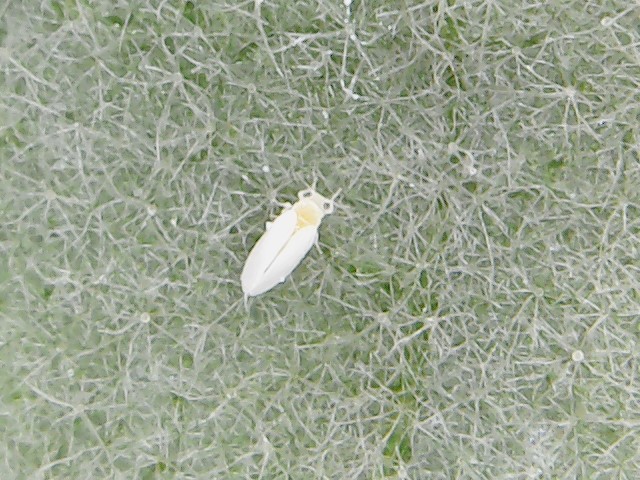
Whiteflies. Tiny white moth-like flies that puff up when disturbed; their flat, scale-like nymphs feed on undersides. Silverleaf whitefly is a particular Florida headache on vegetables and ornamentals. Full guide: Whitefly.
Scale insects. The masters of disguise. Armored scale looks like tiny bumps or scabs; soft scale looks like small domes and makes honeydew. They barely move as adults, which is why gardeners mistake them for part of the plant. Full guide: Scale.
Mealybugs. Cottony white clumps in leaf joints, stem crevices, and root crowns. If it looks like someone dabbed the plant with cotton balls, it is mealybugs, not a fungus. Full guide: Mealybug.
Stink bugs and leaf-footed bugs. The big ones. Shield-shaped, strong fliers, and they feed on fruit and seeds as well as leaves — tomatoes, peppers, and citrus with dimpled, discolored, or misshapen fruit are often their work. Full guides: Stink Bug and Leaf-footed Bug.
Thrips. Slender, fringed-winged, barely visible without a lens. They rasp as much as they suck, leaving silvery, scarred patches on leaves and flowers, plus tiny dark specks of frass. Full guide: Thrips.
Spider mites (honorary members). Not insects at all — they are mites, eight legs and all — but they feed the same way, cell by cell, and the stippling they cause is classic. Fine webbing on undersides in dry weather is the giveaway. Full guide: Spider Mite.
Leafhoppers and psyllids. Leafhoppers cause stippling and, in some species, a burned-looking leaf tip called hopperburn. Psyllids matter most on citrus: the Asian citrus psyllid spreads citrus greening disease, which is why citrus growers treat any psyllid sighting seriously. Full guides: Potato Leafhopper and Asian Citrus Psyllid.
What to Do, Gentlest First
The IPM ladder again, because it works, and because skipping to the top is how you end up with dead ladybugs and a worse problem next month.
1. Monitor before you move. A few aphids on a vigorous plant are a snack for the ladybugs that are probably already on their way. Check twice a week, count roughly, and act when numbers climb or damage spreads — not the moment you see a single insect. Plants tolerate a surprising amount of sipping.
2. Water blast. A strong stream of water knocks aphids, whiteflies, and mites off the plant, and many do not find their way back. Do it in the morning so leaves dry by evening (wet leaves overnight are a fungus invitation in our humidity). This is the most underrated control in gardening, possibly because it feels too simple to work. It works.
3. Prune the worst of it. Heavily infested shoot tips and leaves can just come off. Bag and trash them — do not compost heavily infested material and do not drop it on the ground, where the insects simply walk back. This is also how you remove the ants’ livestock, which annoys the ants into finding a new pasture.
4. Invite the predators. Ladybugs, lacewings, hoverfly larvae, and tiny parasitic wasps eat sucking insects for a living, and they are already in your garden if you have not sprayed them away. Flowers nearby (sweet alyssum, dill, yarrow) give them nectar and a reason to stay. Buying ladybugs by the bag is mostly theater — they fly away — but keeping the ones you have, by not spraying broad-spectrum insecticide, is real pest control.
5. Soap and oil, used carefully. Insecticidal soap and horticultural oil kill soft-bodied sippers on contact and break down quickly, which makes them good mid-ladder tools. Two Florida cautions: never spray oil in hot midday sun or on drought-stressed plants (leaf burn is real), and always check the label for its temperature cutoff and for which plants it excludes. Soaps and oils only work on the insects they touch, so coat the undersides — that is where the insects are, and that is the part everyone forgets.
6. Botanicals like neem, with eyes open. Neem oil is a real tool with real limits: it works best on young nymphs, needs repeat applications, and can harm beneficials if sprayed carelessly. Use it as a targeted treatment on the insects you have confirmed, not as a garden-wide perfume. Same heat cautions as other oils apply.
7. Chemical, last, labeled, and pollinator-aware. If an infestation is defoliating plants, ruining a crop, or spreading disease, a labeled insecticide used exactly per its label is legitimate. Two non-negotiables: do not spray open blooms (that is where the pollinators are), and prefer evening applications when bees are done for the day. Broad-spectrum sprays kill the predators along with the pests, which is why infestations often bounce back worse after a heavy spray — you removed the only thing that was eating them for free.
Mistakes Worth Not Making
Treating the mold instead of the insects. Scrubbing sooty mold off leaves while the aphids above keep raining honeydew is mopping the floor with the tap running. Find the sippers first. The mold usually weathers away on its own once the honeydew stops.
Spraying the top of the leaf only. The insects live underneath. A spray that only hits the top is a rain shower for the plant and a minor inconvenience for the pests. Flip, spray, flip back. Every time.
Feeding the problem. Soft, nitrogen-pushed new growth is aphid candy. If you are pushing heavy fertilizer on a plant that is already infested, you are running a buffet. Ease off the nitrogen until the population is under control.
Confusing stippling with disease. Stippling is not a leaf-spot disease, and spraying fungicide on it does nothing. If you are unsure whether you are looking at stippling or spots, read the companion guide on Localized Leaf Spot or Mechanical Damage — the two guides are designed to be used together, because the photo tool hands out both diagnoses and gardeners need to tell them apart.
Frequently Asked Questions
Are the tiny white things on the underside whiteflies or mealybugs?
Disturb them. Whiteflies puff up and fly in a little cloud; mealybugs stay put in their cottony clumps. Whitefly nymphs are flat, translucent scales stuck to the leaf; mealybugs are fluffy and mobile. The control is similar either way, but the guide you want differs, so the puff test is worth the ten seconds.
Do I need to worry about a few aphids?
Usually not. A small colony on a vigorous plant is normal, and predators often clean it up within days. Worry when numbers climb fast, new growth is curling, honeydew is coating leaves, or ants are actively farming the colony.
Why do aphids keep coming back after I spray?
Three usual reasons: you sprayed only the tops (they live underneath), you killed the predators along with the pests (so the survivors breed unchecked), or the plant is pushing soft nitrogen-rich growth that invites reinfestation. Fix the coverage, ease off the fertilizer, and give the predators a chance.
Can I just use dish soap instead of insecticidal soap?
Not recommended. Dish soaps contain detergents and degreasers that can strip the leaf’s waxy cuticle and burn foliage, especially in Florida sun. Insecticidal soap is formulated for plants, dosed on its label, and cheap enough that the substitution is not worth the risk.
Is honeydew harmful to people or pets?
Honeydew itself is just sugary insect excretion — sticky and annoying, not poisonous. The problem is what it grows (sooty mold) and what it signals (an active infestation). Wash sticky produce before eating, as you would anyway.
When should I ask Extension for help?
When the insects are unidentifiable even with a lens, when damage is spreading despite two rungs of the ladder, or when you suspect a virus (mosaic patterns, severe distortion) or a citrus psyllid problem. Your county UF/IFAS Extension office and Master Gardener clinics identify insects and diseases for free — bring a sample in a sealed bag and a photo of the whole plant.
Still stuck? Run the plant through the Plant Doctor — answer the symptom questions, or upload a photo, and it will narrow the suspects for you.
🌱 Keep learning
Three related guides worth reading next:
- The Lazy Gardener's Guide to Starting a Garden — A low-drama first garden built around fewer chores and better decisions.
- I Have a Vegetable Garden. Now What? — Watering, feeding, scouting, harvesting — the routine that keeps it alive.
- What to Plant and When? — Zone-by-zone planting guides: find your USDA zone and your planting calendar.
Got a sick plant? Plant Doctor ranks the most likely causes from your symptoms.
🪱 Your Soil Needs This
Reading about healthy soil is great. Growing in it is better. Our small-batch, traceable worm castings are the shortcut your garden deserves.
Shop Worm Castings Subscribe & SaveEvery bag comes with a lot certificate. Know what's in your soil.