
🌸 Alabama Crimson Coral Honeysuckle
What it looks like
Why this variety
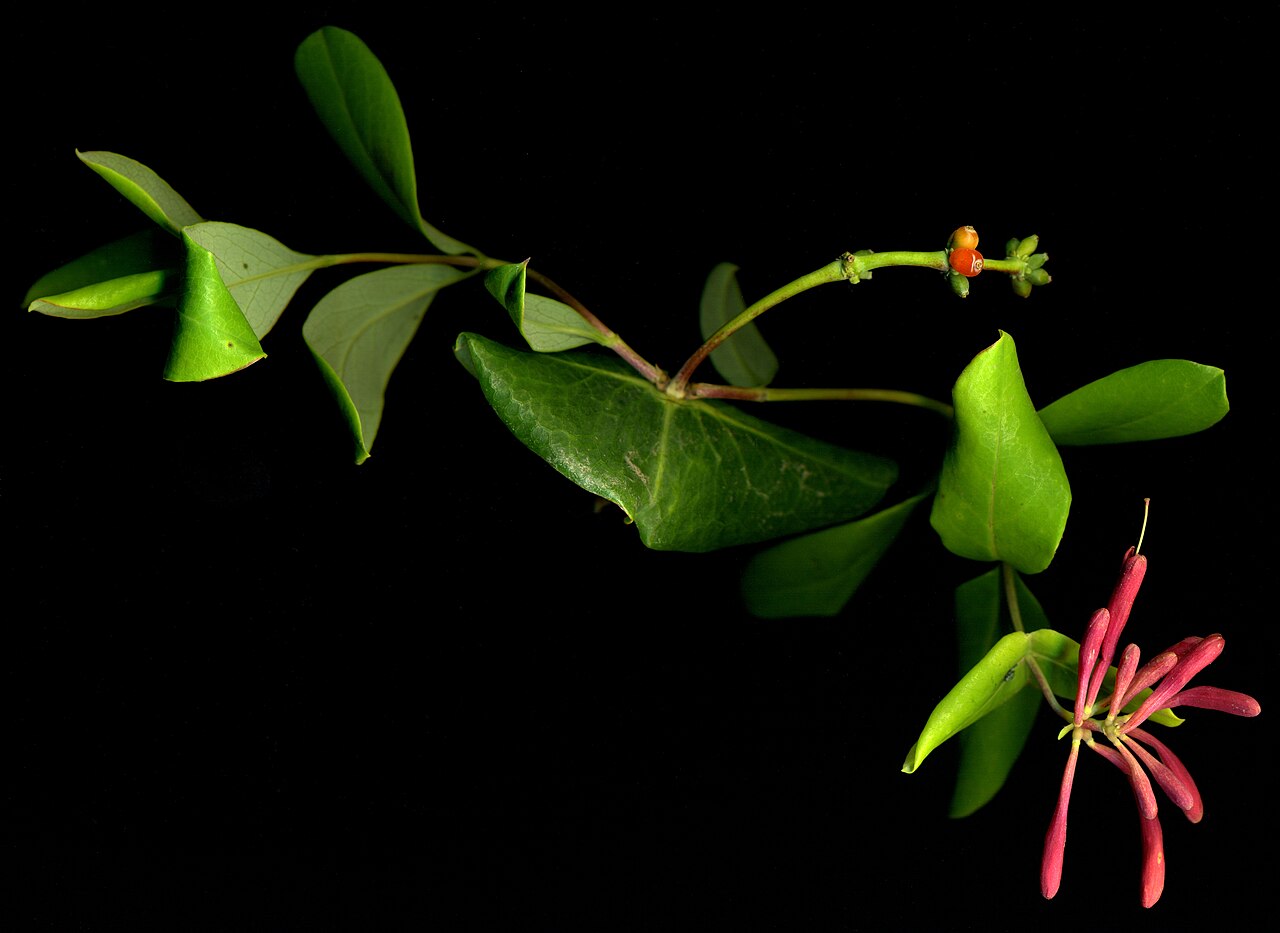
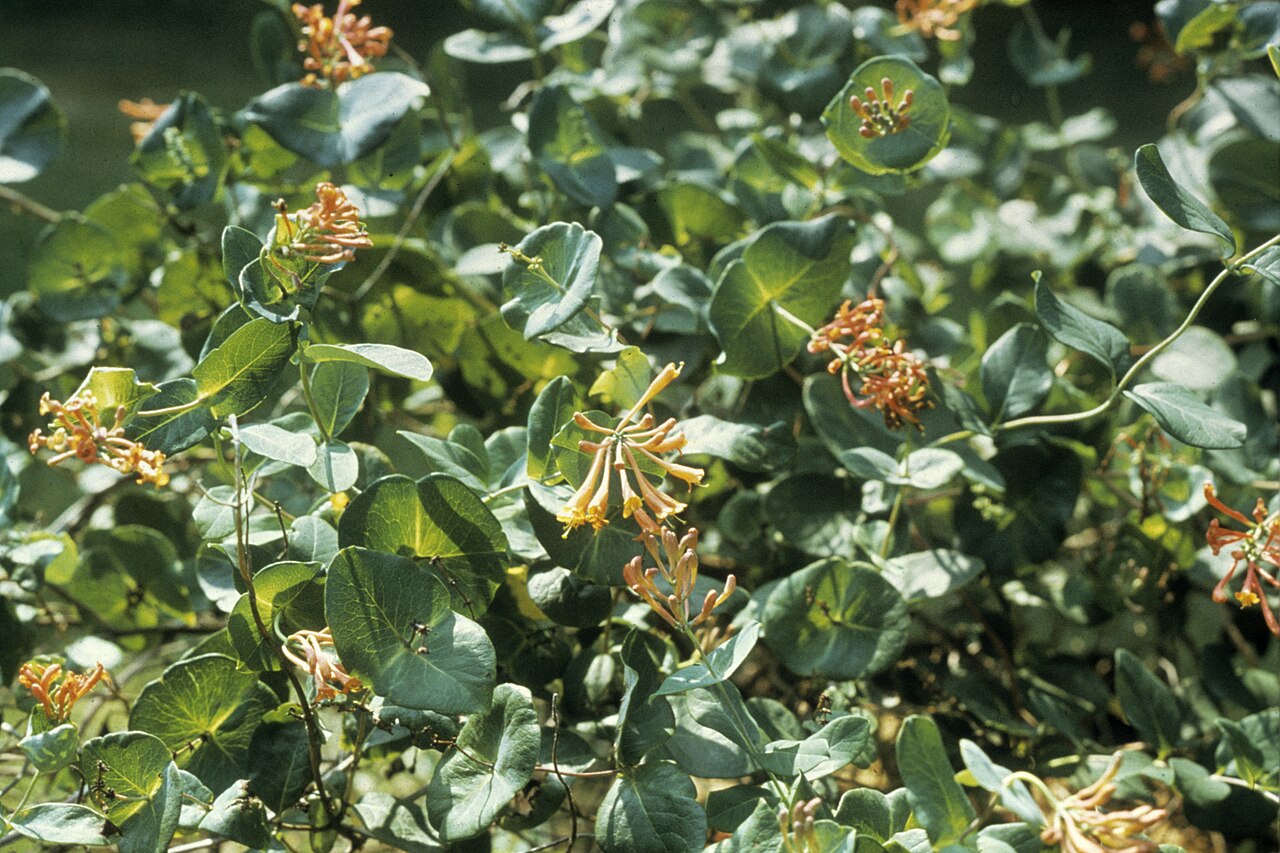
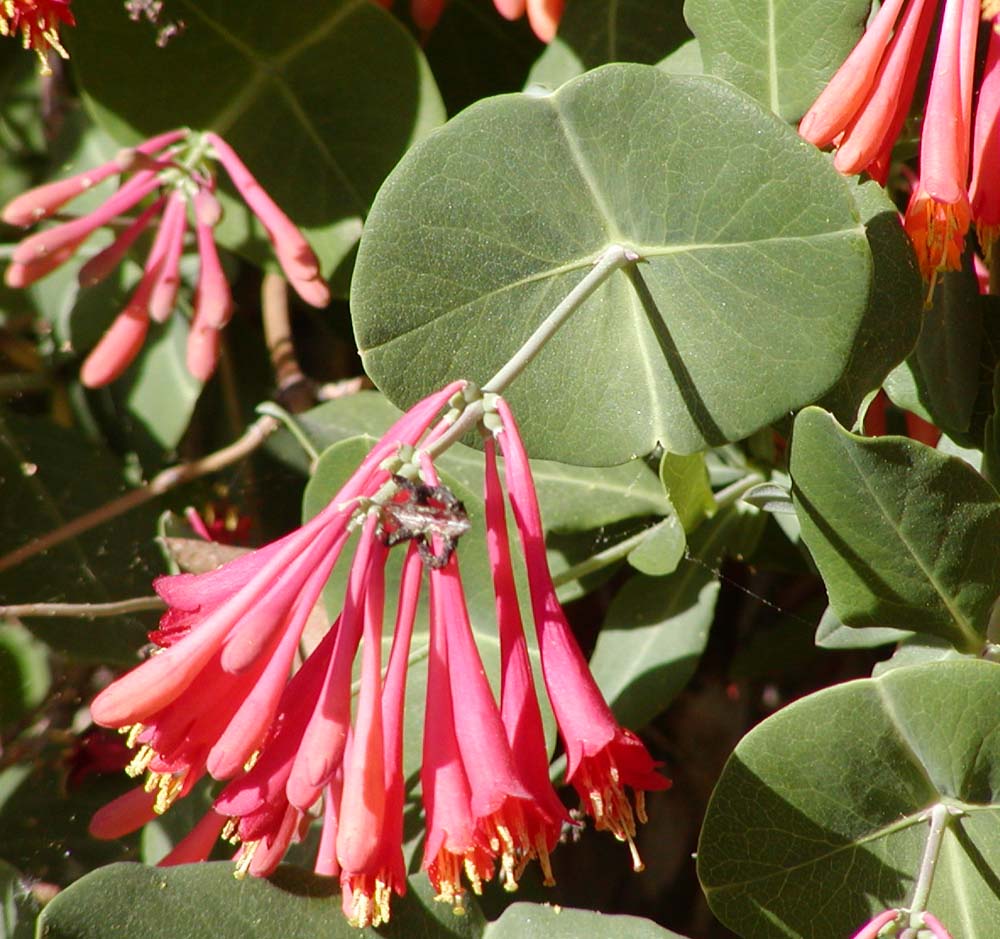
Alabama Crimson is the coral honeysuckle for gardeners who find the wild flower’s coral-red a touch too pink and want something deeper: a selection of Lonicera sempervirens with deep crimson, almost wine-red trumpet flowers, listed by extension and arboretum sources among the established cultivars. Where Major Wheeler is scarlet and showy, Alabama Crimson is crimson and rich — the difference is subtle in a catalog photo and obvious in the garden, especially in evening light, when deep red flowers hold their color while brighter scarlets wash out. It blooms from late spring through summer with repeat flowering, climbs 10 to 15 feet, and carries the same native, non-invasive, hummingbird-magnetic character as every coral honeysuckle in this series.
Plant Alabama Crimson where its deep color can be appreciated up close — an arbor over a path, a trellis by a seating area, a fence along a walk — because deep crimson rewards proximity in a way scarlet shouts across a yard. Pair it with John Clayton’s yellow on the same structure for a crimson-and-gold combination that looks deliberate rather than accidental, or let it climb alone into a small tree, where its flowers hang like lanterns. Like all coral honeysuckles, it needs a support to twine, full sun for best bloom, and air around its leaves. Hummingbirds visit it as eagerly as any red form, and the red berries that follow are songbird food through summer and fall.
How to grow
Coral honeysuckle, also called trumpet honeysuckle, is a twining woody vine native to the eastern United States, reaching south into the central Florida peninsula and west to Texas. It is the native honeysuckle to plant instead of Japanese honeysuckle, which is invasive: coral honeysuckle climbs politely, blooms in clusters of long trumpet flowers that hummingbirds defend like tiny territories, and follows with red berries that songbirds eat. The wild flower is coral-red; the cultivars below include the famous red rebloomers and the older yellow selections, all selections of the same native species, not hybrids with the invasive cousin. In Florida it is semi-evergreen to deciduous depending on winter cold, and it flowers heaviest in spring with repeat bloom through summer and fall when it is happy. Give it sun, something to climb — a fence, trellis, arbor, or mailbox post — and air around its leaves, and it will cover that support faster than you expect.
Plant in fall or spring in full sun to part shade, in average, well-drained soil. Set at the base of its support, backfill with native soil and worm castings, mulch the root zone, and space 3 to 5 feet apart along a support. Guide young stems onto the trellis and tie loosely until twining takes over. Water deeply the first year; established vines tolerate drought but bloom best with steady moisture. Prune in late winter, removing dead wood and thinning crowded stems — Alabama Crimson blooms on new wood, so late-winter pruning sets up the season’s flowers rather than removing them.
Water & feeding
Coral honeysuckle is not a thirsty vine: average garden water, deep watering for the first year, and drought tolerance once established are the whole story. In sand, mulch the root zone to keep it cool — the old rule is heads in the sun, feet in the shade — and water at soil level during dry spells to keep bloom coming. Work worm castings into the planting hole and top-dress in spring; it is a light feeder, and overfeeding makes leafy growth at the expense of flowers. Good air circulation matters more than extra fertilizer in humid Florida, where crowded, still air invites mildew.
Common problems
Aphids on new spring growth are the main pest; water blast and ladybugs handle most outbreaks. Powdery mildew and leaf spot appear in humid, crowded plantings — space for air, water at soil level, prune for circulation. Deer browse young vines. Deep-red flowers hide mildew and aphid damage better than yellow ones, so inspect Alabama Crimson deliberately rather than assuming its dark color means clean leaves. Vigor management is the same as for Major Wheeler: build the support for the mature vine and prune each late winter.
Harvest
Leave berries for birds, cut flowering stems sparingly for arrangements — deep crimson honeysuckle in a vase is dramatic — and prune in late winter for shape and air. Deadhead lightly to push rebloom, but leave some clusters to fruit for songbirds. Thin by removing whole stems to the base rather than shearing the outside, which tangles the vine and removes flowering wood unevenly. A well-pruned Alabama Crimson looks like a vine, not a hedge, and flowers like it means it.
Nerdy fact: The deep crimson of Alabama Crimson is not a dye or a trick — it is the same anthocyanin pigment family that colors the wild flower, just more of it, selected and propagated because a nurseryman noticed one vine flowering darker than its neighbors and kept it.
Saving seeds
Alabama Crimson is a named selection, so seed saved from it won’t come true — propagate it from cuttings instead. The Saving seeds section of the Coral Honeysuckle guide covers seed for the straight species.