
💕 Alba Bleeding Heart
What it looks like
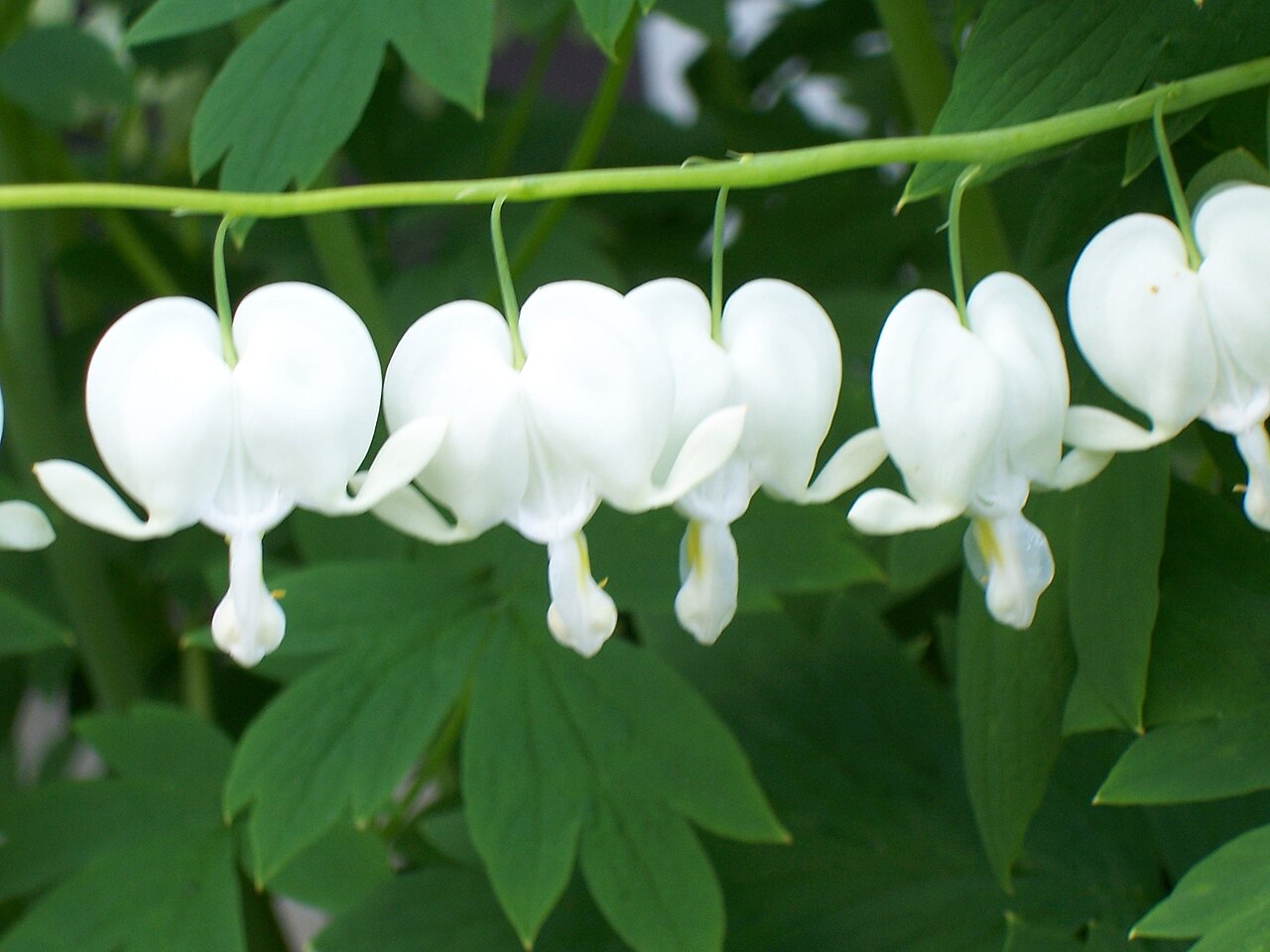

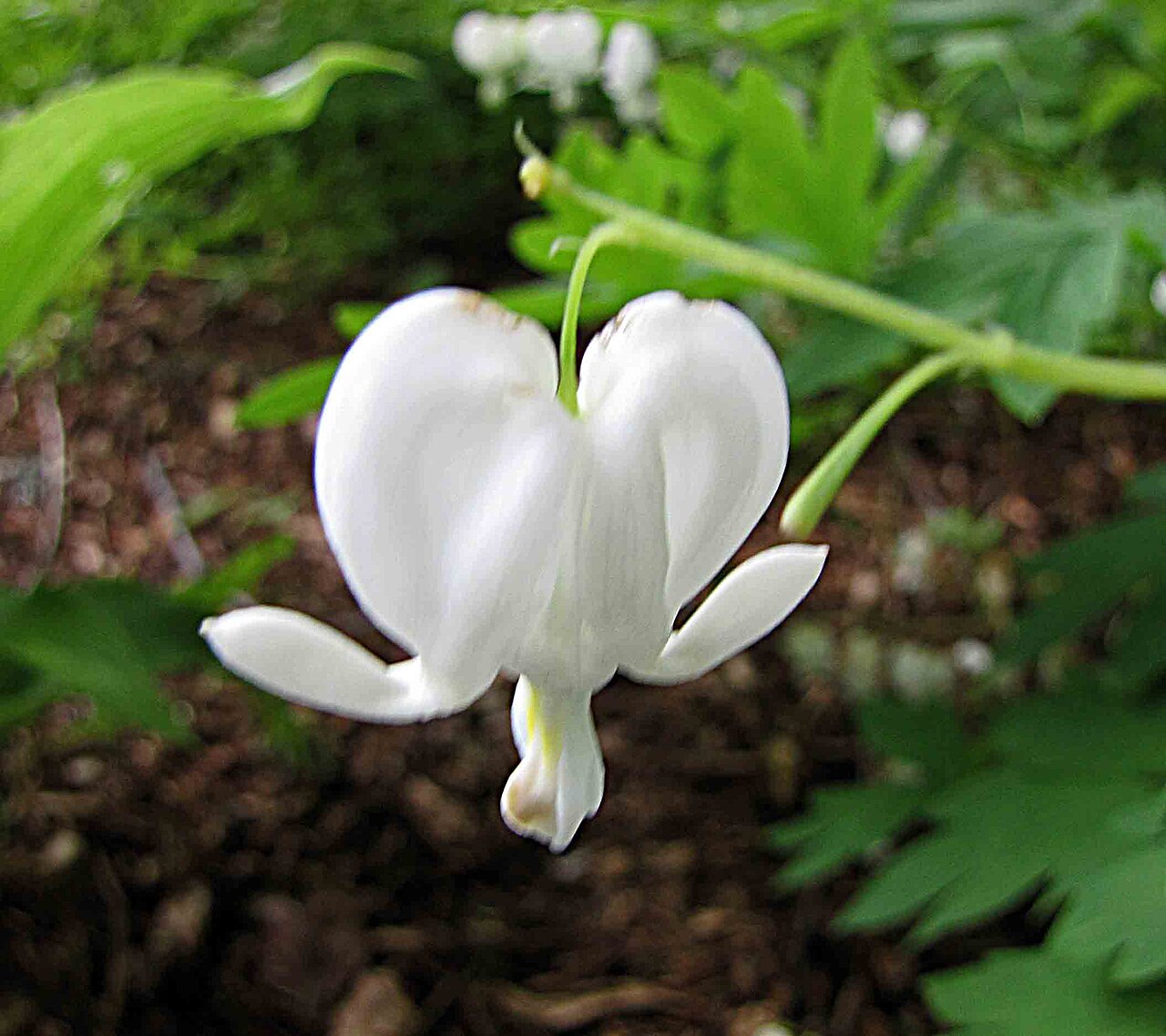
Why this variety
Alba is the white form of the old-fashioned bleeding heart, and it is the one to plant if pink hearts feel too sweet for your shade garden: pure-white, heart-shaped flowers dangling from arching stems over fern-like foliage, on a large, bushy clump 2 to 3 feet tall and wide, blooming in late spring. It comes true from seed, which is unusual for a named cultivar and useful if you want more of it without buying more of it — sow the seed, get white hearts, not a lottery. Wisconsin Extension notes that Alba seems to tolerate summer heat better than the normal pink type, though it is not as vigorous a plant, which is a trade worth making in a warm garden.
The trade-off is the bleeding-heart bargain: ephemerality. Alba flowers lavishly in late spring, then yellows and goes dormant by summer, on purpose — it is a spring plant that retreats underground when heat arrives, leaving a gap where a plant used to be. Plan for that gap with ferns, hostas, or astilbes that fill in as Alba retreats, and do not dig up the ‘dead’ plant in July: it is asleep, not deceased, and it will return next spring if you leave the roots alone and keep the soil from drying to dust.
If you are new to choosing between cultivars, the Varieties Matter guide explains why the name after the plant matters as much as the plant itself. Alba is a perfect example: it is not just a bleeding heart in the abstract, it is a bleeding heart with a specific job, a specific history, and specific strengths.
Florida honesty, stated plainly: bleeding heart is a trial plant in Florida, not a promise — and Alba is the best trial candidate, not a guarantee. The species is listed to zone 9, but Florida’s heat and humidity push it hard: expect it to bloom briefly in spring in North Florida shade and then go dormant early, and expect failure or no return south of the Panhandle. Plant Alba only in deep shade with rich, moist, well-drained soil that never dries out, mulch heavily, and treat a second spring as a victory. If it fails, it fails in the first hot summer, fast and honestly.
How to grow
Plant in spring or fall in rich, moist, well-drained soil in shade — bleeding heart is a woodland plant that wants leaf-mold soil, consistent moisture, and protection from hot sun. Work worm castings and compost into the bed at planting, mulch deeply, and plant ferns, hostas, or astilbes nearby to fill the gap when it goes dormant by summer. Do not dig it up in July when it vanishes: it is asleep, not dead, and it will return next spring if the roots stayed moist.
Set plants 24-36 inches apart in soil with a pH around 6.0-7.0. Work worm castings into the bed at planting and mulch to hold moisture. A well-fed bleeding heart plant rewards that care directly: steadier growth, better bloom, and a show that actually shows up.
Water & feeding
Keep soil consistently moist but never waterlogged — bleeding heart wants woodland moisture, not swamp and not drought. Water at the soil line, mulch deeply with leaf litter or compost, and feed lightly: castings and compost at planting plus a spring top-dress. Once it goes dormant in summer, reduce watering but do not let the bed dry to dust, or next spring’s return will be thinner.
Common problems
- Early dormancy — yellowing and vanishing by summer is normal, not death; plant ferns or hostas nearby to fill the gap and do not dig up the roots.
- Slugs and snails on young growth in wet springs — pick at dusk and keep mulch pulled back slightly from crowns.
- Scorch in sun or dry soil — bleeding heart wants shade and consistent moisture; sun and drought make it retreat early and return thinly.
- Aphids on new growth — blast with water and encourage ladybugs; avoid broad-spectrum sprays.
- Short life or no return in hot climates — heat shortens bleeding-heart life; in warm zones, treat it as a trial in deep shade with soil that never dries out.
Harvest
Cut a few arching stems for spring bouquets, when hearts are fully formed — bleeding heart lasts a few days in water and its arching habit suits a tall vase. Do not cut heavily: the plant needs its foliage to feed next year’s bloom, even though it will vanish by summer. Leave the foliage to yellow naturally, do not cut it back green, and mark the spot so you do not dig up the dormant roots while planting summer annuals over them.
Browse all plant & pest guides
Saving seeds
Alba comes true from seed — unusual for a named cultivar, but the guide says so: sow the seed and you’ll get white hearts, not a lottery. The full method is in the Propagation section of the Bleeding Heart guide.