
💙 Alba Plumbago
What it looks like
Why this variety
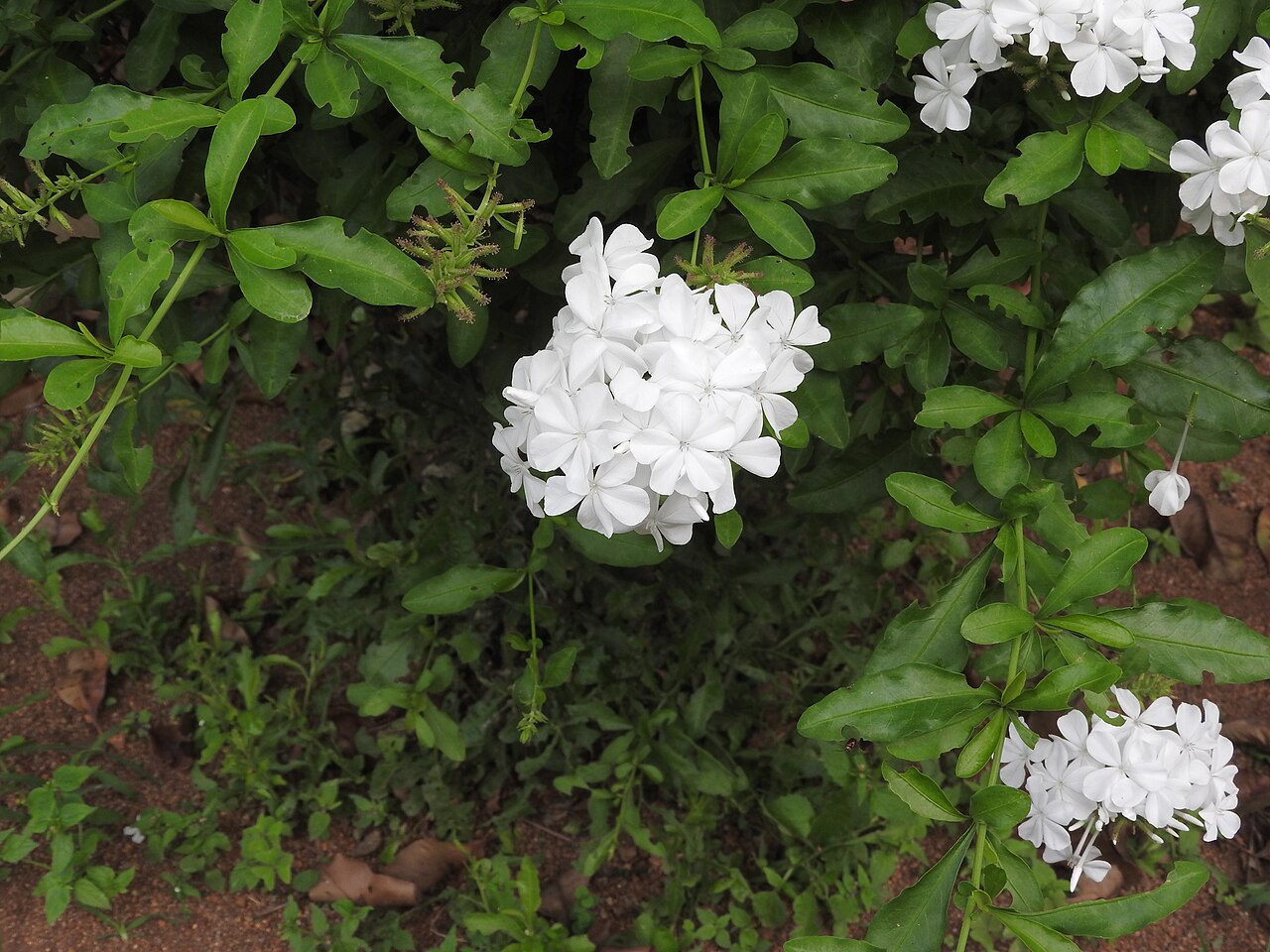
Alba is the white form of plumbago, and it is the one to plant when blue feels too loud or when you want a shrub that glows at dusk: the same vigorous, heat-loving habit and the same clustered, five-petaled flowers, but in pure white, so a hedge in evening light looks lit from within. White plumbago pairs beautifully with blue Imperial Blue for a two-tone hedge, and it cools a hot, sunny garden in a way no blue can — white flowers reflect heat and light, so Alba reads as shade even in full sun.
The trade-off is the same as all plumbagos: vigor, sprawl, and frost tenderness. Alba grows fast, freezes back in a hard frost and regrows in spring, and needs pruning after bloom to stay shrubby. White flowers also show every speck of dirt and every visiting insect, which is part of their charm and part of their honesty. Give it sun, drainage, and room, and it will be the calmest, coolest shrub in the sunny garden.
If you are new to choosing between cultivars, the Varieties Matter guide explains why the name after the plant matters as much as the plant itself. Alba is a perfect example: it is not just a plumbago in the abstract, it is a plumbago with a specific job, a specific history, and specific strengths.
Florida honesty: like Imperial Blue, Alba is a genuine statewide Florida plant, thriving in heat and blooming nearly year-round where it never freezes. In North Florida it freezes back in hard winters and regrows from the base; in Central and South Florida it is a near-permanent white hedge that needs pruning to stay in bounds. Plant it where its dusk glow can be seen — near a patio, a path, or a window, not hidden at the back.
How to grow
Plant in spring in full sun to part shade and well-drained soil — plumbago is a heat-loving shrub that wants sun, drainage, and room, not shade or wet feet. Work worm castings into the planting hole, mulch lightly, and water through the first season until established. Prune after bloom to keep it shrubby rather than sprawling, and cut out frost-damaged wood in spring.
Set plants 3-4 feet apart in soil with a pH around 6.0-7.5. Work worm castings into the bed at planting and mulch to hold moisture. A well-fed plumbago plant rewards that care directly: steadier growth, better bloom, and a show that actually shows up.
Water & feeding
Water through the first season, then water in drought — established plumbago is fairly drought-tolerant, but a young shrub that dries out stalls and blooms thinly. Water at the soil line, mulch lightly, and feed lightly: castings at planting plus a balanced organic feed in spring is enough. Overfeeding makes soft, leggy growth that needs pruning.
Common problems
- Freezing back in hard winters — cut out dead wood in spring; the shrub regrows from the base in warm zones.
- Sprawling out of bounds — prune after bloom to keep it shrubby, and do not plant it where a rampant shrub will swallow a walk.
- Sticky stems and calyx — glandular hairs trap insects and leave fingers tacky; wear gloves when deadheading heavily.
- Whiteflies and aphids in hot weather — blast with water and encourage predators before reaching for sprays.
- Short life in wet soil — plumbago rots in soil that stays wet; plant in sharp drainage or raised beds where summer rain ponds.
Harvest
Cut stems for bouquets from spring into fall, when clusters are fully colored — plumbago flowers last a few days in water and suit loose, cottage-style arrangements, though the sticky calyx means you should handle stems with care. Deadhead spent clusters for rebloom, prune after bloom to keep the shrub shapely, and cut out frost-damaged wood in spring. The real harvest is color: a plumbago hedge in full bloom is a blue wall that butterflies visit all day.
Browse all plant & pest guides
Saving seeds
Alba is the white form of plumbago, so seed saved from it won’t come true to white — propagate it from cuttings instead. The Saving seeds section of the Plumbago guide covers seed for the straight species.