
🪶 Astilbe
What it looks like
How to grow
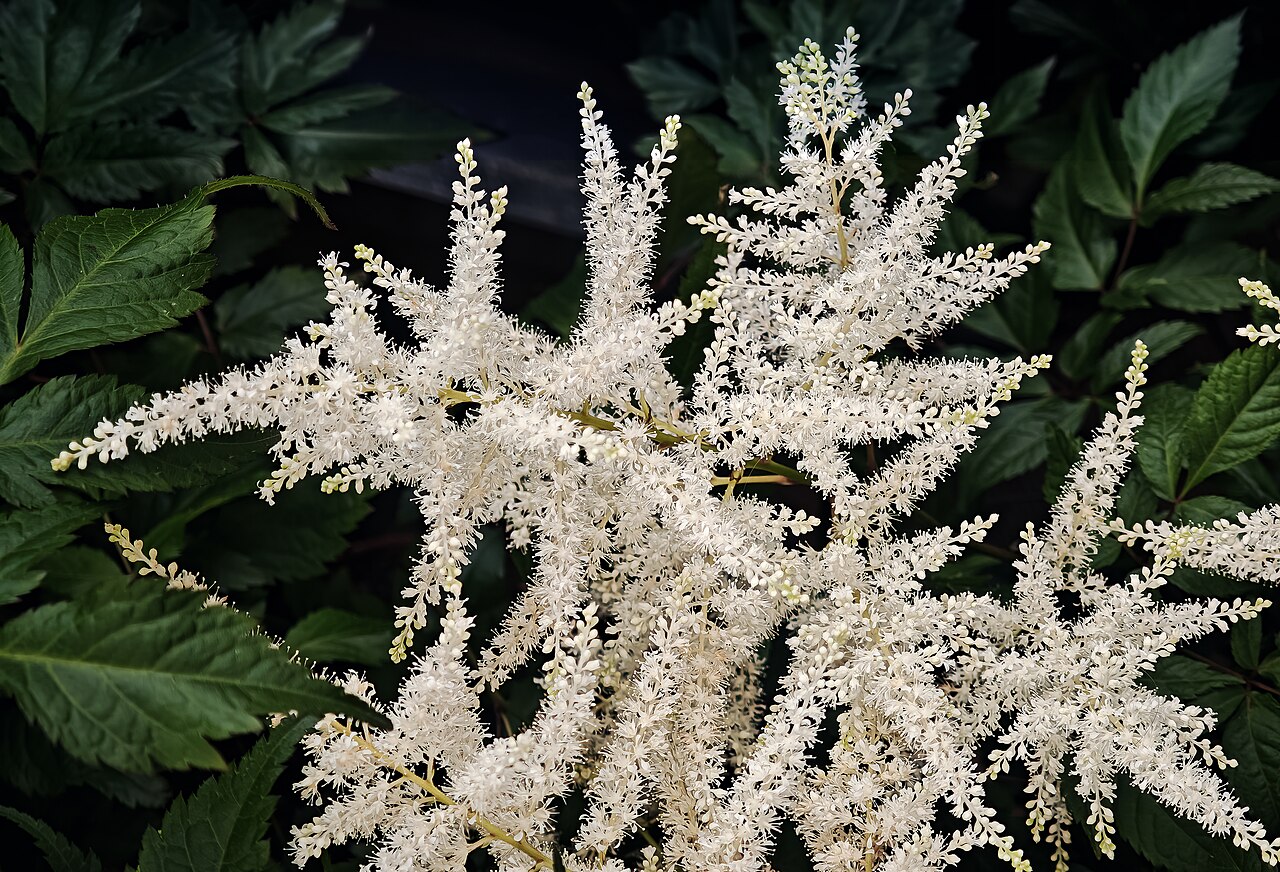
Plant in spring or fall in rich, moisture-holding soil in shade — astilbe is the rare shade perennial that actually flowers lavishly, in plumes of pink, white, red, and lavender in early to midsummer. The one thing it will not forgive is dry soil: in sun or drought it scorches and sulks. Amend with compost at planting, mulch deeply, and site it where soil stays moist — near downspouts, in rain gardens, or in the shade bed you actually water. Chinese astilbe (A. chinensis) tolerates drier soil than the showy hybrids.
Water & feeding
Water consistently — astilbe is a moisture-lover, and ‘drought-tolerant’ is not a word that belongs near it. Keep soil evenly moist through the growing season.
Common problems
- Drought stress and leaf scorch — the number-one problem, and it is a siting problem
- Few pests; occasionally slugs on young foliage
- Declining bloom in crowded, dry clumps — divide and replant in compost-rich soil
Harvest
Leave spent plumes standing through winter for structure and winter interest, then cut back in early spring before new growth. Divide clumps every 3–4 years in spring or fall.
Browse all plant & pest guides
Propagation
Astilbe is a division plant first and a seed plant a distant second. Named varieties are mostly hybrids, and their seedlings will not come true — sow their seed and you get a lucky dip, not a copy of the parent. Division gives you the same plant, genetically identical and already half-grown, and it revives a congested clump that has gone woody in the middle.
Divide in early spring just as the buds begin to swell, or in fall after the foliage has yellowed. Water the clump well the day before, then dig around it generously — astilbe roots are tough and fibrous, so bring a sharp spade. Lift the whole clump and cut it into sections, making sure every division carries both roots and at least one firm, healthy bud. Small, budless scraps are compost, not plants. Replant each division at the same depth it grew before, firm the soil, and water deeply. Keep new divisions consistently moist until established, because astilbe hates drying out.
Seed is not forbidden, just second choice, and it suits species astilbes and gardeners who enjoy a surprise. Collect seed from fully dried, brown seed heads in late summer or fall, and give it a cold period of roughly four to six weeks in the refrigerator before sowing, since it germinates unevenly without a chill. Sow it on the surface of moist seed-starting mix and barely cover it — the seed is tiny and needs light — then keep it evenly moist in indirect light until seedlings appear. In Florida, remember that astilbe is a cool, moist-shade plant at the warm edge of its comfort zone, so divisions need shade, steady moisture, and mulch. Whichever route you take, label everything: divisions of two similar pink varieties look identical in a wheelbarrow.
Varieties
Every named variety of Astilbe with its own growing guide:
- Bridal Veil Astilbe — The classic white astilbe: arching, creamy-white plumes that droop gently at the tips over deep-green foliage, an RHS Award winner.
- Deutschland Astilbe — The compact white japonica: upright white plumes on a stout, bushy plant about 20 inches tall — the white astilbe for smaller shade gardens.
- Fanal Astilbe — The red astilbe: intense deep-red plumes over bronze-tinged foliage — the Arends classic that brings real color to deep shade.