
🪶 Fanal Astilbe
What it looks like
Why this variety
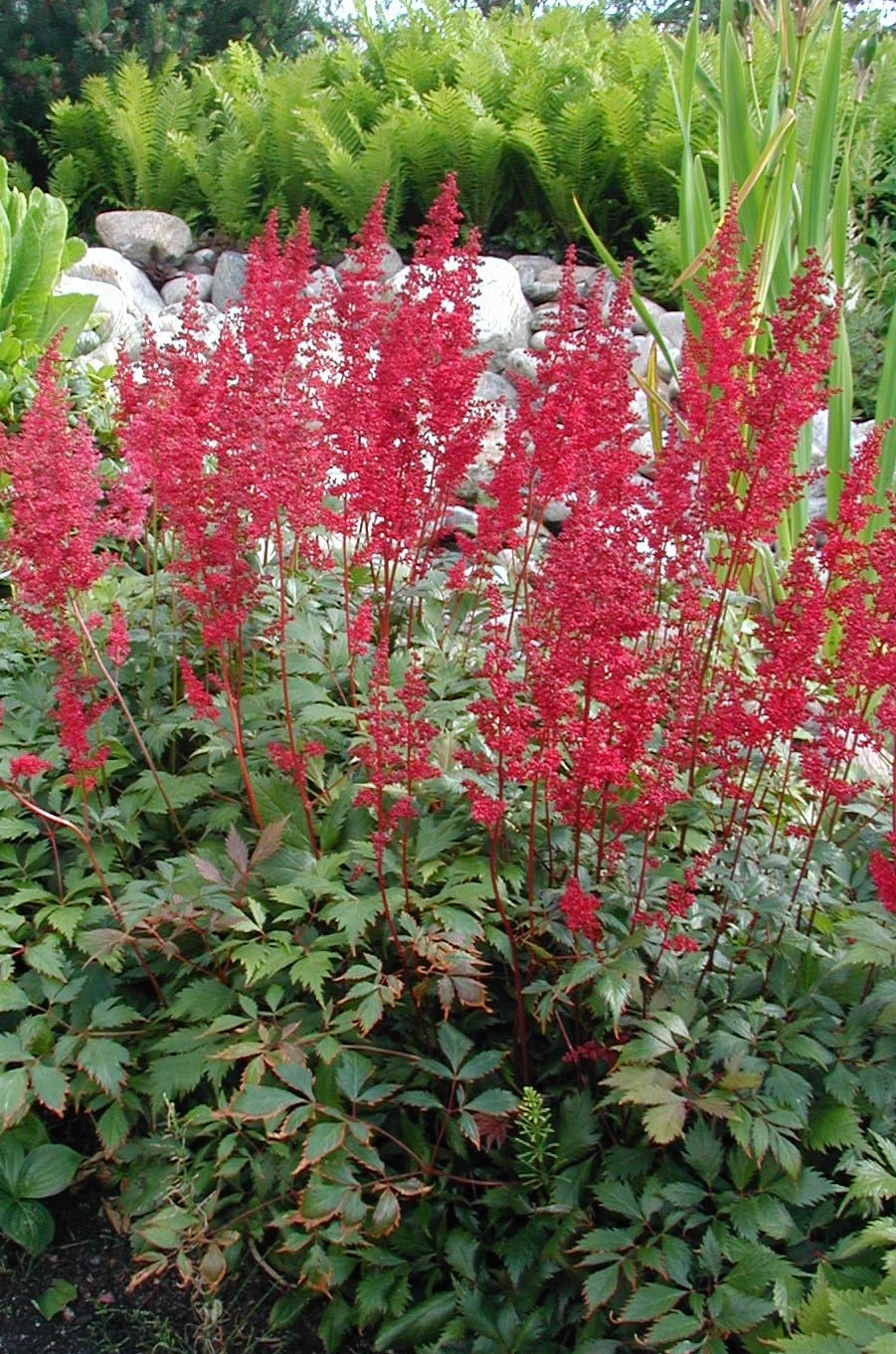
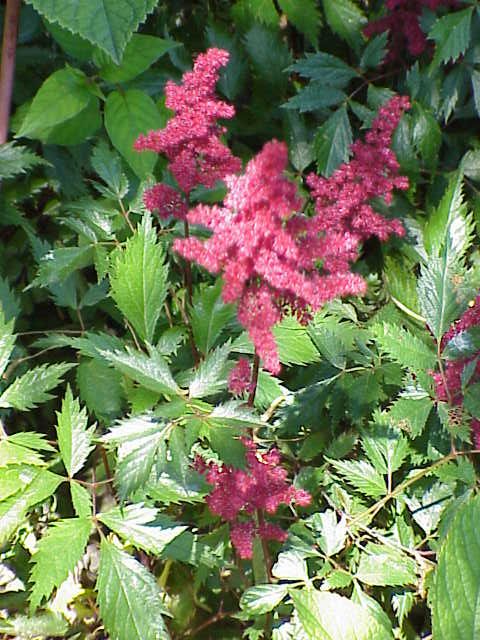
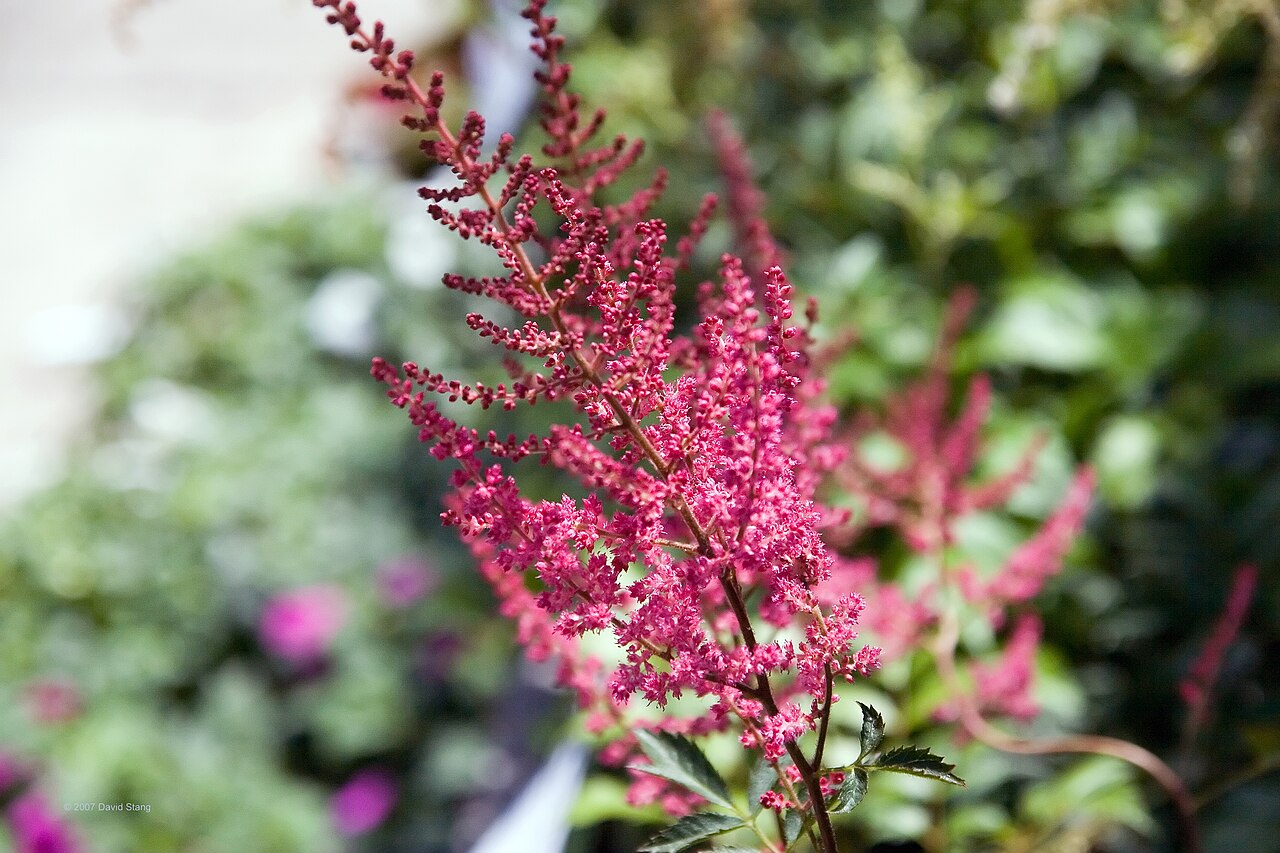
Fanal is the red astilbe, and ‘red’ here means it: intense, deep crimson-red plumes, up to 10 inches long, held over foliage with a distinct bronze-red tinge, on a plant about 2 feet tall. It is an Arends hybrid — a cross of Japanese, Chinese, David, and Thunberg astilbes, bred by Georg Arends’ program — and it is one of the oldest and most awarded reds, with an Award of Garden Merit to its name. In a shade garden, where most flowers are white, pink, or blue, a true red plume is a rarity, and Fanal’s color reads as jewel-like against dark green foliage rather than garish, which is why it has never gone out of style.
The trade-off, again, is water: Fanal scorches in sun or drought like every astilbe, and its dark foliage shows scorch more plainly than green foliage does, so a stressed Fanal looks worse than a stressed green astilbe even when the damage is the same. Give it shade, rich, moisture-holding soil, compost at planting, and deep mulch, and it will be the most dramatic thing in the shade border in July. Give it a dry, sunny spot and it will be a cautionary tale.
If you are new to choosing between cultivars, the Varieties Matter guide explains why the name after the plant matters as much as the plant itself. Fanal is a perfect example: it is not just a astilbe in the abstract, it is a astilbe with a specific job, a specific history, and specific strengths.
Florida honesty, stated plainly: astilbe is a North Florida shade trial, not a statewide promise. Florida’s heat, humidity, and drying winds are the opposite of Fanal’s native conditions — expect scorch, short life, or failure south of the Panhandle, and even in North Florida plant it only in shade with soil that never dries out, mulch heavily, and water through dry spells. Its dark foliage is beautiful and also a heat liability in Florida sun, so shade is not optional here, it is the whole plan.
How to grow
Plant in spring or fall in rich, moisture-holding soil in shade — astilbe is the rare shade perennial that flowers lavishly, and the price is water. Amend heavily with compost at planting, work worm castings into the bed, mulch deeply, and site it where the soil stays moist: a low spot, a north-facing bed, or near a downspout that does not flood. Never let it dry out in its first season, and do not plant it in sun unless you enjoy watching a shade plant complain in public.
Set plants 18-24 inches apart in soil with a pH around 5.5-6.5. Work worm castings into the bed at planting and mulch to hold moisture. A well-fed astilbe plant rewards that care directly: steadier growth, better bloom, and a show that actually shows up.
Water & feeding
Keep soil consistently moist — this is the single most important sentence in this guide. Astilbe scorches in dry soil, and a scorched astilbe does not recover its looks that season. Water at the soil line, mulch deeply, and feed lightly: castings and compost at planting plus a spring top-dress. If your site dries out regularly, astilbe is the wrong plant for it, and no watering schedule fixes a bad site choice.
Common problems
- Scorch in sun or drought — browned leaf edges and stunted plumes; the fix is shade, moisture, and mulch, applied before the damage, not after.
- Japanese beetles on foliage and flowers in some regions — hand-pick, encourage predators, and avoid broad-spectrum sprays that kill beneficials.
- Crown rot in waterlogged soil — astilbe wants moist soil, not standing water; improve drainage and do not plant it in a spot that ponds.
- Powdery mildew in humid, crowded plantings — space for air and water at the soil line.
- Short life in hot climates — heat shortens astilbe life; in warm zones, treat it as a shade trial with soil that never dries out.
Harvest
Cut plumes for fresh bouquets in early to midsummer, when panicles are fully colored but before they fade — astilbe plumes last well in water and dry well, too, holding their shape and much of their color for dried arrangements. Leave some plumes standing for winter interest if you like their tawny skeletons, or cut the whole plant back in late fall. Divide congested clumps every few years in spring or fall, replanting divisions in rich, moist soil.
Browse all plant & pest guides
Saving seeds
Fanal is an Arends hybrid astilbe — a cross of Japanese, Chinese, David, and Thunberg astilbes — and astilbes are propagated by division, so seedlings won’t hold its intense crimson-red plumes. The Propagation section of the Astilbe guide covers the route.