
🪶 Blue Grama
What it looks like
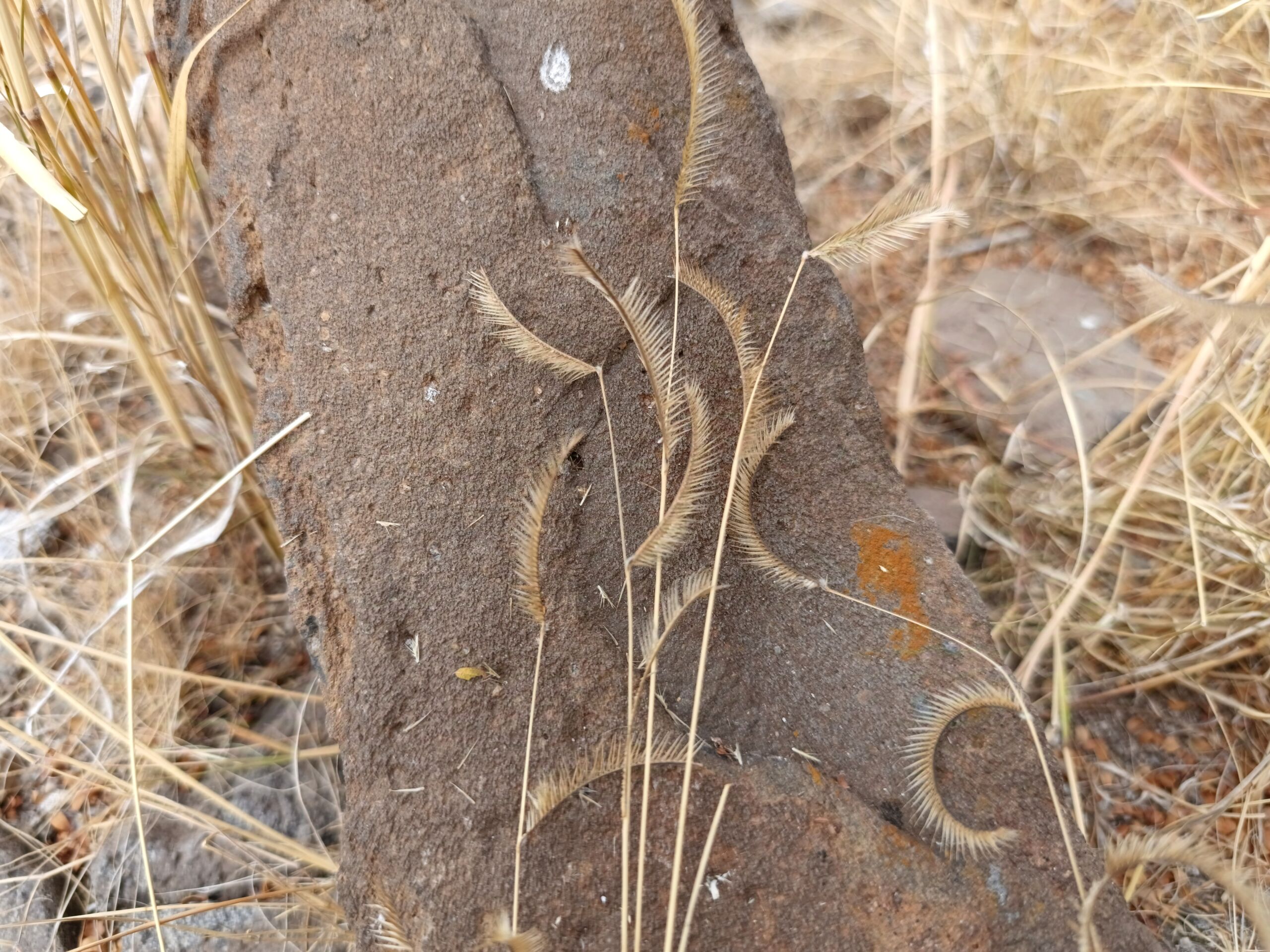
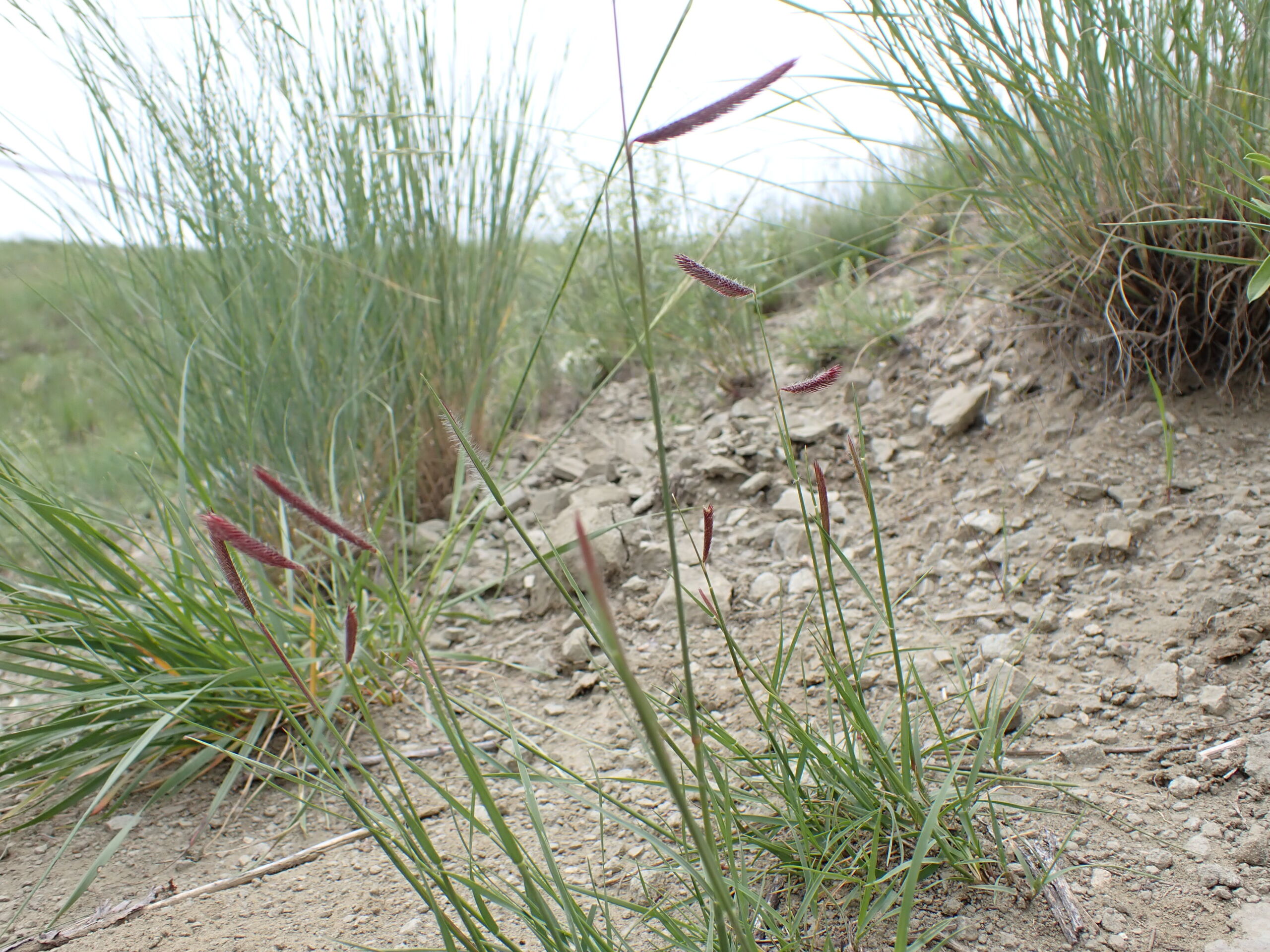
Blue grama is a small, warm-season, perennial bunchgrass that looks delicate and behaves like a survivor. It forms dense tufts of narrow, blue-green to grey-green leaves, usually 6 to 18 inches tall in foliage, with flowering stems rising to around 2 feet. Its claim to fame is the seed head: a curved, comb-like spike that sticks out sideways from the stem like a tiny eyelash or a miniature toothbrush. Gardeners call it “eyelash grass” for exactly that reason, and once you have seen those little combs nodding in a summer breeze, you will never unsee them.
This is one of the defining grasses of the North American shortgrass prairie, native from Canada through the Great Plains and Rocky Mountains to Mexico. It is a keystone prairie species — the grass that holds the whole dry-grassland community together — and it does it on rainfall that would make most lawn grasses file a formal complaint, roughly 10 to 20 inches a year in its native range. Its roots tell the story: a dense fibrous system that can reach several feet deep, with lateral roots ready to grab light rains before they evaporate. It is also a butterfly plant in the most literal sense: its foliage feeds the caterpillars of skippers such as Leonard’s skipper and Ottoe’s skipper, and its seeds feed birds.
How to grow
Blue grama is the right plant for the hard places: hot, dry, sunny, poor-soiled spots where pampered plants go to sulk. Give it full sun — six or more hours of direct sun — and well-drained soil, and it will largely take care of itself. It grows on sandy loams, loams, and even clays, provided they are not waterlogged, and it tolerates a pH range around 6.0–8.5, including calcareous soils. What it will not forgive is wet feet. Soggy soil, heavy irrigation, and rich, constantly moist beds are how you kill a plant that evolved to be thirsty. If your soil stays wet, plant something else and admire blue grama from a respectful, drier distance.
Start from seed or plugs. Seed is readily available and germinates well with a modest amount of moisture during establishment, though seedlings do best when they are not competing with aggressive neighbors for water. Plugs give you a head start and a tidier look sooner. Space plants 12–18 inches apart for a meadow or groundcover effect; they will form clumps 12–24 inches wide and slowly knit together, and they can be mowed to about 2 inches if you want a low, informal lawn for light foot traffic. Do not expect a putting green. Blue grama makes a soft, tufty, natural lawn, not a billiard table, and it is not suited to heavy play or sports traffic.
Manage your expectations about fertility, too. Blue grama evolved on poor soils, and it genuinely prefers them. Excess nitrogen makes it flop over (gardeners call it lodging) and invites weeds to the party. Skip the fertilizer program. A lean diet, full sun, and benign neglect are the whole care plan, which makes this one of the few ornamental grasses where doing less is doing it right.
Florida note: blue grama is a prairie and plains native, not a Florida native, and Florida’s humid, rainy climate is not its happy place. It may be grown as a curiosity in a very well-drained, sunny, raised spot, but it is not a recommended Florida lawn grass — Florida gardeners wanting the same low-water, tufty look should look to grasses actually adapted to Florida’s humidity and rainfall instead of forcing a desert prairie grass to endure a swampy summer.
Water & feeding
Water sparingly, and then stop. The single most common way gardeners kill blue grama is by loving it with the hose. Once established, it needs very little supplemental water — in its native range it thrives on as little as 10 to 20 inches of annual rainfall — and it prefers sporadic deep soaks over frequent light sprinkling. Let the soil dry out between waterings. If the foliage browns in a drought, that is often dormancy, not death; blue grama is an opportunist that greens up quickly when water returns and waits out the dry times in between.
Feeding: do not. Or, to be precise, do not fertilize it like a lawn. Low fertility is a feature here. A light topdressing of compost once in a while will not hurt, but regular lawn fertilizer will produce floppy growth, more weeds, and a plant that looks worse, not better. If your soil is extremely poor and the plants look genuinely starved, a single light feeding in spring is plenty. When in doubt, leave it alone and let the prairie do its thing.
The soil science angle is worth a moment: blue grama’s deep, fibrous roots are superb at building soil structure. They open channels for air and water, feed microbes with root exudates, and add organic matter deep in the profile as roots grow and die back seasonally. That is why prairie soils are famously deep and dark — thousands of years of grasses like this one quietly composting themselves underground.
Common problems
- Overwatering and wet soil. The number one killer. Yellowing, rotting crowns, and plants that simply melt away in a wet summer usually trace back to too much water or poor drainage. Fix the drainage or move the plant.
- Too much shade. Blue grama cannot grow in shade. In shade it thins, stretches, and fades. Full sun is non-negotiable.
- Too much fertilizer. Floppy, lodging growth and weed invasion follow heavy feeding. Feed little or not at all.
- Slow establishment. Seed production and seedling establishment depend on soil moisture and temperature, and recovery after disturbance is slow. Be patient in year one; a blue grama planting looks better in year two and better still in year three.
- Heavy traffic. It tolerates light foot traffic as a mowed lawn alternative, but it is not a sports turf. Constant heavy wear will wear it out, and it recovers slowly.
Harvest
There is no vegetable harvest here, but there are two satisfying ones. First, the seed heads: cut stems in late summer and fall for dried arrangements, where those eyelash combs hold their shape beautifully and last for months indoors. Second, the “harvest” of a mowed lawn alternative: mow a blue grama lawn to 2–4 inches a few times a season if you want it tidy, or leave it unmowed and let the seed heads dance all summer and stand blond and handsome through winter. Either way, leave some seed heads standing into winter if you can — birds eat the seeds, and the tawny winter silhouette is half the plant’s charm. Cut back dead foliage in early spring before new growth starts, and the tufts will return fresh and blue-green.
Browse all plant & pest guides
Saving seeds
Blue grama’s seed heads are the giveaway — one-sided, comb-like little flags that look like eyelashes waving on wiry stems. They are also your harvest calendar. When the heads turn straw-colored and dry, and a gentle shake or pinch sends seed popping free, the crop is ready. If the seed clings stubbornly, it is not ripe yet; if it falls at a touch, you are right on time, so do not dawdle — ripe grass seed is famously unbothered about leaving without you.
Harvest by hand-stripping: grasp the base of a seed head and pull gently away from the stem, letting the spikelets fall into a paper bag. Collect from several plants rather than stripping one heroic clump bare — a wider parent base means stronger, more varied seedlings, and it leaves each plant enough seed to do its own reseeding. Spread the harvest in a thin layer somewhere airy for a few days to finish drying, especially if you collected on a humid morning.
Cleaning is where grass seed earns its reputation. The seed comes wrapped in chaff — papery spikelet husks that cling like packing peanuts. Rub the dried heads between your hands or over a coarse screen to free the grains, then winnow: pour the mix slowly from one container to another in a light breeze (or in front of a fan on its lowest setting) and let the lighter chaff blow away while the heavier seed drops. Repeat until the seed looks reasonably clean. Perfection is not the goal; you are sowing a prairie grass, not grading diamonds. A little chaff in the mix will not stop germination.
To sow, press the seed into a firm, weed-free seedbed and cover only lightly — about a quarter to half an inch deep. Blue grama is a warm-season grass, so sow in spring once the soil has warmed, or in fall and let winter settle the seed in. Good seed-to-soil contact matters more than depth precision: broadcast seed should be pressed or raked in, not left sitting on top like confetti. Keep the bed moist until seedlings are up, then back off — this is a drought-hardy prairie native, and coddling it wet is how you teach it to be needy.
Two honest caveats. First, seed from a named selection will not necessarily come true — seedlings vary, and if you want an exact copy of a specific cultivar, division of an established clump is the reliable route. Second, the Florida note: blue grama is a western prairie grass, not a Florida lawn grass, so treat saved seed like the desert native it is — dry it thoroughly, store it airtight with a desiccant packet, cool and dark, and do not let Florida humidity turn your seed jar into a terrarium.
Varieties
‘Blonde Ambition‘ — the best-known ornamental selection: taller than the species (to about 2–2.5 feet), with showy chartreuse-gold seed heads held at right angles on arching stems, persisting into winter; discovered as a chance sport in a Santa Fe garden.
‘Hachita‘ — a range-type selection collected in 1957 on the semiarid plains south of Hachita, New Mexico, chosen for drought tolerance and uniform growth; a workhorse for restoration and low-water lawns.
‘Lovington‘ — another range-type selection used for drought-hard turf and forage plantings where uniformity and toughness matter more than ornamental flair.
‘Bad River‘ — a northern range-type selection used for restoration and low-water plantings in colder, drier sites.
Straight species (seed-grown) — for meadows and restoration, unselected seed gives the most genetically diverse, prairie-authentic planting, and it is usually the cheapest option.