
🌿 Bog Rosemary var. polifolia
Botanical form, not a garden cultivar: var. polifolia is the typical, northern form of bog rosemary. Warning: all parts contain grayanotoxin and are toxic if eaten — grow it to look at, never to nibble.
What it looks like
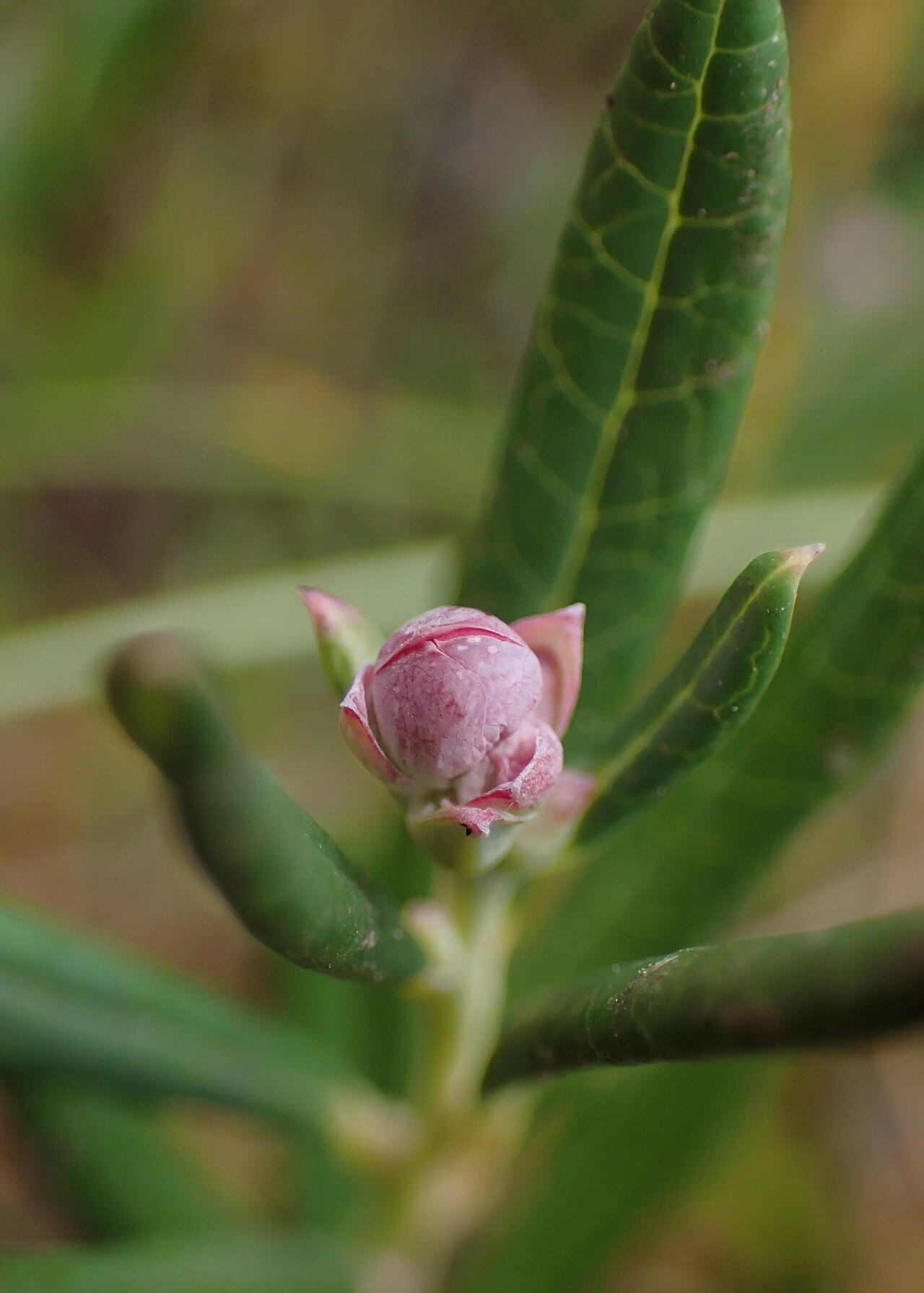
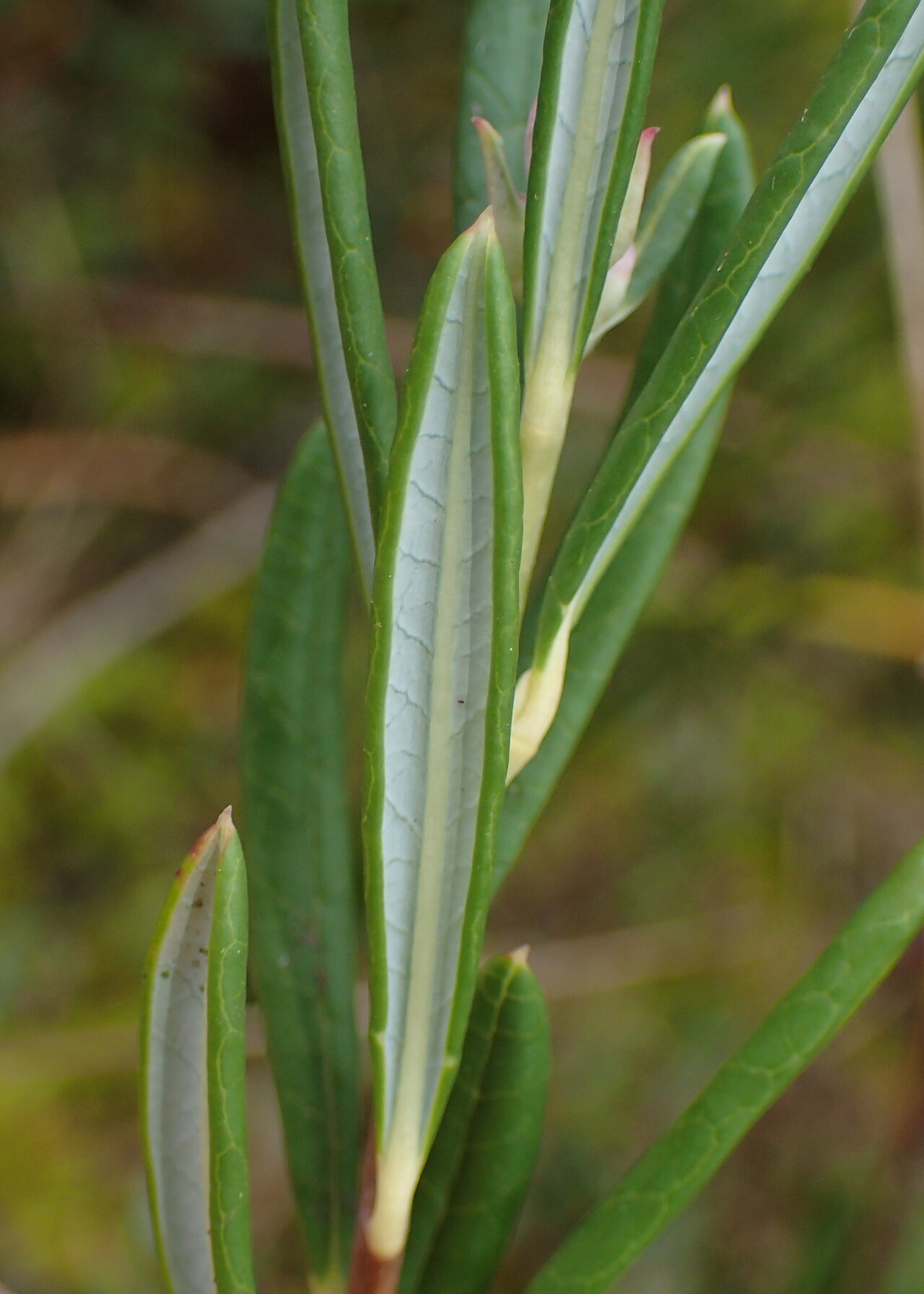
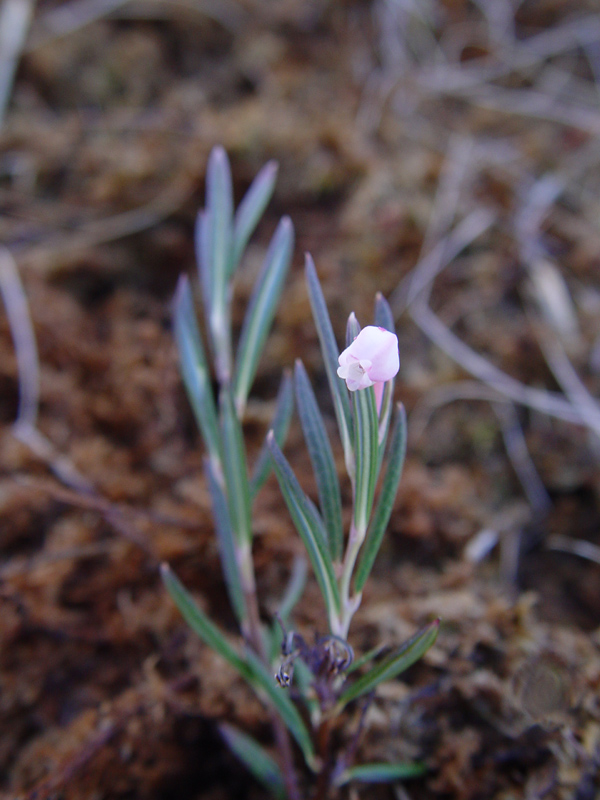
Var. polifolia is the smaller, more northern bog rosemary: a low, spreading evergreen shrub, typically under 8 inches tall (though it can reach about 16 inches), with slender stems and leathery, lance-shaped leaves, dark green above and white beneath, their margins curled under like a rosemary leaf’s — the resemblance that gave the plant its common name, though the two are not related. In late spring to early summer it carries nodding, bell-shaped flowers, white to pink, on slender, nearly straight pedicels several times the length of the flower, followed by small brownish capsules. Under the leaves when young is a glaucous bloom that may wear off with age, and the young shoots are green, not glaucous — the quiet field marks that separate it from its American cousin.
Why this variety
This is the original bog rosemary, the plant Linnaeus described from the peat bogs of northern Europe, now known to range across northern Asia and arctic America as well as northwestern North America. It is the bog rosemary of the far north, and its small stature is a feature, not a flaw: in a peat bog, growing tall is a good way to get wind-burned and freeze-dried, and this plant’s whole strategy is to stay low, stay evergreen, and bloom early while pollinators are desperate. It is also a plant with a warning label built in — grayanotoxin in all parts — which makes it a look-but-don’t-taste garden citizen, and honestly a more interesting one for it.
How to grow
Grow it only if you can give it a genuine bog: saturated, strongly acid peat, full sun to light shade, and cold winters. This is not a plant you amend into a normal bed — ordinary garden soil, lime, and fertilizer are all hostile to it. A constructed bog garden (a lined depression of peat and sand, kept wet with rainwater) is the honest way to grow it outside its native range, and even then it wants a cold climate: zones 2–6, with real winter chill. In warm climates it declines, and in Florida it is simply not a viable outdoor plant — admire it in northern gardens and bog collections instead.
Water & feeding
Keep it wet, acid, and poor: rainwater or distilled water, never hard tap water or limestone gravel, and no fertilizer beyond what the peat provides. The roots must stay moist year-round — a dried-out bog rosemary is a dead bog rosemary — but the water must drain slowly through peat, not sit stagnant and anaerobic. Mulch with sphagnum, not bark, and never lime the bed: like most heath-family plants, it is a calcifuge, and lime is poison to it in slow motion.
Common problems
- Toxicity — grayanotoxin throughout the plant; ingestion can cause dizziness, vomiting, and breathing difficulty. Keep away from children, pets, and foragers.
- Wrong soil — neutral or alkaline soil, or ordinary potting mix, will yellow and kill it; it needs acid peat, full stop.
- Drying out — a bog plant that dries out rarely recovers; a rainwater-fed bog bed is the insurance policy.
- Warm winters — insufficient chill and hot summers exhaust it; in Florida and the deep South, do not plant it in the ground and expect it to live.
Harvest
There is no harvest, and that is a safety rule, not a disappointment: no part of bog rosemary is edible, and its grayanotoxin is the same family of toxin found in some rhododendrons. The yield is the plant itself — evergreen winter foliage, pink spring bells, and the satisfaction of keeping a genuine circumboreal bog plant alive in a garden that can honestly support it.
See also: Bog Rosemary: Growing Guide