
🍊 Bouquet de Fleurs Sour Orange
What it looks like


Why this variety
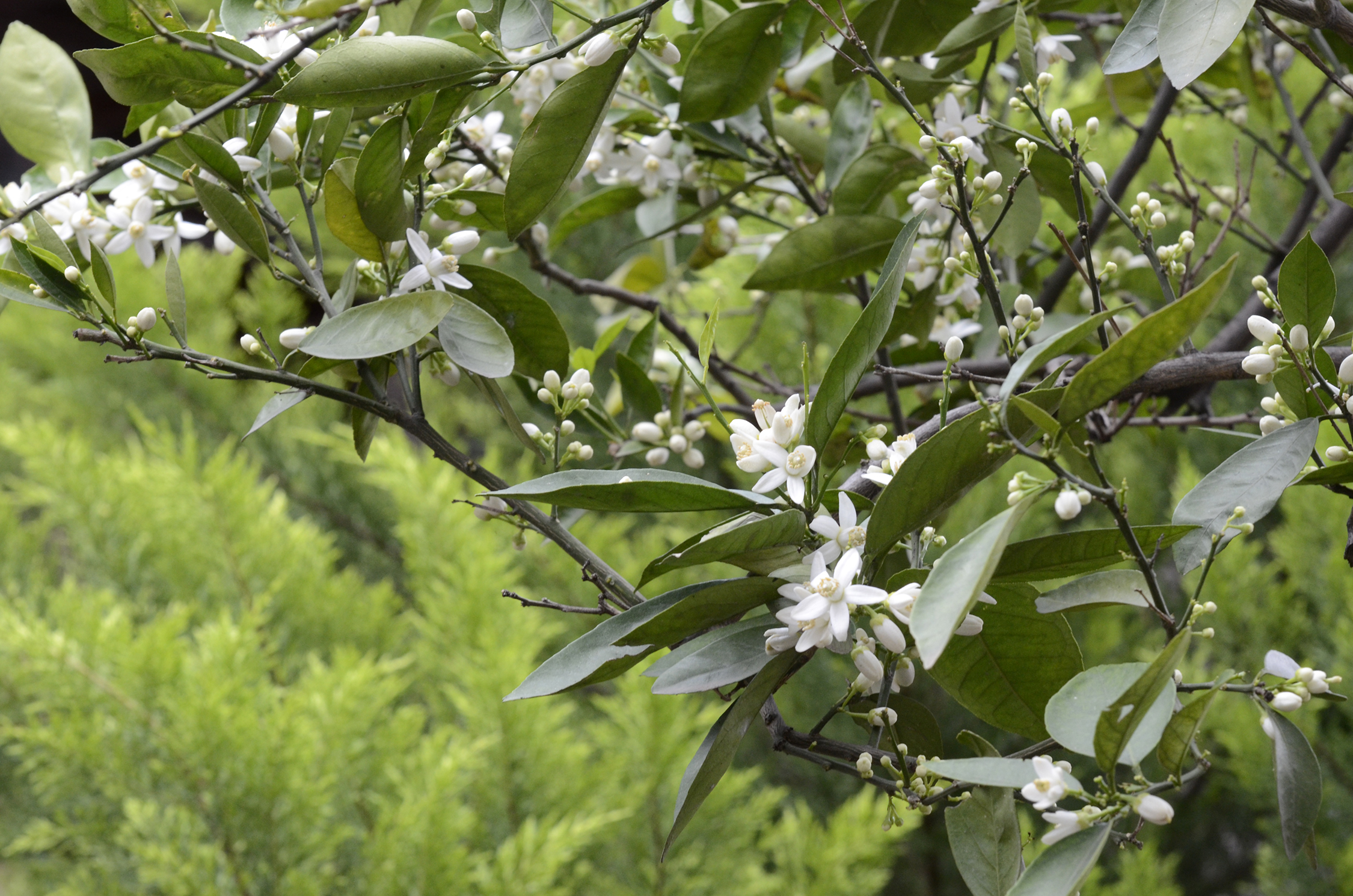
Bouquet de Fleurs is the odd one out in the sour orange family, and proudly so: most sour oranges are grown for their fruit, but this one is grown for its flowers. It throws out massive clusters of intensely fragrant white blossoms — the flowers steam-distilled into neroli oil and orange-flower water — so a hedge of it in bloom does not just look good, it perfumes the whole yard. The tree itself is small, spreading, dense-leaved, and nearly thornless, which is exactly why it makes such a good hedge: it fills in thick, stays at a polite height of roughly 8 to 10 feet, and does not fight back when you prune it.
The fruit is still a sour orange, mind you — sour, bitter, and not for fresh eating — but it is perfectly good for marmalade and liqueurs, so nothing goes to waste. Think of the fruit as the bonus round: the flowers are the main event, the fruit is the encore, and the hedge is the stage. If you want a citrus tree that earns its keep in spring even before a single fruit ripens, this is the one.
A note on Florida, stated plainly: Bouquet de Fleurs is likely to grow in Florida — sour orange itself is Florida-hardy and widely used as a Florida rootstock, and the selection is rated for zones 8 to 11 — but no Florida-specific trial of this selection was found, and no Florida seller was found. The large California nursery that sells it cannot ship citrus to Florida, so do not order it from there expecting a Florida delivery; check with a Florida citrus nursery first. If you are new to choosing between cultivars, the Varieties Matter guide explains why the name after the plant matters as much as the plant itself.
How to grow
Plant Bouquet de Fleurs the way you would any citrus, with one difference in intent: you are planting a hedge, not an orchard tree. Give it full sun in the warmest, sunniest, best-drained spot you have, with the graft union kept above the soil — buried graft unions invite rot and rootstock suckers, and neither smells as good as the blossoms. Space hedge plants about 8 to 10 feet apart so they knit together without strangling each other, and site it where the spring fragrance can drift: along a walk, near a patio, or upwind of the porch, not crammed against a wall where the scent goes nowhere.
Start with certified disease-free nursery stock, because citrus greening (HLB), spread by the Asian citrus psyllid, is the defining challenge for every citrus tree in Florida, sour oranges included. No variety here is greening-resistant, so the plan is vigilance, not immunity: buy clean stock, scout new flush for psyllids, and keep the tree vigorous, because a stressed tree declines faster. Container growing works too — a big pot lets you wheel a young tree under cover for a freeze, which is a genuine advantage at the colder edge of its range — but a hedge in the ground will always out-perform a pot in the long run.
Water & feeding
Water deeply and infrequently, letting the top few inches of soil dry between waterings; shallow daily sprinkles build shallow roots and invite root rot. Young trees need water weekly through their first dry season, and container trees need it far more often — a pot in Florida sun dries out with impressive speed.
Feed with a citrus fertilizer split across spring and summer rather than dumped in one dose, and watch for micronutrient deficiencies — yellowing between leaf veins often means zinc or manganese, and Florida’s sandy, high-pH pockets lock those up. Castings help soil life, but they do not replace the citrus feed; use both, and skip fertilizer in late fall, when tender new growth would walk straight into a freeze.
Common problems
- Citrus greening (HLB) — yellowing, blotchy mottled leaves, lopsided bitter fruit, and slow decline, spread by the Asian citrus psyllid. There is no cure: buy certified disease-free trees, scout for psyllids, keep trees vigorous, and remove confirmed trees so they do not infect neighbors.
- Citrus leafminer, scale, and aphids — inspect new growth and treat with horticultural oil where needed.
- Root rot (Phytophthora) — follows poor drainage and overwatering. Plant high, drain well, and water deeply but infrequently.
- Freeze damage — the northern Florida citrus killer. Cover young trees, water before freezes, and plant in the warmest spot you have.
- Fruit too sour for fresh eating — this is a feature, not a flaw; cook it, do not snack on it expecting a sweet orange.
Harvest
Pick fruit when it turns fully orange and fragrant, in fall and winter, and use it for marmalade, candied peel, or liqueurs — taste is the test, since color alone can mislead, and fruit holds on the tree for weeks, so pick as needed rather than stripping the tree at once. The real harvest, though, comes in spring: gather blossoms from unsprayed trees for orange-flower water, or simply stand downwind and let the hedge do its work. Fruit picked at full color keeps a couple of weeks refrigerated, and the peel zests beautifully if you grow without heavy sprays.
Browse all plant & pest guides
Saving seeds
Bouquet de Fleurs is a named cultivar, so seed saved from it won’t come true — buy a grafted tree instead. The Saving seeds section of the Sour Orange guide covers seed for the straight species.