
🕓 Broken Colors Four O’Clock
What it looks like
Why this variety
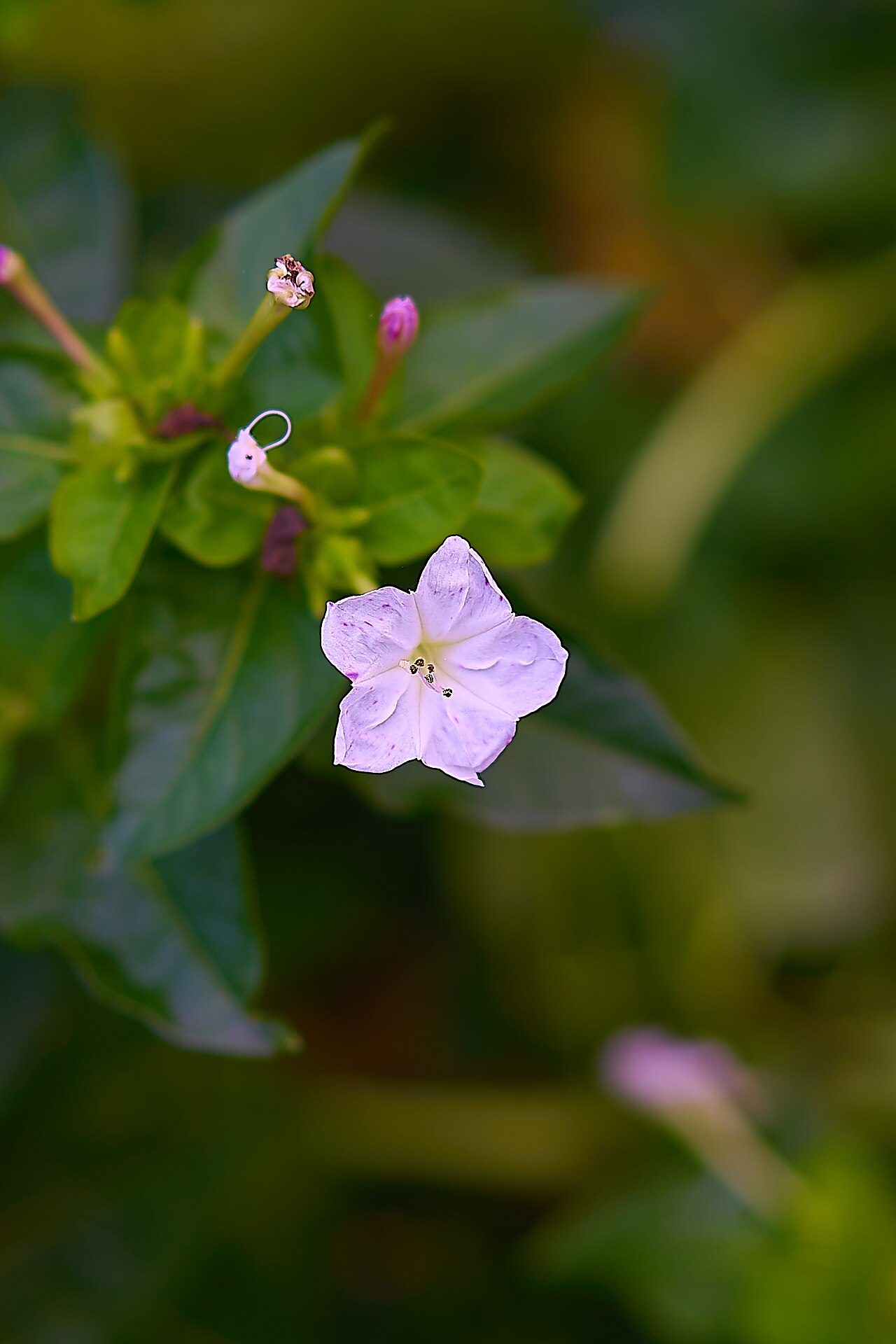
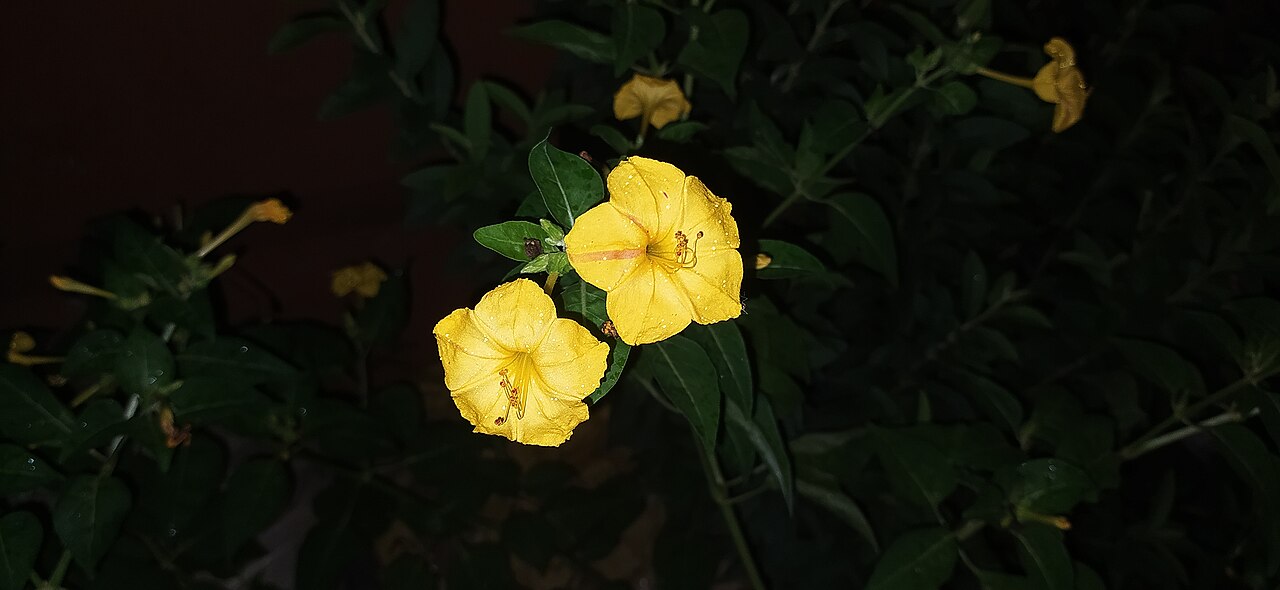
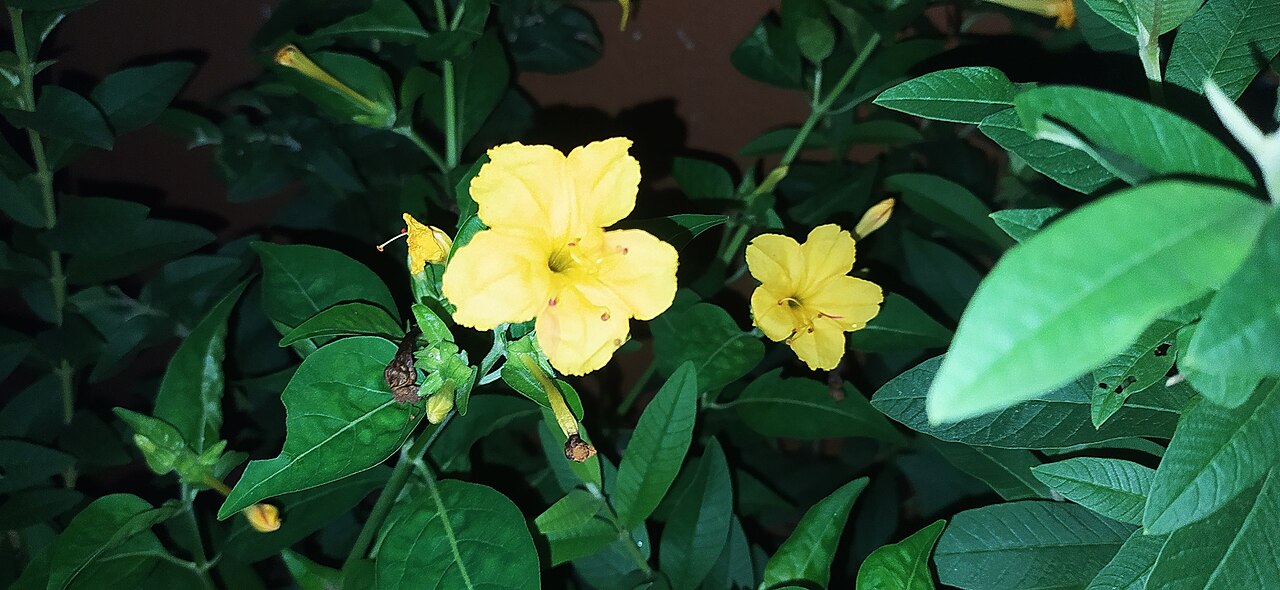
Broken Colors is the four o’clock for gardeners who cannot decide on a color: a strain, not a single-color clone, whose plants bear trumpets in magenta, yellow, white, and pink — striped, splashed, and solid, sometimes all on one plant, sometimes all on one flower. No two plants are alike, which is the point: a drift of Broken Colors is a confetti garden that changes every evening, and the surprise is part of the show. It carries the same jasmine scent, the same four o’clock punctuality, and the same easy, bushy habit as the species.
The trade-off is unpredictability, stated honestly: because Broken Colors is a seed strain, you cannot order a pink one and get a pink one — you get the mix, and the mix is the variety. If you want a guaranteed color, plant Alba for white or a solid-color selection instead. Like all four o’clocks, Broken Colors is toxic if eaten and self-seeds freely, so admire it, do not taste it, and edit volunteers in spring where you do not want them.
If you are new to choosing between cultivars, the Varieties Matter guide explains why the name after the plant matters as much as the plant itself. Broken Colors is a perfect example: it is not just a four o’clock in the abstract, it is a four o’clock with a specific job, a specific history, and specific strengths.
Florida honesty: four o’clock is a genuine statewide plant in Florida — annual everywhere, perennial from tubers in zones 9-11 — and Broken Colors thrives in Florida heat, blooming from summer until frost in sun to part shade. Give it average, well-drained soil, water to establish, and room to bush out, and let it self-sow for next year’s surprise drift. In wet soil it sulks, so raised beds help where summer rain ponds.
How to grow
Sow seed directly after frost danger, or start indoors 4 to 6 weeks early — four o’clock seed germinates with warmth and patience. Set plants out after frost in full sun to part shade and average, well-drained soil, work worm castings into the bed at planting, and give them room: a mature four o’clock is a bushy 2- to 3-foot plant, not a bedding plant. Water to establish, then water in dry spells, and let a few plants self-sow for next year’s drift if you want one.
Set plants 12-24 inches apart in soil with a pH around 6.0-7.0. Work worm castings into the bed at planting and mulch to hold moisture. A well-fed four o’clock plant rewards that care directly: steadier growth, better bloom, and a show that actually shows up.
Water & feeding
Water to establish, then water in dry spells — four o’clock is heat-tolerant once established and sulks in wet soil. Water at the soil line, mulch to hold moisture, and feed lightly: castings at planting is usually enough, because rich soil makes leggy plants with fewer flowers.
Common problems
- Toxic roots and seeds — Mirabilis roots and seeds are toxic if eaten; admire and smell, do not taste.
- Enthusiastic self-seeding — volunteers appear freely; edit seedlings in spring or welcome the drift.
- Wilting in dry soil — four o’clock wilts fast in drought; water deeply in dry spells.
- Leggy growth in shade — full sun to part shade makes bushy plants; deep shade makes thin ones.
- Tuber rot in wet winters — in zones 9-11, tubers rot in standing water; plant in drainage or lift and store dry.
Harvest
Cut stems for evening bouquets, when trumpets are fully open and scented — four o’clock flowers last a day or two in water and suit small, fragrant arrangements for a bedside table. Deadhead only if you do not want self-seeding; otherwise, let plants seed for next year’s drift. In zones 9-11, lift tubers after frost and store dry for spring, or leave them in the ground in drainage and let them return.
Browse all plant & pest guides
Saving seeds
Broken Colors is a seed strain, so it comes true from seed as the same mix — save seed from your best plants and let a few self-sow for next year’s drift. The full method is in the Saving seeds section of the Four O’Clock guide.