
🕓 Four O’Clock
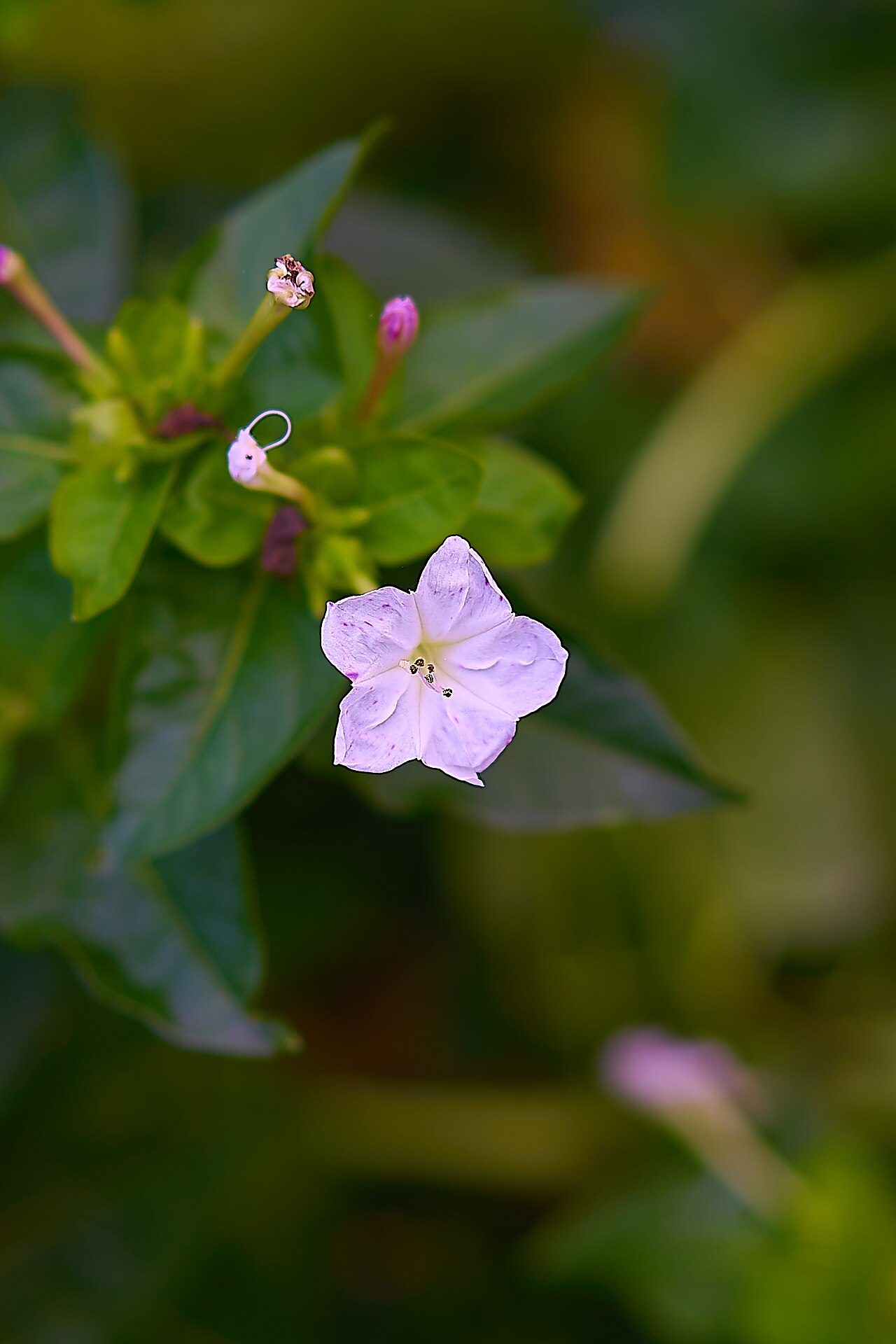
What it looks like
How to grow
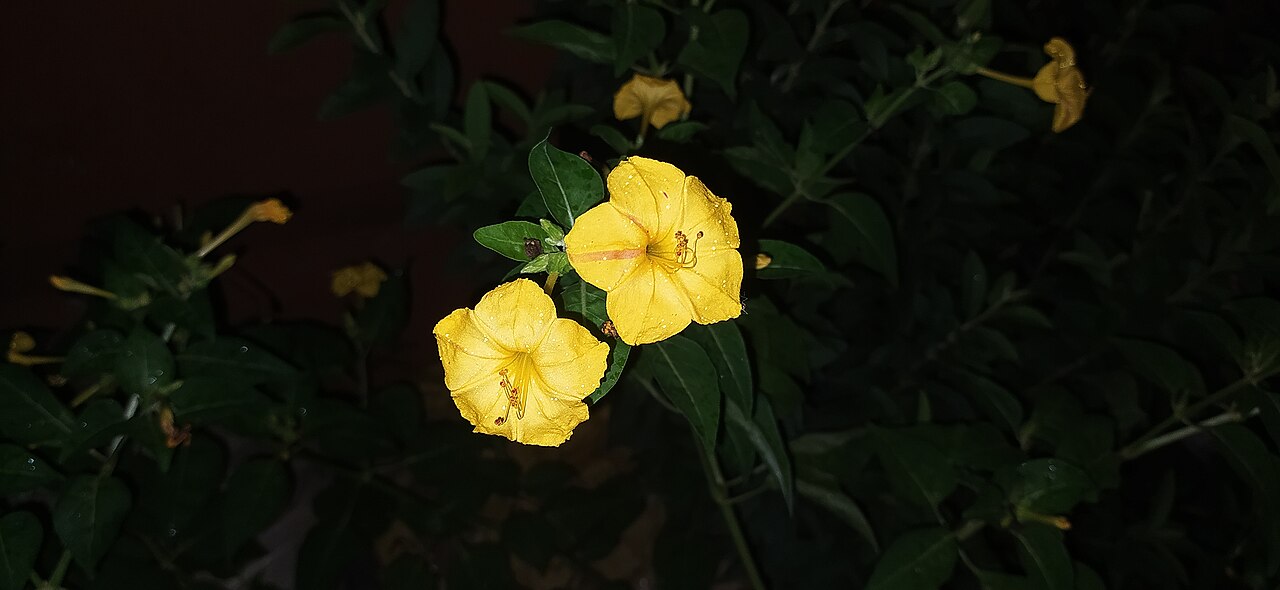
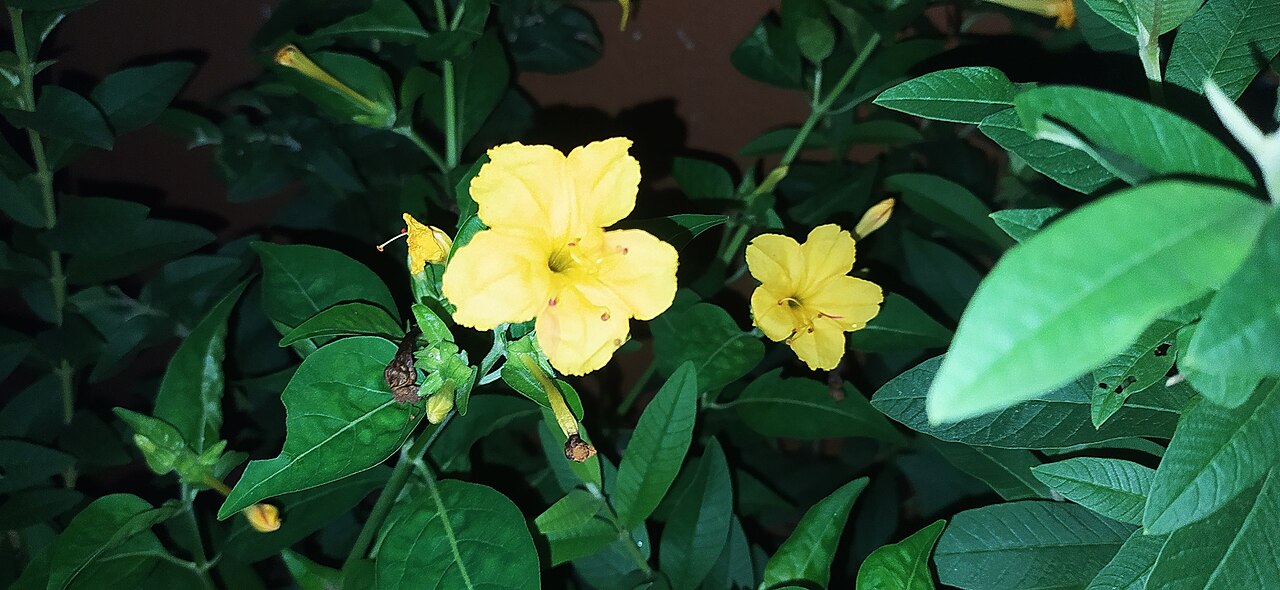
Four o’clocks are old-fashioned garden favorites, 2–3 feet tall and wide, with trumpet-shaped flowers in pink, yellow, white, red, or striped combinations — sometimes several colors on the same plant, and sometimes a single flower split between two colors — that stay closed through the heat of the day and open in late afternoon, filling the evening garden with fragrance. Plant after last frost in full sun to part shade in average, well-drained soil, spacing 12–24 inches apart. In zones 9–11, the tuberous roots overwinter and return each year, growing larger; elsewhere, grow as an annual, or dig tubers in fall like dahlias and store them dry for winter. Four o’clocks self-seed readily, so volunteers are common. All parts are toxic if eaten — ornamental only.
Water & feeding
Water regularly; four o’clocks like even moisture and wilt in drought, though established plants recover quickly. Mulch to hold moisture. Feed lightly with compost at planting; heavy fertilizer makes leafy growth at the expense of flowers.
Common problems
- Self-seeding — deadhead or thin volunteers if they spread too far.
- Tubers rotting in storage — store dry, cool, and frost-free; discard soft tubers.
- Late bloom if started late — start seed indoors 6–8 weeks before last frost for earlier flowers.
- Few pests — generally trouble-free.
Notes
Deadhead if you want to limit self-seeding, or leave flowers to set seed for volunteers. In cold zones, dig tubers after frost, dry them, and store like dahlias. Four o’clocks are a grandmother’s-garden plant for a reason: they bloom through heat, scent the evening, and come back on their own if you let them.
Browse all plant & pest guides
Saving seeds
Toxicity warning up front. Four o’clock seed is poisonous if eaten, and so are the roots. The “seeds” you collect are technically nut-like fruits — large, dark, wrinkled, five-ribbed spheres — and they look uncomfortably like peppercorns, which is exactly the wrong thing to leave within reach of a curious toddler or a dog that samples the garden floor. Some people also get contact dermatitis from handling the plant. So: label packets clearly, store them out of reach of children and pets, wash your hands after collecting, and never let this plant near an edible bed on the strength of a folk remedy. It is an ornamental, full stop.
With that said, four o’clock is one of the easiest seeds in the garden to save, mostly because the plant is trying to save itself whether you help or not. Flowers open in late afternoon, wilt by morning, and by autumn each faded flower has left behind one of those big black seeds. Let seed heads dry on the plant, then simply pick the hard, dry seeds off — no pulp, no chaff, no fiddly cleaning. Spread them thin to dry thoroughly indoors before storage. In Florida humidity, that drying step is the whole ballgame: seed that goes into a jar even slightly damp will mould, so wait until the seeds feel hard and papery-dry, then seal them in an airtight container with a desiccant packet and keep them cool and dark. Hard-coated seed stored truly dry keeps well, and you will have far more than you need — one plant makes a generous handful.
Sowing is equally forgiving. Soak the seeds overnight in water, or nick the hard coat lightly, to speed things up, then sow about 6 mm (a quarter inch) deep — light helps germination, so do not bury them deep. Sow outdoors after the last frost, or indoors up to eight weeks earlier, and expect sprouts in roughly five to seven days at warm room temperature, though some batches take a couple of weeks. Thin or transplant to a foot or more apart, because four o’clocks get bushy fast and will happily fill the space you give them.
Now the two quirks that make four o’clock seed-saving different from most flowers. First, self-seeding: in warm climates, including Florida’s zones 9–11 where the tuberous roots persist, volunteers will appear whether you saved seed or not, and the plant has naturalised in parts of the southern United States. Deadhead if you want to limit the spread, or leave flowers to set seed if you want a self-renewing patch — just do it deliberately, and pull volunteers while they are small if they land where you do not want them. Second, colour honesty: four o’clocks cross-pollinate freely, and a single plant can throw solid, striped and splashed flowers, sometimes all on one bloom. Seed from a mixed planting will not reliably repeat a parent’s pattern — even a white ‘Alba’ in a mixed bed can surprise you — so grow one colour alone if you want the best odds of that colour, and otherwise enjoy the confetti. In cold zones, remember the other half of the plant’s survival kit: dig the tubers after frost and store them like dahlias, and you have two routes back next spring, seed and tuber alike.
Varieties
Every named variety of Four O’Clock with its own growing guide:
- Alba Four O’Clock — The white four o’clock: pure white, jasmine-scented trumpets that open at four and glow at dusk, the moon-garden four o’clock.
- Broken Colors Four O’Clock — The confetti four o’clock: a single plant in stripes, splashes, and solid colors — sometimes all on one bloom, the four o’clock that never repeats itself.