
🟡 Bruce Canistel
What it looks like
Why this variety
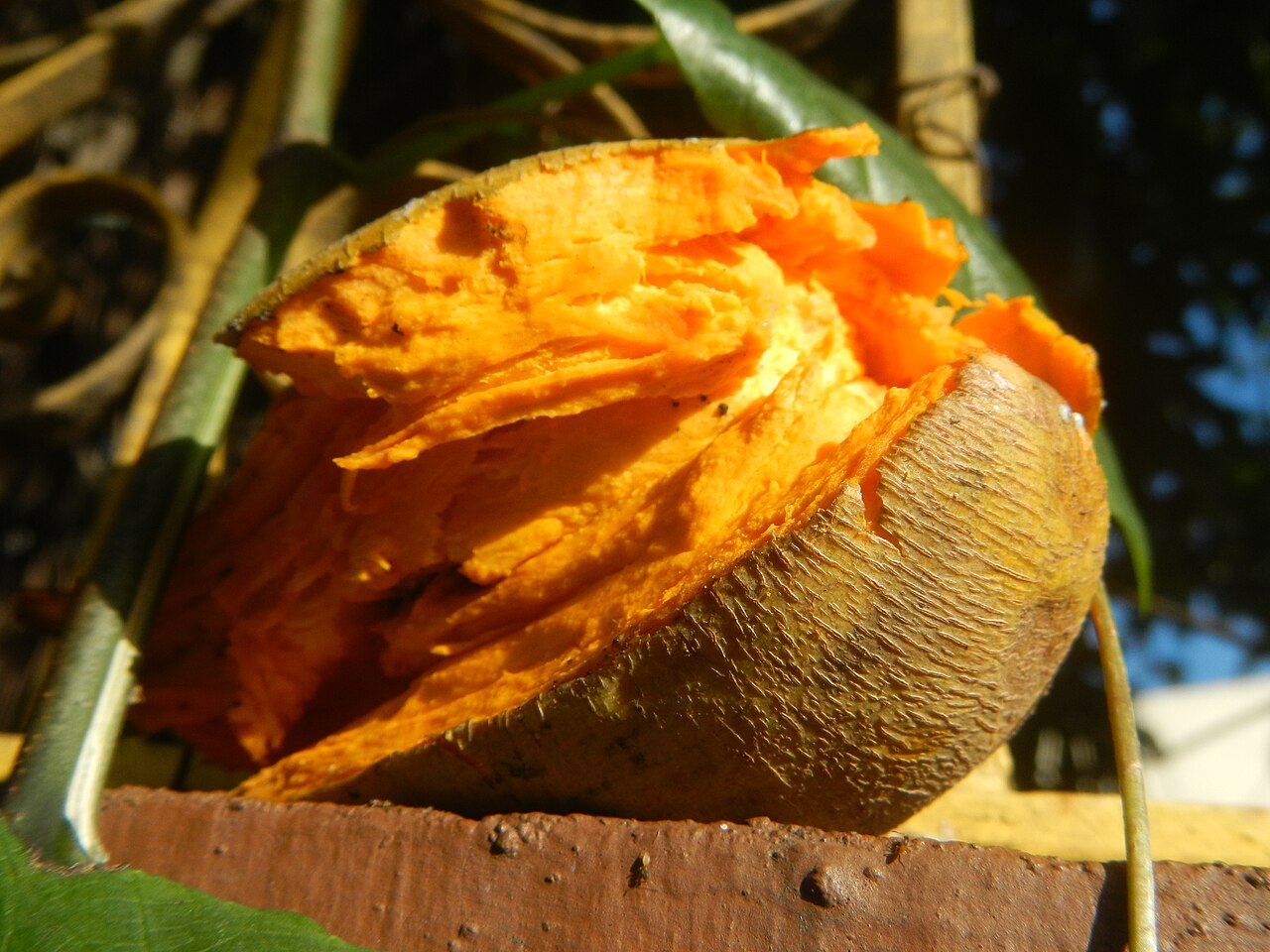
Canistel is the fruit that divides rooms: dense, yellow, sweet, and exactly like a hard-boiled yolk that decided to become dessert. ‘Bruce’ is the cultivar UF/IFAS Extension lists for Florida home gardens, and for good reason — it makes large, uniform fruit shaped, charmingly, like a chocolate kiss (only yellow), with dry-ish, dense flesh and fair eating quality that turns excellent when the fruit is fully ripe and chilled. If you like eggfruit at all, ‘Bruce’ is the reliable way to get a lot of it.
‘Bruce’ fruits in two major waves — August to October and again February to March — which means eggfruit season is not a single event but a recurring appointment. Each fruit carries two to three seeds and plenty to eat, and the tree is a vigorous, dependable grower in South Florida conditions.
How to grow
Here is the honest Florida part first: canistel is a zone 10-11 tree, and in Florida that means the southern counties. It is well adapted to South Florida — including limestone soils that defeat fussier fruit — but a hard freeze will damage or kill it, so north of the frost-free zone it is a container tree or not at all. Do not let a catalog’s enthusiasm override the zone map.
Plant grafted, in full sun, in well-drained soil; canistel tolerates a range of soils but not wet feet. Buy grafted, not seedling, trees: seedlings vary wildly in flesh texture, and the difference between a dry, chalky seedling and a good ‘Bruce’ is the difference between loving canistel and never eating it again.
Water & feeding
Water deeply but infrequently once established — a long soak that reaches the root zone, then a drying interval, beats daily sprinkles that keep the surface wet and the roots shallow. Young trees need steady water for their first year or two; mulch 3-4 inches deep (kept off the trunk) to hold moisture in sandy soil. Feed with worm castings worked into the mulch ring a few times a year plus a balanced citrus/tropical-fruit fertilizer on the schedule your local extension recommends — and go easy on nitrogen, which grows leaves at the expense of fruit.
Common problems
- Freeze damage — a zone 10-11 tree; plant in the warmest microclimate and protect young trees on cold nights.
- Dry, chalky fruit from seedlings — buy grafted ‘Bruce’, not an unnamed seedling, or you may get the texture that turns people off eggfruit forever.
- Root rot from wet feet — well-drained soil only.
- Fruit drop in drought — steady water through fruit development keeps the crop on the tree; mulch heavily in sandy soil.
Harvest
Canistel fruit is mature when the skin turns fully yellow-orange and the fruit yields slightly to pressure, then it softens indoors over a few days. ‘Bruce’ fruit is large — extension tables list 6 to 24 ounces — so one fruit is a serving, not a snack. Eat chilled with a spoon, mash with a little milk and sugar for eggfruit custard, or bake into pies where it behaves like sweet potato.
With two fruiting waves, pick as fruit colors rather than stripping the tree, and expect the February-to-March wave to be the one you brag about — winter eggfruit tastes like the tropics keeping a promise.
Browse all plant & pest guides
Saving seeds
Bruce is a named cultivar, so seed saved from it won’t come true — buy a grafted tree instead. The Saving seeds section of the Canistel guide covers seed for the straight species.