
🟡 Canistel
What it looks like
How to grow
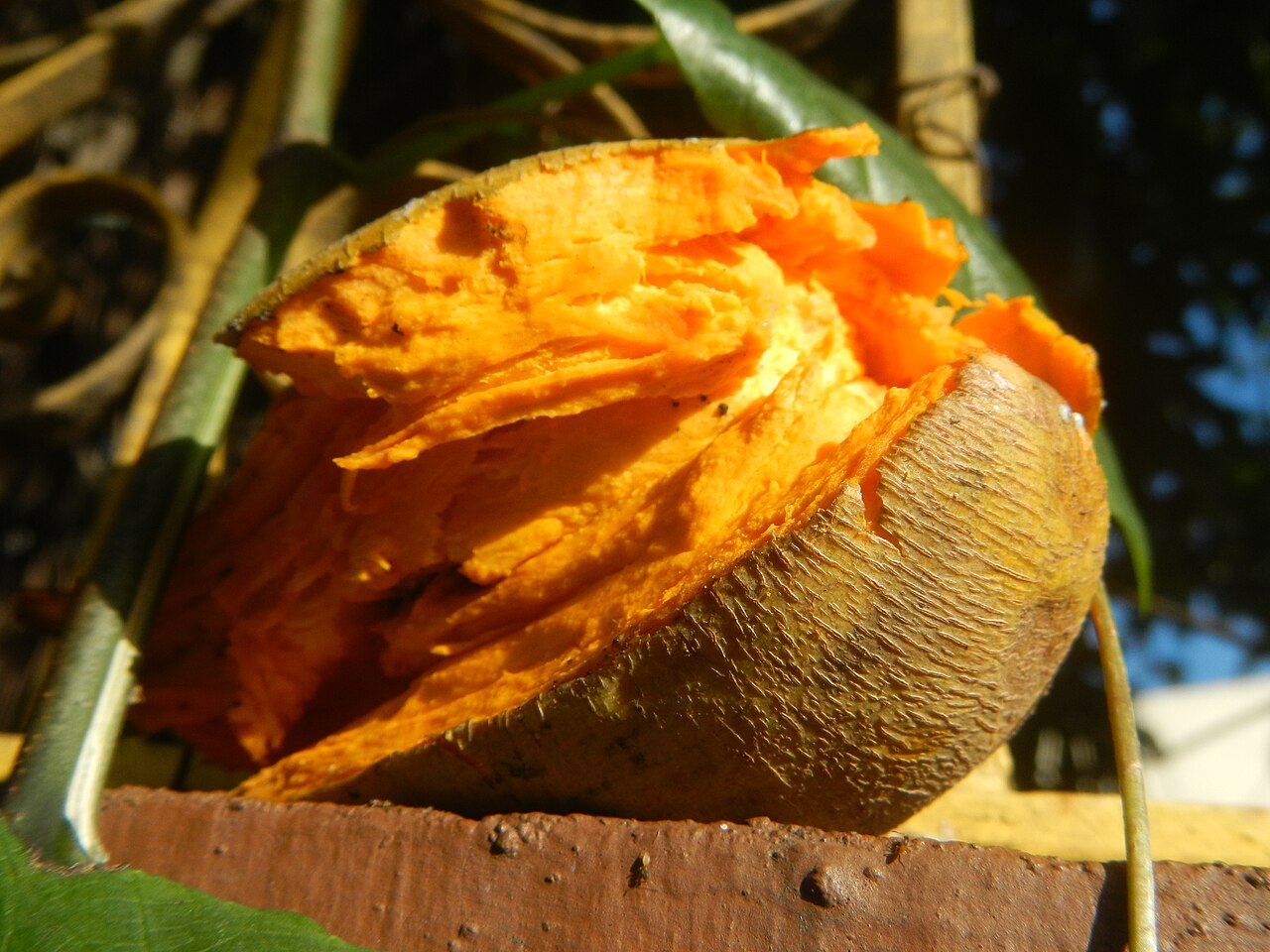
Canistel — eggfruit — is a tropical tree from Central America that produces yellow, egg-shaped fruit with dense, dry-ish, sweet flesh that really does resemble a cooked egg yolk in texture, and tastes like sweet potato and vanilla. Plant a grafted variety (‘Ross’, ‘Bruce’) in spring in well-drained soil in a frost-free spot; canistel tolerates limestone soils and some drought once established. It is self-fertile, so one tree fruits, and the tree is moderate in size (20–30 feet) and evergreen. The fruit’s dry texture divides opinion — fans love it, skeptics find it chalky — but blended with milk, sugar, and vanilla into a shake or custard, it is superb. Pick at the right stage: underripe canistel is astringent, fully ripe canistel is soft and sweet.
Water & feeding
Water during establishment and dry spells; mature trees tolerate moderate drought but fruit better with steady moisture. Mulch and feed in spring. Protect young trees from frost.
Common problems
- Frost — a true tropical; zone 10–11 outdoors
- Picking underripe fruit — wait until the fruit gives slightly and the skin is fully yellow-orange
- Dry texture disappointing some first-time tasters — blend it, and the texture becomes a virtue
- Fruit flies in some regions — pick promptly and clean up fallen fruit
Harvest
Pick when the fruit is fully yellow-orange and gives slightly — ripen indoors until soft throughout. Eat fresh with a spoon, or blend into shakes, custards, and ice cream, where canistel’s dense sweetness shines.
Browse all plant & pest guides
Saving seeds
Canistel seed saving comes with a timer, and the timer starts the moment you cut the fruit open. Like several of its tropical cousins, canistel seed is short-lived: plant it within a few days of extraction, or watch its viability slide away. This is not a seed for the seed tin. It is a seed for the pot you already filled while you were eating the fruit.
Collect from fully ripe fruit — the egg-yolk-yellow flesh should be soft and sweet-smelling. Each fruit holds one to five large, glossy brown seeds. Scoop them out, rinse off every trace of pulp, and sow promptly. Plant shallowly, covered only lightly, in a warm, moist, well-draining mix, and keep it consistently moist but never soggy. Warmth matters: tropical warmth, roughly the mid-70s to mid-80s Fahrenheit, in bright light. Germination is where sources disagree, and the disagreement is worth knowing about: some growers report sprouts within a couple of weeks when the seed coat is removed, while the standard expectation — and the one Florida extension gives — is two to three months, with some seeds taking longer still. Plan for the slow end, celebrate the fast end, and do not throw the pot out at week six. Seedlings grow rapidly once they are up, and a seedling tree can begin bearing fruit in three to six years.
Storage, bluntly, is a losing game with this species. Do not dry the seed the way you would dry a bean, do not file it in an envelope for next spring, and do not expect a refrigerator to rescue it for months. If you absolutely must hold seed for a day or two between fruit and pot, keep it moist — damp coir in a sealed bag, cool, not cold — and sow at the first opportunity. Florida humidity does not change this equation: damp air will not keep a canistel seed alive the way it keeps a fern alive, and a seed left in a warm Florida room is a seed quietly expiring.
Do seedlings grow true? Only in the broad sense, and that “only” carries real weight with canistel. Seedling trees vary in fruit quality, and some turn out to be poor or unreliable bearers — the classic seedling lottery, played for years before you find out what you won. That is why superior named varieties must be propagated vegetatively: side-veneer or cleft grafting, or patch budding, onto seedling rootstock is the standard, and air layering (marcottage) works too, though it is less common. Cuttings, by contrast, are slow to root and not the recommended route. So the honest strategy is two-track: sow seed freely for rootstocks and for the fun of the lottery — a seedling canistel is still a handsome tropical tree — but graft the variety you actually want to eat from, and buy or trade grafted wood for that job. Isolation is a non-issue for the home grower; there is no other canistel in the neighborhood to cross with, and the variation you see comes from the seed itself, not from stray pollen. Florida note: extension does not consider canistel a problem species here, and it grows well in frost-free South Florida — just give it full sun, good drainage, and a shelter plan for cold snaps, because a tropical tree that survived your seed-saving enthusiasm deserves better than a freeze it never signed up for.
Varieties
Every named variety of Canistel with its own growing guide:
- Bruce Canistel — The big eggfruit: large, uniform, kiss-shaped golden fruit in two waves a year — the canistel Florida extension lists first.
- Ross Canistel — The doughnut-shaped eggfruit: flattened, juicy, slow-growing, and easy to keep small — the patio-sized canistel.