
🧴 Captain Cook Bottlebrush
What it looks like
Why this variety
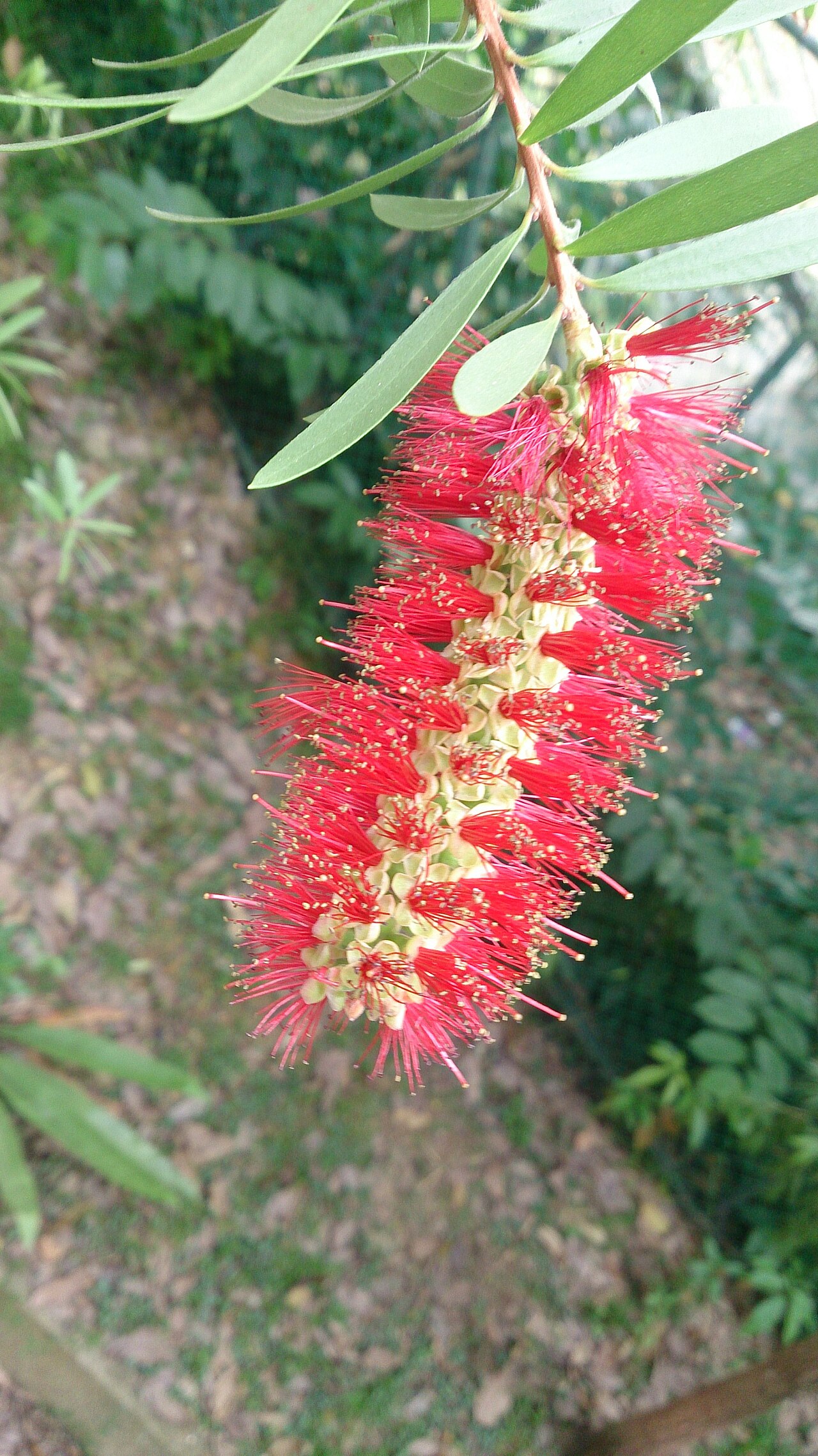
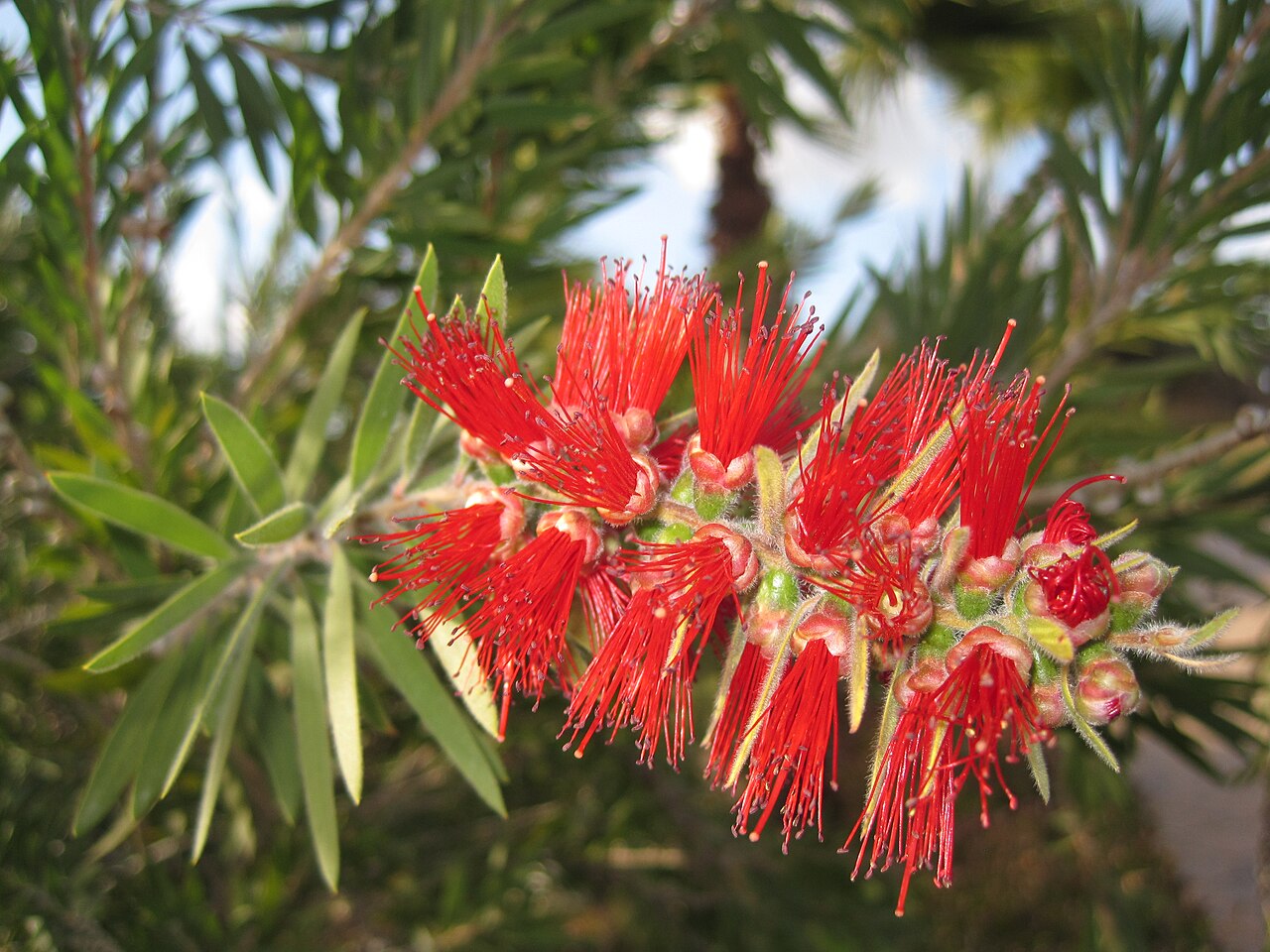
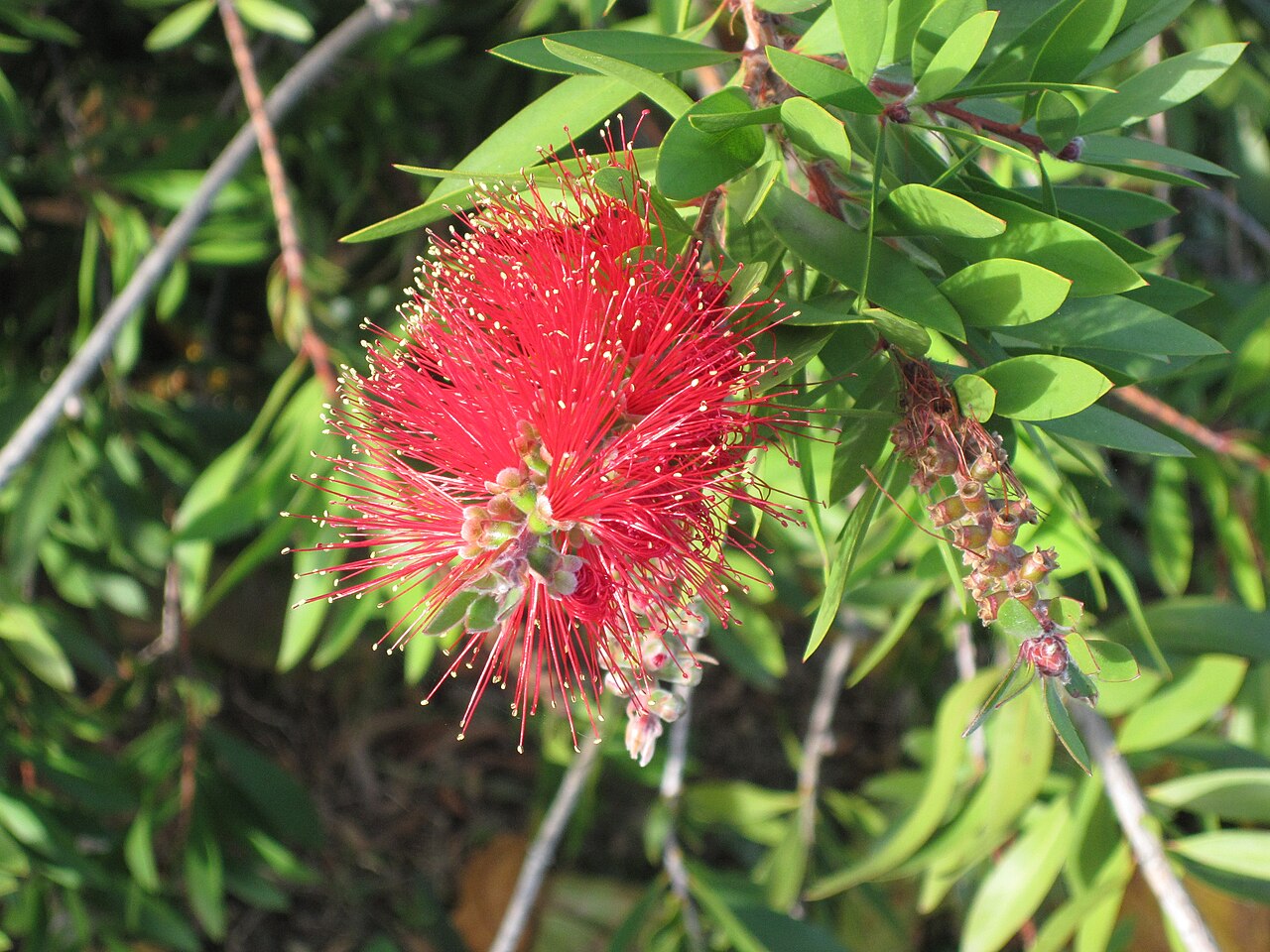
‘Captain Cook’ is the bottlebrush that solved the genus’s biggest garden problem — size. Most bottlebrushes want to be small trees; Captain Cook stays a compact, dense shrub around 5 feet, covered in the same big scarlet brushes that hummingbirds fight over, with a long bloom season from spring into fall. It is the bottlebrush for a foundation bed, a hedge, or a large container — places where ‘Hannah Ray’ would eventually eat the windows. Same weeping tendency in the branches, same nectar bar, a fraction of the ladder work.
How to grow
Plant in spring in full sun and well-drained, moist soil rich in organic matter. Water regularly the first season; consistent moisture encourages faster growth and more blooms, though established plants tolerate drought. Prune lightly after flowering to shape, removing up to a third of the foliage in spring to encourage more blooms — do not cut into old bare wood, which may not regrow. Mulch to hold moisture in sand.
Florida soil is the plot twist: sugar sand drains fast, holds almost no nutrients (low cation exchange capacity), and dries to dust between summer storms. Work in compost or worm castings before planting — castings hold water and nutrients in the root zone without burning roots, and they feed the microbes that make those nutrients plant-available. Mulch thickly; bare sand is a weed invitation and a moisture leak.
Water & feeding
Water regularly for the first season, then during dry spells; consistent moisture means more brushes. Feed in spring with a balanced fertilizer or, better, compost and castings worked into the mulch — bottlebrush likes organic matter and rewards it with growth. In sandy soil, mulch is the moisture plan.
Common problems
- Cold damage at the northern edge — plant in a sheltered spot in zone 9 and mulch the crown.
- Scale insects — check stems and treat early; vigorous plants shrug off light infestations.
- Pruning into bare wood — old wood may not regrow; prune lightly and after flowering.
- Chlorosis in very alkaline soil — keep pH in range and add organic matter.
Harvest
Ornamental — the brushes are the harvest, and the hummingbirds take first pick. Prune lightly after flowering to shape and to push the next flush of brushes; a well-shaped Captain Cook in full bloom is a neighborhood landmark.
Browse all plant & pest guides
Saving seeds
Captain Cook is a named cultivar, so seed saved from it won’t come true — take cuttings instead. The Saving seeds section of the Bottlebrush guide covers seed for the straight species.