
🌺 Bottlebrush
What it looks like
How to grow
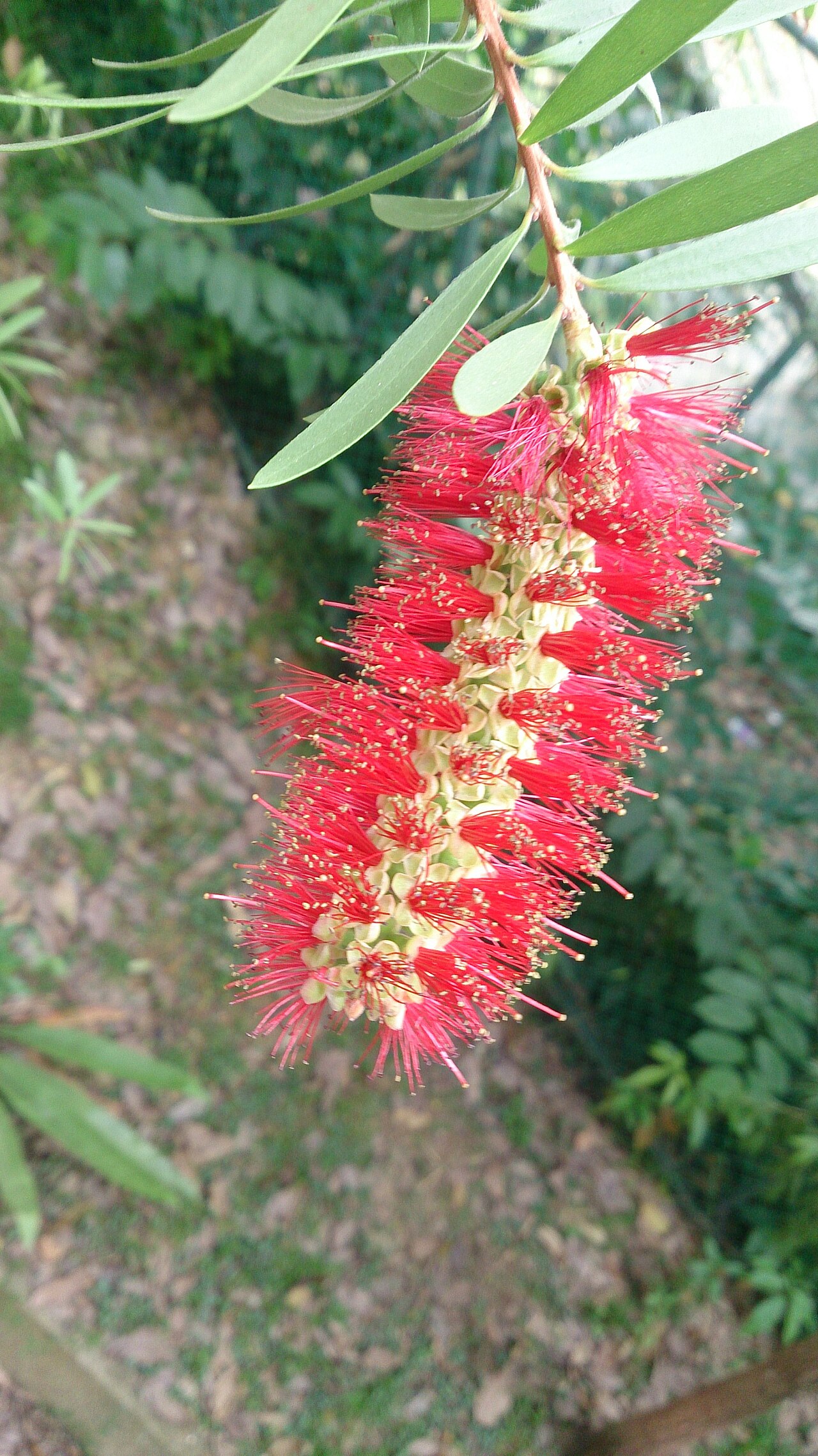
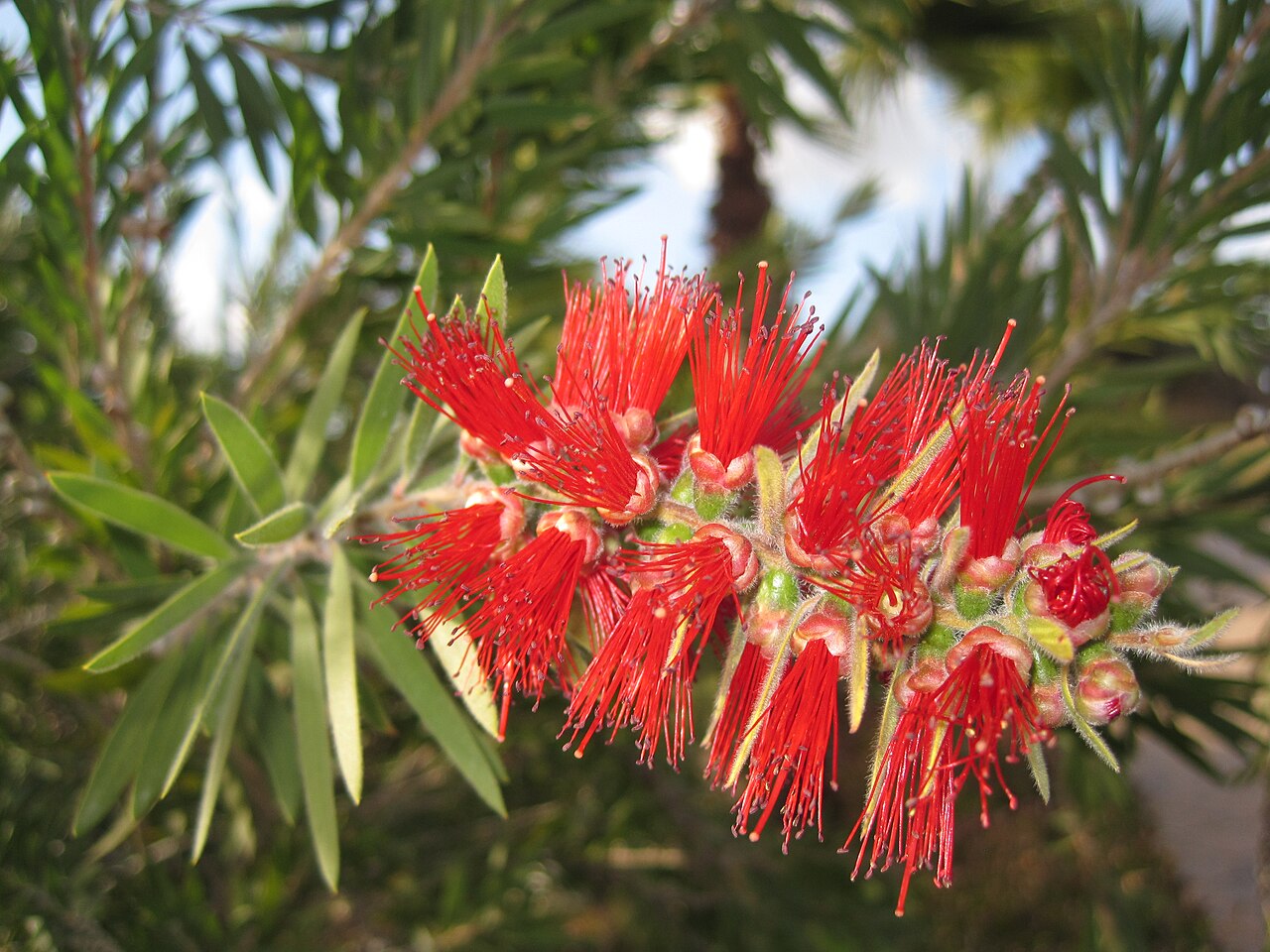
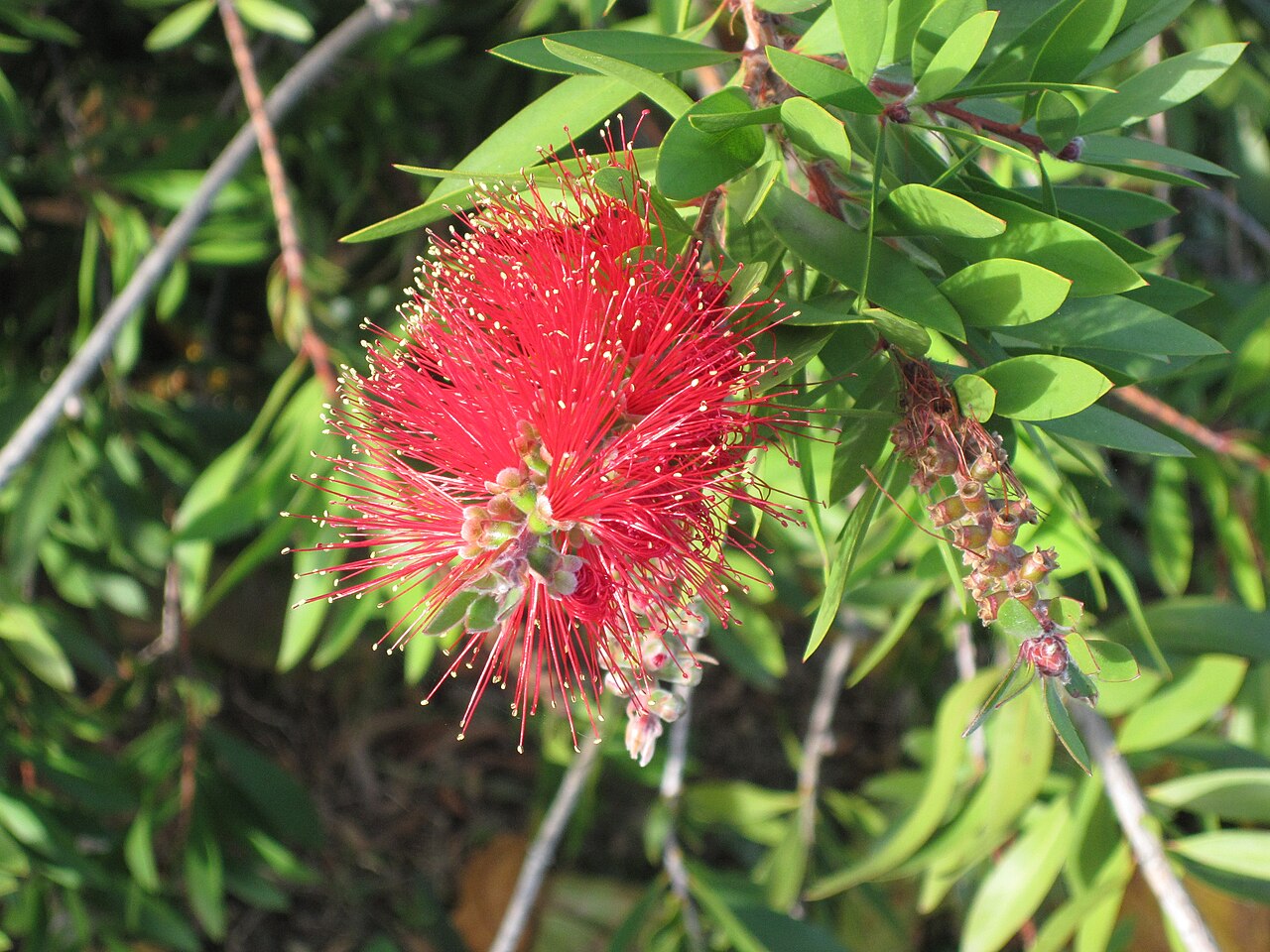
Bottlebrush is an evergreen shrub (or small tree, in larger species) with narrow leaves and spectacular cylindrical spikes of red flowers that really do look like bottle brushes, blooming from spring into fall. Dwarf cultivars like ‘Little John’ stay 3-5 feet tall; larger types reach 10-15 feet or more, so — as with loropetalum — read the tag and believe it. Plant in spring in full sun and well-drained, moist soil rich in organic matter. It is a hummingbird and butterfly magnet, tolerates coastal conditions and some drought, and makes a striking hedge, screen, or specimen in warm climates.
Water & feeding
Water regularly for the first season, then water during dry spells; consistent moisture encourages faster growth and more blooms, though established plants tolerate drought. Mulch to hold moisture. Feed in spring with a balanced fertilizer or compost. Prune lightly after flowering to shape, removing up to a third of the foliage in spring to encourage more blooms — do not cut into old bare wood, which may not regrow.
Common problems
- Cold damage — at the northern edge, plant in a sheltered, sunny microclimate and expect dieback in hard winters; prune dead wood in spring.
- Iron chlorosis — yellowing leaves in alkaline soil; bottlebrush prefers slightly acidic to slightly alkaline soil, not highly alkaline ground.
- Scale insects — occasional; treat with horticultural oil.
- Outgrowing its space — choose a cultivar that fits, since bottlebrush grows fast.
- Captain Cook Bottlebrush — The dwarf red bottlebrush: big scarlet brushes on a compact 5-foot shrub — the bottlebrush for foundation beds.
- Endeavour Bottlebrush — The big red bottlebrush: huge scarlet brushes on a fast, tough shrub — the screen, the specimen, the show.
- Woodlander’s Hardy Red Bottlebrush — The cold-hardy bottlebrush: scarlet brushes on the toughest bottlebrush of all — the one for the northern edge.
Harvest
There is no harvest, though the flower spikes are striking cut for arrangements. Propagate by semi-hardwood cuttings in summer. Note the name change: many bottlebrushes have been reclassified from Callistemon to Melaleuca, so nursery tags may show either name for the same plant.
Browse all plant & pest guides
Saving seeds
This section is written at the genus level, because that is how bottlebrush is grown and sold: the guide covers Callistemon species and their many cultivars (a genus now often folded into Melaleuca by botanists, which is why you will see both names on plant tags). The seed-saving method is the same across the genus, but the genetics warning at the end is the part that actually matters, so read that before you sow anything.
After flowering, bottlebrush produces rows of small woody capsules pressed along the stem, and here is the genus’s party trick: most species simply do not open them. The capsules can sit on the branch for years, holding their dust-fine seed like a vault, waiting for fire or the death of the branch to release it. That makes collecting easy and timing forgiving. Choose capsules that are at least a year old — the newest capsules are often not ready — snip a stem section carrying them, and drop it in a paper bag in a warm spot indoors. Within a few days the capsules crack open and spill their tiny seeds, and you can shake the rest free. A few species, including the weeping bottlebrush, release their seed annually once ripe, so if your capsules are already gaping open on the plant, collect promptly rather than assuming they will wait.
Sowing is refreshingly undemanding: no special pretreatment is needed. Surface-sow the fine seed on a freely draining seed-raising mix in spring or summer, press it in lightly without burying it, and keep it consistently moist until germination, which usually arrives within a few weeks. Some growers use the “bog method” — standing the pot in a shallow saucer of water until seedlings appear — which suits a genus whose wild ancestors grew along Australian watercourses. Prick seedlings out once they are big enough to handle, and grow them on before planting out.
Now the warning. Bottlebrushes hybridize readily, and seed from a garden plant is a genetic lottery ticket: it will grow into a bottlebrush, but not necessarily the bottlebrush you collected it from. For a named cultivar — its exact flower color, size, and habit — cuttings are the only reliable route: semi-hardwood cuttings taken in the warmer months, lower leaves removed, dipped in rooting hormone, and kept moist until rooted. Seed is for species plants and for happy accidents; cuttings are for keeping a favorite exactly itself. Florida note: dry the fine seed thoroughly and store it airtight with a desiccant, cool and dark — fine seed has a lot of surface area for its size, and Florida humidity gets into it fast.
Varieties
Every named variety of Bottlebrush with its own growing guide:
- Little John Bottlebrush — The dwarf bottlebrush that fits a foundation bed: blue-green leaves, deep-red brushes over a long season, and hummingbirds on patrol.
- Hannah Ray Bottlebrush — The weeping bottlebrush with pink spring growth and red brushes: a small tree with an arching, graceful habit that stops traffic.