
🧴 Woodlander’s Hardy Red Bottlebrush
What it looks like
Why this variety
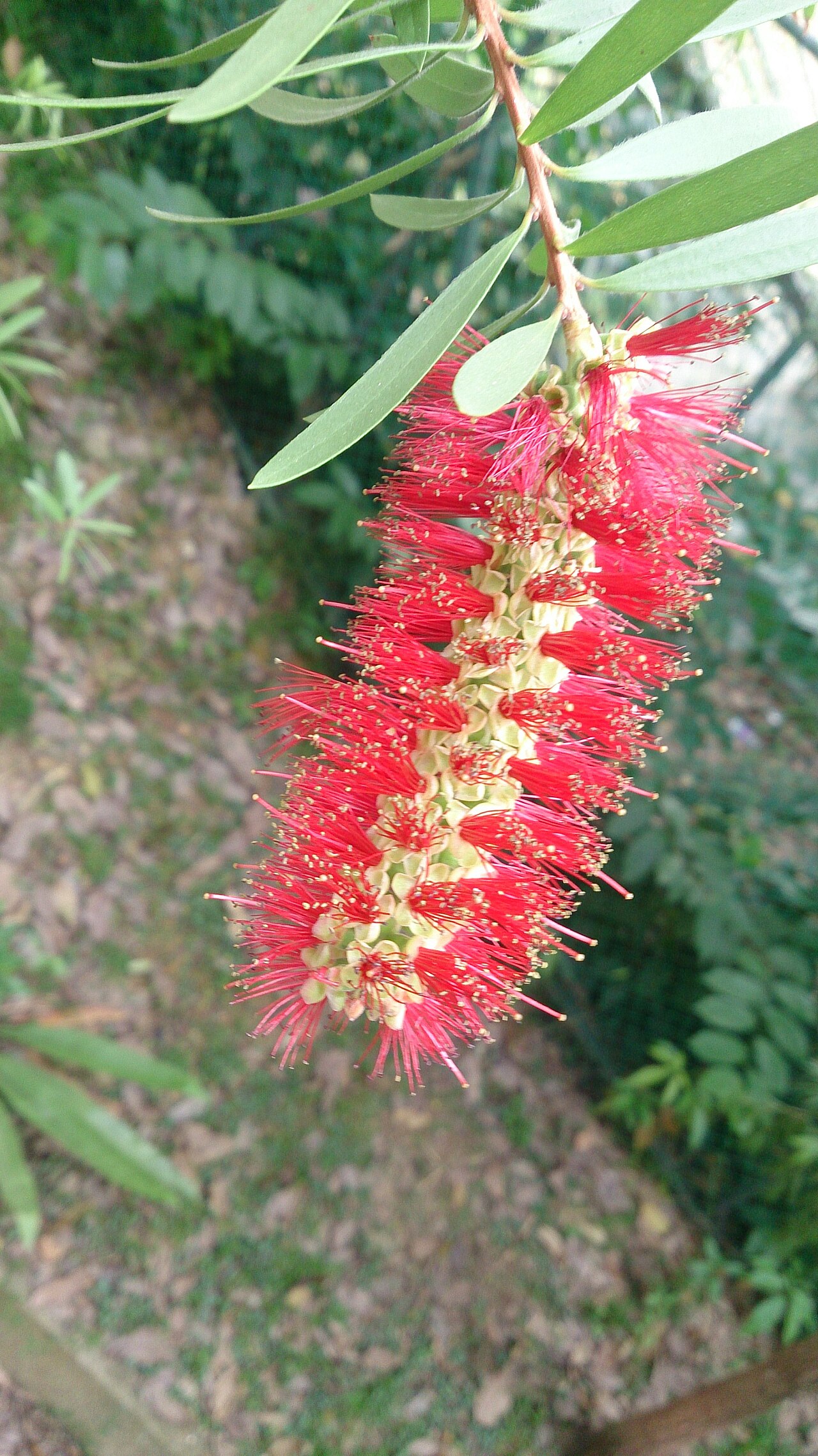
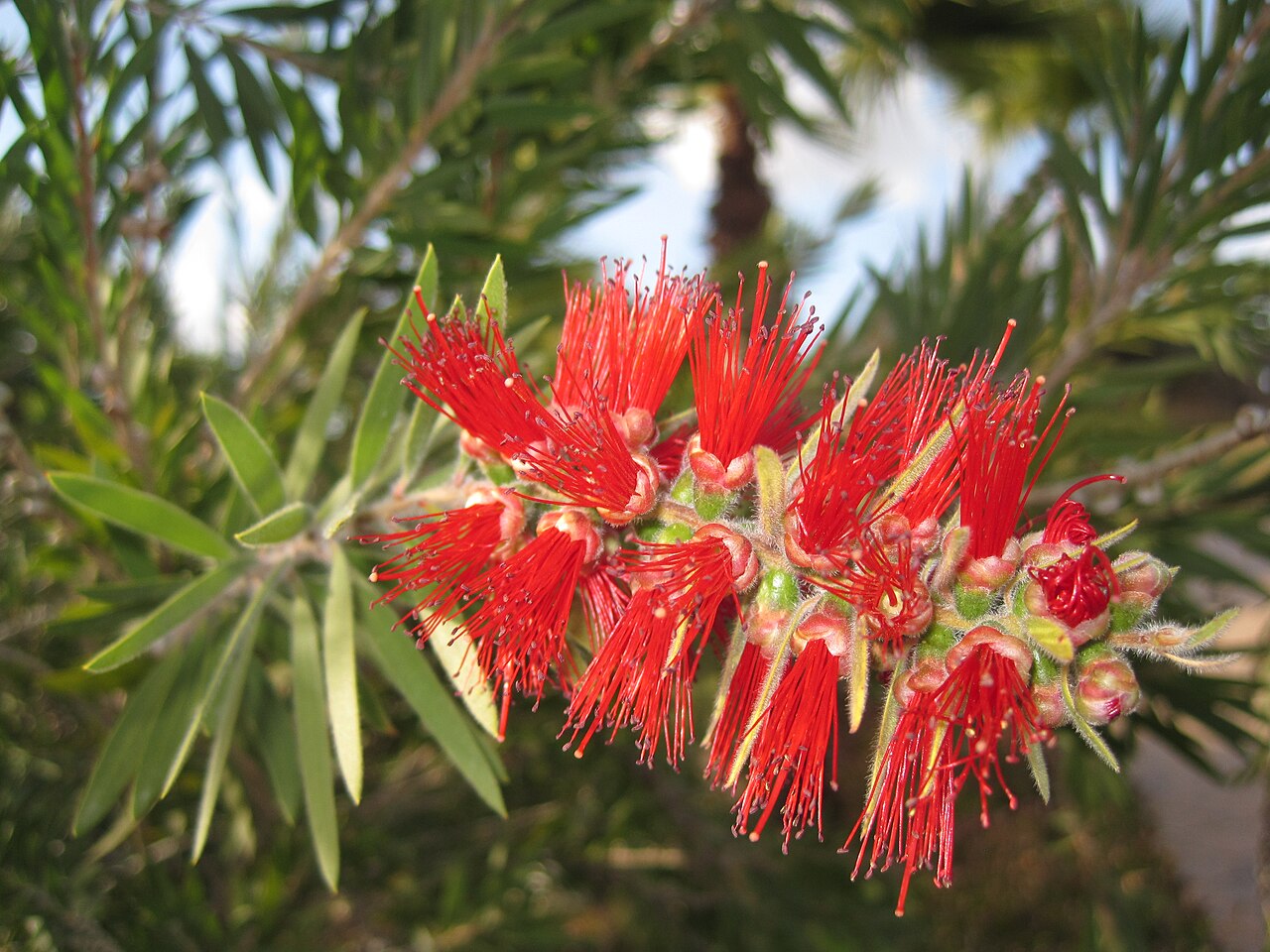
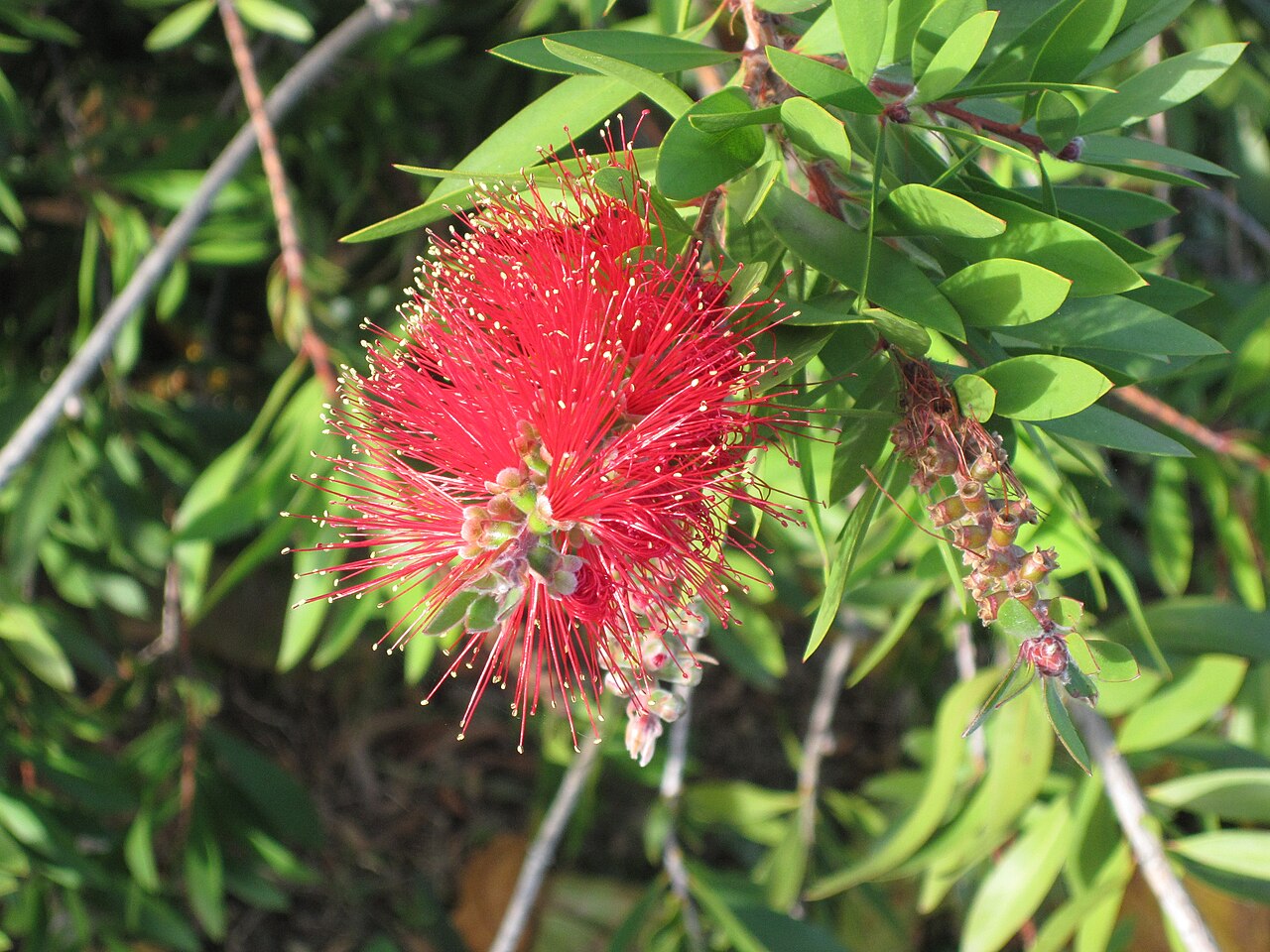
‘Woodlander’s Hardy Red’ is the bottlebrush for gardeners who were told they could not grow bottlebrush: selected for cold hardiness down to zone 7, it carries the classic scarlet brushes on a vigorous shrub to small tree, surviving freezes that flatten its tender cousins. In Florida that hardiness is a bonus, not the point — the point is a big, fast, reliable red bottlebrush that also happens to be the toughest of its kind, so a North Florida cold snap that worries other bottlebrushes is just weather to this one. Hummingbirds, of course, do not care about hardiness ratings; they care about brushes, and this one delivers.
How to grow
Plant in spring in full sun and well-drained, moist soil rich in organic matter, with 6–8 feet of room. It grows fast and large (10–15 feet), so site it as a specimen or screen, not a foundation shrub. Prune lightly after flowering to shape, removing up to a third of the foliage in spring — never cut into old bare wood, which may not regrow. Mulch to hold moisture in sand.
Florida soil is the plot twist: sugar sand drains fast, holds almost no nutrients (low cation exchange capacity), and dries to dust between summer storms. Work in compost or worm castings before planting — castings hold water and nutrients in the root zone without burning roots, and they feed the microbes that make those nutrients plant-available. Mulch thickly; bare sand is a weed invitation and a moisture leak.
Water & feeding
Water regularly for the first season, then during dry spells; consistent moisture encourages faster growth and more blooms, though established plants tolerate drought. Feed in spring with compost or castings. In sandy soil, organic matter in the mulch layer does more good than any fertilizer schedule.
Common problems
- Cold damage — far less than other bottlebrushes, but mulch the crown at the northern edge anyway.
- Scale insects — check stems, treat early.
- Pruning into bare wood — may not regrow; prune lightly and after flowering.
- Size — a big shrub that wants to be a small tree; site it accordingly.
Harvest
Cut flowering stems for bold arrangements; leave most brushes for hummingbirds, which treat a hardy red bottlebrush in bloom as a territory worth defending. Prune after flowering to shape and encourage the next flush.
Browse all plant & pest guides
Saving seeds
‘Woodlander’s Hardy Red’ is the bottlebrush for gardeners who were told they could not grow bottlebrush: selected for cold hardiness down to zone 7, it carries the classic scarlet brushes on a vigorous shrub to small tree, surviving freezes that flatten its tender cousins. In Florida that hardiness is a bonus, not the point — the point is a big, fast, reliable red bottlebrush that also happens to be the toughest of its kind, so a North Florida cold snap that worries other bottlebrushes is just weather to this one. Hummingbirds, of course, do not care about hardiness ratings; they care about brushes, and this one delivers. Seed will not repeat it: the cold hardiness and scarlet brush are a selected clone, and seedlings vary in hardiness and flower color. Keep Woodlander’s Hardy Red true with cuttings — semi-hardwood cuttings taken after flowering root well. The full method is in the Saving seeds section of the Bottlebrush guide.