
🍂 Chestnut
What it looks like
How to grow
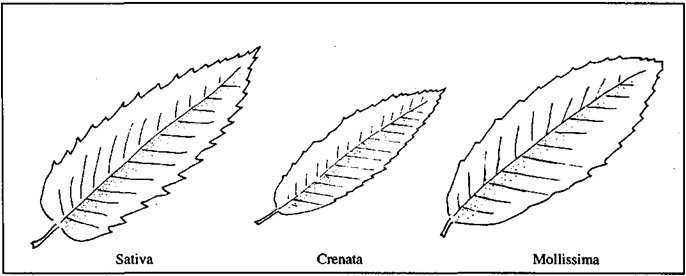
Chestnuts carry a famous story. American chestnut (Castanea dentata) once dominated eastern forests until chestnut blight, a fungal disease introduced around 1904, killed nearly every mature tree. Pure American chestnuts still sprout, but susceptible trees usually succumb to cankers. For home growers, the practical choices are Chinese chestnut (Castanea mollissima), which co-evolved with the blight fungus and is largely resistant, and Chinese-American hybrids such as ‘Dunstan’, bred to combine resistance with American growth habit and nut quality.
Plant at least two genetically different trees — chestnuts are self-sterile and need cross-pollination by wind, and a lone tree produces little or nothing. Site in full sun in well-drained, slightly acidic soil; chestnuts are intolerant of waterlogged ground and alkaline soils. They grow 40–60 feet tall with a broad, spreading crown, so give them room. Prune in dormancy to remove crossing branches and any blight-infected limbs well below the canker.
USDA zones
Chestnuts are hardy in zones 4–8, with Chinese chestnut reliable into zone 9. They need winter chill and full sun for good crops. In Florida, chestnuts are at best a north-Florida experiment: heat and often-alkaline soils work against them, and southern gardeners should not expect orchard results.
Water & feeding
Water deeply while establishing and during dry spells in nut-fill season; mature trees are moderately drought-tolerant. Feed lightly — chestnuts do well in fertile soil with a spring top-dress of compost or worm castings, and overfeeding pushes soft growth. Never lime a chestnut planting unless a soil test proves it is needed; they want acid soil.
Common problems
- Chestnut blight — lethal cankers on susceptible American trees. Plant resistant Chinese or hybrid types, and cut infected limbs well below cankers.
- Phytophthora root rot — in wet, poorly drained soil. Plant on high ground with drainage, never in a soggy hollow.
- Spiny burs — the harvest hazard. Wear heavy gloves and use tongs or a nut roller; burs split open when ripe and the spines mean business.
Harvest
Nuts drop in fall when burs split — gather daily before wildlife does, wearing gloves. Cure briefly in a cool, airy spot, then store in the fridge for fresh eating or roast: score an X through the shell first, or steam will turn a roasting chestnut into a small explosion. Fresh chestnuts are starchy and sweet, unlike other nuts, and they cook like a vegetable as much as a snack.
Browse all plant & pest guides
Saving seeds
Chestnut seed saving starts with two warnings that save years of disappointment. First, plant at least two trees, because chestnuts are poor self-pollinators and a lone tree bears lightly or not at all, and a lone seedling with no pollination partner is a shade tree with a nut-shaped daydream. Second, seed does not carry blight resistance like a label: a nut from a pure American chestnut will grow into a tree just as vulnerable to blight as its parent, while nuts from Chinese chestnuts and resistant hybrids carry the toughness that made them worth planting. Choose your parent trees for resistance first, and treat seed from a susceptible tree as a conservation curiosity, not as an orchard plan. This guide covers Chinese and American chestnuts and their hybrids, so the method below is genus-level in the sense that it fits the clan, while the blight warning varies by species, and that difference matters.
Collect in fall, when the spiny burs split and the nuts drop, wearing the heavy gloves the harvest section insists on, because enthusiasm is no substitute for leather. Gather daily, before squirrels conduct their own harvest survey, and sort ruthlessly: keep only plump, glossy, uncracked nuts, and discard anything moldy, shriveled, or rattling with weevil damage. Floaters in a bucket of water are often damaged or weevily and make a useful rough sort, though floating alone is not a perfect verdict, so use it to cull the obvious losers, not to certify the winners. Never let planting nuts dry out. Chestnuts are not beans: they die if they dry, which is the single most common way a promising handful of nuts becomes a handful of expensive disappointment.
Chestnut seed needs a cold, moist winter to wake up, and the refrigerator is the most reliable winter you can control. Mix sound nuts with damp sand or peat in a bag or box, keep them cold and moist but not swimming, and leave them for a few months, checking now and then for mold and for the first white root tips. Sources vary on the exact chilling time, with common guidance spanning roughly two to four months, so watch the nuts, not the calendar, and plant when roots emerge rather than on a fixed date. Plant about an inch or two deep in deep pots or a protected bed, root down, and protect them from squirrels with hardware cloth, because a squirrel considers a newly planted chestnut to be room service. Seedlings vary, as seedlings do, and a seed-grown chestnut typically takes several years to bear, which is fine for a timber or wildlife planting and frustrating if you wanted one exact nut.
For an exact cultivar, grafting is the answer, not seed. Scion wood from a proven tree is grafted onto a seedling rootstock in late winter or budded in summer, and only that grafted tree repeats the cultivar’s nut size and flavor. In Florida, add the soil and climate check before you plant anything: chestnuts want acidic, well-drained soil and real winter chill, and much of Florida offers neither comfortably, so a chestnut seed project here is best treated as an experiment in the right microclimate, not as a guaranteed orchard. Store planting nuts only as a short, cold, moist stratification, never as dry pantry stock, label every pot with parent and year, and remember that the best seed-saving advice for chestnuts is the least glamorous one: keep them moist, keep them cold, keep them labelled, and let the squirrels find someone else’s nuts.
Varieties
Every named variety of Chestnut with its own growing guide:
- Dunstan Chestnut — The blight-resistant American-Chinese hybrid that brought the chestnut back to home orchards: big, sweet nuts on a fast-growing tree.
- Colossal Chestnut — The giant-nut chestnut of West Coast orchards: very large, sweet nuts that peel easily and roast beautifully.