
🎄 Christmas Senna
Stop — read this first
Do not plant Christmas senna in Florida. The University of Florida’s IFAS Assessment rates Senna pendula var. glabrata as High Invasion Risk in Central, North, and South Florida, and states it is “not recommended by IFAS.” The Florida Invasive Species Council lists it as a Category I invasive — a species known to alter native plant communities. If you are shopping for a butterfly plant and a nursery offers you this one, skip it and scroll down to the native alternatives. They feed the same butterflies without eating the neighborhood.
This guide exists because a photo ID came in with nowhere to point: the tool guessed Christmas senna, and there was no guide. Now there is one — and its job is to help you recognize this plant, avoid planting it, and deal with it if it is already in your yard.
What it looks like

Quick facts
- Scientific name: Senna pendula (syn. Cassia pendula)
- Family: Fabaceae (the pea family)
- Origin: South America — not native to Florida
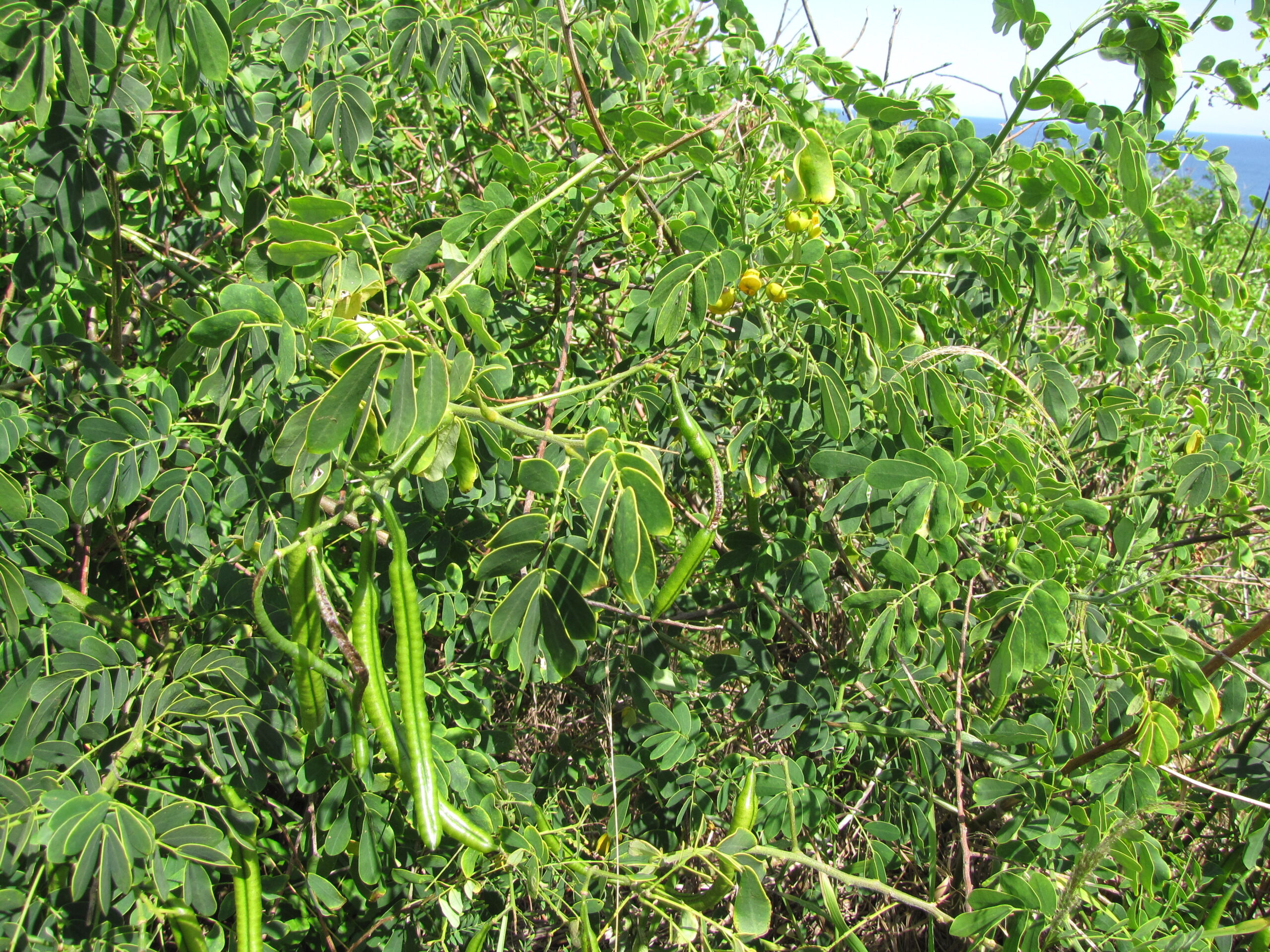
- Size: Fast-growing, sprawling, evergreen to semi-deciduous shrub or small tree, typically 2–4 metres (about 6–13 feet), with arching, multi-branched stems; it can scramble and climb into nearby vegetation
- Leaves: Pinnate (feather-like), with pairs of wide, rounded-tip leaflets with yellowish margins, and a small gland between each pair of leaflets
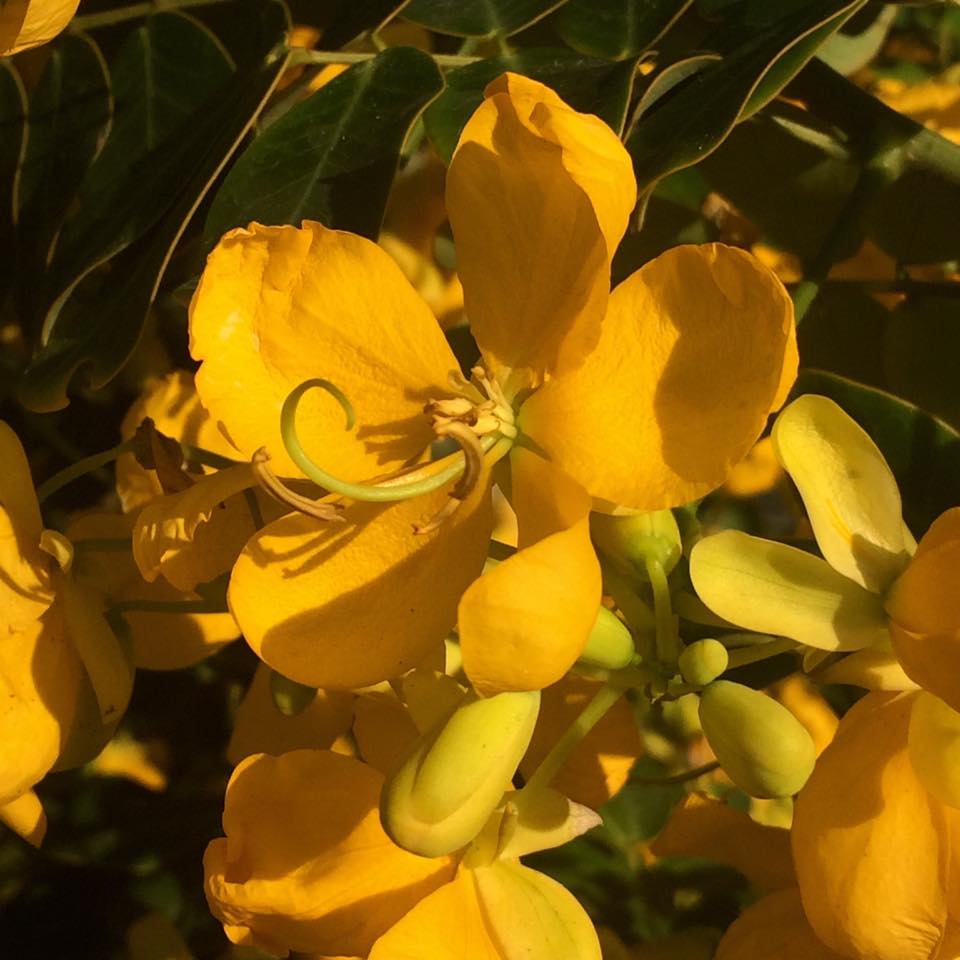
- Flowers: Bright golden-yellow, about 3 cm across, five petals, in clusters at the tips of branches; in Florida it blooms in late fall and winter — that is where the Christmas name comes from
- Fruit: Cylindrical pods, 10–20 cm long, hanging down, packed with hard seeds
- Florida status: UF/IFAS High Invasion Risk in all three zones; Florida Invasive Species Council Category I — do not plant
- Wildlife: Caterpillar host for cloudless sulphur, sleepy orange, and orange-barred sulphur butterflies — which is exactly why the native alternatives below matter
What it is
Christmas senna is a South American shrub in the pea family that found its way into Florida gardens as an ornamental — and then kept going. It grows fast, sprawls, scrambles over neighbors, and produces pods full of seeds that birds, water, ants, rodents, and careless garden-waste dumping all helpfully spread around. In Australia it was introduced as a garden plant in 1957, became an environmental weed, and is no longer sold there for that reason. In Florida it is cultivated in all regions of the state and naturalized in the peninsula. It is, in short, the botanical equivalent of a houseguest who eats everything, never leaves, and invites all its friends.
The name pendula means drooping or pendulous, for the hanging flower clusters and pods. Other common names include Easter cassia, winter senna, climbing cassia, butterfly senna, golden shower, pendant senna, and valamuerto — which loosely means “don’t eat the seeds.” The plant named itself a warning label. Listen to it.
How to tell it from its look-alike
Florida nurseries very often sell this plant under the wrong name: Senna bicapsularis. An investigation of herbarium specimens from the University of Florida, the University of South Florida, and Fairchild Tropical Botanic Garden found that true Senna bicapsularis is very scarce in cultivation in Florida, while Senna pendula is the common, widespread one. If a tag says bicapsularis, assume you are probably looking at pendula until proven otherwise.
Count leaflets if you want to check: Senna pendula typically has 4–7 pairs of leaflets per leaf with a gland between each pair, and its flowers sit on longer stalks (1–3 cm). Senna bicapsularis has 3 pairs of leaflets and very short flower stalks (under half a centimeter). Either way, the advice is the same: don’t buy it.
Why people plant it — and why the natives are better
Let’s be fair to the plant for one paragraph: those winter flowers are genuinely gorgeous, and sulphur butterflies genuinely use it. Cloudless sulphurs lay eggs on it, and their caterpillars eat the leaves and flowers — they even change color to match whichever part they are eating, which is the kind of evolutionary party trick that makes gardeners fall in love.
But you do not need an invasive to get that show. The Florida Wildflower Foundation’s butterfly guide lists native hosts for the cloudless sulphur that are commercially available and do the same job without the escape-artist habit. Plant these instead:
- Privet senna (Senna ligustrina) — a Florida native shrub, and a cloudless sulphur host.
- Chapman’s senna (Senna mexicana var. chapmanii) — also called Chapman’s wild sensitive plant, a Florida native and sulphur host.
- Partridge pea (Chamaecrista fasciculata) — a Florida native wildflower, a sulphur host, and a soil-builder to boot (it’s a legume, so it fixes nitrogen while it feeds butterflies).
Same yellow flowers. Same butterflies. No invasion. That is not a hard trade.
If you already have it
No shame — a lot of people bought this plant in good faith from a nursery tag that may not even have had the right name on it. Here’s the general, safe approach:
- Pull seedlings by hand whenever you see them. Seedlings are the easiest stage to stop, and this plant makes a lot of them.
- Cut off the pods before they ripen, or prune before seed set, so no new seed enters the soil or gets carried off by birds and water.
- Don’t dump clippings, pods, or pulled plants in natural areas or anywhere they can take root. Bag seed-bearing material and dispose of it with household trash.
- Expect resprouting. This plant can coppice and resprout after cutting or pruning, so cutting it down once usually isn’t the end of it. For full removal, dig out the roots, and keep pulling the regrowth and seedlings that follow.
- Replace it with one of the natives above, so the sulphurs that were using it still have a host in your yard.
If a plant has escaped into a natural area near you, that’s a job for your county extension office or local land manager, not a solo herbicide adventure — this guide doesn’t recommend specific herbicide products.
One safety note, stated plainly
Sources genuinely disagree about how toxic this plant is — some call it not particularly toxic, others list it as toxic to pets and people in quantity. Here’s the honest middle: sennas as a group contain purgative anthraquinone compounds, and Christmas senna’s seeds are described as toxic if eaten, with stomach upset, nausea, vomiting, and diarrhea as the reported effects. The common name valamuerto exists for a reason. Treat the seeds as not food, keep pods out of reach of small children and pets, and don’t brew anything from this plant. This is a caution, not a medicinal recommendation — there is none here.
One note on varieties
Senna pendula has many accepted varieties (17, by one count), but the form assessed in Florida is var. glabrata — that’s the one the IFAS assessment covers, and the one in the third photo above. You will not find separate variety guides for this plant on this site. Writing individual grow-guides for an invasive would undercut everything above, so this species guide is the whole story.
Sources
- UF/IFAS Assessment: Senna pendula var. glabrata — High Invasion Risk, Central, North, and South zones; “Predicted to be invasive and not recommended by IFAS.” assessment.ifas.ufl.edu
- Florida Wildflower Foundation, “Bring on the Butterflies!” — Christmas senna (S. pendula) listed as a Florida Invasive Species Council Category I invasive that “should be avoided”; native sulphur hosts listed. flawildflowers.org
- Senna pendula description, synonyms, Florida mislabeling, and leaflet distinction from S. bicapsularis: Wikipedia, Senna pendula
- Photos: Wikimedia Commons, credited in the captions above.