
🕷️ Cleome
What it looks like
How to grow
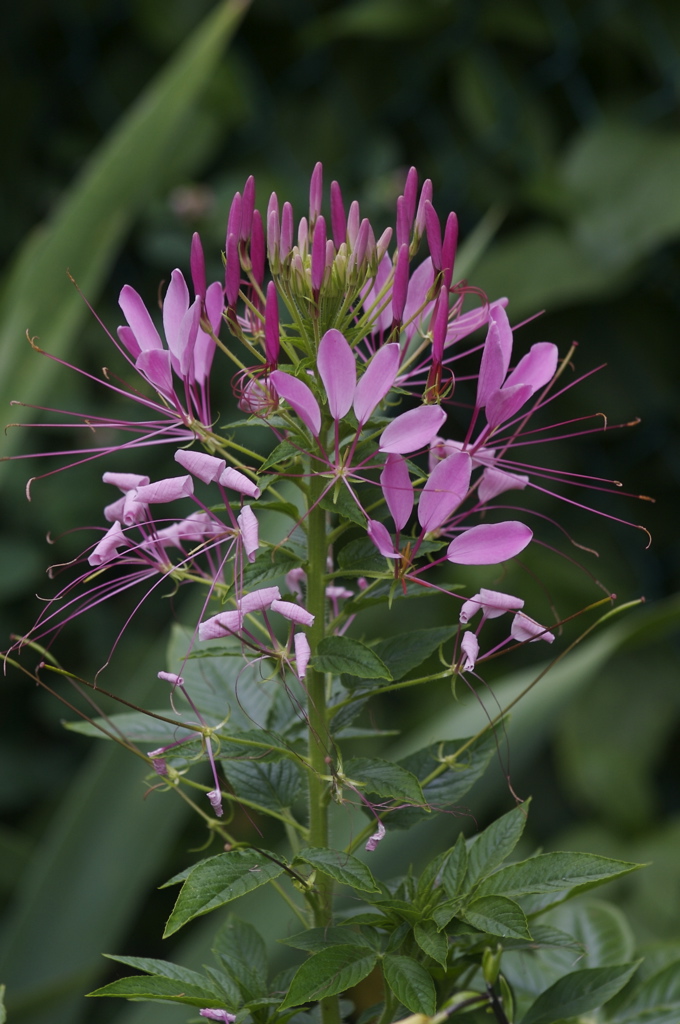
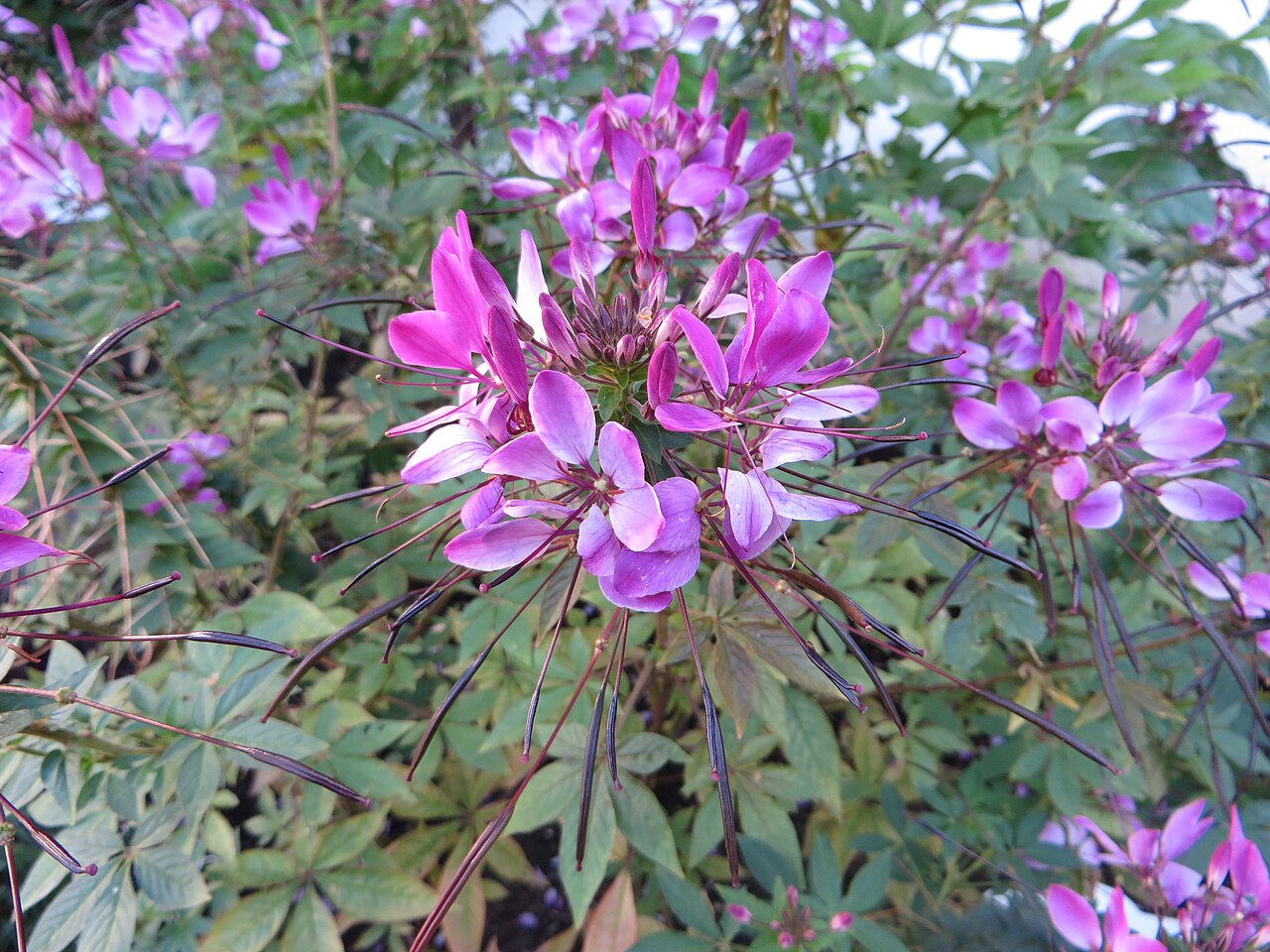
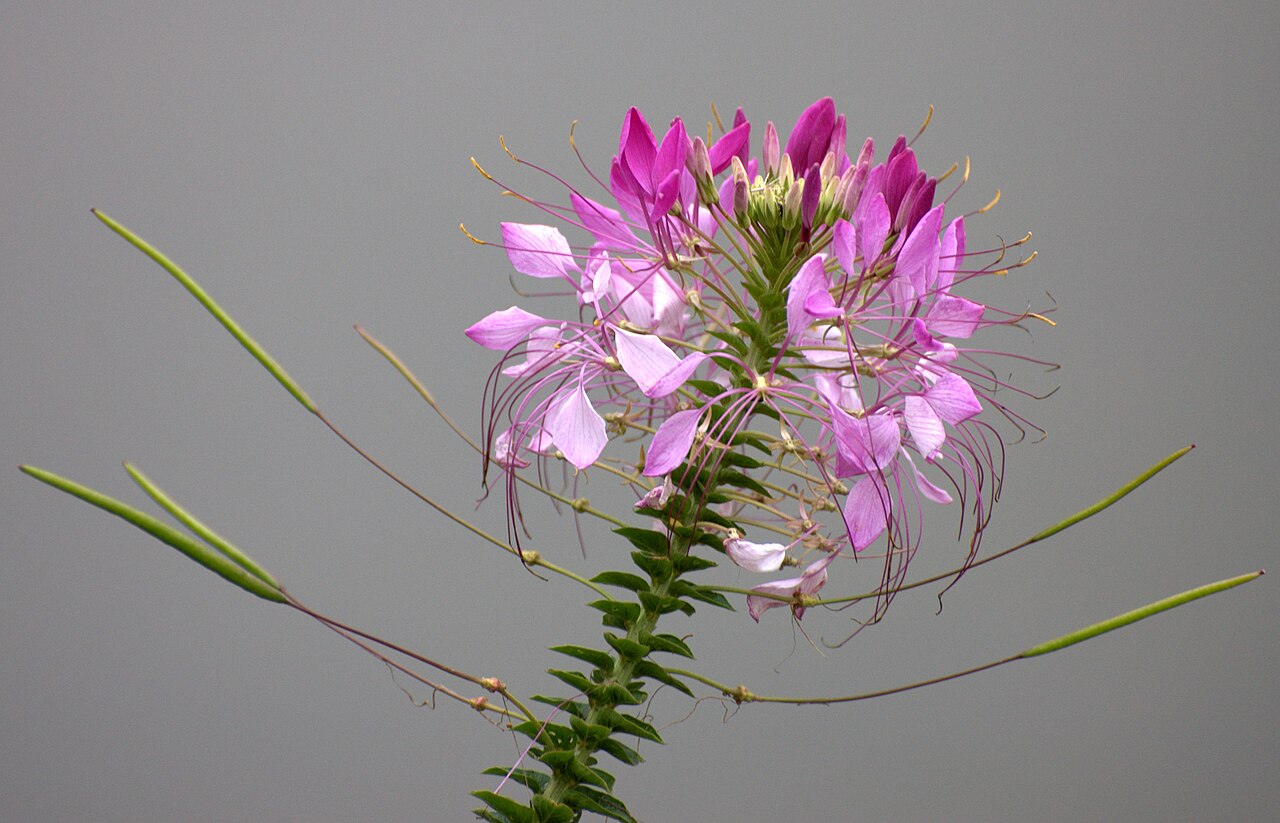
Cleome, or spider flower, is a tall annual, 3–5 feet tall, with palmate leaves and large clusters of pink, white, or purple flowers with long, protruding stamens that give the ‘spider’ look — and a long bloom season from summer to frost, with almost no deadheading needed. It is a cottage-garden and cutting-garden staple: plant after last frost in full sun and average, well-drained soil, spacing 12–24 inches apart, and it will bloom through heat that defeats fussier annuals. Cleome self-seeds freely, so a planting often returns on its own next year — welcome in a cottage border, less welcome in a formal bed, where you should deadhead before seed forms. Note the prickles: stems can be spiny, so wear gloves when handling mature plants, and site it at the back of the border where its height and airy habit shine.
Water & feeding
Water regularly until established, then water in dry spells; cleome tolerates heat and some drought but blooms best with steady moisture. Feed lightly — compost at planting is enough; heavy fertilizer makes leggy growth. Mulch to hold moisture.
Common problems
- Self-seeding everywhere — deadhead if you do not want volunteers, or let a drift form.
- Spiny stems — wear gloves; site at the back of the border.
- Leggy growth — pinch young plants once for bushier growth.
- Few pests — generally trouble-free; aphids occasionally, blasted off with water.
Notes
Deadhead spent clusters if you want to limit self-seeding, or leave them for volunteers next year — many gardeners do the latter and simply thin seedlings in spring. Cut stems for bouquets when clusters are half open. Cleome attracts hummingbirds, bees, and butterflies all summer, and its height makes it a natural screen for a fence or an ugly view.
Browse all plant & pest guides
Saving seeds
Cleome is one of the easiest seed-saving plants in the whole garden, mostly because it insists on doing the job itself whether you help or not. After the flowers fade, long thin pods form along the stems — they look like little green beans standing at attention — and as they ripen they turn tan, papery, and eventually split open and fling their seeds everywhere. That self-sowing habit is the whole story: a cleome bed left to its own devices will reseed itself next year, which is wonderful if you want a cottage-garden thicket and mildly alarming if you wanted a tidy border.
To save seed on purpose, pick your moment. Wait until the pods are dry and tan and rattle faintly when you shake the stem, but do not wait until they have all split — once they pop, the seed is on the wind and in the cracks of the path, and you are collecting leftovers. Clip whole stems on a dry day, drop them head-first into a paper bag, and let them finish drying indoors for a week or two in a spot with good air movement. Then crumble the pods over a tray and winnow away the papery chaff with a gentle puff or a fan on low. The seeds themselves are small, dark, and roundish, and they need light to germinate, so remember that detail when you sow them: press them onto the surface of the soil and barely cover them, or not at all.
Storage is straightforward, with one Florida footnote. Dry the seed thoroughly — truly dry, not Florida-in-July dry — then seal it in a labelled jar with a little desiccant packet and keep it somewhere cool and dark. Kept that way, cleome seed stays lively for a few years, so one good harvest can cover several springs. If you are saving from a named variety rather than the straight species, expect some drift: open-pollinated cleome crosses freely, and over a few generations of self-sowing the flower colours tend to wander back toward a uniform pale pink. That is not a failure, it is genetics doing its thing, but if you want your White Queen to stay white, buy fresh seed of that variety rather than saving from it.
One honest caveat about the sterile modern types: some newer cleomes were bred specifically not to set seed, which is a selling point if you hate volunteers. If your plant never forms pods at all, it is not your fault and it is not a saving failure — that variety simply has nothing to save. Check for pods before you plan your seed stash, and let the self-sowers sow.
Varieties
Every named variety of Cleome with its own growing guide:
- Rose Queen Cleome — The pink spider flower: tall spikes of soft rose-pink flowers, the romantic cleome.
- Violet Queen Cleome — The violet spider flower: tall spikes of violet flowers with long, spidery stamens, the classic cleome.
- White Queen Cleome — The white spider flower: tall spikes of pure white flowers that glow at dusk, the moon-garden cleome.