
🤍 Clotted Cream Common Jasmine
What it looks like
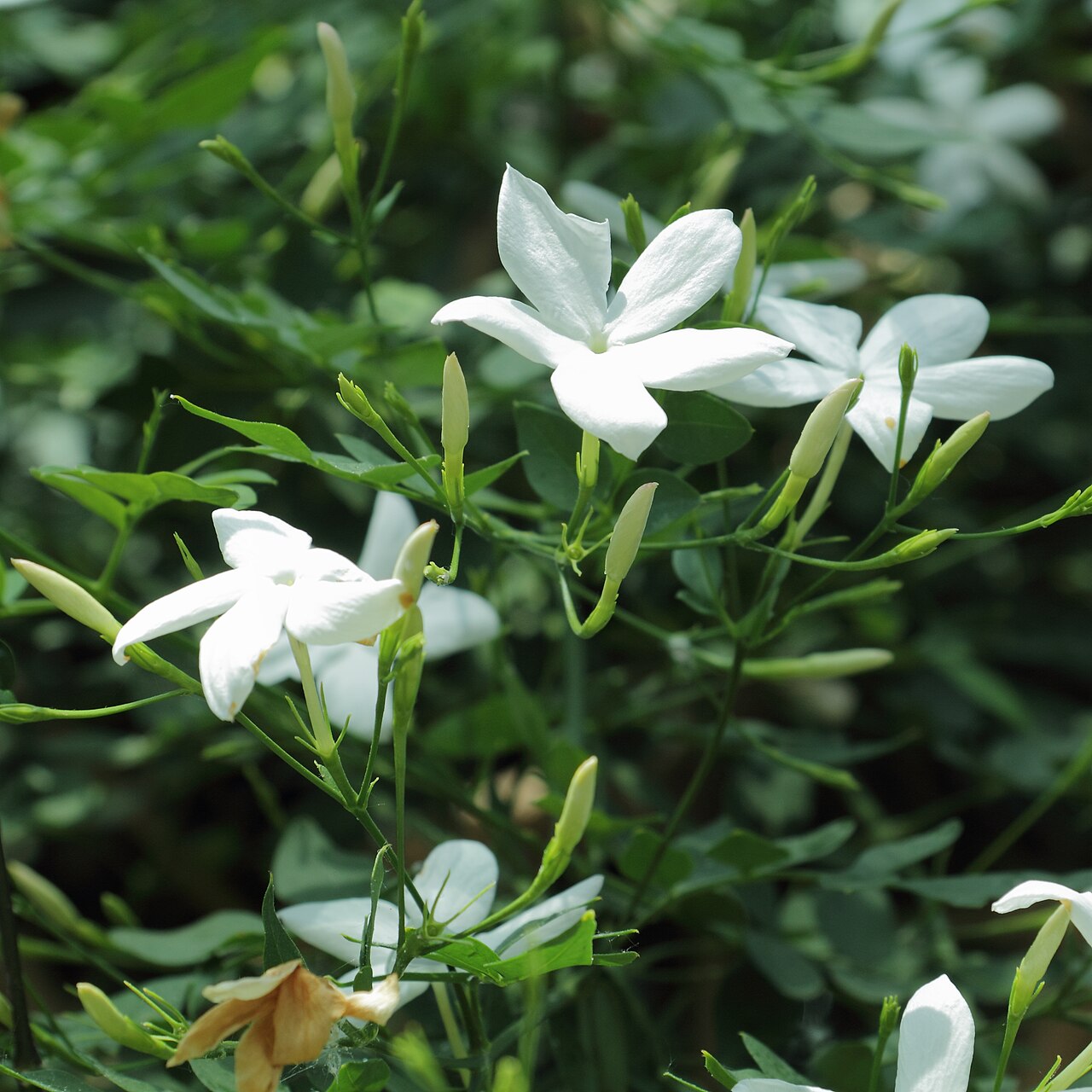
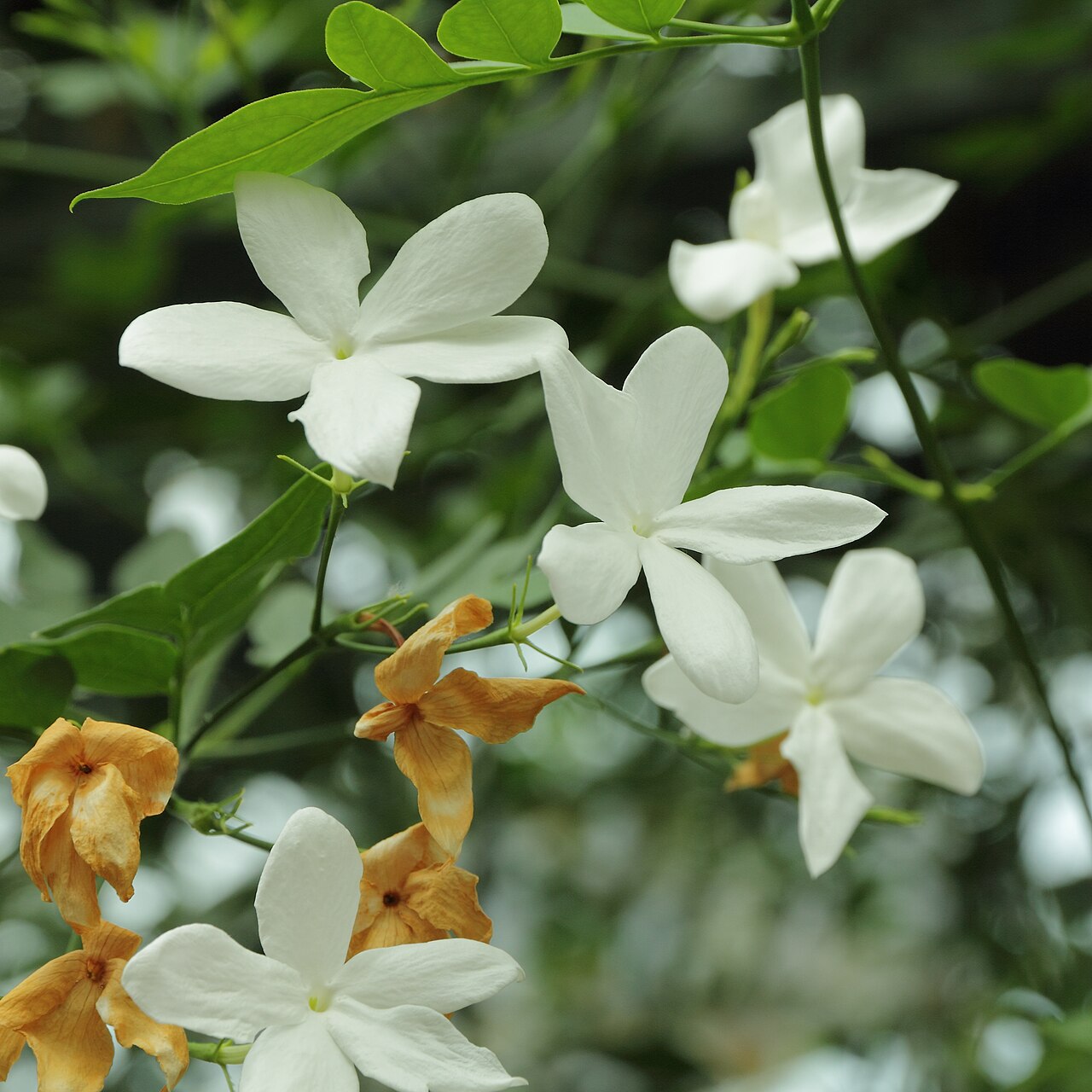
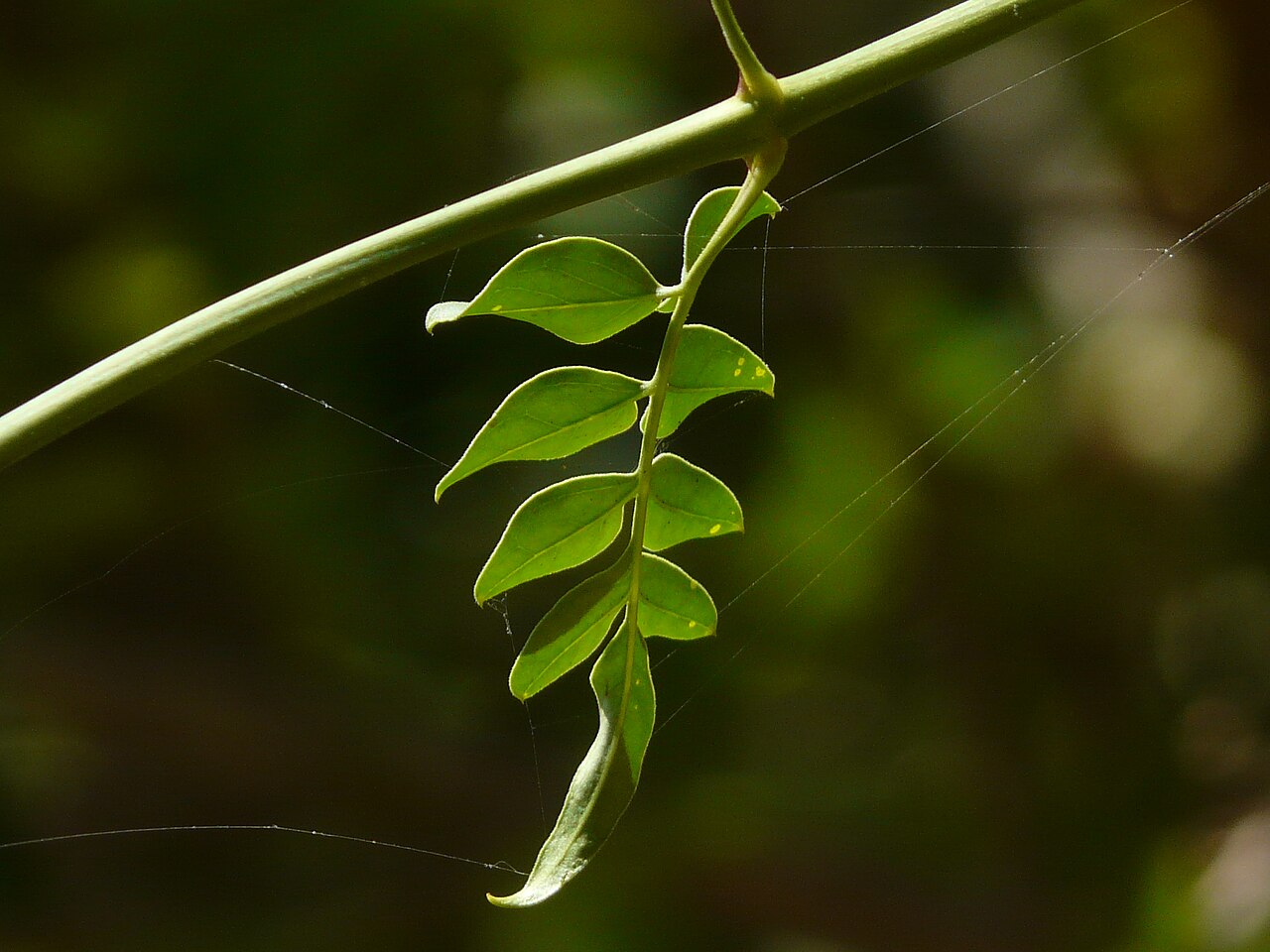
Photos show the species, Common Jasmine, since no cultivar-specific photo has been verified for this variety — the species photos above are already hosted on this site and attributed as on the species guide.
Why this variety
Clotted Cream is common jasmine with the volume turned up on colour: instead of the species’ pure white stars, it opens creamy-yellow flowers, often from pink buds, that are larger and, growers report, even more powerfully scented. The effect on a sunny wall is less bridal-white and more warm candlelight — the same plant, the same perfume cloud, a softer palette.
It is a selected form of Jasminum officinale, also sold as ‘Devon Cream’, and it behaves exactly like the species otherwise: a vigorous twining climber with ferny, pinnate leaves and flowers that keep coming through summer. If you already love common jasmine but want something a shade less common, this is the honest upgrade — no new care regime, just a different flower colour.
How to grow
Plant in spring in fertile, well-drained soil against a sunny wall, trellis, or pergola, and give it something to twine around — horizontal wires or lattice, not a flat wall it cannot grip. In Florida it grows statewide in shelter, flowering summer into fall, and it appreciates afternoon shade in the hottest inland gardens, where full blazing sun can scorch foliage.
Prune lightly after the main summer flush, cutting back long, straggly stems and any dead wood, and tie in new growth while it is still flexible. Work worm castings into the planting hole and mulch well; a jasmine that is fed and mulched in spring rewards you with a second wave of flowers instead of a single polite showing.
For the general picture, start with the Common Jasmine growing guide, then use this guide for the details that make Clotted Cream different. And a plain-language note on the hero stats above, because vines and shrubs are not vegetables: “Spacing” here means mature planting distance, and “Days to harvest” means time to first bloom — the moment the plant starts paying you back in flowers, not a picking date.
And a plain-language note on the hero stats above, because vines and shrubs are not vegetables: “Spacing” here means mature planting distance, and “Days to harvest” means time to first bloom — the moment the plant starts paying you back in flowers, not a picking date.
Water & feeding
Keep soil evenly moist in the first season, then water deeply during dry spells. Jasmine hates two things equally: drought stress, which aborts buds, and soggy feet, which rot roots. Mulch to hold moisture, feed with a balanced organic fertilizer in spring and again after the first flush, and skip high-nitrogen feeds that produce leaves at the expense of flowers.
Common problems
- Scale insects and mealybugs on stressed vines — check leaf joints, prune out heavy infestations, and use horticultural oil in cool weather, never in hot sun.
- Root rot in soggy soil — jasmine wants moist, well-drained soil, not a puddle. If leaves yellow and drop in wet weather, drainage is the diagnosis, not fertilizer.
- Sparse bloom in too much shade — fragrance needs sun. A jasmine in deep shade grows leaves and keeps its perfume to itself.
- Winter cold snap damage at the northern edge of its range — wait until spring growth shows what is truly dead before cutting, then prune to live wood.
Harvest
There is no vegetable harvest here — the harvest is perfume and cut stems. Snip flowering stems in the morning when buds are just opening, and they will scent a room for days. Deadhead spent clusters to encourage rebloom, and do your main pruning right after the summer flush, not in winter, when you would be cutting off next season’s flowering wood.
Browse all plant & pest guides
Saving seeds
Clotted Cream is a selected form of common jasmine — keep it from cuttings, not seed; seedlings won’t hold the creamy-yellow flowers. The Saving seeds section of the Common Jasmine guide covers seed for the straight species.