
🕊️ Columbine
What it looks like
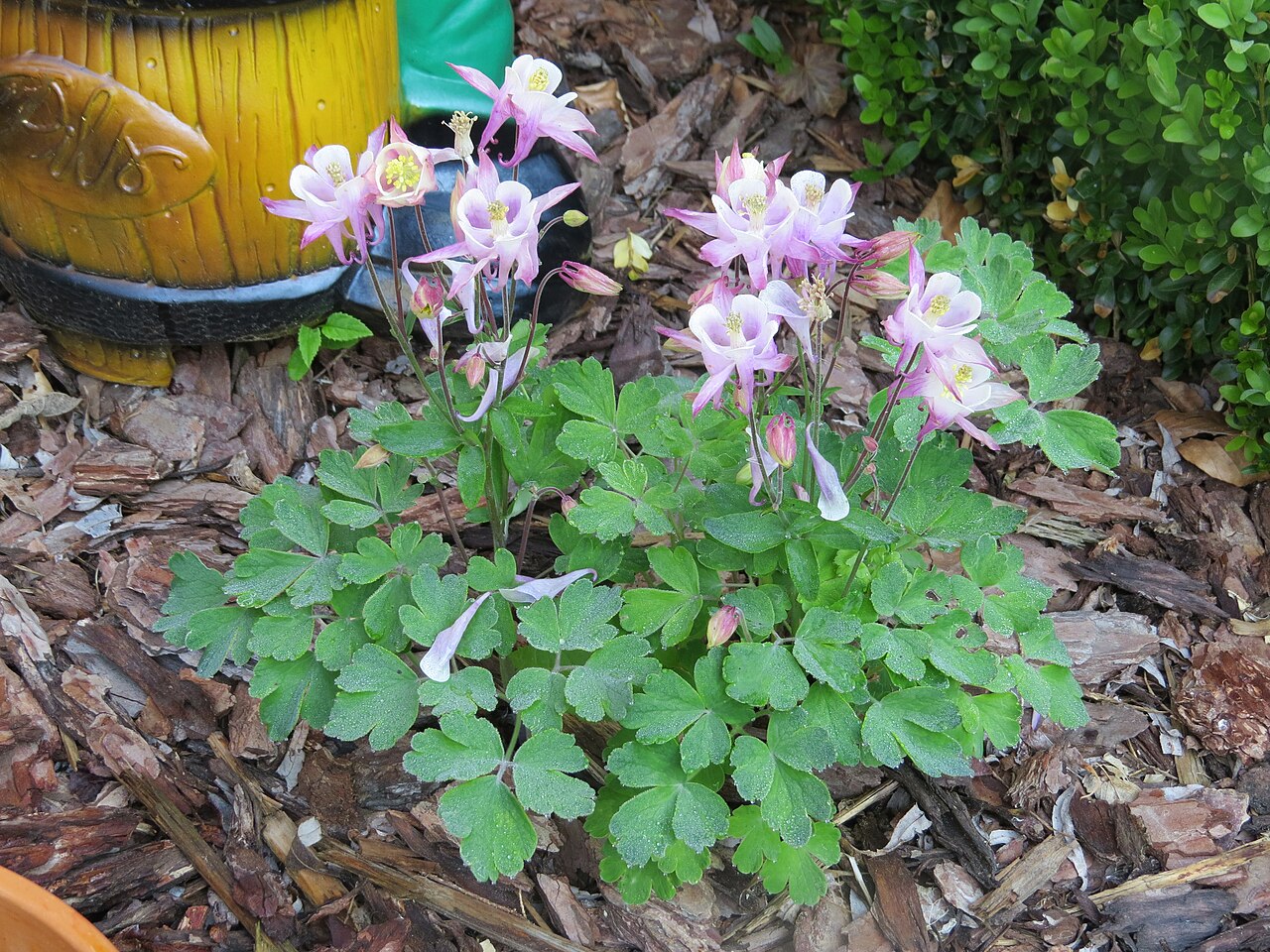
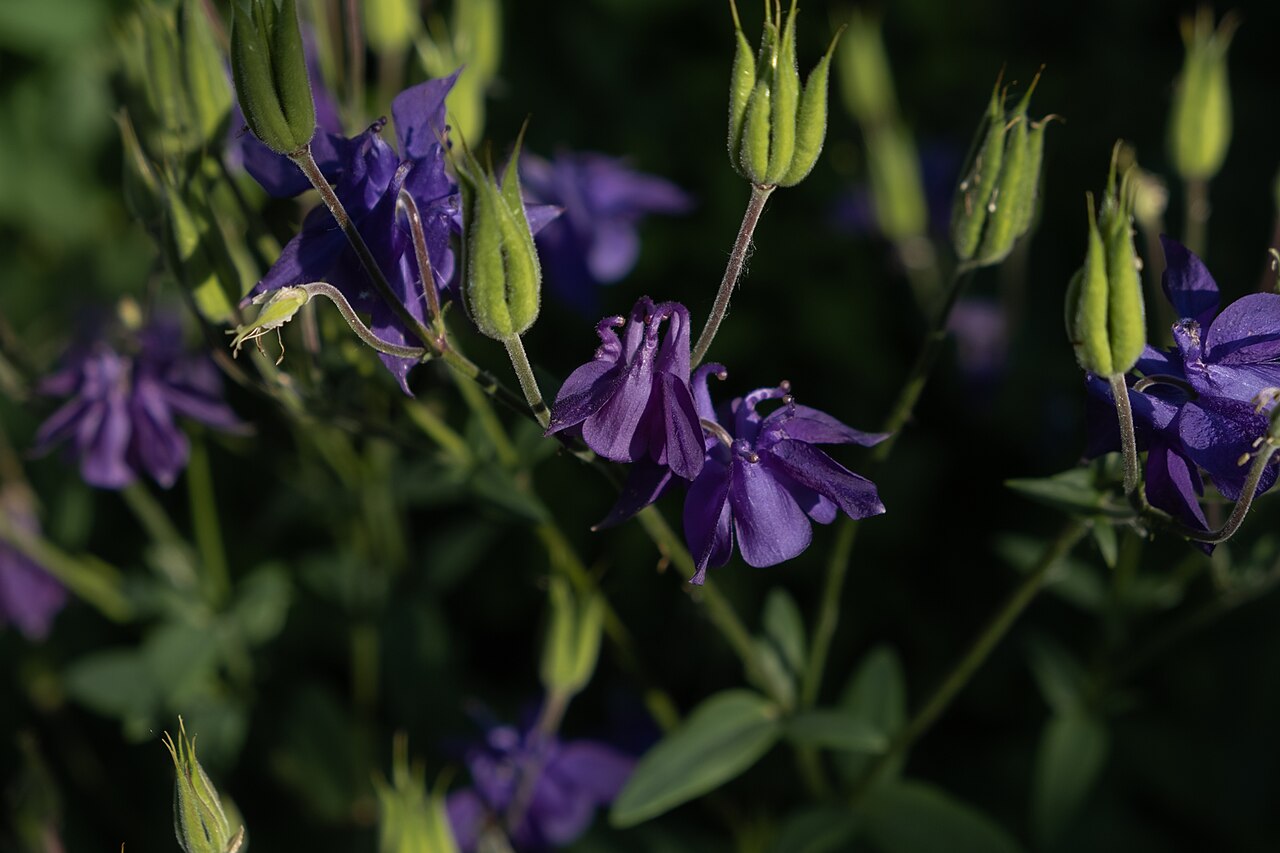
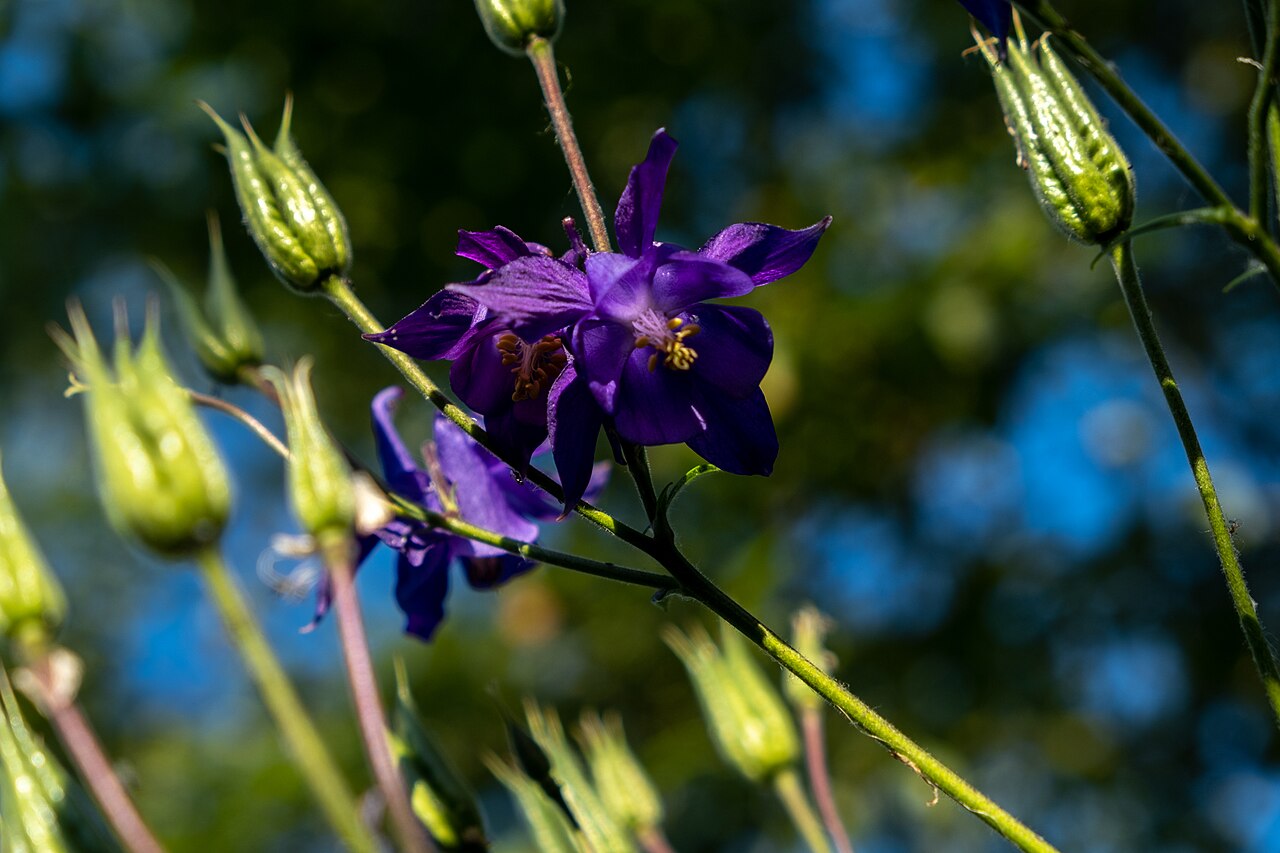
How to grow
Plant in spring or fall in rich, well-drained soil in part shade — columbine is a short-lived perennial (3–5 years) that self-seeds freely, so a planting renews itself if you let some seed drop. Native wild columbine (A. canadensis, red and yellow) feeds hummingbirds; garden hybrids offer blue, purple, pink, and white in taller spires. It tolerates sun in cool climates but needs afternoon shade and steady moisture in heat. Leaf miners tunnel the foliage in summer — unsightly but rarely fatal — and many gardeners simply cut foliage back after bloom and let it regrow.
Water & feeding
Water consistently in spring and during dry spells; columbines prefer evenly moist soil and decline in drought. Good drainage matters — wet crowns rot in winter.
Common problems
- Leaf miners tunneling leaves in summer (cosmetic; cut back foliage after bloom)
- Short lifespan — allow self-seeding for replacements
- Powdery mildew in humid, crowded sites
Harvest
Deadhead if you want to prevent self-seeding; otherwise leave seed heads to drop for next year’s plants. Cut foliage back after bloom if leaf miners disfigure it.
Saving seeds
Columbine is the rare plant that saves its own seed better than you do, which is both the good news and the warning label. Individual plants are short-lived, often fading after just a few years, yet a columbine patch can persist for decades because it self-sows so freely. The seed pods split open at the top and scatter their contents around the parent plant, and the volunteers that appear the following spring keep the colony going. Saving seed, then, is less about rescuing a rare treasure and more about choosing which plants get to be parents, and where their children are allowed to land.
Watch the pods after flowering. They start green and upright, like tiny candelabras, and ripen to brown. The moment to cut is when a pod is mostly brown but has not yet split wide open; at that stage the small, shiny black seeds inside are mature, and you can still catch them. Wait too long and you will find elegant empty pods and a fresh crop of seedlings exactly where the plant decided to put them. Snip the stalks into a paper bag or a bowl, because a ripe pod tips its seed out at the slightest provocation, then finish drying the pods indoors for a week or two before shaking the seed free.
Cleaning is simple. Shake the dried pods over a tray, let the black seeds fall out, and pick out the papery pod fragments. There is no pulp to ferment and no coat to scrub off. Dry the seed a few more days on paper indoors, then store it in a labeled envelope, ideally inside an airtight jar with a desiccant packet, kept cool and dark. In Florida, that desiccant step matters more than it does in drier climates, because seed that feels dry in August air can still carry enough moisture to spoil in storage. Well-dried columbine seed keeps for several years, so you do not need to panic-sow it, but fresh seed germinates most readily and is the safest bet.
Sowing is where columbine shows its nerdy side. The seed has a dormancy that winter normally breaks, so you have two honest routes. Sow outdoors in autumn and let the cold season do the chilling for you, or mimic winter yourself by sealing the seed in a bag with barely damp vermiculite or a folded damp paper towel and refrigerating it for a few weeks before sowing. Either way, sow on the surface or barely covered, because the seed needs light to germinate, and keep the mix consistently moist. Seedlings will not flower in their first year, which is normal and not a failure; they spend year one building roots and a rosette of leaves, then bloom in year two.
Now the genetics, because this is where columbine seed savers either fall in love or get annoyed. Columbines cross-pollinate freely, so seed from a named variety growing near other columbines is a mixture, not a copy. Over years a self-sown patch tends to drift toward simpler, wilder-looking flowers, which many gardeners love and some find heartbreaking. If you want a particular variety to stay true, buy fresh seed or new plants, and pull the volunteers that pop up nearby before they flower and join the gene pool. If, on the other hand, you enjoy a garden that invents its own hybrids, let a few plants go to seed each year, deadhead the rest to keep the patch in bounds, and treat every spring seedling as a small, spurred surprise.
Browse all plant & pest guides
Varieties
Every named variety of Columbine with its own growing guide:
- Black Barlow Columbine — The near-black double: fully double, spurless flowers in deepest purple-black, the darkest columbine.
- Nora Barlow Columbine — The double pink-and-white: fully double, spurless flowers in pink and white, like tiny Victorian rosettes.
- William Guinness Columbine — The magpie columbine: dark purple-and-white bicolored flowers with long spurs, the classic 'Magpie' form.