
🌿 Common Buttercup
What it looks like
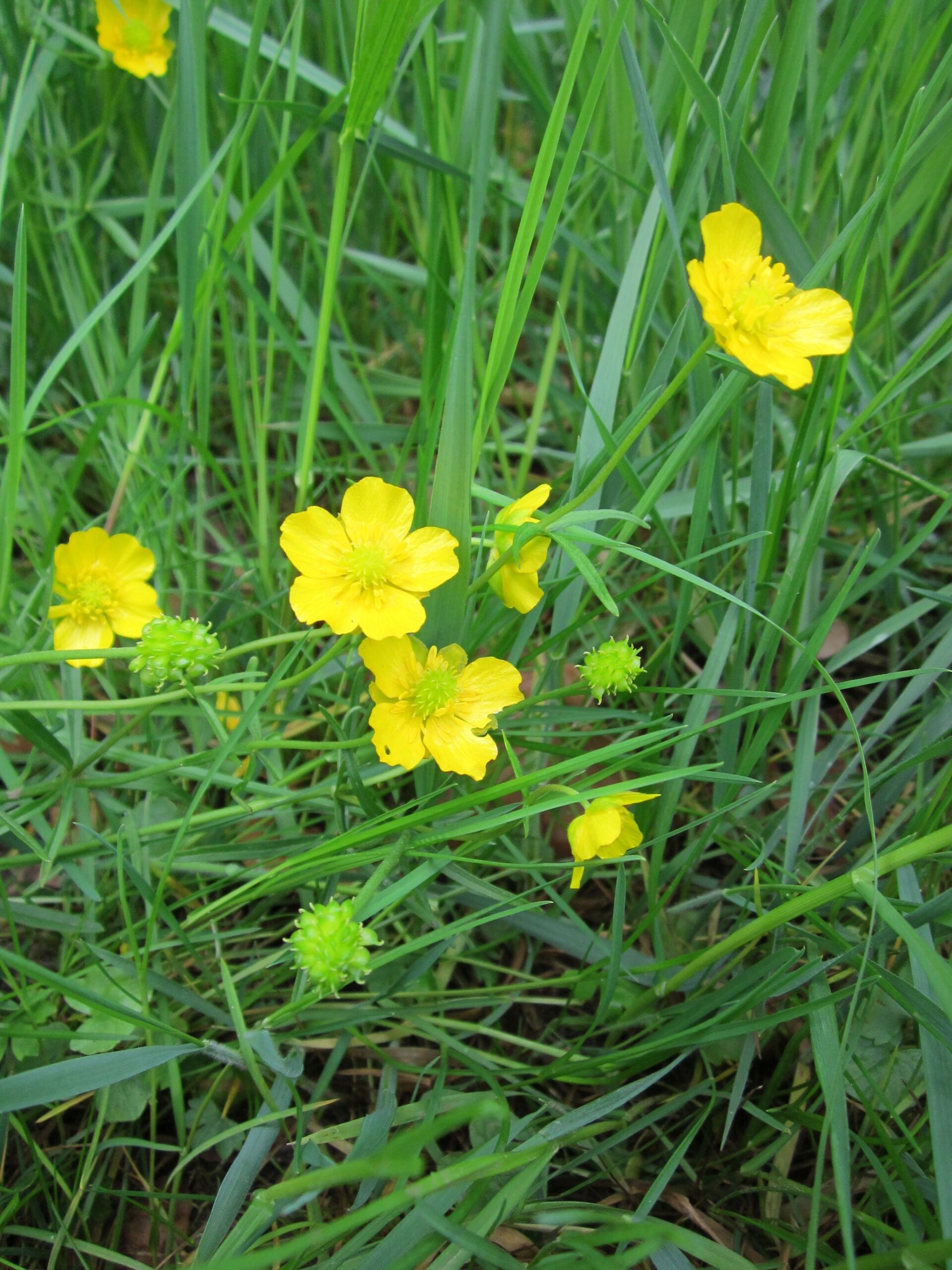
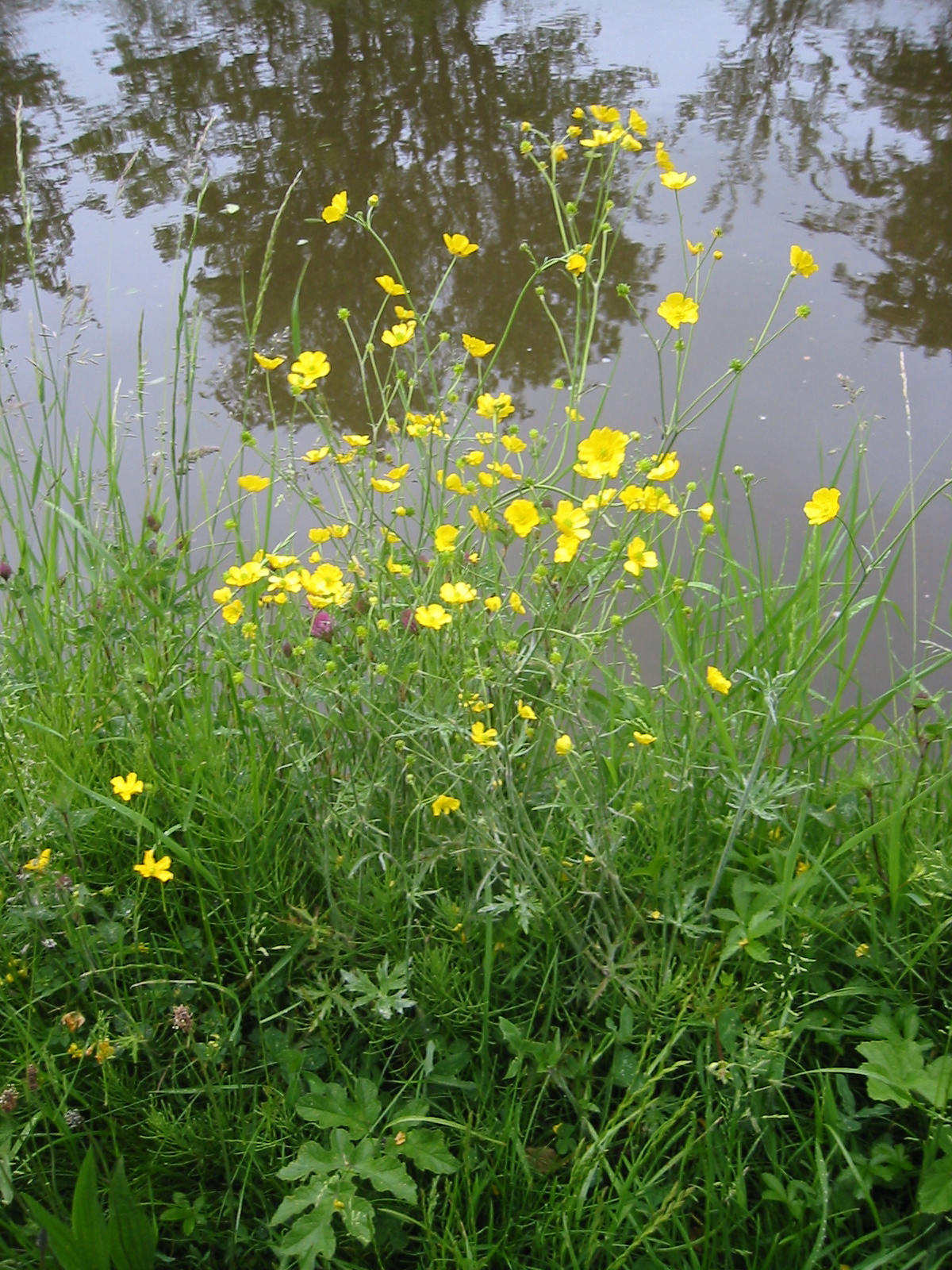
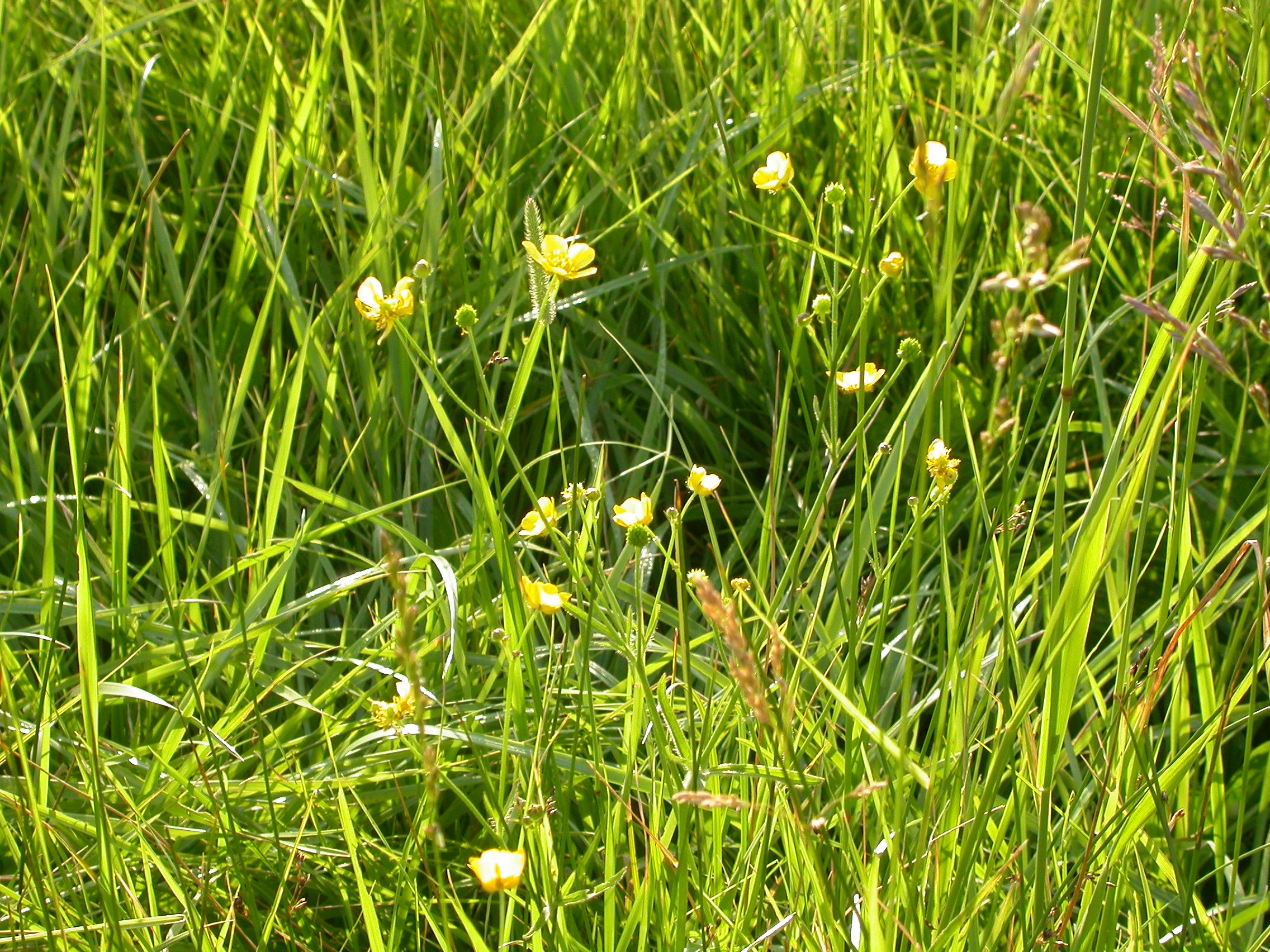
Common buttercup is the buttercup of meadows, and it is the tallest and most familiar of the wild buttercups — the one that makes a whole pasture look gilded in May and June. Ranunculus acris L., in the buttercup family (Ranunculaceae), is also called meadow buttercup, tall buttercup, and giant buttercup, and all four names describe the same plant: a herbaceous perennial, 30 to 100 cm tall, with upright, ungrooved, branching stems bearing glossy yellow flowers about 25 mm across. Each flower has five overlapping, rounded petals — glossy as if varnished, which is the buttercup’s signature trick — above five green sepals, with a dense cluster of yellow stamens in the center, and the leaves are compound, deeply cut, and hairy, with the terminal leaflet stalkless, a small detail that separates it from its creeping cousin. It is native to Eurasia and now has a circumpolar distribution: naturalized across much of North America, where it is probably native in Alaska and Greenland and introduced elsewhere, and a serious pasture weed in New Zealand, where it costs the dairy industry dearly. A plant this successful is not a wallflower, and this guide does not pretend otherwise.
The genus name is a joke in Latin that every buttercup carries with it: Ranunculus means “little frog,” from rana, frog, plus the diminutive suffix, a nod to the genus’s fondness for damp ground where frogs abound. The species name acris means bitter or acrid, as in acrid, and it is a warning label: the plant’s sap contains ranunculin, a glycoside that breaks down into protoanemonin, an acrid, blistering compound that irritates skin and mouths, causes blistering of the tongue and lips and digestive upset in animals that eat it fresh, and is the reason grazing animals usually leave buttercups standing in an otherwise closely cropped pasture. Drying destroys the compound, which is why buttercups in hay are harmless and buttercups in a fresh mouthful are not — a distinction that matters to farmers, to foragers, and to anyone tempted by the childhood game of holding a buttercup under a friend’s chin to see if the yellow reflects (it does, and the game is safe, because the flower is under the chin, not in the mouth).
The butterfly story is a nectar story, not a host story, and the distinction matters. The American Copper guide lists common buttercup in its Nectar plants section: adults nectar on many low flowers, including common buttercup, white clover, butterflyweed, yarrow, ox-eye daisy, fleabane, ragwort, thyme, and goldenrod. American coppers are generalists at the flower and specialists at the host — their caterpillars eat sorrels and docks, not buttercups — so common buttercup’s role in that guide is the fuel stop, not the nursery. That is still a real role: a meadow with buttercups in flower is a meadow with nectar on offer for coppers, bees, and hoverflies, and a low yellow flower at exactly the height a small butterfly flies is a flower doing its job. This guide covers Ranunculus acris only, as a species: the wild buttercup genus as a whole has its own genus guide, and the cultivated Persian buttercup has its own species guide, and neither of those is this plant.
One disambiguation, because buttercup common names are a tangle and this guide must not swallow its cousins. Creeping buttercup (Ranunculus repens) is the lawn buttercup, spreading by runners and rooting at the nodes, with a stalked terminal leaflet; common buttercup does not spread by runners and its terminal leaflet is stalkless. Bulbous buttercup (Ranunculus bulbosus) is the drier-ground buttercup, with a swollen, bulb-like stem base and grooved flower stalks; common buttercup has ungrooved stalks and no bulb. Persian buttercup (Ranunculus asiaticus) is the cultivated cut flower of florists, with its own plant-guides guide and its Tecolote variety guides, and it is not a meadow plant at all. Buy and identify by Latin name, and let the common names be nicknames, not identifications.
How to grow
Here is the honest framing, stated before any growing advice: common buttercup is usually not planted deliberately, and this guide does not urge you to plant it. In much of its range it arrives on its own, as a meadow and pasture plant, and the gardener’s decision is usually whether to welcome it in a wildflower meadow or remove it from a lawn or pasture. That said, if you want it — as a wildflower meadow component, as a naturalistic grassland plant, as the buttercup of a northern meadow garden — grow it the way meadows grow it: full sun to part shade, moist, neutral grassland soil, neither droughty nor waterlogged, in a mown or grazed sward where it can compete without being shaded out by tall grasses. Its ecological niche is specific and worth stating: it favors drainage conditions intermediate between bulbous buttercup’s drier soils and creeping buttercup’s wetter hollows, and it is characteristic of grazed or mown neutral grassland, where its abundance is even used as an indicator of grassland age and continuity. A meadow that is mown once or twice a year, after flowering, suits it; a meadow that is never cut, where tall grasses close over, does not, because it is not a strong competitor in tall, species-rich swards.
Propagation is by seed and by short, thick rhizomes that can split to form daughter plants, and the plant’s own calendar explains its persistence: flower buds begin developing in late summer of the year before flowering, the plant passes winter as a small rosette of frost-resistant leaves, and it flowers from late spring into summer — May to July at its best in Britain and Ireland, with a season stretching from April into October. Sow seed in a meadow mix in autumn or spring, or let an existing patch seed itself, and expect it to establish as part of a community rather than as a specimen: buttercups look right in drifts among grasses, ragged robin, and other meadow flowers, and wrong as a dot plant in a formal bed. Do not plant it in a lawn you intend to keep as lawn, because it will colonize lawns and paths cheerfully and then you will be writing the removal section of this guide from experience.
Florida note, stated plainly rather than forced. Common buttercup is a cool-temperate meadow plant, and most of Florida is at or beyond its warm edge: it is not a Florida garden plant, and this guide does not recommend it for Florida beds. The Florida buttercup story is the Persian buttercup, Ranunculus asiaticus, the cultivated cut flower with its own guide — a different species, a different garden, a different climate conversation. Northern gardeners with a meadow get the plant in this guide; Florida gardeners get the honest statement that this one belongs to cooler meadows, and a pointer to the buttercup that actually suits their climate.
Water & feeding
Water, for a meadow buttercup, is a question of moisture without extremes. It wants moist, neutral soil that stays damp through the growing season but never waterlogs — the middle ground between its two cousins, as its ecology section says — and in a meadow with normal rainfall it largely waters itself, while in a dry spell it thins out and disappears first from the driest spots, which is a useful indicator that the meadow is drying, not a failure of the plant. A meadow planting needs no irrigation system and no feeding program: meadow soil, mown and left, with the cuttings’ nutrients cycling back, is the whole fertility plan. The soil science here is the grassland story: a grazed or mown meadow is a community held open by cutting, where light reaches the ground, where grasses and forbs compete on roughly equal terms, and where a buttercup’s glossy flowers are not decoration but advertising to pollinators in a crowded marketplace. Feed a meadow heavily and the grasses win; starve it completely and everything thins; mow it once or twice a year and the buttercups hold their place in the middle, which is where they evolved to be.
Feeding: none, in a meadow. If you are growing the double-flowered cultivar ‘Flore Pleno’ as a garden plant rather than a meadow component, a spring topdressing of compost in a moist, humus-rich border is the right scale — but that cultivar is a garden plant, and the species in a meadow wants no fertilizer at all. The distinction is the point: a wildflower meadow is not a flower bed with less weeding, it is a different ecosystem with different rules, and the first rule is that fertility is a weed control tool used in reverse — lean soil keeps the community diverse, rich soil hands the meadow to the grasses.
Common problems
- It is a weed where you do not want it. The most common problem with common buttercup is that it is too successful: it colonizes lawns, paths, pastures, and beds, and in pastures it is a serious weed precisely because livestock avoid it, leaving it to seed while they eat everything around it. In a meadow it is welcome; in a lawn it is a removal job, by hand or by improving drainage and mowing, not by reaching for a spray first.
- Toxicity, fresh. Ranunculin breaks down to protoanemonin in fresh sap, causing skin blistering and digestive upset in people and animals that eat it. Do not eat it, do not let children or pets sample it, and do not confuse “it grows in hay” with “it is safe fresh” — drying destroys the compound, fresh sap does not forgive.
- Mistaken identity. Creeping buttercup (runners, stalked terminal leaflet) and bulbous buttercup (swollen stem base, grooved stalks) are the usual confusions, and they matter because their habits differ: a runnering buttercup in a lawn is a different removal problem from a clumping one in a meadow. Identify by Latin name and by the stalkless terminal leaflet.
- Herbicide resistance. In some pasture populations, notably in New Zealand, common buttercup has developed resistance to herbicides, which is a reminder that spraying a successful weed selects for the survivors. Cultural control — mowing, drainage, competition — is the durable answer, not a stronger spray.
- Too dry or too wet. It vanishes from droughty ground (bulbous buttercup’s territory) and from waterlogged hollows (creeping buttercup’s territory). If your buttercups thin out, check the drainage before blaming the plant: it is telling you about the soil.
- Shaded out. In an unmown, tall-grass sward it loses the competition for light. Mow once or twice a year, after flowering, and it holds its place.
Harvest
Common buttercup’s harvest is seed, and the knowledge that it is not a food plant — in that order, and with one firm boundary. This is not an edible or medicinal plant for home use: the fresh plant is acrid and blistering, and the traditional uses recorded for it — poultices and infusions among several Native American peoples, and the old headache remedies of sniffing crushed flowers and leaves — are history, not a recommendation, and this guide does not repeat them as instructions. If you want seed, collect the small, flattened achenes in their dense, star-like heads in summer, after flowering, and sow them in a meadow mix in autumn; or let the patch seed itself, which it will do with enthusiasm. If you want flowers for a vase, cut them knowing the sap irritates skin: gloves, not bare hands, and keep cut stems away from mouths and from pets.
The simplest harvest, though, is a May meadow with no agenda at all: gold flowers at knee height, coppers and bees working the low blooms, and the knowledge that the gloss on the petals is not paint but a trick of the petal’s structure, reflecting light back at the pollinators like a tiny mirror. Leave most plants standing through flowering for the pollinators, mow after seed set if the meadow needs it, and let the rosettes overwinter for next year’s gold. That is the crop, and it arrives without a single spray — because spraying it would kill the very insects it feeds, and because a meadow plant that has run its system for centuries does not need your intervention, only your willingness to mow at the right time and then get out of its way.
Saving seeds
Stop here first, because this section is written backwards on purpose. Common buttercup, Ranunculus acris, is toxic, and it is weedy, and those two facts come before any talk of collecting seed. All parts of the plant contain ranunculin, a compound that turns into an acrid irritant when the plant tissue is crushed, and it can blister skin and irritate the mouth and digestive tract. This is not a food plant, not a medicine plant for home use, and not a plant to handle bare-handed and then rub your eyes. Wear gloves, wash your hands after handling it, and keep children and pets from chewing it. If you are reading this section hoping for a recipe, close the tab. There is not one, and there should not be.
The second warning is about spread. Buttercup self-seeds readily, and a single plant can produce hundreds of seeds, with a large plant producing far more, which is how a pretty meadow flower becomes a lawn and pasture problem. Its seeds mostly fall near the parent plant, and its short rhizomes let a clump thicken in place, so an unmown patch quietly becomes a bigger patch year after year. In a garden setting the responsible move is usually prevention, not propagation: mow or deadhead after flowering, before seed ripens and sheds, and do not deliberately sow buttercup seed into beds, lawns, or anywhere near pasture. If your goal is more buttercups, the honest advice is to reconsider, because the plant rarely needs your help and frequently needs your restraint.
So why does this guide have a seed section at all? Because a gardener who already has buttercup needs to know how its seed behaves in order to manage it, and because a gardener moving an existing plant needs a safer route than seed. For identification and control purposes, know this: flowers appear over a long season, seed ripens and sheds in the weeks after flowering, and seedlings emerge mainly in the cooler months, often in clumps near the parent. Dry-stored seed has been reported to stay viable for several years, which means a patch you mow this year can still throw seedlings from seed shed in earlier years.
If you must move buttercup, for example to keep a named double-flowered garden form, divide the plant instead of sowing seed. Lift a clump in spring, split the short, thick rhizome into pieces each with roots and shoots, and replant them directly where you want them, wearing gloves throughout. Division gives you the same plant, not a seedling lottery, and it does not scatter hundreds of seeds across the garden in the process.
For storage, the same Florida rule that governs every other seed in this project applies, but here it applies to seed you are containing, not seed you are saving for sowing. If you collect seed heads for disposal or for identification, bag them before they shatter, keep them dry and labeled, and do not leave open containers of seed around the garden. Store any seed you keep for reference cool, dry, and dark in a sealed jar with desiccant, out of reach of children, and treat it as what it is: a toxic plant’s reproductive material, not a packet of promise. The best buttercup seed-saving advice is the shortest version of this whole section: deadhead before seed sets, wear gloves, divide rather than sow, and let the meadow keep its buttercups without your help spreading them.
Browse all plant & pest guides
Varieties
Common buttercup is grown as the species, Ranunculus acris, and its one widely recognized garden form is the double-flowered cultivar ‘Flore Pleno‘, whose many-petalled flowers have gained the Royal Horticultural Society’s Award of Garden Merit — a garden plant rather than a meadow plant, and the form to buy if you want buttercups in a border rather than buttercups in a pasture. The rare autumn buttercup (Ranunculus aestivalis) is sometimes treated as a variety of this species, and the typical form is subspecies acris. Related buttercups a gardener may meet are distinct species, not varieties of this one: creeping buttercup (Ranunculus repens), the runnering lawn buttercup; bulbous buttercup (Ranunculus bulbosus), the drier-ground buttercup with a swollen stem base; and Persian buttercup (Ranunculus asiaticus), the cultivated cut flower with its own plant-guides guide. Buy by Latin name, and let the common names be nicknames.