
🌿 Flore Pleno Common Buttercup
What it looks like
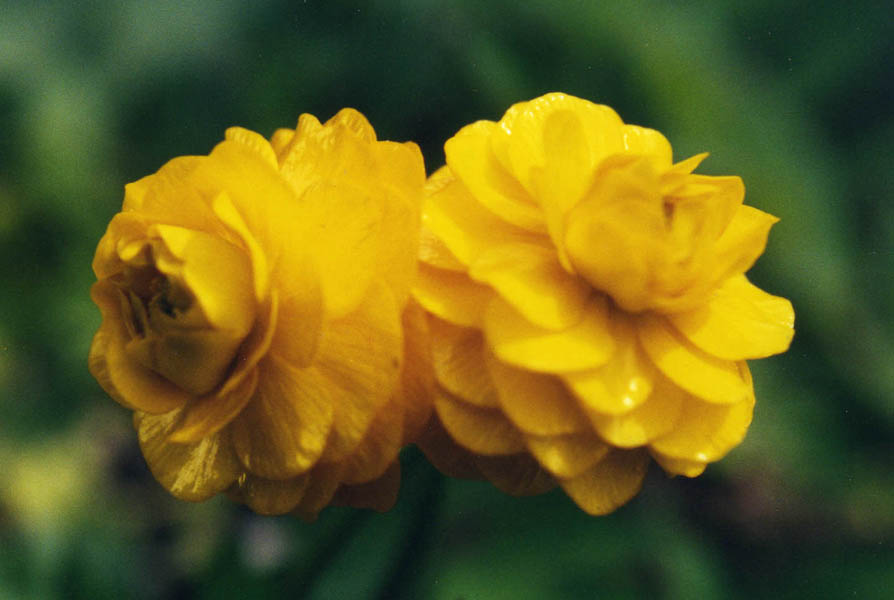
‘Flore Pleno’ is the common buttercup dressed for a party. Where the species carries the familiar five-petalled, glossy yellow cups on wiry stems, ‘Flore Pleno’ — the name means ‘with full flowers’ — packs each bloom with many petals, turning the simple cup into a dense, golden, almost pompon-like double flower. The plant otherwise keeps the species habit: upright, branching stems with divided, palmate leaves, flowering in late spring and summer. It is the one widely recognized garden form of Ranunculus acris, and it holds the Royal Horticultural Society’s Award of Garden Merit — the mark of a plant that has been trialed and judged outstanding for garden use.
Why this variety
Plant ‘Flore Pleno’ when you want buttercups in a border rather than buttercups in a pasture. That distinction is the whole point of this cultivar: the species is a meadow and pasture plant that usually arrives on its own and is more often managed than planted, while ‘Flore Pleno’ is a garden plant, bought deliberately, planted in a moist, humus-rich border, and enjoyed for its doubled flowers. The trade-off is that doubled flowers are generally less useful to pollinators than single ones — the extra petals get in the way of the nectar — so plant it for beauty and nostalgia, and leave the single species to the meadow for the bees. And a standing caution: buttercups are acrid and irritating if eaten, and they are pasture weeds in the wrong place. This is a border jewel, not a forage plant.
How to grow
Plant ‘Flore Pleno’ in full sun to part shade in moist, neutral, humus-rich soil that stays damp but not waterlogged — the soil of a meadow edge or a border that never quite dries out. Space 12 to 18 inches apart. Unlike the species in a meadow, which wants no fertilizer at all, this garden form appreciates a spring topdressing of compost in its border. Divide clumps every few years in autumn or early spring to keep them vigorous and to make new plants. Deadhead spent flowers if you want tidiness and a longer show, though the plant will carry on regardless.
Water & feeding
Keep the soil moist. ‘Flore Pleno’ is not a drought plant: dry soil shortens flowering and stresses the plant, while waterlogged soil rots it. The sweet spot is the consistently damp, humus-rich border — water in dry spells, mulch to hold moisture, and never let it bake. In a meadow setting the species manages on rainfall; in a border, this cultivar earns its compost and its watering can.
Common problems
Drought is the main stress, followed by the plant’s own enthusiasm: buttercups self-seed and spread, and even a double form can seed around — though doubled flowers set less seed than single ones. Watch for the usual damp-border pests: slugs and snails on young growth, and aphids on flower stems. The sap is acrid and can irritate skin, so wear gloves when cutting back, and never graze it or feed it to livestock — buttercup is toxic fresh, which is exactly why grazing animals avoid it and why it thrives in pastures.
Harvest
The harvest is the flower show and the cut stem: pick double blooms for small, sunny posies — they hold reasonably well in water for a few days. Cut the whole plant back after flowering if it gets straggly, and it will regrow fresh foliage. Divide in autumn for new plants, and remember the rule that governs all buttercups: admire them, do not eat them.
For the species as a whole, see the Common Buttercup guide.