
🌿 Common Dog Violet
What it looks like
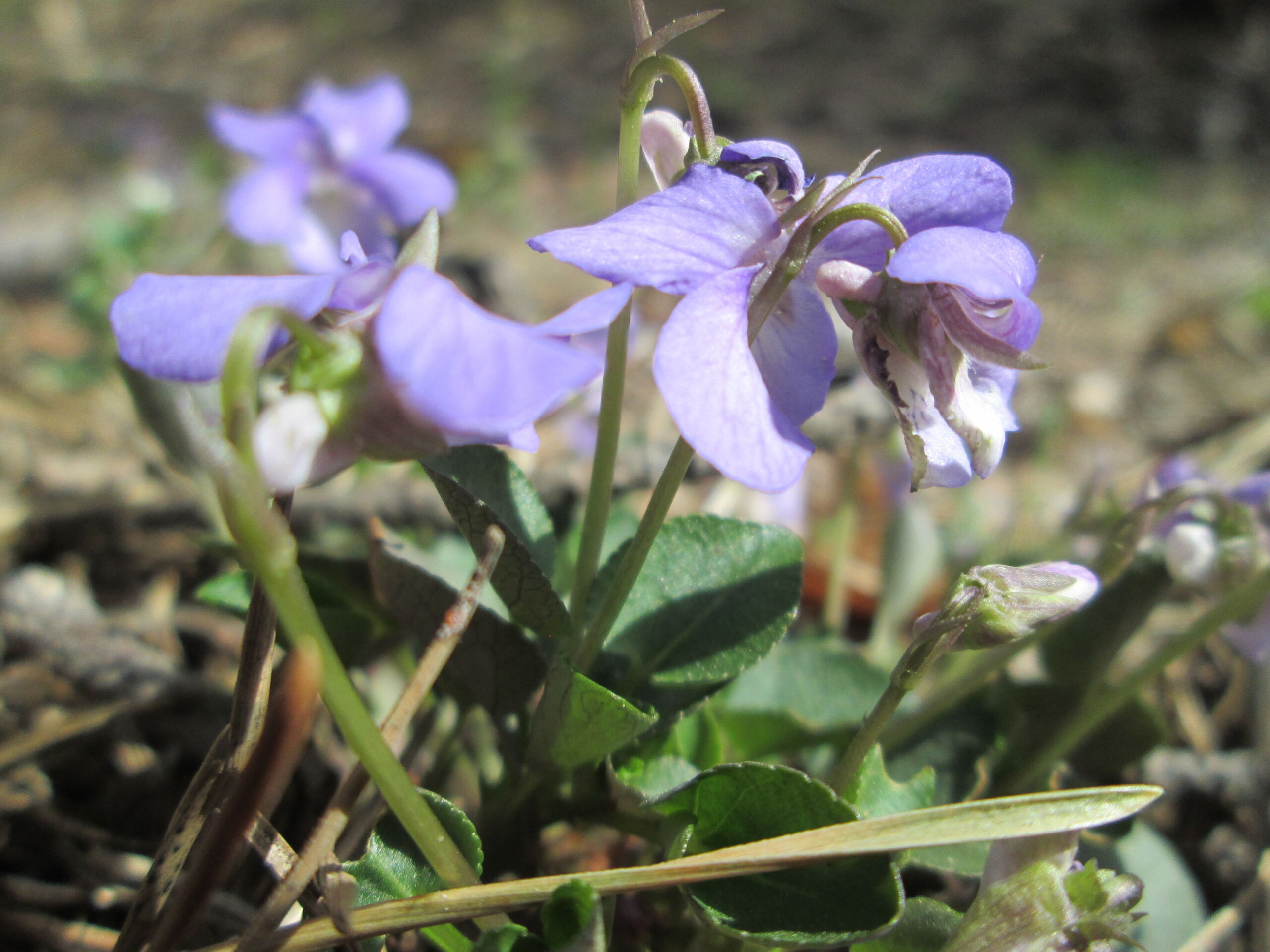
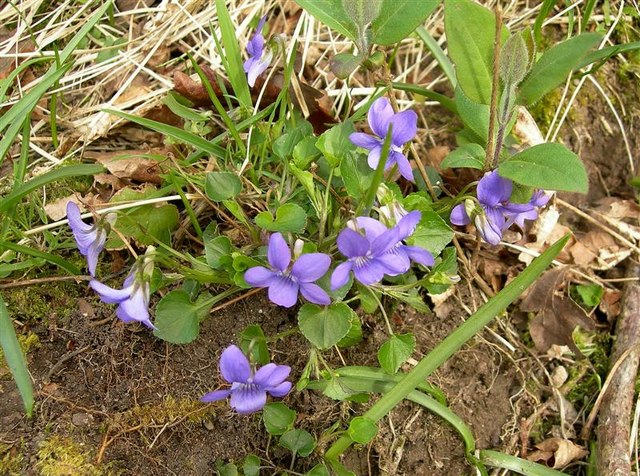
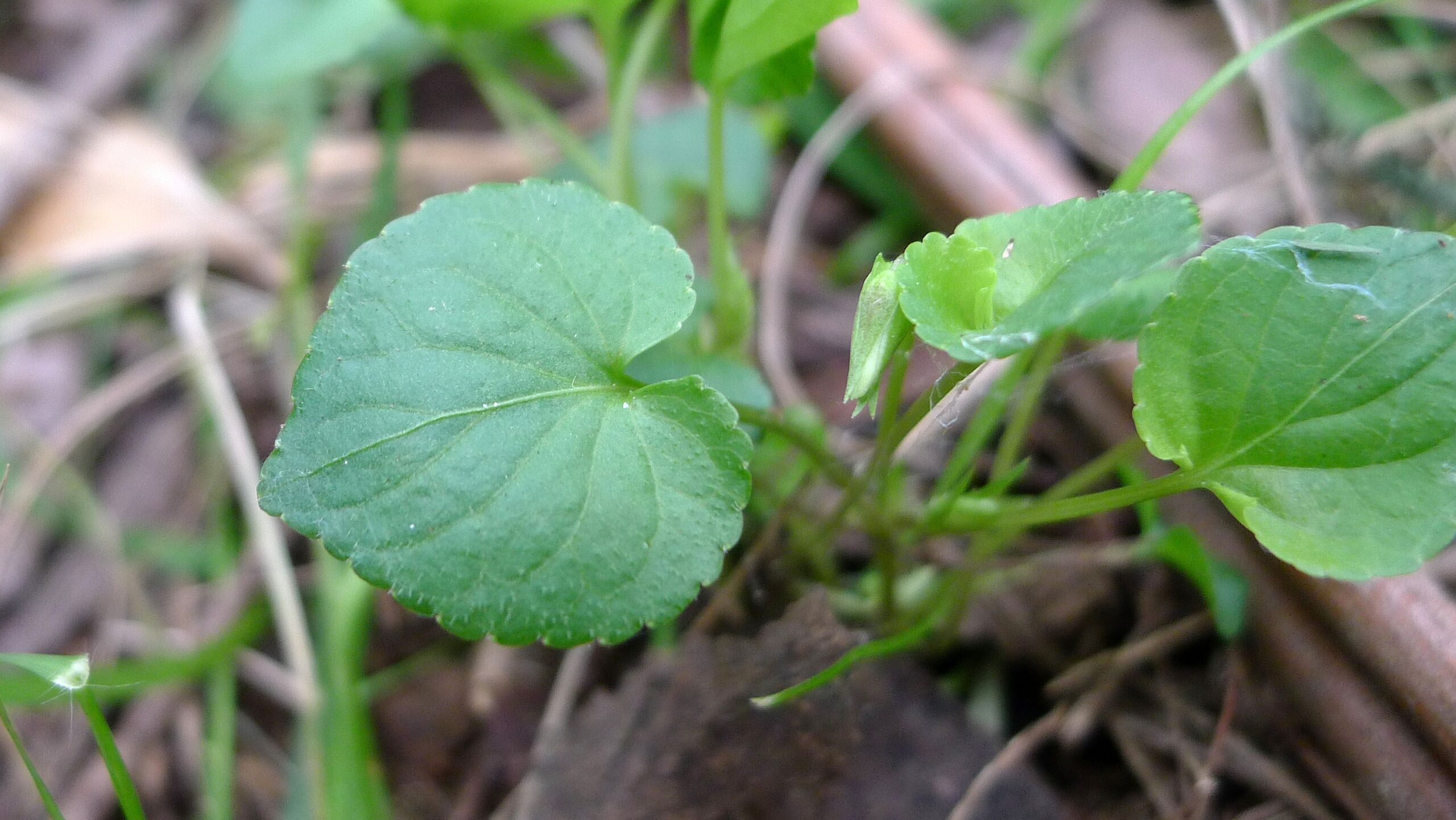
Common dog violet is the violet you meet on a woodland edge in spring and smell nothing from, and that nothing is the whole story. Viola riviniana Rchb., in the violet family (Violaceae), is also called wood violet and dog violet, and it is a low, prostrate perennial — about 10 cm tall and up to 50 cm broad — with dark green, heart-shaped leaves and multiple violet flowers in spring, May and June at their best, though the season runs from mid-March into June and occasionally beyond. The flowers are 15 to 25 mm across, blue to deep violet, five-petalled, with the lower petal veined darker purple and a spur behind it that is the identification key: in common dog violet the spur is upturned, much paler than the petals — often white or nearly so — and notched or furrowed toward its tip. The leaves are long-stalked, heart-shaped, hairless or only slightly downy, with regularly spaced teeth around the edges, and the plant spreads mainly by above-ground runners, stolons, that creep along the ground and root as they go. It is, in short, a violet that behaves like a groundcover and looks like a jewel, and it is common in the best sense: common in Ireland and all the British Isles, common across mainland Europe and parts of North Africa, and the most abundant violet species in much of its range.
The “dog” in the name is an old insult, and it is worth knowing because it explains the plant’s reputation. In the old plant-name logic, a “dog” version of a plant was the inferior, scentless imitation of the prized one: sweet violet (Viola odorata) is fragrant, and dog violet is not, so dog violet was considered fit only for dogs. The name has nothing to do with actual dogs and everything to do with Victorian snobbery about perfume. The specific epithet riviniana honors August Quirinus Rivinus, a professor of botany at Leipzig in the late 1600s and early 1700s, Latinized into a flower’s surname — a plant named for a botanist, an insult, and a missing scent, all in one small violet. It was voted the county flower of Lincolnshire in 2002, in a poll by the wild plant conservation charity Plantlife, which suggests the insult never quite stuck with the people who actually walk past it.
The butterfly story is a host story, and it is a fritillary story. The Silver-bordered Fritillary guide lists common dog violet in its Host plants section: silver-bordered caterpillars feed exclusively on violets, including marsh violet, common dog violet, and related damp-ground violets, and a wet meadow with abundant violets is silver-bordered nursery habitat. In its European home, common dog violet is likewise a food plant for fritillaries — the pearl-bordered, small pearl-bordered, silver-washed, and high brown fritillaries all use it — which makes the genus connection the real story: fritillary caterpillars eat violets, and common dog violet is one of the violets they eat. An honest ambiguity belongs here, stated rather than smoothed over: the butterfly guide gives no Latin name for its “common dog violet,” and in a North American wet-meadow list the name could also point to a native dog violet rather than this Eurasian species. This guide covers the standard referent of the name — Viola riviniana, the common dog-violet of the floras — and the coordinator should note the ambiguity when wiring the mention, because a North American meadow’s dog violet and a European woodland’s dog violet share a name more exactly than they share a range.
One disambiguation, because violet common names are a tangle and this guide must not swallow its cousins. Sweet violet (Viola odorata) is the fragrant one, with all its leaves at the base and gland-tipped stipules; common dog violet is unscented, with leaves up the stems. Heath dog violet (Viola canina) has clear blue flowers, narrower leaves, and smaller teeth on the stipules. Marsh violet (Viola palustris) is the wet-place violet, with kidney-shaped leaves and dark-veined flowers. Early dog violet (Viola reichenbachiana) is the close cousin with which common dog violet hybridizes to produce Viola × bavarica. And the nursery trade adds a final confusion: in the United States, plants sold as Viola labradorica — including the purple-leaved ‘Purpurea’ — are in fact Viola riviniana, mislabeled. Buy by Latin name, sniff for the absence that confirms it, and check the spur.
How to grow
Common dog violet wants the conditions of a woodland edge, and it is forgiving about everything except heat and extremes. Plant it in part shade to shade — a woodland edge, a hedgerow bank, a shady path margin, the north side of a fence — in most soils except acid or very wet ones, and let it form drifts rather than dots: this is a carpeting plant, and a single violet in a pot is a specimen of loneliness, while a drift along a path is a spring event. It tolerates a wide range of soil types and nutrient levels, and it is most frequent and abundant on moist, semi-shaded, infertile ground, especially in lowland deciduous woods and scrub margins — which is a useful hint that it does not want a rich, pampered bed. Plant in autumn or spring, water to establish, and then let the stolons do the spreading: it will seed itself gently and creep steadily, filling gaps between ferns, primroses, and other woodland-edge plants without bullying them.
Propagation is by seed and by stolons, and the plant has a second, secret flowering system worth knowing: like several violets, it produces showy spring flowers for insect pollination and later, inconspicuous, self-pollinating cleistogamous flowers in the leaf axils, which set seed without ever opening. That is why a violet patch seeds itself so reliably even in a year when pollinators are scarce — it has a backup plan that does not require an audience. Divide clumps in autumn or spring if you want more plants faster, or simply let the runners run and move the rooted sections where you want them. It is wintergreen in mild climates, holding a rosette of leaves through winter, and it flowers twice in a season in some places, with a spring flush and a smaller later showing.
Florida note, stated plainly rather than forced. Common dog violet is a cool-temperate woodland plant, and most of Florida is at or beyond its warm edge: it is not a Florida garden plant, and this guide does not recommend it for Florida beds. The Florida violet story belongs to the native violets of the wild-violet genus guide — common blue violet and its warm-temperate cousins — which are the violets that suit Florida’s climate. Northern and cool-climate gardeners with a shady edge get the plant in this guide; Florida gardeners get the honest statement that this one belongs to cooler woodlands, and a pointer to the violets that actually suit their climate.
Water & feeding
Water, for a woodland-edge violet, is a question of moisture without extremes. It wants moist, semi-shaded ground that stays damp but never waterlogged — it is found in all soils except acid or very wet ones, which is a precise way of saying it likes the middle: not a bog, not a drought. In a woodland-edge planting with normal rainfall and a leaf-litter mulch, it largely waters itself once established, while in a dry spell it wants a deep soak rather than a sprinkle, because its shallow roots and stolons live in the top few inches of soil and dry out first. Mulch with leaf litter, which is both its natural mulch and its natural fertilizer: a woodland floor’s annual leaf fall is the whole feeding program, and a violet patch under deciduous trees is, in effect, fed by the trees above it.
Feeding: none, or leaf litter only. A spring topdressing of compost or a fresh layer of fallen leaves is the right scale, if any is needed at all; heavy fertilizer produces soft, leggy growth and fewer flowers, and it hands the edge to faster, hungrier plants. The soil science here is the woodland-edge story: a deciduous woodland edge is a nutrient highway, where leaf litter falls, fungi and invertebrates break it down, and the nutrients cycle back into the soil in a steady, slow release that suits a low, carpeting perennial perfectly. A violet’s roots live in that community, storing energy in a short rhizome, sending out stolons across it, and flowering from it in spring before the canopy closes — and its yearly leaf fall returns its own small crop of leaves to the same cycle. Plant it on a shady edge and you are not just decorating a path — you are installing a fritillary nursery on top of a soil-building machine that runs on fallen leaves and spring light.
Common problems
- Heat. The most common problem is climate: common dog violet is a cool-temperate plant, and hot summers and warm winters stress it. In warm regions it fades, thins, and disappears, and no amount of watering fixes a plant that wants a cool spring. Grow it where springs are cool, or grow a warmer-climate violet instead.
- Mistaken identity. Sweet violet (fragrant, basal leaves), heath dog violet (narrower leaves, smaller stipule teeth), marsh violet (kidney leaves, wet places), and early dog violet (the hybridizing cousin) are the usual confusions, and the nursery mislabel — Viola riviniana sold as Viola labradorica ‘Purpurea’ — is the commercial one. Identify by the pale, notched spur and the absence of scent.
- Too wet or too acid. It avoids very wet ground and acid soils. A boggy corner or a pine-needle bed is the wrong address; a moist, neutral, shady bank is the right one.
- Too much shade, too little light. It wants woodland-edge light, not deep forest gloom. In dense shade it survives but flowers sparsely; give it dappled light or morning sun and it blooms properly.
- Violet rust. It is a known host of the pathogenic fungus Puccinia violae, violet rust, which spots the leaves with orange pustules. It rarely kills the plant, and the answer is airflow, spacing, and removing badly affected leaves, not a spray program — and never spray a fritillary host plant because it has a fungus on it, or you will kill the caterpillars along with the rust.
- Over-enthusiastic spreading. Stolons and self-seeding mean a happy patch will wander into paths and lawns. Edge it, mow the wanderers, or let it wander — a violet in a lawn is a problem only if the lawn is supposed to be only grass.
- Caterpillar feeding. Fritillary caterpillars will eat the leaves, and that is the point of planting it. A healthy patch recovers, so do not spray the caterpillars — they are the crop.
Harvest
Common dog violet’s harvest is flowers, leaves, and seed — with one firm boundary and one honest distinction. The leaves and flowers have been used as a wild spring green and salad addition, and the plant contains the usual violet chemistry of saponins and mucilage, but this guide does not present it as a food crop to be harvested heavily: pick sparingly, from large patches only, and never from a patch you are growing for fritillaries, because every leaf you pick is a leaf a caterpillar cannot eat. If you want seed, collect the small capsules as they ripen in summer — they split explosively, flinging seed a short distance, which is why violets appear in surprising places — or let the patch seed itself, which it will do with enthusiasm, thanks to both its showy flowers and its secret self-pollinating ones.
The simplest harvest, though, is a spring morning on a woodland path with no agenda at all: violet flowers at ankle height, the pale spur catching the light if you crouch close enough, and the knowledge that the flower you are looking at has no scent on purpose — or rather, no scent by evolution, because its pollinators find it by sight and its caterpillars find it by taste. Leave most plants standing through flowering for the pollinators and the fritillaries, let the seed capsules pop where they will, and let the stolons creep into next year’s drift. That is the crop, and it arrives without a single spray — because spraying it would kill the very thing you planted it for.
Saving seeds
Common dog violet has a seed system so sneaky it deserves a whole section just to explain the trick. Like many violets, Viola riviniana makes two kinds of flowers. The showy purple ones you notice in spring are open for insect pollination, and they may cross with other violets flowering nearby. The second kind never opens at all. These closed, self-pollinating flowers hide under the foliage later in the season, fertilize themselves, and quietly make seed without any bee ever visiting. A violet patch is therefore running two breeding programs at once: one that mixes genes, and one that copies the parent faithfully. If you save seed, you are saving the output of both, and that matters for what grows.
Collecting violet seed is a race against a tiny explosion. The seed capsules, small pale capsules that follow the flowers, dry as they ripen and then split open with a snap, flinging their small seeds a short distance from the parent. Ants then carry many of those seeds further, attracted by a small, oily appendage on each seed called an elaiosome. To beat both the capsule and the ants, watch for capsules that are swelling and starting to pale and dry, and pick them just before they split. Drop them straight into a paper bag or a small lidded box, because a capsule that pops in your hand will scatter seed across the nearest surface, and violet seed is small enough to lose in a heartbeat.
Cleaning is gentle work. Tip the bag out over a tray, pick out the split, three-pointed capsule husks, and keep the small, light-brown seeds. There is no pulp to ferment off and no heavy coat to remove, and washing is unnecessary and unhelpful. Spread the seed on paper indoors for a few days until it feels thoroughly dry, then label it at once with the species and the year.
For storage, use the Florida rule that runs through this whole project: dry thoroughly, then seal in an airtight container with a desiccant packet and keep it cool and dark. Violet seed kept damp in humid air loses vigor quickly, and a paper envelope left in a warm shed is the fastest way to waste a good collection. Do not assume old violet seed will behave like fresh seed; if a packet has sat for a year or more, sow it thickly and expect a lower strike rate, or do a small germination test first rather than devoting a whole tray to a gamble.
Sowing needs a little patience, because violet seed often benefits from a cold period before it germinates well. The simplest route is autumn sowing outdoors, where winter provides the chill naturally, with seed pressed onto the surface or barely covered, since it germinates best with light and must not be buried deep. Indoors, you can mimic winter by chilling the seed for a few weeks in a bag with barely damp vermiculite in the refrigerator before sowing in spring. Keep the mix evenly moist, never waterlogged, and expect seedlings over several weeks rather than all at once. As for trueness, seed from the closed, self-pollinating flowers will usually resemble the parent closely, while seed from the open spring flowers may vary, especially if other violets grow nearby. If you want an exact copy of a purple-leaved form, divide an established clump instead; if you enjoy a woodland-edge patch that slowly invents its own variations, let the capsules pop, let the ants do their delivery work, and enjoy the quiet conspiracy happening under the leaves.
Browse all plant & pest guides
Varieties
Common dog violet is grown as the species, Viola riviniana, and its one widely recognized garden form is the purple-leaved Purpurea Group, whose dark foliage sets off the violet flowers and which is frequently mislabeled in the nursery trade as Viola labradorica ‘Purpurea’ — buy it by the riviniana name, whatever the tag says, and check the spur. No other distinct garden varieties are sold under this name; the species itself, in its variable wild forms, is the plant. Related violets a gardener may meet are distinct species, not varieties of this one: sweet violet (Viola odorata), the fragrant one; heath dog violet (Viola canina); marsh violet (Viola palustris); early dog violet (Viola reichenbachiana), with which it hybridizes; and common blue violet (Viola sororia), the North American violet of the wild-violet genus guide. Buy by Latin name, and let the common names be nicknames.