
🌿 Purpurea Common Dog Violet
What it looks like
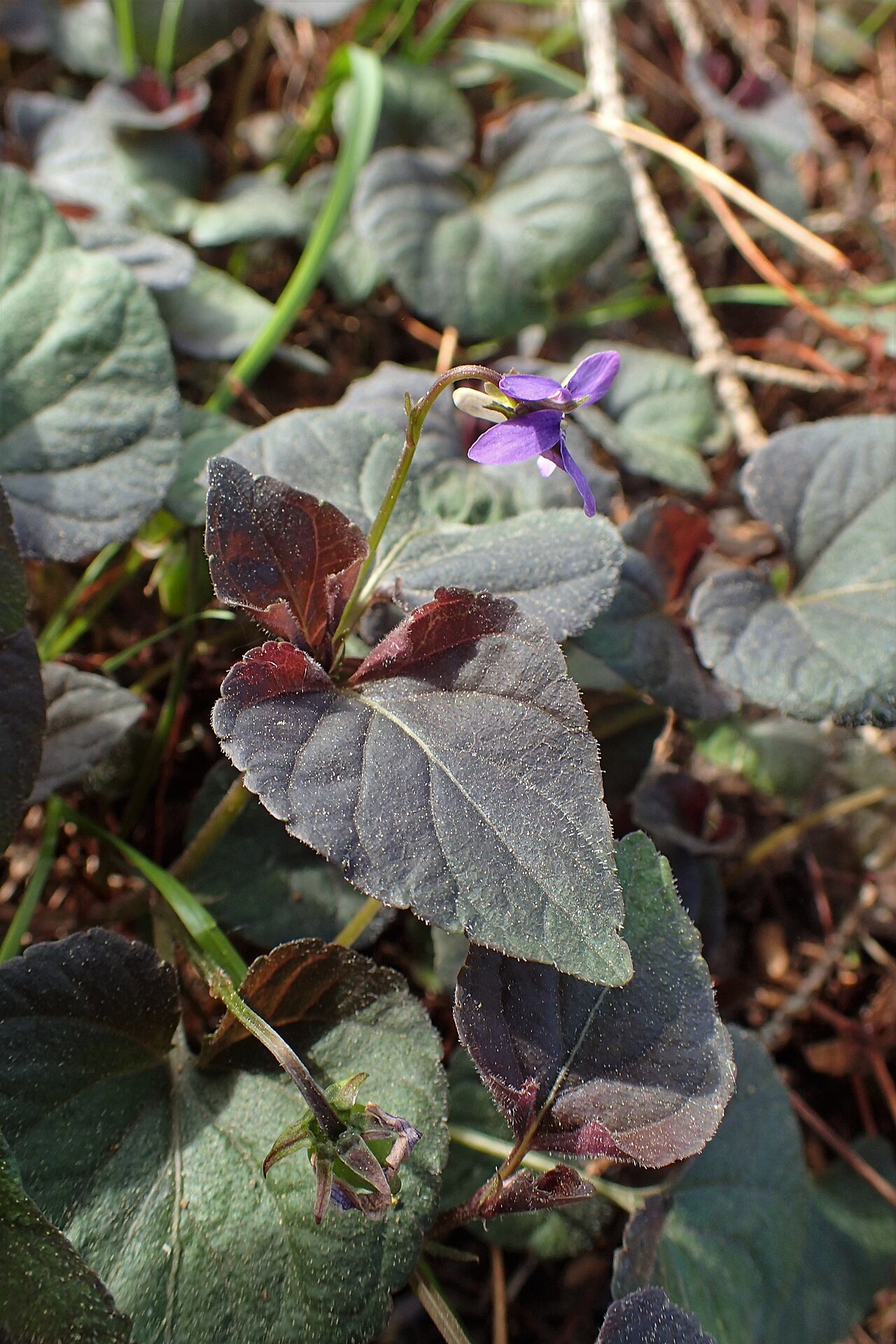
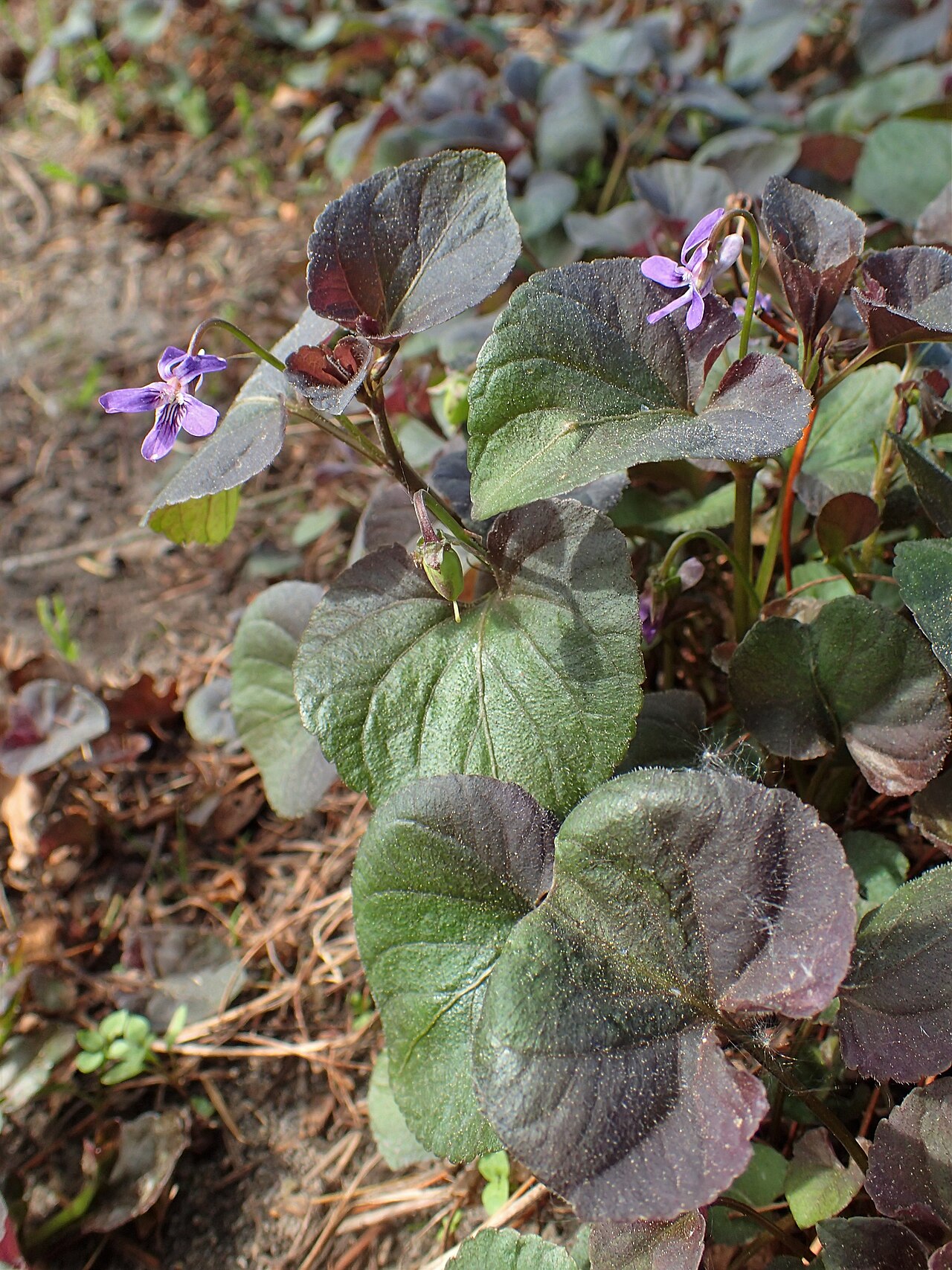
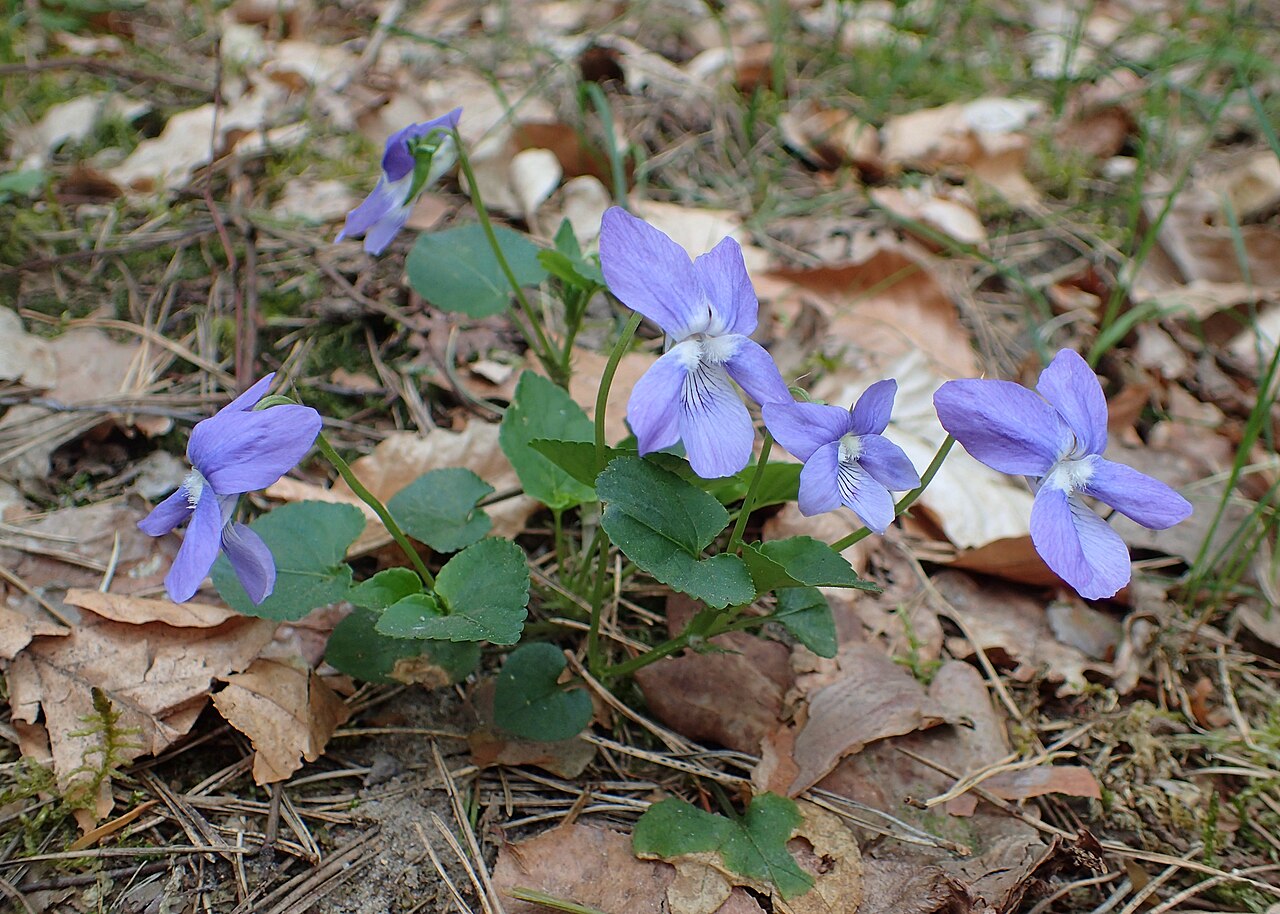
The Purpurea Group is common dog violet with the lights dimmed: the same low, spreading, heart-leaved violet, the same violet-blue, unscented flowers with their pale, notched spur, but with foliage richly flushed dark purple — leaves that read almost black-purple in good light and set the flowers off like lanterns. It is a group rather than a single clone: a set of purple-leaved forms of Viola riviniana, variable in detail but unmistakable in effect. In a shady border or woodland edge, the dark foliage does something the green species cannot — it makes the plant visible from a distance, a pool of purple shadow with violet sparks.
Why this variety
Plant the Purpurea Group when you want a violet that earns its place by foliage first and flowers second. Common dog violet is a quiet woodland plant; the purple-leaved form is a design plant, useful for edging a shady path, underplanting shrubs, or filling a north-facing bank where color is scarce. The naming caution matters here and it is worth stating plainly: plants sold in the United States as Viola labradorica ‘Purpurea’ are in fact Viola riviniana, mislabeled — the true Labrador violet is a different, North American species. Buy by the riviniana name, whatever the tag says, and check the pale, notched spur and the absence of scent to confirm you have dog violet and not sweet violet. The trade’s confusion is not your problem once you know the check.
How to grow
Plant in part shade to shade — a woodland edge, a hedgerow bank, a shady path margin, the north side of a fence — in moist, neutral soil that is neither boggy nor pine-needle acid. Space 9 to 12 inches apart and let it spread gently by seed and runners; it naturalizes politely rather than invasively. It flowers in spring, then settles into a foliage plant for the rest of the season. It is forgiving about everything except heat and extremes: too much sun scorches the purple leaves, too much shade thins the flowers.
Water & feeding
Keep the soil moist but not wet. Dog violet wants the damp of a woodland edge, not the saturation of a bog, and it sulks in drought. Mulch with leaf mold to hold moisture and to feed the soil the way a woodland floor does. Water in dry spells, and do not let it bake in summer sun — the purple foliage shows scorch faster than green leaves do.
Common problems
Heat, deep shade, and waterlogging are the three stresses. Too wet or too acid a site rots it or starves it; too much shade gives leaves without flowers; too much sun bleaches and scorches. Slugs and snails may nibble in damp weather, and violets can host fritillary caterpillars — which, for a wildlife gardener, is a feature rather than a problem. The main human-caused problem is buying the wrong plant under the labradorica label; check the spur and the scent before you plant.
Harvest
The harvest is the spring flower show and the season-long foliage: pick a few flowers for a tiny posy, and leave the rest for the bees and the fritillaries. Cut back tatty foliage in late winter before spring growth, and divide clumps every few years if they get congested. The flowers are edible in the general violet way, but this group is grown for looks — and the leaves, not the flowers, are the reason to plant it.
For the species as a whole, see the Common Dog Violet guide.