
🌿 Crossvine
What it looks like

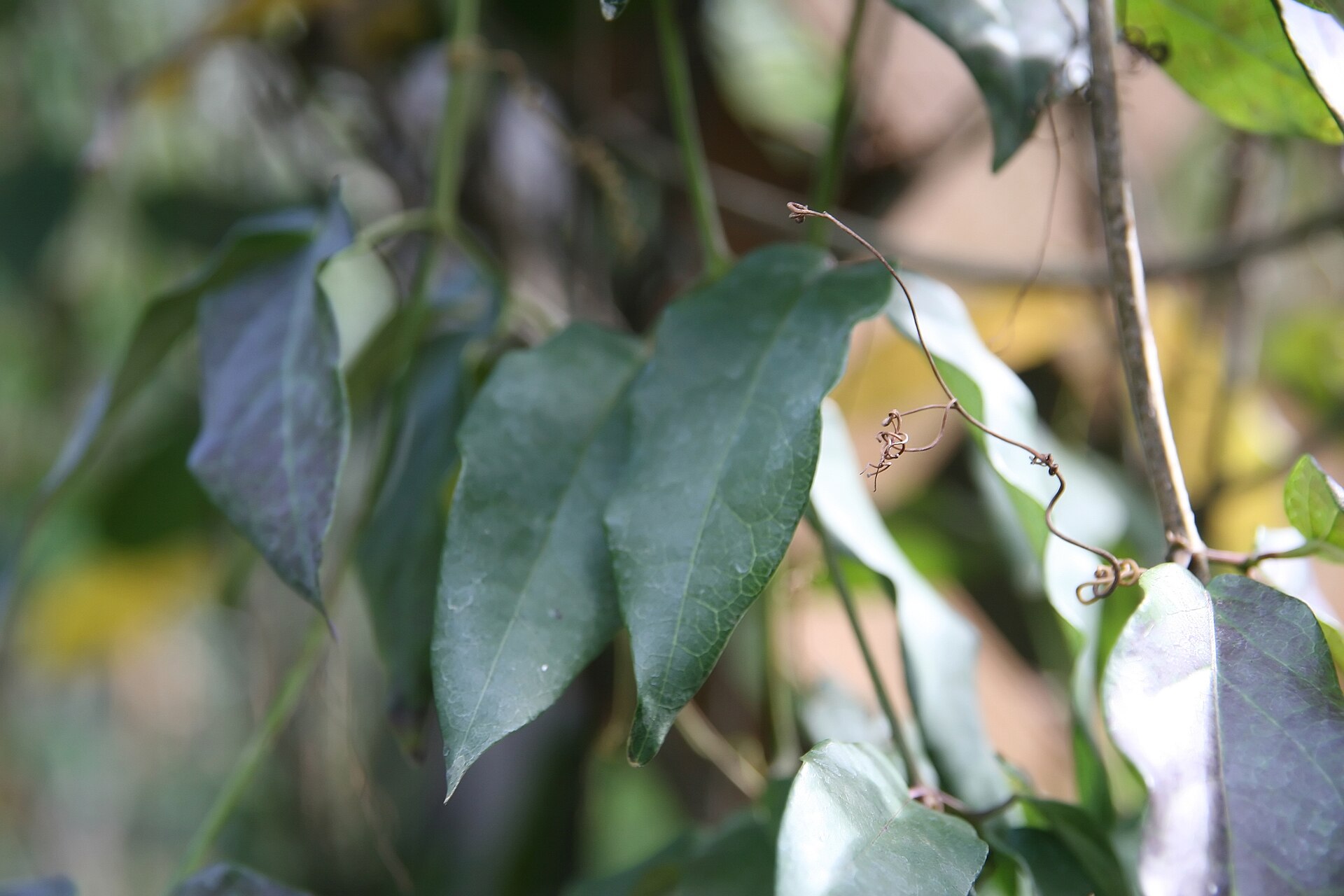
Crossvine is a woody, evergreen vine that climbs by tendrils tipped with little adhesive pads, so it can scale a wall or a tree trunk without strangling it. Its leaves are glossy, paired, and evergreen in mild winters, and in spring it throws masses of trumpet flowers, orange-red outside and yellow inside, in clusters that can cover a fence so completely the leaves disappear.
Cut a stem and you will see the vine’s namesake: the cross-shaped pattern in the wood, which is how old-timers identified it before the flowers arrived. It is a big vine in time, easily reaching 30 feet or more up a tree, but it is not a thug: it climbs up, it does not run along the ground rooting everywhere, and a gardener with pruners stays in charge.
Why this variety
Choose crossvine for a spring spectacle on a scale few vines can match, plus winter green. Where coral honeysuckle blooms in polite flushes all season, crossvine puts on one great spring show, and the rest of the year it is a handsome evergreen screen.
It is also a native alternative to trumpet creeper, which is far more aggressive about suckering and self-seeding. Crossvine gives you the trumpet look with a calmer habit, and it feeds hummingbirds and the big carpenter bees that buzz-pollinate its wide trumpets in spring.
How to grow
Plant in sun or light shade in soil that drains but does not bake bone-dry. Give it something real to climb: a fence, an arbor, a pergola, or a sturdy tree it can ascend without girdling. Water deeply at planting and through the first dry season, mulch well, and guide the first stems onto the support.
Prune after spring bloom to keep it in bounds, cutting long shoots back to a side branch. If it reaches the top of its support and starts flopping, cut the flop back rather than letting it pile up into a heavy mat, which shades itself out and flowers less the next year.
Water & feeding
Crossvine likes steady moisture while young and tolerates short dry spells once established, but it sulks in both standing water and in deep drought. A deep weekly soak in a dry spring beats a daily sprinkle, and a compost mulch keeps the root zone even.
Feed lightly, if at all: compost at planting and a spring top-dressing in poor sand is enough. Heavy nitrogen grows leaves at the expense of the spring flower show, which is the whole point of planting it.
Common problems
No flowers on a young vine: crossvine often needs two or three years before it blooms well. Be patient, give it sun, and do not overfeed.
Too big for its trellis: prune after bloom and again lightly in summer. A vine that is cut back hard in winter will regrow, but it may skip a spring show.
Leaf spot in wet weather: usually cosmetic. Improve air flow, avoid overhead watering late in the day, and rake fallen leaves from under the vine.
Climbing where it is not wanted: check it does not climb into gutters or under shingles. Tendril pads grip well, so redirect stems early rather than tearing them off later.
Harvest
There is no edible harvest, and crossvine is grown for flowers and cover, not for food. The harvest is the spring weeks when the fence glows orange, and the winter months when the vine still screens the neighbors while the deciduous shrubs are bare sticks.
Cut stems for spring arrangements if you like, but take only a few, since each flowering shoot is next year’s display too. The best long-term yield is a mature vine that needs one annual prune and rewards it with a bigger show every spring.
Saving seeds
Crossvine is one of the friendlier vines to save seed from, mostly because it does the hard part for you: it hangs its seed out in long, flat pods that turn light brown and dry in late summer and early fall, practically waving a flag that says pick me now. Collect the pods just as they dry but before they split wide open and spill their winged seeds to the wind, and bring them indoors in a paper bag for a few more days of drying. Then split the pods and shake out the flat, winged seeds, winnowing away the papery chaff. If the pods still feel at all soft or damp, they are not done; seed stored damp in Florida humidity is seed stored dead, so dry thoroughly, then store in a sealed container with a little desiccant.
Sowing is refreshingly undemanding. Most references agree crossvine seed needs no pretreatment at all, though you will occasionally meet one that recommends a cold spell first; fall sowing outdoors settles the argument, since winter does whatever chilling the seed wants, and spring sowing after frost works too. Sow about an inch or two deep in well-drained mix, keep the soil evenly moist, and expect sprouts in roughly three to four weeks. Germination is usually generous, but seedlings can be slow to establish and may need a winter outdoors to harden before they go into their permanent spot, so start them in pots rather than gambling on a direct sowing.
Storage is short-term by seed standards. Kept sealed and refrigerated, crossvine seed stays viable for up to about a year, so this is a save-it-and-sow-it seed, not a save-it-for-a-decade seed. Label the container with the year, and sow the oldest seed first.
One honesty note before you sow a whole fence line: seedlings grow into crossvine, but they do not grow into a named cultivar. If you want the exact red-orange flowers and yellow throat of Tangerine Beauty Crossvine, take cuttings instead, since a cutting is a clone and a seedling is a lottery ticket. Take a 6- to 8-inch softwood cutting in late spring or early summer, strip the lower leaves, dip the cut end in rooting hormone, and keep it moist under a plastic bag until it roots, which takes roughly six to eight weeks. Save seed for the species, take cuttings for the cultivar, and you will never be disappointed by either.
Varieties
Named crossvine cultivars with their own full guides include Tangerine Beauty Crossvine. See also Crossvine: All Varieties.