
🔴 Danny Partridgeberry
What it looks like
Why this variety
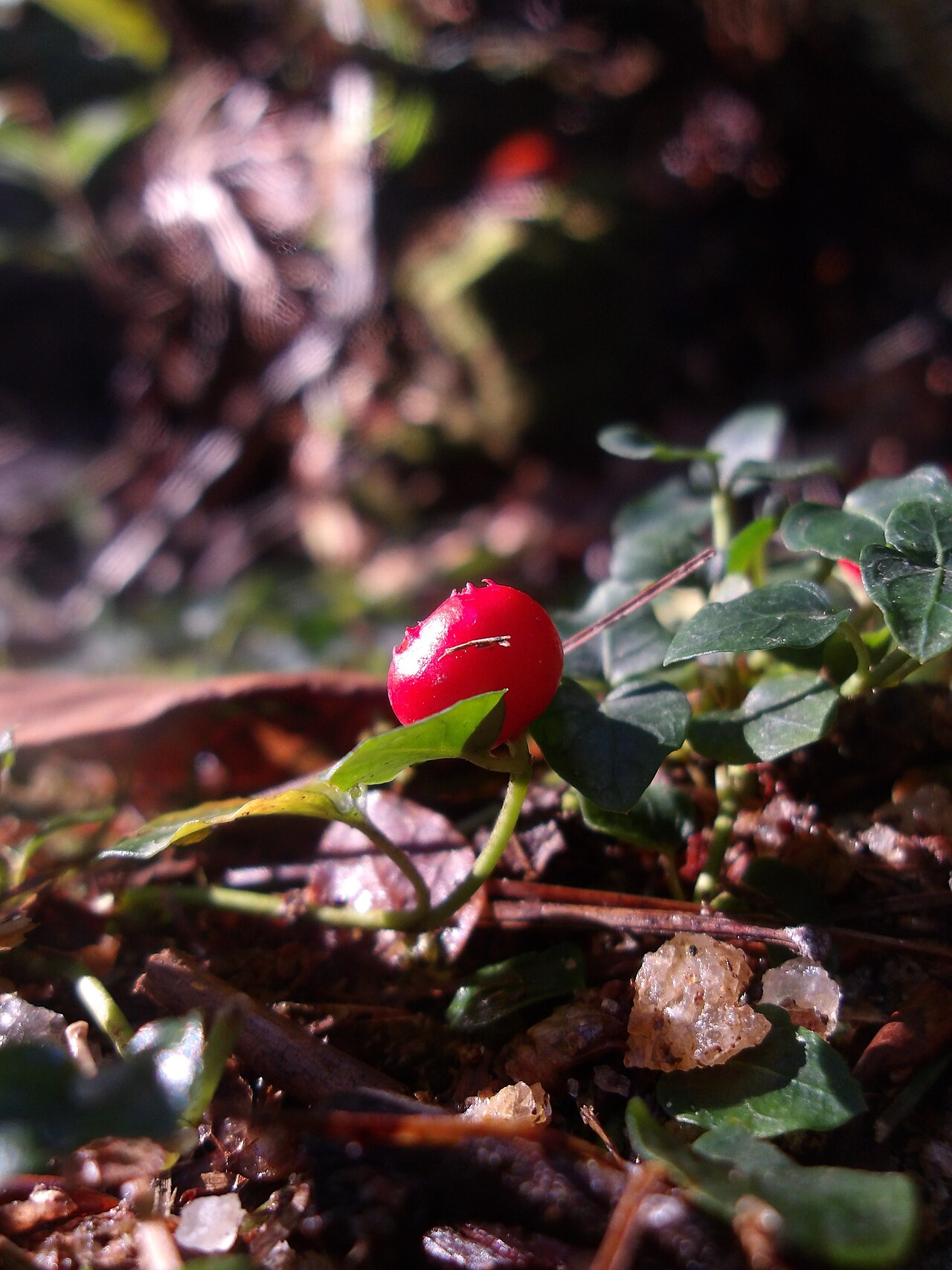
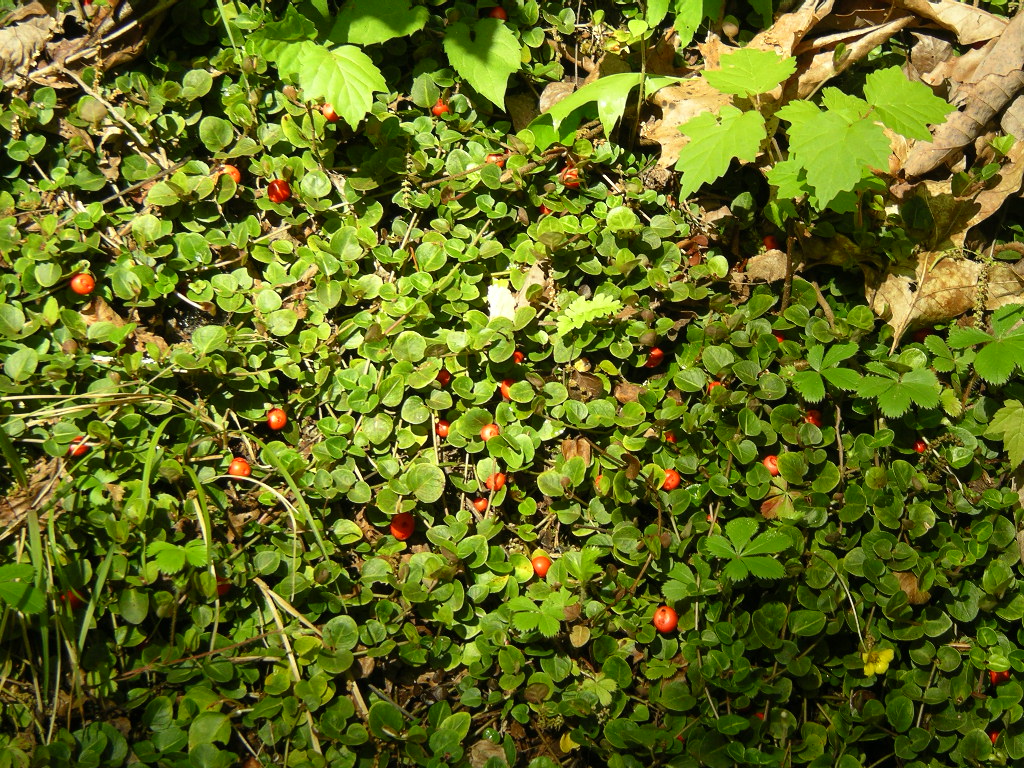
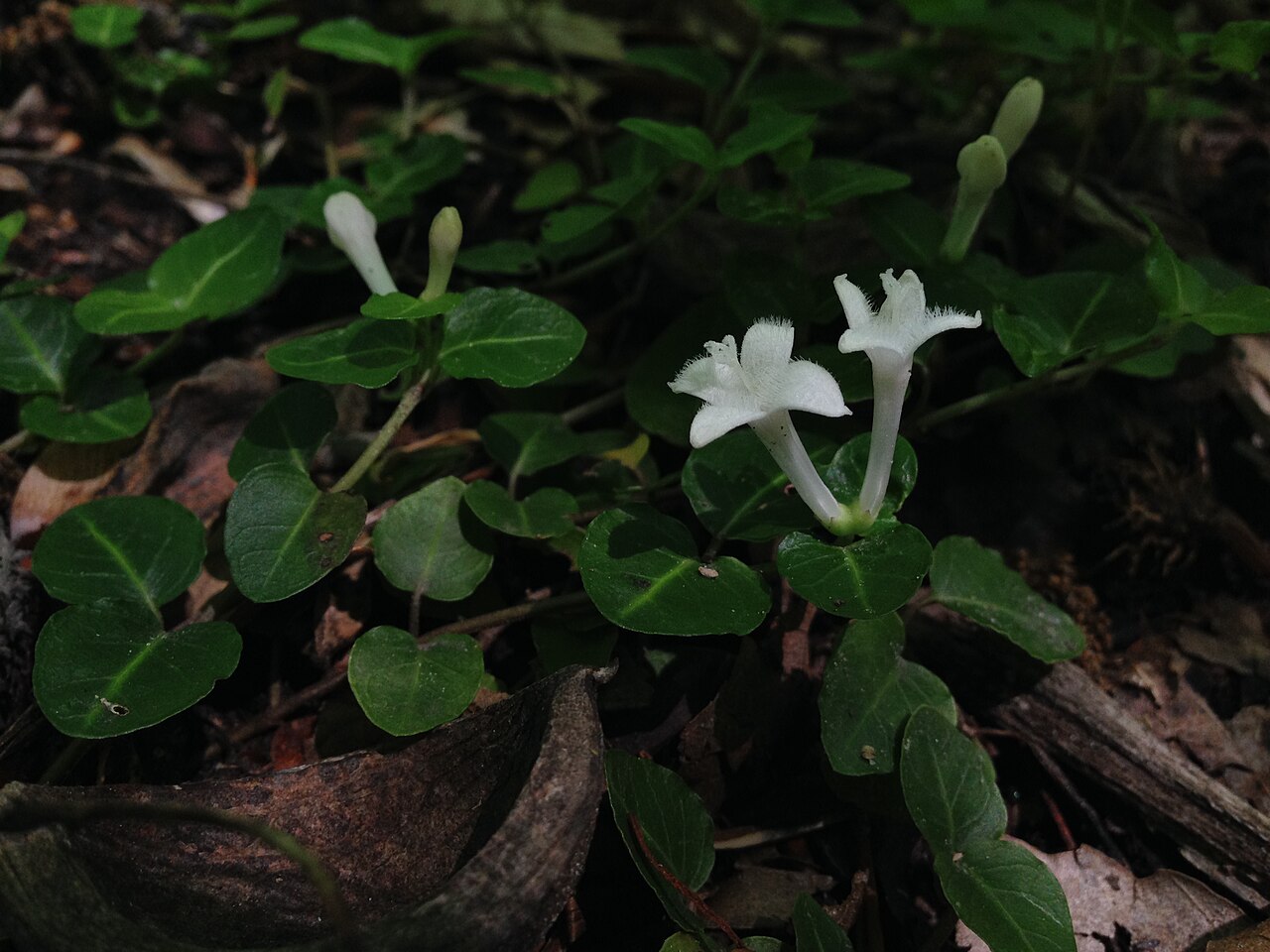
Danny is the one named partridgeberry selection with real documentation behind it: a particularly vigorous form of Mitchella repens, recommended by American Horticultural Society experts and sold by Plant Delights Nursery, that forms a dense, evergreen mat where the species can be thin and patchy. The plant itself is a charmer at any speed — trailing stems that root at the nodes, small glossy evergreen leaves with a pale stripe down the midvein, and pairs of tiny, fragrant, trumpet-shaped white flowers, lightly flushed pink, that fuse at the base and ripen into a single scarlet berry with two dimples, one for each flower. Danny’s virtue is vigor: it spreads about three feet in five years, which for this famously slow plant counts as enthusiasm.
The trade-off is patience, and Danny only softens it, it does not remove it: partridgeberry is a slow groundcover that takes years to knit into a mat, and it wants what woodland plants want — shade, moist, humus-rich, acidic soil, and no foot traffic, no mowing, and no sunny, dry bed. It also has a pollination quirk worth knowing: partridgeberry is distylous, with pin flowers (long style) and thrum flowers (short style) on different plants, and only cross-pollination between the forms sets a full berry crop — a patch of one form alone flowers beautifully and fruits sparsely. Plant Danny in drifts, not singles, and let the mat do its slow work.
If you are new to choosing between cultivars, the Varieties Matter guide explains why the name after the plant matters as much as the plant itself. Danny is a perfect example: it is not just a partridgeberry in the abstract, it is a partridgeberry with a specific job, a specific history, and specific strengths.
Florida honesty: partridgeberry is native to eastern North America from Canada south to Texas and Florida, but in Florida it is a North Florida woodland plant, not a statewide groundcover — it wants shade, moisture, and acid humus, and it will not survive a sunny, dry, or South Florida bed. In a North Florida shade garden, under acid-loving shrubs, in soil amended with leaf mold and pine bark, Danny is a genuine evergreen groundcover with winter berries for birds. South of there, admire it in photographs and plant a heat-loving groundcover instead; this guide will not sell you a shade-loving northern native for a sunny yard.
How to grow
Plant container-grown plants in spring in part shade to shade, in moist, humus-rich, acidic soil — partridgeberry is a woodland groundcover that wants leaf mold, pine bark, and shade, not sun, foot traffic, or dry beds. Work worm castings and leaf mold into the planting area, space 6-12 inches apart to knit into a mat, mulch with pine needles or shredded leaves, and water through dry spells. Plant in drifts, not singles, because its pin-and-thrum flowers need cross-pollination between forms for a full berry crop, and be patient: this is a slow mat that takes years to fill in.
Set plants 6-12 inches apart as a groundcover mat in soil with a pH around 5.0-6.5. Work worm castings into the bed at planting and mulch to hold moisture. A well-fed partridgeberry plant rewards that care directly: steadier growth, better bloom or fruit, and a show that actually shows up.
Water & feeding
Keep soil evenly moist but never waterlogged — partridgeberry wants woodland moisture, not swamp and not drought, and its shallow roots dry out fast. Water at the soil line, mulch with pine needles or shredded leaves to hold moisture and acidity, and feed lightly: castings at planting plus leaf mold is plenty, because rich feeding makes soft growth in shade. Never lime the bed, and never let a young mat bake dry in a sunny spell.
Common problems
- Slow establishment mistaken for failure — partridgeberry takes years to knit into a mat; mark the spot, mulch, water, and wait before declaring it dead.
- Poor berry set from a single flower form — pin-only or thrum-only patches flower well and fruit sparsely; plant drifts so both forms cross-pollinate.
- Sun scorch and drought — a shade plant in sun or dry soil scorches and thins; give it shade, moisture, and humus, and never plant it in a sunny bed.
- Weed competition in the mat — low groundcovers lose to weeds; mulch well, hand-weed gently (stems are trailing and shallow), and do not use heavy cultivation in the bed.
- Wrong soil pH — partridgeberry wants acidic, humus-rich soil; never lime the bed, and amend with pine bark and leaf mold where soil is alkaline.
Harvest
There is no fruit harvest for people worth planning around — partridgeberry berries are edible but famously tasteless, and their real harvest is for birds, which eat them through winter when little else fruits. Leave berries on the mat for wildlife, enjoy the evergreen foliage and winter color, and take cuttings or divisions in spring if you want more plants, because partridgeberry propagates readily from stem cuttings and division and reluctantly from seed. The real harvest is a shade garden that looks alive in February, with green leaves and red berries against leaf litter, which is a winter show most shade plants cannot offer.
Browse all plant & pest guides
Saving seeds
Danny is a named partridgeberry selection, so seedlings won’t hold its vigor — propagate it from rooted stems, which root at the nodes. The Saving seeds section of the Partridgeberry guide covers seed for the straight species.