
🍒 Partridgeberry
What it looks like
How to grow
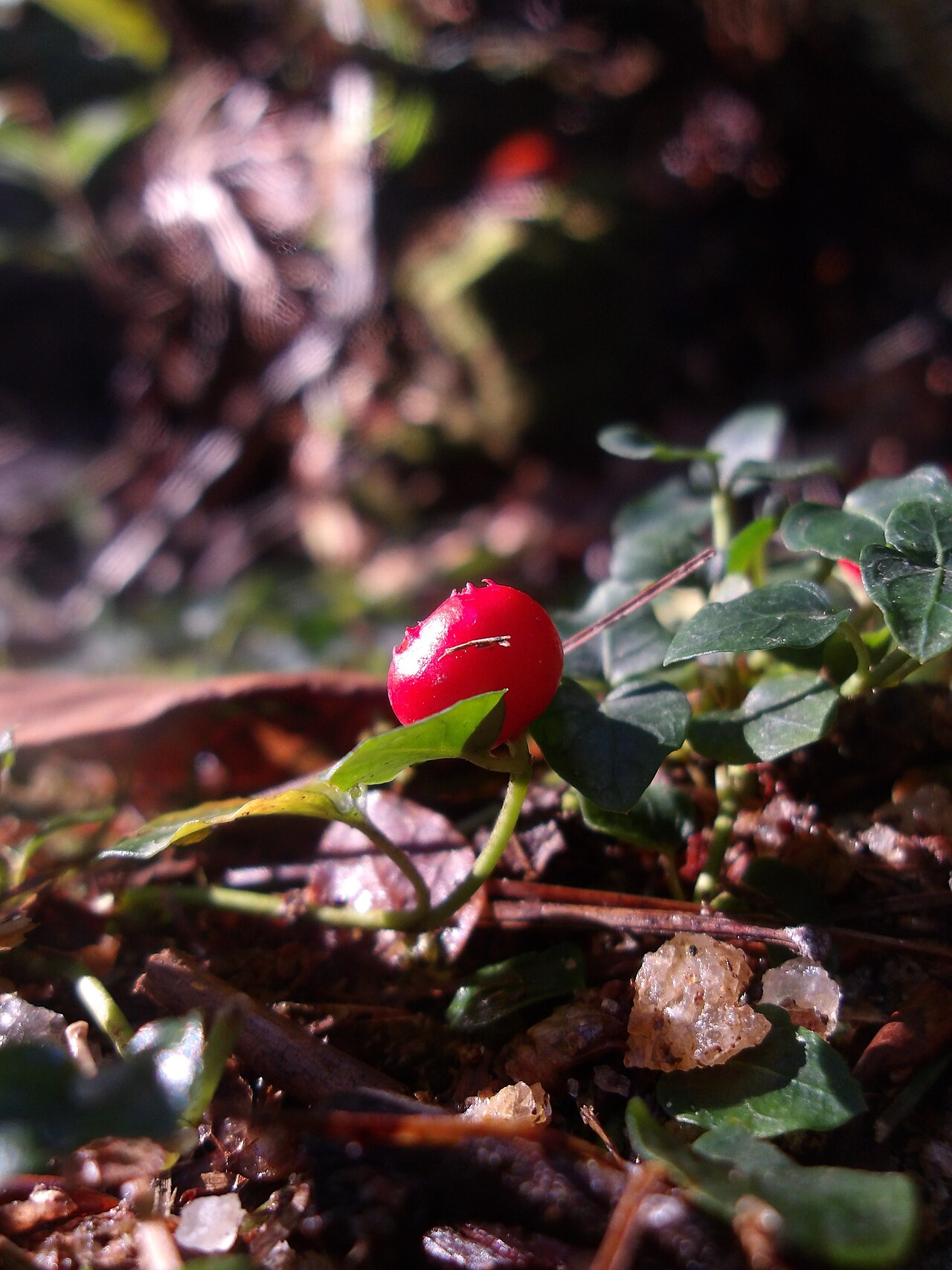
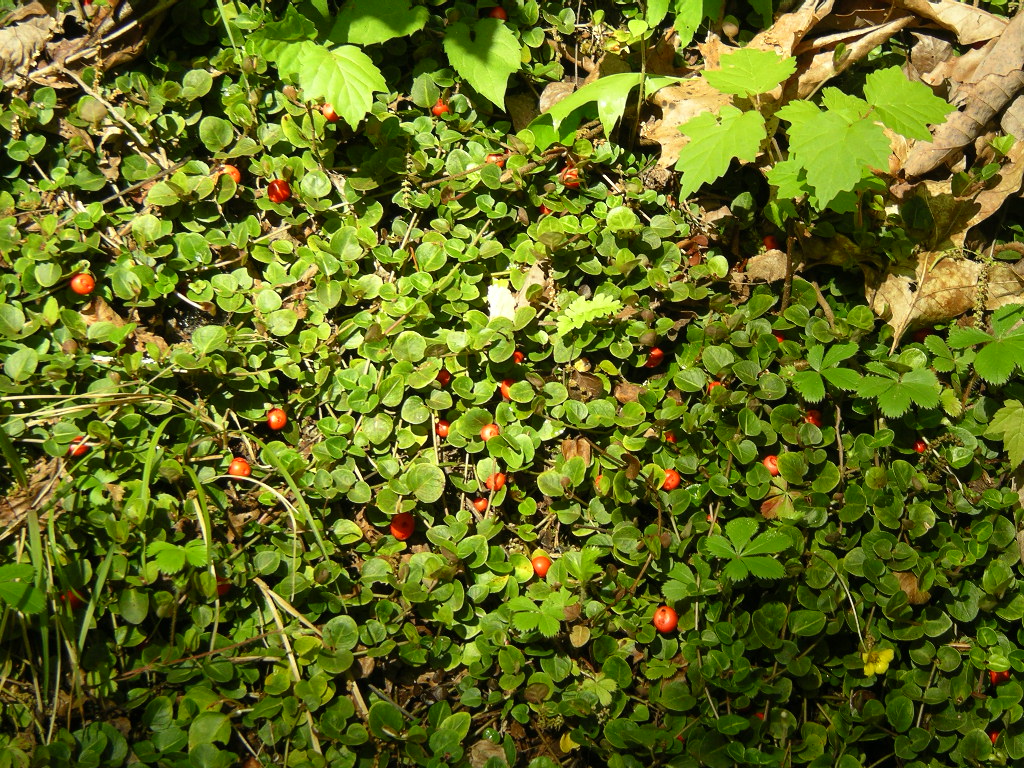
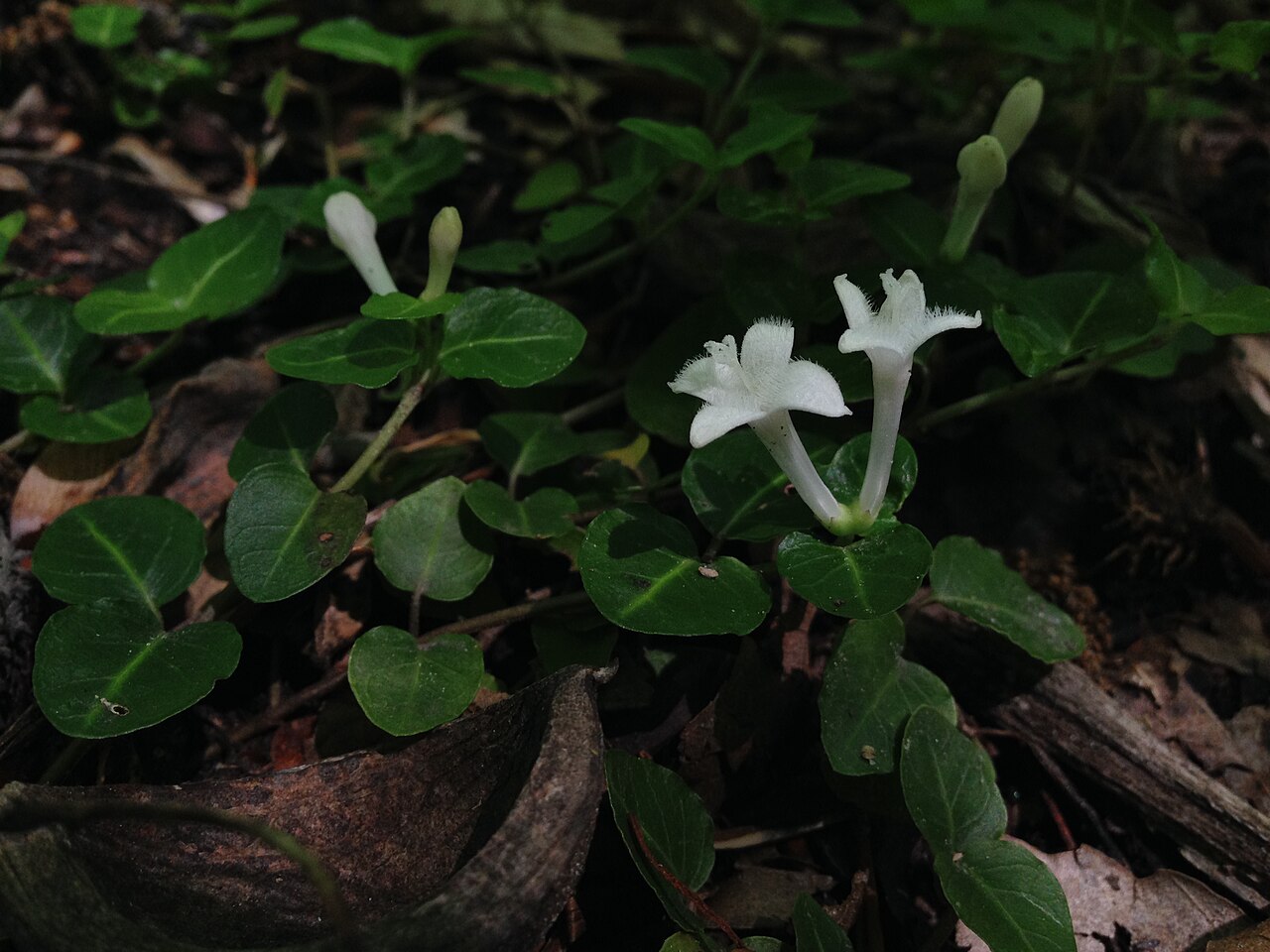
Partridgeberry is a tiny evergreen groundcover, barely 2 inches tall, that creeps along the woodland floor rooting as it goes, with glossy paired leaves marked by a pale midrib, fragrant paired white flowers in spring, and bright red berries that ripen in fall and persist through winter. Plant nursery plants in spring or fall in moist, well-drained, acidic, peaty soil in shade — under trees, along a woodland path, or in a terrarium-style shady corner. It can be slow and fussy to establish, and it resents being disturbed once settled, so plant it where it can stay. The flowers come in fused pairs: both must be pollinated for a single berry to form, which is why a healthy patch berries far better than a lone sprig. It is not a lawn substitute for foot traffic, but it is a beautiful living mulch under acid-loving shrubs.
Water & feeding
Keep soil evenly moist, especially while establishing and in dry summers; partridgeberry falters in dry woodland soil. Mulch lightly with leaf litter to hold moisture, and feed sparingly — a light spring feed of complete fertilizer or compost is plenty. Once established, leave it alone: digging around it breaks the shallow rooting stems it depends on.
Common problems
- No berries — a lone plant, or flowers that missed pollination; plant a generous patch so paired flowers get pollinated.
- Slow fill — normal. Partridgeberry creeps slowly; set plants 6–8 inches apart if you want coverage sooner.
- Drying out — the most common killer; shade plus steady moisture is non-negotiable.
- Pests and disease — rare. If the site is right, partridgeberry is one of the lowest-trouble groundcovers you can grow.
Harvest
Berries are edible but dry, seedy, and mostly tasteless — traditionally made into jams in places where they grow abundantly, but honestly they are better left for partridges, grouse, and winter birds. Enjoy the red dots through winter and let the wildlife have the harvest.
Browse all plant & pest guides
Saving seeds
Partridgeberry is a slow, two-inch evergreen carpet that is in no hurry about anything, and its seed is slow in exactly the same way. The plant has a charming quirk: its twin white flowers must both be pollinated for a single red berry to form, which is why the berries are always single and always worth noticing. Collect the berries when they are fully ripe and bright red, usually in fall and holding through winter, and clean the pulp off the seed — the pulp can inhibit germination, so mash the berries in water, rinse the seed well, and dry it briefly on paper.
The seed has a double dormancy, and that is why so many first attempts fail. It needs a warm period followed by a cold period before it will sprout — warm stratification for a couple of months, then cold stratification for three to four months — and even with the full treatment, germination is slow and uneven. The easiest method is also the oldest one: sow the seed fresh in fall, outdoors, in a pot of moist, acidic, well-draining mix set in a shady spot, and let the seasons do the work. Mark the pot clearly and do not throw it away for two years.
Cuttings and division are the faster routes, and the practical ones: partridgeberry roots along its stems as it creeps, and a rooted stem section, snipped and potted in spring, is a guaranteed new plant. Division of an established patch in spring works too, as long as each division has roots attached. Seed is for the patient, and for the gardener who wants the experience of growing a woodland carpet from scratch.
Save seed from a healthy patch, sow more than you need, and keep any stored seed cool and damp, never dry. And one thing worth knowing about the plant you are growing: partridgeberry is slow — allow a year or two for a patch to fill in — but once it does, it is a carpet that asks for almost nothing and gives back red berries all winter.
Varieties
Every named variety of Partridgeberry with its own growing guide:
- Danny Partridgeberry — The vigorous partridgeberry: a dense, evergreen, berry-carrying groundcover selection for shade — the native mat that flowers in pairs and fruits as one.